Showing posts with label Tyehimba Jess. Show all posts

Tuesday, April 03, 2018

Poem: Tyehimba Jess

Tyehimba Jess
Several years ago, Tyehimba Jess (1965-), winner of last year's Pulitzer Prize in Poetry for his innovative, rich and complex collection Olio (Wave Books), published the following poem on "Poem-a-Day." In it, he calls forth a sculpture by the famous 19th century African American sculptor Edmonia Lewis (see below), a pioneering figure in the world of Western art. Lewis was the first Black woman  artist and first woman artist of Native American ancestry to gain international recognition and acclaim, in no small part for artworks that depicted Black subjects, though often with the features tempered for her white patrons and audience.

Jess, a friend and fellow former Cave Canem grad and NYU alum, excavates American and African American history, often in relation to major and lesser known Black figures who are artists and performers, whether working in the fine arts or vernacular and popular forms. The poem below, while differing in form from the page-crossing sonnets in Olio, offers a sense of his poetics, particularly his skillful use of voice and imagery, which also are on vivid display in his award-winning first book, Leadbelly. What I also like about the poem below is how he merges ekphrasis and dramatic monologue; it is the sculpture, as well as Hagar, the Biblical figure serving as a metonymic stand-in for Black women, and Lewis, who speak through the lines, figuratively and literally bringing the art work to life.

HAGAR IN THE WILDERNESS


by Tyehimba Jess


Carved Marble. Edmonia Lewis, 1875


My God is the living God,
God of the impertinent exile.
An outcast who carved me
into an outcast carved
by sheer and stony will
to wander the desert
in search of deliverance
the way a mother hunts
for her wayward child.
God of each eye fixed to heaven,
God of the fallen water jug,
of all the hope a vessel holds
before spilling to barren sand.
God of flesh hewn from earth
and hammered beneath a will
immaculate with the power
to bear life from the lifeless
like a well in a wasteland.
I’m made in the image of a God
that knows flight but stays me
rock still to tell a story ancient as
slavery, old as the first time
hands clasped together for mercy
and parted to find only their own
salty blessing of sweat.
I have been touched by my God
in my creation, I’ve known her caress
of anointing callus across my face. 
I know the lyric of her pulse
across these lips...  and yes,
I’ve kissed the fingertips
of my dark and mortal God.
She has shown me the truth
behind each chiseled blow
that’s carved me into this life,
the weight any woman might bear 
to stretch her mouth toward her
one true God, her own
beaten, marble song.

Edmonia Lewis (1845-1907) was an African/Native American expatriate sculptor who was phenomenally successful in Rome.

Copyright © 2013 by Tyehimba Jess. All rights reserved. This poem appeared in the Academy of American Poetry's Poem-A-Day on December 26, 2013.

And Lewis's "Hagar," also known as "Hagar in the Wilderness," 1875, carved marble, Smithsonian American Art Museum, Gift of Delta Sigma Theta Sorority, Inc., 1983.95.178


Friday, April 14, 2017

Tyehimba Jess, Colson Whitehead Win Pulitzer Prizes

Tyehimba Jess
CONGRATULATIONS to poet and friend Tyehimba Jess, who was awarded the 2017 Pulitzer Prize in Poetry for his new collection Olio (Wave Press)! Winner of numerous awards, including a Whiting Foundation fellowship, Jess is a fellow NYU graduate and graduate fellow of Cave Canem. He is an associate professor at the CUNY College of Staten Island. His collection, for which he developed a new poetic form, the syncopated sonnet, explores the lives of a cavalcade of key 19th century African American artists and performers, many clustered around the minstrel tradition. The title, "Olio," is in fact a term for the variety acts in a minstrel show, a component of such performances that carried over into Vaudeville and burlesque. Jess's collection manages to be both formally and visually innovative, and historically and culturally humanizing, and underlines his standing as one of the major poets writing today.

Congratulations also to fiction writer Colson Whitehead, who received this year's Pulitzer Prize in Fiction for his novel The Underground Railroad (Doubleday), which I am teaching this spring in my undergraduate literature class on history and myth in contemporary African Diasporic fiction. Whitehead's novel takes the concept of the Underground Railroad and transforms it, using the speculative mode, into a narrative that manages both to capture the essence of the fugitive system and  signify on a range of ideological nodes in US history, including state-sanctioned white supremacy, Progressive-era eugenicism, and precarious liberalism's inability to safeguard black life. Throughout Whitehead's skill, at every level of his prose, gleams, and his protagonist, Cora, as well as numerous minor figures, are not easily forgotten.

Colson Whitehead
Other winners this year in the arts and letters category include Lynn Nottage in the Drama category for her play Sweat; Heather Ann Thompson in the history category for her study Blood in the Water: The Attica Prison Uprising of 1971 and Its Legacy (Pantheon); Hisham Matar in the Biography category for The Return: Fathers, Sons and the Land in Between (Random House); Matthew Desmond, in the General Nonfiction category, for Evicted: Poverty and Profit in the American City (Crown); and composer Yu Dun, in the music category, for Angel's Bone, a multimedia opera. In the news category, Hilton Als received a Pulitzer in Criticism for his reviews in The New Yorker.

Lynn Nottage
I may be wrong, but I believe this is the most Black--4!--Pulitzer Prize winners ever, and the most ever received by authors and journalists of color. I guess we'll see if this is but a temporary shift or a harbinger of the future. (One of the oddest selections, though, was Peggy Noonan, Ronald Reagan's former speechwriter and spinner of tissues of fantasy, in the Commentary selection. Perhaps this was supposed to reflect balance of some sort, but having read several of Noonan's columns this past year, I remain no less baffled than when I first heard the news.)

Noonan included, congratulations again to all this year's recipients, and please go out and buy of a copy of Olio, The Underground Railroad, and any of Als's books, and, before it closes and if you're in New York, catch Sweat! (I still have to myself.)

Sunday, March 20, 2016

Changing Color of American Literature @ Teton County Library

I have just returned from an amazing three-day trip to Jackson, Wyoming, where I participated in a several events sponsored by and held at the Teton County Library and the Teton County Library Foundation. Poet and exceptional host Leah Shlachter was the organizer, and brilliant poet Tyehimba Jess (whose masterpiece Olio drops from Wave Books very soon!) invited fellow brilliant poet and thinker Tonya Foster, author of Swarm of Bees In High Court (Belladonna*, 2015), and me to join him in exploring the topic "The Changing Color of American Literature," through a group reading and lively panel discussion at the Teton County Library. It was a pleasure to join Tyehimba and Tonya in conversation over several days, which also included a visit to and writing workshop with Matt Daly's creative writing class(es) at the Journeys School of Teton Science Schools.

A huge hug and thanks to Leah, who was an incomparable host and showed us (around) Jackson Hole, which included encounters with real wildlife (see below), though no skiing, and spent much quality time with us, even introducing us to "pig candy," which I brought a box back for C; to Katherine Gulotta Ward, who brought me to Journeys School and joined us for the workshop (documenting it with some of the photos below); to poet and University of Wyoming MFA student Randall Tyrone, who moderated our panel and spun off quite a few good lines in the process; to the Library Foundation; to KHOL 89.1 radio's Cassandra Lee, who interviewed us; and to everyone who came to the events, including a number of people who attended both nights, and asked though-provoking questions at each event. (It was a special delight to see Lost Roads Press's Susan Scarlata, for whose press's poetry award I'd served as a judge a few years ago.) A huge thanks goes to Tyehimba, who made the event possible, and to Tonya, who together keep me thinking hard!

My interview with KHOL is here.  Some photos below!

Moose in a field on the way from the airport to Jackson
A closer view of the moose
National Museum of Wildlife Art, on the way
from the airport to Jackson
A view of a butte
Me, under one of the antler's arches
on the Jackson town square
The Journeys School
During our workshop (I
was writing with them too!)
(photo by Katherine Gulotta Ward)
With the Journeys School student writers
(photo by Katherine Gulotta Ward)

A marvelous origami bird that Ci-Ci,
one of the talented poets and students at Journeys
School made for me as a gift
One of the buttes
Leah pointing out an exhibit at
the Teton County Library
Tyehimba discussing and reading from
one of the syncopated sonnets
in Olio
A ski slope looming above town
Bighorn sheep
Several bighorn sheep, including a ram
resting and keeping an eye on us
Panoramic view
The Grand Tetons in the distance
The snowy landscape (no buffaloes, though)
More buttes and cloud-shrouded mountains

The landscape around Jackson Hole
Randall, Tyehimba and Tonya
before our conversation
The Grand Tetons the day I flew back
(the clouds had dispersed to reveal
the  mountains in their full majesty)
A closer look at Grand Tetons

Monday, April 06, 2015

Out of Bonds: The Slave Past & Contemporary Poetry at Rutgers


Last Friday I participated in a great mini-symposium, "Out of Bounds: The Slave Past and Contemporary Poetry," at Rutgers University-New Brunswick. Organized by Douglas Jones, an assistant professor in the English department at Rutgers-New Brunswick, with the assistance of Gabrielle Everett, a doctoral student in English, the event aimed to explore ideas contained in a paper entitled “On Failing to Make the Past Present" by UC-Berkeley English professor Stephen Best, that appeared in a 2012 issue of the journal MLQ, through talks, presentations, discussions, and poetry readings.
To summarize Best's article, in it he suggests that rather than taking the approach of Toni Morrison, in Beloved and other works (though not A Mercy) of reviewing and reanimating the past as a means of understanding the present, which is to say, of viewing slavery and its conditions as part of an epistemological continuum with and prism to understand present day concerns, contemporary black scholars and writers might have followed--and still might follow--Orlando Patterson's 1970s prescription for African Americans to utterly remake ourselves anew as if from a clean slate, or, to put it another way, reading through the lines of argument in A Mercy, rather than racial and historical affiliation, "We seem less held together by race here, and more together in our abandonment."

Meta and Evie
The symposium began with a vibrant, provocative, and probing open conversation, led by Jones and Ivy Wilson, my former colleague and an associate professor at Northwestern University, on Best's article. I arrived halfway into this conversation, which was truly open to all present, which meant not just faculty and graduate students, but undergraduates and other audience members, but the sizable portion of Jones' and Wilson's exchange, as well as the questions and commentary from everyone else, that I caught was superb and highly informative. I kept thinking as I listened that Jones's article echoed in some key ways Kenneth W. Warren's provocative arguments in What Was African American Literature?, which have merited several waves of responses, and Jones articulated this connection with considerable brio, illuminating the parallels before challenging both approaches.

Evie reading her poem,
which is projected on the screen
behind her.
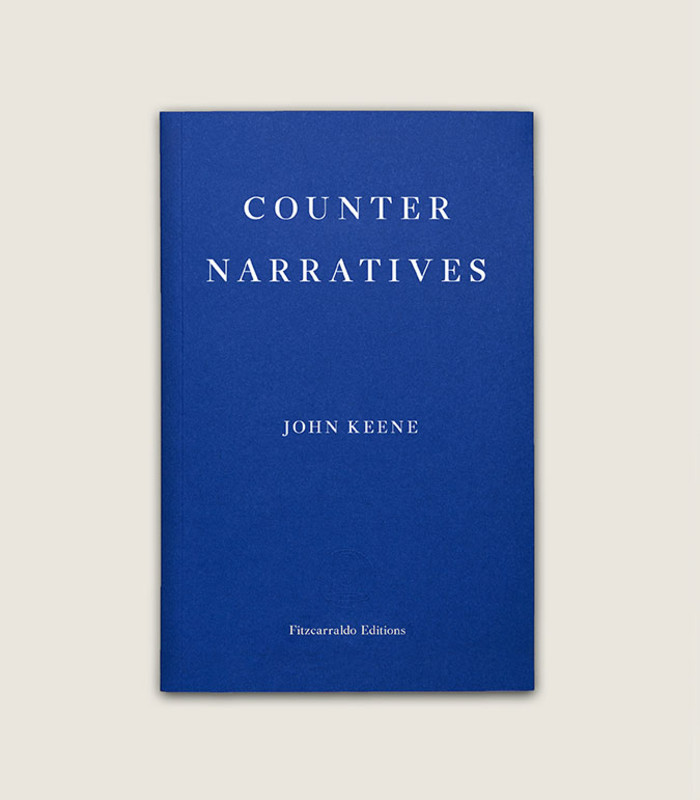
This portion set the stage for the next portion of the afternoon, which was the two sets of conversations pairing contemporary literary and cultural studies scholars, and contemporary poets (though Evie Shockley is also a major scholar in her own right). Radiclani Clytus, a filmmaker, critic and assistant professor of English at Brown University and I began, with Radiclani posing some thoughts about my work, both older poems that directly treated the theme of slavery (I had dug them up for him), leading into a discussion of some of the pieces in Counternarratives, in which slavery and its aftermath is not only thematized in multiple ways, but narrativized and dramatized in half the stories. Radi is as sharp as a laser and kept me thinking on my toes, creating a free-wheeling back and forth. It was easily one of the most enjoyable public conversations I've had in years. I wish it were possible to participate in public discussions like this, with Radi and others, more often.

Tyehimba, reading one of his
syncopated sonnets

Next came Evie, a renowned poet and scholar of poetry, who teaches at Rutgers-New Brunswick, and Meta DuEwa Jones, an acclaimed scholar who teaches at Howard University. Evie and Meta talked about Evie's work, beginning with Evie reading one of her formally and linguistically experimental poems that allowed them talk in and around the notion of the cut--"how does tight, taut form work in relation to damage, monstrous intimacy" (citing Christina Sharpe's brilliant work here)--and so much more. Along the way, Stowe's "Topsy," critics Sylvia Wynter and Alex Weheliye, legal tender, Toi Derricotte, the confluence of multiple heritages, histories and herstories, and M. Nourbese Philip's Zong all arose in the course of their back-and-forth.

Tyehimba, reading one of the poems
that adapts the ghazal form
Tyehimba Jess concluded the events, delivering the keynote presentation, introducing and then reading a series of poems, many dealing with historical figures who emerged during and shortly after the Civil War period, such as Blind Tom, Black Patti, and the McCoy Twins, from his forthcoming collection Olio. His new work, following formally from the inventive, innovative aesthetic vision in his award-winning first collection Leadbelly, includes a number of poems using innovative forms, among them what he has labeled "syncopated sonnets," which incorporate multidirectionality and improvisation into their formal structures, which is to say, multiple possibilities for reading (up-down, across from top to bottom and the reverse, skipping diagonally between lines, and so on) left up to the reader-performer, and Jess did so with panache. He also read poems that adapted the ghazal (and Golden Shovel) form, again showing how the poems themselves suggested certain performativities and how he, as the author and reader, improvised on those, creating at certain points what felt very much like the blues and at others like hip hop. No one does it like Jess!

It was a scintillating afternoon and evening, and I want to thank Doug, Gabrielle and Ivy, and Radiclani, Meta, Evie and Jess, as well as my sister campus in New Brunswick again! And as we said, we have to do this again--soon!


Saturday, October 20, 2007

Black Arts Movement in Chicago + Jordan & Jess at Poetry Center

This fall, the university has been especially lucky to have Ed Roberson as the Visiting Writer in Residence at the Center for Writing Arts, an autonomous division headed up by my distinguished colleague, author Reg Gibbons. Ed's residency is a huge deal, as the Center infrequently invites poets, and in the past (before Reg's tenure) seldom (never?) had a writer of color for a full quarter. (Mary Ann Mohanraj will be in residence in the spring.)

Ed, whom I think of as a sage, is teaching two classes, and as part of his visit and the courses, he planned a one-day conference on the Black Arts Movement in the Broader Legacy of the Civil Rights Movement, with special emphasis on its history in Chicago. The event brought three of the central figures from the Chicago branch of that movement, writers Angela Jackson, Carolyn Rogers, and Sterling Plumpp, to campus to talk about their experiences as poets and activists. (This was pretty significant in that Chicago, where the Organization of Black American Culture (OBAC), was established in 1966, was an important center for Black Arts poetry and the Black Power movement--one of the key Black Panthers branches was in the city; Fred Hampton and Mark Clark were assassinated in a joint FBI Cointelpro-Chicago Police Department assault in 1969--and yet it is often passed over in scholarly and artistic discussions on this topic.) In addition, Ed invited his friend Sala Udin, who took many of the ideas he'd gained in the movement back to his hometown of Pittsburgh, where he's been an actor in the plays of his friend and fellow poet, and later one of the greatest American playwrights, August Wilson, while also serving as a city councilor and arts and community activist. One of his successes is Pittsburgh's August Wilson Center for African American Culture.

Hearing the speakers talk about the history of the movement in Chicago filled in so many gaps in my knowledge. All spoke of the crucial roles that Gwendolyn Brooks and Hoyt Fuller played in encouraging artists, artmaking and activism. Sterling Plumpp's comments about his friendship and work with Dennis Brutus, then teaching at the university, and the relationship between African-American and South African poets, who were battling for freedom and an end to the oppressive apartheid system, was revelatory. He spoke at length about the intricacies of Left-politics and how these played a role in the positions people took, both in terms of the Black Arts movement members and the African National Congress. (I sometimes have to remind myself that at one point, Brutus, Jan Carew, and Leon Forrest all taught at the university--but simultaneously? I think of this constellation of Black creative writer-intellectuals with considerable awe.) Plumpp also noted that he wished he and others had taken on the issues of gender and sexism, and, as he put, "gender and sexual choice" (I think I transcribed that right) more forcefully. This led one of Ed's students, who prepared an excellent overview of the movement, to ask the panelists about their feelings on Fuller, who was gay, and despite the extremely problematic nature of the term "sexual choice," they all argued there was no hostility towards Fuller (who, Jackson noted, most did not know was gay), nor homophobia among any of them.

Concluding the event, my colleague Alex Weheliye gave a brief yet thorough response to the talks and panel discussion.

Ed Roberson introducing the speakers (Sam Greenlee and Sterling Plumpp are the two poets in the foreground)

Angela Jackson, offering a history lesson on the Black Arts Movement in Chicago

Carolyn Rogers, who Ed characterized as a "metaphysical" poet, talking about her experiences with the local poets

Ed, and the panelists (Rogers, Salah Udin of Pittsburgh, Jackson, Plumpp)

My colleague Alex Weheliye, who gave a fitting response

***

In addition to slipping in briefly to today's late afternoon conversation between Haki Madhubuti and Sonia Sanchez, whom I could listen to for hours (and who was one of the best workshop leaders I ever had) at Chicago State University's annual Gwendolyn Brooks Conference, I went to hear two poets I admire tremendously, A. Van Jordan and Tyehimba Jess, present their work this past Wednesday at the Poetry Center of Chicago's reading down at the School of the Art Institute of Chicago. It was a rainy night, I'd had a long day, and it took forever to get downtown from Evanston, and parking is scarce downtown, but I did get to hear Van and spend some time with both poets, as well as Tasha Tarpley and Toni, who brightens any room she enters. Cue the photos:

Van on stage, Jess in the foreground

Van answering a question from Francesco of the Poetry Center

Jess and Toni

Van signing books