Showing posts with label Tayari Jones. Show all posts

Wednesday, February 07, 2018

Tayari Jones' Novel Oprah's Book Club Pick + Elizabeth Alexander To Lead Mellon Foundation


A million congratulations to my Rutgers-Newark colleague Tayari Jones, on the publication of her new, fourth novel, An American Marriage, now out from Algonquin Books of Chapel Hill! Tayari's novel has been receiving rapturous reviews (Entertainment Weekly, LA Review of Books, New York Times Book ReviewSFGate, and USA Today, to name a few) since its appearance, as well as praise from readers on Amazon, Goodreads, and elsewhere. To add to the excellent news, Oprah Winfrey selected An American Marriage as her newest Oprah's Book Club pick, which she announced on CBS Morning News yesterday morning.

Tayari on CBS, as Oprah announces
her book as its newest Book Club selection

Oprah has said of the book, "I have to tell you, it is intriguing. It's a love story that also has a huge layer of suspense. And it's also so current and so really now that I could not put it down and I've already passed it on to lots of my friends and so I know – certainly believe – that you're gonna love it." On her website, Tayari, a writer of numerous gifts, offers a summation of An American Marriage:

Newlyweds, Celestial and Roy, are the embodiment of both the American Dream and the New South. He is a young executive and she is artist on the brink of an exciting career. They are settling into the routine of their life together, when they are ripped apart by circumstances neither could have imagined. Roy is arrested and sentenced to twelve years for a crime Celestial knows he didn’t commit. Though fiercely independent, Celestial finds herself bereft and unm oored, taking comfort in Andre, her childhood friend, and best man at their wedding. As Roy’s time in prison passes, she is unable to hold on to the love that has been her center. After five years, Roy’s conviction is suddenly overturned, and he returns to Atlanta ready to resume their life together.

I have had the pleasure of hearing Tayari describe the book as she was writing it over the last few years, and have now purchased my copy and intend to dive into it very soon! I also expect the praise to continue and prizes to shower this book too. CONGRATULATIONS AGAIN, TAYARI!

You can purchase a copy of An American Marriage here!

***

Elizabeth Alexander
Yesterday brought more good news: poet, scholar, critic, and generally extraordinary person Elizabeth Alexander has been named the next head of the Andrew W. Mellon Foundation! Elizabeth will assume the Mellon presidency in March 2018, replacing Earl Lewis, who has served since 2013. Currently she is the Wu Tsun Professor in the Humanities at Columbia University, and had served as Director of Creativity and Freed Expression at the Ford Foundation. Before this, she was the Frederick Iseman Professor and had previously held the post of Thomas Donnelley Professor and chaired the African American Studies Department at Yale University, where she taught for 15 years. At the Ford Foundation, Elizabeth "co-designed the Art for Justice Fund, a $100 million fund seeded by philanthropist Agnes Gund to transform the criminal justice system and all of its inequities through art and advocacy."

At Mellon, Elizabeth will preside over a foundation that has long been dedicated to work in the humanities and culture, particularly the liberal arts, from supporting scholarship to scholarly publication to the training and development of future educators, as well as considerable work in the museum world. It will be fascinating to see how her interests, as someone who has long promoted equality, social justice and civic participation in the arts and humanities intersects with Mellon's current agenda, and how she as its leader will guide and develop its focus. Inside Philanthropy offers five to consider in terms of Elizabeth's new tenure. Key will be defending not just the humanities, but universities and higher education in general, from those on the right and, to a different degree, from some critics on the far left. As Elizabeth notes, "The value of free expression, of arts and culture, is not something that’s always shouted from the rooftops, right now."

Elizabeth is one of the major American poets, serving as a Chancellor of the Academy of American Poets, as well as on the boards of the Pulitzer Prize and the African Poetry Book Fund. She also is a prolific author and critic. In 2009, she was President Barack Obama's first inaugural poet, her poem captured in the volume Praise Song for the Day. Her 2015 memoir The Light of the World, a powerful tribute to her late husband Ficre Ghebreyesus, which was a 2016 finalis for the Pulitzer Prize and the National Book Critics Circle Award. She is also the author of six books of poetry, including The Venus Hottentot, Body of Life, Antebellum Dream Book, American Sublime, and Crave Radiance: New and Selected Poems. She also has penned two collections of critical prose, The Black Interior and Power and Possibilities: Essays, Reviews and Interviews, as well as a book for children, with Marilyn Nelson, entitled Miss Crandall's School for Young Ladies and Little Misses of Color.

Congratulations to Mellon for making this superlative choice, and CONGRATULATIONS, ELIZABETH!

Monday, June 23, 2014

"Mannahatta" Cited in HuffPost + Colleagues' & Students' Honors

A contemporary illustration showing Juan Rodriguez (holding pan)
establishing a trading post with Native Americans
on Manhattan Island in 1613. (Copyright © 
Charles Lilly Art
 and Artifacts Division, New York Public Library,
Schomburg Center for Research in Black Culture)
You never know what may appear in your email inbox, but unexpected good news is, at least for me, always welcome. I recently received some when Sandi Wisenberg, longtime co-director of Northwestern's graduate MA/MFA program, and literary advisor to TriQuarterly, wrote to say that my story "Mannahatta," which appears in Triquarterly'Issue 145, Winter/Spring 2014, was selected by Maddie Crum, for her Huffington Post list, "Read 15 Amazing Works of Fiction in Less Than 30 Minutes." With all the stories she quotes the opening line, and all are brief enough to take in, well, under half an hour. I'm always glad when my work merits some public acknowledgement, but I'm doubly happy that this story was name-checked, because I wrote it last fall, in the midst of demanding teaching (the writing-and-reading intensive undergraduate "Introduction to Literary Studies") and administrative duties (as acting Chair of African American and African Studies), and because it tells a far too little known story, about the histories of the African Diaspora and of New York.

When I read the story at Rutgers-Newark last winter during an event with my colleague Rigoberto González, I noted that doing so represented a personal and public 400th anniversary tribute to the story's protagonist, Juan (Jan) Rodríguez (Rodrigues). I hope the story whets readers' appetites for the rest of the collection, and for learning more about the rich and complex histories of our country; as was the case with Juan Rodríguez's story, "Mannahatta" is but the beginning.

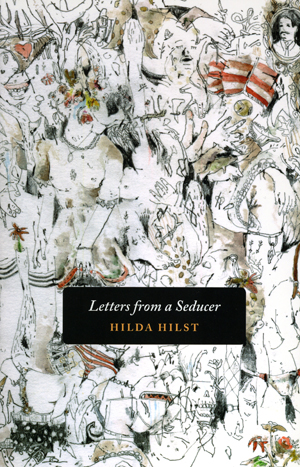
UPDATE: I just saw on Facebook that Entropy, "a new website featuring literary & non-literary content," selected the translation of Hilda Hilst's Letters from a Seducer for its "Ultimate Summer Reading List." It's a wild ride, that will definitely take you places you usually don't venture in contemporary American literature! Definitely check out their list of other summer must-reads, by writers such as Hugo Ball (translated by Catherine Schelbert), Anne Carson, Joshua Corey, Hervé Guibert (translated by Nathanaël), Ray JohnsonDouglas Kearney, Kevin Killian, Édouard Levé (translated by Jan Steyn), Fred Moten, Sawako Nakayasu, Alejandra Pizarnik (translated by Yvette Siegert), and others.

***

I work with truly extraordinary people who regularly receive honors of all kinds, so I thought I'd mention a few of the literary awards and citations they've received (this is not comprehensive and I surely will be missing something). Rigoberto, whom I mentioned above, received this year's Lambda Literary Award for Best Gay Poetry, for his collection Unpeopled Eden (Four Way Books, 2013). His beautiful collection was in one of the tightest competitions, with poetry books by Frank Bidart, Rafael Campo, David Groff, Randall Mann, Carl Phillips, and Brian Teare all in the running. Rigoberto also was a finalist for the Publishing Triangle's Thom Gunn Award for Best Gay Poetry for Unpeopled Eden, and was just named a full Professor of English.

Tayari Jones was one of the writers selected by Edwidge Danticat for Elle Magazine's "12 Great Female Authors Recommend Their 40 Favorite Female Authors," and O, The Oprah Magazine, chose her 2011 novel Silver Sparrow as one of its 2014 Summer Reads. Underlining these selections, back in April Flavorwire picked Silver Sparrow as one of its "50 Best Southern Novels Ever Written."

Akhil Sharma recently published his second book, Family Life (W. W. Norton, 2014), and it has received consistently high praise, including being featured on the front page of the New York Times Book Review.

RN MFA Program Director, Jayne Anne Phillips, whose stories in Black Tickets I first remember reading with excitement around the time I joined the Dark Room Collective, saw her 2013 novel Quiet Dell (Scribner), which has received stellar reviews, named one of the "Top 10 Fiction Books of 2013" by the Wall Street Journal, one of the Best Books of 2013 by the notoriously tough Kirkus Reviews, and one of last year's best books by The Saint Louis Post-Dispatch.

Finally among my colleagues--and I probably have left out something--one of the newest arrives with a particularly high honor: A. Van Jordan, a poet I've known and admired for many years and a fellow Cave Canem Graduate Fellow, will be RN's first Henry Rutgers Presidential Professor, joining the English department and MFA Program in Creative Writing this fall.

Among my students, one who received his RN MFA last year, Vincent Toro, and another whom I had the great pleasure of teaching a few years ago during her undergraduate study in creative writing, Jeannie Vanasco, received 2014 Poets House Emerging Poets Residencies. I was away so I was unable to attend their residency reading earlier this month, but both are writers to watch, and not just for their poetry. Vincent is an accomplished playwright whose plays have been staged around the New York-New Jersey metropolitan area, and Jeannie is a talented nonfiction writer who is currently working on a book that I can foresee garnering a good deal of acclaim.

Lastly, Drew Ciccolo, who received his RN MFA this year and who will begin the RN PhD program in American Studies this fall, has won Talking/Writing's Nonfiction Contest with his very fine piece "Paige." Drew was also one of 10 MFA students from across the US who had a story--"The Behemoth"--selected as a finalist by The Masters Review.

A hearty congratulations to all of them!

Sunday, December 09, 2012

Random Photos

One more week of classes to go, and the fall semester, my first at Rutgers-Newark, will conclude. At times it has felt like it passed in an eyeblink, at others as slowly as a glacier, but the disruption of Tropical Storm Sandy scrambled things sufficiently enough that it has really been like no other teaching experience save my first semester at Brown, in the fall of 2001, when 9/11 took place. That horror launched the term and shadowed the rest of the year; this event divided it into two halves, with the ripples still drawing faint but perceptible circles. I reckoned the new position, new classes, new students, and new programs would all require a considerable amount of work and I wasn't wrong; one casualty has been my blogging here. There are days when I ask myself how I ever managed, amidst all the work at Northwestern, to nearly meet my 365-day project total back in 2005-6, and I realize it was mostly determination and madness. Short of both, it often feels like a miracle if I can get to this blog once a week, if at all. Taking photos (awful as they are) is easy, though, so here are a few photos from recent weeks. Enjoy.

Jim Goodman, Tayari Jones, Nick Flynn
The final Writers at Newark reading of the fall:
MC Jim Goodman with readers Tayari Jones, and Nick Flynn
Pallets with replacement parts of Exchange Place elevators
Replacement parts on pallets in Exchange Place Station
Night, NYC
On 7th Avenue
Sample sale, NYC
A sample sale, on 14th Street
Robert Reid-Pharr, me, Greg Pardlo
Before my reading at Robert Reid-Pharr's
l-r: Robert Reid Pharr, me, Greg Pardlo
(Tyehimba Jess in foreground; photo by Reggie Harris)
Park Avenue, looking south
Christmas tree sales
Christmas Tree street market
9/11 Memorial Preview site
The 9/11 Memorial Preview Site (with the endless lines)
Midtown, NYC
On 6th Avenue, in Midtown
Sample sale, 14th St.
Alex Bittar sample sale, pop-up store, 14th Street
Meatpacking district, by night
14th and 9th, Meatpacking District
Rag & Bone sample sale
Rag & Bone sample sale, Chelsea Market
At NBC Studios, NYC
NBC Studios, Midtown
Rockefeller Center Holiday tree, decorated and mobbed
Rockefeller Center Christmas tree, fully decorated (and mobbed)
Google's NY HQ
Google's New York Headquarters, Meatpacking district
9th Avenue, NYC
Chelsea Market, 9th Avenue
Pre Art Basel Miami posters
Offensive Art Basel Miami sign
7th Avenue, Midtown
Ticker-tape diode, 7th Avenue
#payphoneography
#payphoneography
Downtown JC, at night
Somnolent Jersey City street
Park Avenue, looking South
Park Avenue, with MetLife Building in the background
Full moon over JC
Full moon over Jersey City
At David's Party in Bkyn
At filmmaker David Moore's (standing at right) birthday party in Brooklyn

Thursday, November 12, 2009

Ernest Hardy Interviews Sapphire + Tayari Jones & Breadmaking

Yesterday I mentioned the author Sapphire, from whose novel Push director Lee Daniels created his new film Precious. Journalist, critic and critical thinker Ernest Hardy posted an interview with Sapphire yesterday on his blog, Blood Beats. It's excerpted, he says, from a longer version that appears in LA Weekly, which he writes for, and from an extended conversation that he and Sapphire had. It's definitely worth reading.

***

Continuing on the Precious tip, Tayari Jones recently noted on her blog that the controversy swirling about the film had gotten to her so much that she decided to bake a 7-Up pound cake--and she posted the recipe on her blog. (I am going to have to try it.) It looks delicious enough to calm anyone facing anything.

(BTW, Congratulations to Tayari also for having her new novel picked up by Algonquin Books!)

I can't claim similar grounds for my baking, but I do look forward to any excuse to create a loaf of bread. I don't know what is going on with this bread-baking mania, but I really enjoy doing it, and it really calms me down. I did finally make one of the bread recipes Miriam sent, for Irish soda bread--and then turned what was left of it into bread pudding with chocolate that was one of the best desserts I've made in some time. But before I post that, I'm going to post the basic bread recipe from which almost any standard loaf can be made.

I should add that a number of people I know either can no longer eat bread--at least store-bought bread--or deign to for dieting purposes, but I wonder if this homemade bread has the same effect. Recently when we had gone through several micro-sized baguettes I baked C bought some bread from Calandra's Bakery, and it molded after about 4 days (!?), while other store-bought bread--baguettes, Italian bread, etc.--turns to stone if left out of the refrigerator. The bread I bake 1) usually keeps for a week without mold if not refrigerated; 2) retains its flavor for weeks, even if refrigerated; and 3) maintains its consistency as well. I wrote to Calandra's to let them know about their bread, but I got a very terse, robotic response from some PR person, so if you're in northeastern New Jersey and shopping for what you think is homemade-style bread, you've been forewarned.

The Basic Recipe

I adapted my basic recipe from Mark Bittman's New York Times "no knead" recipe. It's a better bet than his book, How to Cook Everything, which is excellent but unaccountably uses "pounds" instead of "cups" for the basic recipe, which causes unnecessary confusion. There are several keys to getting consistently good bread with this recipe, I've learned. First, you should always use rapid-rise yeast. Second, mix the flour in a glass bowl, then cover it with a plastic shopping bag (which increases the heat and moisture in the bowl and yeast growth) held in place by a rubber band--it's far more effective than a loosely draped tea towel, a cutting board, etc. Third, keep the covered bowl in a warm part of your kitchen. Fourth, always use a little olive oil during the second (even if brief) knead period. It is essential to prevent the dough from sticking or burning, and it adds flavor.

Okay, so here goes. You start with:

1 packet of rapid-rise/quick-rising yeast (VERY IMPORTANT)
2 teaspoons of salt (Bittman says 1.5, but 2 give more flavor)
3 cups of bread/unbleached flour/whole wheat/rye flour
1/2 cup of pastry flour (VERY IMPORTANT)
1 1/2 cups of water (you can often use a little less but adjust according to the dough's consistency)

C figured out the pastry flour addition. It is essential because pastry flour has LESS gluten and is lighter than regular flour, so when the dough rises, it adds more air bubbles. Do not use self-rising flour, cake flour, or other kinds of prepared flours. Some combos to try are:

1) 3 cups of unbleached whole wheat bread flour + pastry flour = French/white bread
2) 3 cups of unbleached general purpose flour + pastry flour = French/white bread
3) 1 cup of stone ground whole wheat flour + 2 cups of unbleached whole wheat bread flour + pastry flour = lighter whole wheat bread (hearty)
4) 3 cups of stone ground whole wheat flour + pastry flour = fuller whole wheat bread (VERY hearty)
5) 3 cups of whole rye flour + pastry flour = rye bread (and darker than rye bread that you buy in the store--EXTREMELY hearty)

And so on. The proportions are key, and the heavier the basic flour (rye, whole wheat), the more important the pastry flour.

To start, you pour the yeast and salt in the bowl, then add the flour. I either gently stir or whisk these together to ensure that everything is well distributed. Then you slowly add the water. It may not seem to be binding into dough at first, but keep stirring and folding it, with a wooden spoon (you could use your fingers as well), and you will see that it starts to become shaggy, then more of a ball. I suggest not adding all the water if you can; you don't want the dough to be a wet mess, just moist. If it's too wet, then add a little more flour. But if it appears too dry after you'd added the suggested amount of water above, then add a little bit more water so that you can at least pull it from the sides of the glass. Create a little ball, and then cover it with a plastic bag (the basic supermarket ones are great), holding it in place with a rubber band. You don't want any air to get in or out. Let it sit for 3-4 hours. You could create it in the morning before work, and it'll be ready when you get home. It also can sit for longer (6-7 hours, etc.).

NOTE: Rye bread does not rise as much as other kinds of bread. Bittman says it barely rises at all, but with the pastry flour, mine does expand a bit. So don't be dismayed if it doesn't puff up like wheat/white bread.

After the dough has sat for the necessary amount of time and risen (you will see it double or sometimes triple in size), you want to pull it out and on a clean, lightly oiled (olive oil) cutting board, press it down and fold it into itself several times. I always do this by hand. Do not overknead it, but perhaps turn it into itself about 10 or so times. This is the stage at which you can add raisins, nuts like pecans, walnuts and pignoli, olives, herbs like rosemary or chives, garlic, chunks of sun-dried tomato, anything. I have tried many of these. The key is to make sure they're not oily or wet (so wash the pitted olives well and dry them). When you've kneaded or added ingredients and kneaded the dough, form it into another ball and return it to the plastic bag-covered bowl. Let it sit and rerise for another 1/2 hour. (You could let it sit for longer if you like, but usually 1 hour max is great.)

Now comes another important step. As the bread is rerising, you should turn the oven on and set it to 450°. If it takes your oven a while to warm up, start as soon as you return the dough to the bowl. If it warms up quickly, you can do this about 15-20 minutes before you bake the bread. You want the oven HOT, though, when the bread goes in. About 10-15 minutes before you bake the bread, you should put whatever you're baking the bread in or on--an ovensafe covered crock/French pot, a baking sheet, a bread stone--into the oven so that it warms too. I either use a covered crock pot or a baking sheet, depending upon the bread I'm making. Neither needs to be oiled because you've already oiled the bread, and loose oil in a crockpot or on a baking sheet will begin to smoke...bad news!

When the bread has sat for at least 1/2 hour and rerisen, remove the plastic-bag cover. Then remove the crock pot/baking sheet/bread stone and set it atop your stove. You should carefully place the rerisen dough into the crockpot (and cover, to keep the steam in, which will make the bread light inside and hard outside) or onto the baking sheet/bread stone. Form it into a boulle or round loaf, or stretch it out if you want a longish loaf. (For baguettes, break it into two pieces and stretch them out. Put it back into the 45o° oven and let it cook for 30 minutes. (During the baking process, you can gingerly score the top with a knife if you want to be fancy.)

If you put it in a crockpot, remove the pot top (a palindrome!) after 30 minutes, and let the bread bake uncovered for 15 more. It should be light/golden brown on top. If you cook it on a baking sheet, it will also be golden brown, but the crust won't be as hard. The trick to getting a harder crust if you bake the bread on a baking sheet is when you initially put the baking sheet in the oven, to place a pan underneath it, let it heat for a little bit, then CAREFULLY add water so that it steams. You can also spritz (or use your fingers to sprinkle) water on the hot insides of the oven and on the baking sheet to create steam. This creates a hard crust, and is essential if you're making baguettes.

Also, be VERY CAREFUL when spritzing not to splash water on the oven's light bulb. Why? Because it explodes! I can attest to how difficult it is to clean up the broken glass, and to having to throw out the bread for fear it's been pierced by glass shards. Not fun.

Remove the bread after more 15 minutes or it's browned on top. You don't want it to burn. Place it on a cutting board and let it cool to room temperature. Don't cut it right away, but let the inside cool. After about 5-10 minutes, if you want to try some with butter or olive oil, or something else, you can sample it. To keep it for a week, you just place in the same sort of plastic shopping bag you used to cover the rising dough, and let it sit out at room temperature. If your home (apt./house) is really warm, then refrigerate it after a few (2) days, but if not, it should keep for 5-7 days without refrigeration.

And that's the basic bread recipe! I'll post one for semolina bread, and one to make pumpernickel bread, very soon. Both are similar but involve a few more steps/tricks.

Some bread photos:

Olive loaf
Rye bread
Rye bread, cooled and sliced
Pumpernickel bread
Pumpernickel bread (first time--I added too much molasses, so it was too sweet and crumbly. The second time I got the amount right. Recipe coming soon!)

Two mini-baguettes

My standard pecan loaf

Semolina loafs

Bread pudding, made with leftover Irish soda and chocolate