Scrambling, between libraries, offices, cities (and states, that sit right across a river from each other) these days, so in lieu of a longer post (a few are coming), here's a link directly from Paul Krugman's "The Conscience of a Liberal Blog," on economics and the Occupy movement (let's not forget them!).
Showing posts with label Occupy Wall Street. Show all posts
Showing posts with label Occupy Wall Street. Show all posts
Wednesday, August 22, 2012


Friday, March 23, 2012
"Thinking through Collapse" @ NYU

Earlier this week Chris S. emailed notice of this year's Neil Postman Graduate Conference, which New York University's Department of Media, Culture and Communication, in the Steinhardt Graduate School of Education. This year's theme and title was "Thinking through Collapse." Since it was free and since I'm around, I decided to attend and did.
 |
| Prof. Benson, Grad students Richard, Garrett, Selimovic |
Named in honor of the department's distinguished, eponymous former and late media studies professor and cultural critic (1931-2003; he taught at NYU from 1952 until 2002, and I had the pleasure of meeting him), this year's conference proceeded from the following premise, which I quote from the conference website:
In the past year we have been confronted with many sites of present and impending collapse: the collapse of oppressive regimes in the Arab world, a global economy pushed to its limits, our own political system in paralysis, the teetering of the fourth estate, continuing environmental collapse and so on. In each of these sites, visions of apocalypse exist alongside those of renewal, inviting the imagination of new forms of organization and sustainability. In the academy, they are prompting new interdisciplinary assessments of the conditions – historical, social, political, economic, cultural, technological – that have brought us to these limits, and are forcing the question: where might we go from here?
There were several talks, panels, and a roundtable, and I stayed for most of the afternoon, the highlights of which for me were a talk by graduate student Claire Richard entitled "Politics of Fiction in Antoine Volodine's Work," which was part of the "Europe in Crisis" panel, and the keynote talk by philosopher, critic, and New School professor Simon Critchley, "Shit Is Fucked Up and Bullshit," which was quite profound despite--or rather, in keeping with--its title.
 |
| Simon Critchley giving his talk |
Richard's paper explored the writings of the pseudonymous Volodine (b. circa 1949-1950), award-winning author of more than 40 books, written as well under the names Elli Kronauer, Manuela Draeger, and Lutz Bassman, and a translator of numerous works from contemporary Russian literature. (Only two of these texts have been translated into English: 1994's Le nom des singes, as Naming the Jungle [1996], and 1999's Prix du Livre Inter winner Des anges mineurs, as Minor Angels [2000].)
Richard began by discussing how fiction might not just be political, but in its thinking through form constitute a form of politics, and went on to show how Volodine's work bore this dictum out. She began by noting its frequent inclusion of scenes set in camps and prisons, or during or after wars of various sorts. She then noted some key elements of the texts which represented Volodine's narrative method: an avowal of post-collapse worlds without revolution as a recourse not as terminal but as sites of possibility; collaging of multiple languages, linguistic registers and genres, its use of plot and character repetitions and elisions, multiple aporias, all as challenges to unified understandings of history or temporality; the inclusion, in condensed form of the entirety of 20th century European history; and the employment of memory, imagination and poetry as ways of opposing "the end." He has even coined his own name for his approach, "post-exotisme," or post-exoticism, which he wrote about in a book Le Post-exotisme en dix leçons, leçon onze (Paris: Gallimard, 1998). Hearing her account of Volodine made me want to read him, and I shall.
Simon Critchley's talk was the afternoon's highlight. Would that all talks of depth be so clear, concise and, for a philosopher and theoretician, relatively jargon-free, or explanatory in terms of the terms when needed. Drawing his title from the placard statement the Occupy Wall Street protester pictured on the conference's poster was carrying around at one point, Critchley launched into a compelling discussion of how power, the ability to get things done, and politics, the means to get things done, had become decoupled, leading to the widespread "vague, diffuse sense of fear" people throughout the West and many other parts of the world now feel, and which had profoundly delegitimated the "nation state" as the location, however imperfect, as the unity of these two major categorical concepts. In so doing this separation has also profoundly undermined the political regime through which we believe power to be based in and lie with (the) people: democracy. Instead, as anyone looking at the European crisis or our own confounding political scene realizes, power is often supranational, and under the control of global capital and finance, information, military-industrial complexes, trafficking of various kinds, and so on. Critchley noted that we still think of and act as if power is "local," but, as the situation in Greece demonstrates so aptly, sovereignty lies elsewhere. Thus the major casualty: the (nation-)state.
I won't recap Critchley's entire talk, which including a great deal of humor, musings about ancient philosophy and Greek democracy, a one-sentence summing up of the history of philosophy's key issue, and so much more, but instead jump to the conclusion, in which he contrasted "representation" with "association," using this as a way to think through the significance of the latter in relation to the Occupy movements' combination of old forms of democratic engagement, such as "assembly, consensus and autonomy" with newer technologies, from digital recording and photography to social media. He was clear about the necessity of education for "politics," and noted how the Occupiers, though criticized for having "no demands" and achieving little--ha!--were actually quite well prepared, and though in some ways autochthonous, also drew from a deep well of resistant political organization and assembly, both within US history and outside. (I thought immediately of the Highlander Folk School and its important, often forgotten role in the Civil Rights movements of the mid-20th century.)
Critchley, a self-described Gramscian, stated that politics is about "articulation" and the "formation of fronts," and pushed towards the question of an "articulation" between political representation in the conventional sense and the Occupy assemblies, though he was careful not to place too much emphasis on the former, having been a former Labour activist in the 1980s and 1990s, only to witness the triumph of the neoliberal, neoconservative British Prime Minister Tony Blair. Politics requires, Critchley said, a demand flowing from a feeling or need for something; and a location, a "terrain where that politics is to be articulated." Association, which he called the key signifier, and present in the work of Rousseau and the later Marx, might be the generator of such a politics rather than representation, though without a location "we're doomed to the abstraction of protest." But locations, spaces, places, often are unanticipated, as Zuccotti Park proved last year. When Wall Street itself was closed off, the park became the locus of association, and as he pointed out, when people know the location or sense it, their (our) association means something.
I was very glad that he cited the Million Hoodie March for Trayvon Martin as part of this; I think about how the rage and frustration about the aftermath of this young man's murder has been building, but with the rally and march beginning in Union Square, one of the key historic sites in American history for public protest and the articulation of various kinds of politics, the protest had a national and symbolic location that the media could not ignore, though they tried to minimize it, as with the Occupy Wall Street and other protests, and as marches in Florida, Philadelphia, and elsewhere are demonstrating, it is compelling the speech and action of those with power, the President, the Justice Department, authorities in Florida, and so on.
I'll conclude by noting that this was the first conference I've ever attended wherein a question and answer session arose out of democratic consensus on how it might be structured. We had the choice of breakout groups or the General Assembly method of stacking comments, and we chose the latter. People spoke, someone kept a tally of who commented, preference went to those without permanent faculty positions, students, university staff, non-academics; and then Critchley responded to the comments in graceful fashion, without antagonism and taking into account the concerns of all who offered thoughts or questions. He urged that those on the left assume the temporality of the long durée as opposed to immediate results (as, I thought to myself, the right have done my entire lifetime) and accept a "refusal of the future," while still fighting for concrete changes in the here and now. He noted that we also should not ever underestimate the "presence of bodies in space," bodies together, in locales like Zuccotti Park or, as I could attest, marching down Michigan Avenue to protest Proposition 8, or through Washington, DC back in 1990s, and so on.
Though we often and rightly think of politics as a mediat(iz)ed spectacle, we should not forget the "excitement of bodies in space," the "pleasure of performing as bodies together." Again, I could point to the power of this just yesterday. He also talked about the paradox of visibility, and how some activists were seeking, in the face of steadily waxing surveillance and panopticism (he didn't use this word, but I immediately thought of it), to secede from visibility while still engaging in association, to achieve even partial modes of anonymity, an increasingly difficult prospect today. He ended with a point that Mohandas Gandhi or Rev. Dr. Martin Luther King Jr. would have made many times over: "Acting peacefully, in concert, anything is possible."
 |
| Yvonne Garrett (l), talking about Irish artistic responses to the collapse |
As so often when I hear a brilliant talk or reading or have an enlightening conversation, I left the conference--which included a final roundtable discussion with several of the graduate students, very energized--somewhat dazzled, unable to stop thinking about the possibilities before us. As always too, I wished that these sorts of conversations, especially in such a clear and compelling form as Critchley engaged in his, were available to the widest array of people out there, people outside academe, though events all over the world have made clear that these ideas are circulating in varying forms. I also wish that there were more people of color in particular at this event, though I took into account how the program possibly developed, which is to say, who is in the graduate pipeline at NYU or similar institutions. Still, I wish a far more diverse group of people were having such conversations inside academe as well as outside it. That is an ongoing struggle as I can attest from my own experiences and those of many I know.
Those criticisms noted, we have seen more than enough "Collapse": of politics and political structures; of global capitalism; of our ability to challenge or arrest supranational agents; of our psyches, of language and nature (think ecocide) themselves. Yet we are not without power, or possibility, and we must not surrender them. Even if we lose the fight, we still possess them, in multiple forms, modes, ways, especially when we come and are together, and we must never forget that.
Saturday, November 19, 2011
Occupy: Images Worth 99% of 300 Million's Words
"A picture shows me at a glance what it takes dozens of pages of a book to expound." - Ivan Turgenev, Fathers and Sons, 1862
Tuesday, Police assault on Zuccotti Park
Yesterday, Police attack on peaceful students at the University of California, Davis
UC Campus Police pepper-spraying peaceful students
Tuesday, Police assault on Zuccotti Park
Yesterday, Police attack on peaceful students at the University of California, Davis
UC Campus Police pepper-spraying peaceful students
 |
| UC Campus Police Pepper-spraying peaceful students |
Today, Newt Gingrich: "Go get a job right after you take a bath."
Why are people protesting? Why can't they "get a job," Newtie?
Jesse LaGreca, on This Week, with Christiane Amanpour
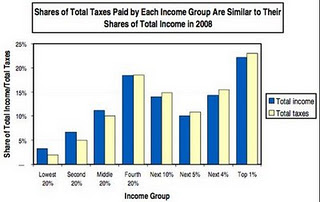
In case they still don't get it, some facts:




Tuesday, November 15, 2011
Human Micropoem 2 @ OccupyChicago
The Human Micropoets met up again, this past Friday, on Veterans Day, for another round of HUMAN MICROPOEM public poetry recitation, in support of the Occupy Chicago and Occupy Together movements. This time the organizers aimed to convene performers during rush hour, in part to reach the large number of workers finishing their day near and those commuting past the base site. The crowd was, unsurprisingly, larger, and as before, passersby did stop and listen, watch, and sometimes participate in the "mic checking" collaborative poetry recitations. I read/recited Robert Hayden's "Those Winter Sundays," which sounds quite different in call-and-response, choral fashion. "What did I know, what did I know / of love's austere and lonely offices?" What did we know, what did we know, of the bravery and resolve of hundreds of thousands of Americans and people all over the globe, to stand up to the economic, political and social thuggery to which we've been subjected for decades?
Afterwards, a number of the participants marched with the Occupy Chicagoans on a silent vigil to the Vietnam Veteran Memorial Site, on Wacker Drive, to show respect for and pay tribute to all US veterans being honored on Friday. The walk, with candles, to the site, was moving, and afterwards I chatted a bit with poet Dan Godston, before heading off to catch up with a friend who was visiting town. I look forward to more such gatherings, and to poetry's and the arts' active interconnection with these incredibly important and vital nodes of resistance to the dominant ideology of today, which has caused and continues to wreak so much destruction in this country and across the globe.
Afterwards, a number of the participants marched with the Occupy Chicagoans on a silent vigil to the Vietnam Veteran Memorial Site, on Wacker Drive, to show respect for and pay tribute to all US veterans being honored on Friday. The walk, with candles, to the site, was moving, and afterwards I chatted a bit with poet Dan Godston, before heading off to catch up with a friend who was visiting town. I look forward to more such gatherings, and to poetry's and the arts' active interconnection with these incredibly important and vital nodes of resistance to the dominant ideology of today, which has caused and continues to wreak so much destruction in this country and across the globe.
 |
| A performer at the Human Micropoem event @ OccupyChicago |
 |
| A performer at the Human Micropoem event @ OccupyChicago |
 |
| Organizer Jen Karmin, in plum hat and wearing sign |
 |
| After the Human Micropoem event @ OccupyChicago |
 |
| A photographer capturing a resistor, with sign, @ OccupyChicago |
 |
| People before the silent candlelight march began |
 |
| The first portion of silent marchers |
 |
| Marchers on Wacker Drive |
 |
| Marching |
 |
| Glittering downtown Chicago and the Chicago River |
 |
| Gathering at the Vietnam Veterans Memorial |
 |
| A veteran |
 |
| "I KNOW WHO I SERVE" |
 |
| The candles lined up in tribute, at march's end |
Monday, October 31, 2011
Happy Halloween + HUMAN MICROPOEM @ #OccupyChicago
HAPPY HALLOWEEN!
Be safe and have fun if you trick & treat tonight!
***
(Since Shakespeare didn't create the word and apparently no one else has either*, I am going to: embogment. That is my state these days. In a bog of competing deadlines, responsibilities, layers of materials to read--and thus, the paucity of new blog posts. It's always hard to convey how the quarter system's pace creates ever new layers of tasks more quickly than some of us can tackle them, but so it is. Nevertheless before another week passes, I wanted to post some entries, so here is one, and as I complete the stubs for the prior ones, I'll post those too. - *Of course this word already exists in English, as quick Google search suggests. P. J. O'Rourke of all people has already employed it.)
Yesterday I temporarily broke my weeks-long engagement with (reading and marking up) fiction and joined some local poets who were reading at the Occupy Chicago main site, on the corner of Jackson and LaSalle Streets, across from the Federal Reserve Branch of Chicago. Dubbed The Human Micropoem, after the Human Microphone approach that Occupy Together protesters have adopted across the country, the gathering, organized by Jen Karmin and Laura Goldstein, drew a decent number of participants, among them the longstanding Occupy Chicago resisters, who for over a month now have been standing their ground, leading rallies and marches, and calling attention to the many gross economic and social disparities that the current Global Economic Depression has only magnified.
The organizers invited readers to bring poems to read--and be human miked aloud--of no longer than 5 minutes. As with any human microphone, the speaker says a line and everyone who can hear it repeats it, roughly in unison. The call and response choral form has the effect of making the words of any statement linger in the mind, and the effect of hearing so many different types of voices speaking- the musical and rhythmic lines of the poems together, sometimes altering based on what was heard and misheard, was multiply resonant for me, not just aurally but at times emotionally. The repetition gave each line weight, but also made the pieces, no matter whether they were prosy or more conventional in their poetic form, comprehensible, and, as I noted, the amplification and harmonization increased their power.
I arrived a little late. Other local writers, artists and activists present, some of whom may or may not have read, included Jen, Laura, Andrew Cantrell, Lina ramona Vitkauskas, John Wilkinson, Kurt Heintz, Braden Coucher, Eric Elshtain, Barbara Barg, Daniel Borzutzky, Larry Sawyer, Chris Gallinari, and Jen Besemer. I was, I believe, the last to read and did not present one of my poems but instead chose Carl Sandburg's "I Am the People, the Mob," because of its appropriateness on many levels. Interestingly even though I mentioned Sandburg before I began, several people afterwards wanted to know about "my poem," so I directed them to the behemoth Google so that they could find it online. I think it, Sandburg, and all the late, past great poets of labor should be invoked as often as contemporary ones are, as often as possible, particularly during rallies and marches. Their words are important and vital today as when they wrote them, and when channeled through human microphones as Human Micropoems, they recapture, even if for a second, the worldly and otherworldly power that words had for our oral ancestors and still have for our mostly oral peers.

Jen Karmin (in the plum cap and coat) beginning to read, as a participant walks to the poem's music

One of the poets reading

Another poet reading

Some of those present

After the reading, the Occupy Chicago announcements
An important message (even though these days it often seems to be a foregone conclusion, to quote Shakespeare)
Be safe and have fun if you trick & treat tonight!
***
(Since Shakespeare didn't create the word and apparently no one else has either*, I am going to: embogment. That is my state these days. In a bog of competing deadlines, responsibilities, layers of materials to read--and thus, the paucity of new blog posts. It's always hard to convey how the quarter system's pace creates ever new layers of tasks more quickly than some of us can tackle them, but so it is. Nevertheless before another week passes, I wanted to post some entries, so here is one, and as I complete the stubs for the prior ones, I'll post those too. - *Of course this word already exists in English, as quick Google search suggests. P. J. O'Rourke of all people has already employed it.)
Yesterday I temporarily broke my weeks-long engagement with (reading and marking up) fiction and joined some local poets who were reading at the Occupy Chicago main site, on the corner of Jackson and LaSalle Streets, across from the Federal Reserve Branch of Chicago. Dubbed The Human Micropoem, after the Human Microphone approach that Occupy Together protesters have adopted across the country, the gathering, organized by Jen Karmin and Laura Goldstein, drew a decent number of participants, among them the longstanding Occupy Chicago resisters, who for over a month now have been standing their ground, leading rallies and marches, and calling attention to the many gross economic and social disparities that the current Global Economic Depression has only magnified.
The organizers invited readers to bring poems to read--and be human miked aloud--of no longer than 5 minutes. As with any human microphone, the speaker says a line and everyone who can hear it repeats it, roughly in unison. The call and response choral form has the effect of making the words of any statement linger in the mind, and the effect of hearing so many different types of voices speaking- the musical and rhythmic lines of the poems together, sometimes altering based on what was heard and misheard, was multiply resonant for me, not just aurally but at times emotionally. The repetition gave each line weight, but also made the pieces, no matter whether they were prosy or more conventional in their poetic form, comprehensible, and, as I noted, the amplification and harmonization increased their power.
I arrived a little late. Other local writers, artists and activists present, some of whom may or may not have read, included Jen, Laura, Andrew Cantrell, Lina ramona Vitkauskas, John Wilkinson, Kurt Heintz, Braden Coucher, Eric Elshtain, Barbara Barg, Daniel Borzutzky, Larry Sawyer, Chris Gallinari, and Jen Besemer. I was, I believe, the last to read and did not present one of my poems but instead chose Carl Sandburg's "I Am the People, the Mob," because of its appropriateness on many levels. Interestingly even though I mentioned Sandburg before I began, several people afterwards wanted to know about "my poem," so I directed them to the behemoth Google so that they could find it online. I think it, Sandburg, and all the late, past great poets of labor should be invoked as often as contemporary ones are, as often as possible, particularly during rallies and marches. Their words are important and vital today as when they wrote them, and when channeled through human microphones as Human Micropoems, they recapture, even if for a second, the worldly and otherworldly power that words had for our oral ancestors and still have for our mostly oral peers.
Jen Karmin (in the plum cap and coat) beginning to read, as a participant walks to the poem's music
One of the poets reading
Another poet reading
Some of those present
After the reading, the Occupy Chicago announcements
An important message (even though these days it often seems to be a foregone conclusion, to quote Shakespeare)
Monday, October 10, 2011
Occupy Chicago + Poem: Carl Sandburg
 |
| One of the signs from yesterday #occupychicago |
For those in Chicago, this is Take Back Chicago week, which will include several events each of the next few days. Today's mobilization:
TAKE BACK OUR JOBS
@4PM: Jobs March
Federal Plaza @ Adams/Dearborn
Daley Plaza @ Washington/Dearborn
On Tuesday, October 11, 2011
TAKE BACK OUR HOMES
@4PM: Homes March
Hyatt Regency @ Wacker/Stetson
On Wednesday, October 12, 2011
TAKE BACK OUR SCHOOLS
@4PM: Schools March
Hilton Chicago @ Balbo/Michigan
Chicago Board of Trade @ Jackson/LaSalle
As I wrote to friends today, when I heard Congressperson Eric Cantor's (R-VA) comments the other day referring to Occupy Wall Street and similar protesters as "mobs," I immediately thought of several poems by Carl Sandburg (1878-1967), the great poet of the Midwest, industrial America and labor. Perhaps the best of these Sandburg poems specifically mentioning "the mob" is "I am the People, the Mob," of one poems I read earlier this year at the Poetry for Labor event I organized down at the Haymarket Memorial Sculpture on May Day. "I am the People, the Mob" grounds the meaning of the latter term in the historical and material conditions of working people, suggesting that without the labor, the intellects, the bodies of workers, the vaunted corporations-persons would have been and would be nothing. Here is Sandburg's poem (I must remember to bring a copy with me in case I want to read it at an event) in case you don't have it handy:
I AM THE PEOPLE, THE MOB
I AM the people--the mob--the crowd--the mass.
Do you know that all the great work of the world is
done through me?
I am the workingman, the inventor, the maker of the
world's food and clothes.
I am the audience that witnesses history. The Napoleons
come from me and the Lincolns. They die. And
then I send forth more Napoleons and Lincolns.
I am the seed ground. I am a prairie that will stand
for much plowing. Terrible storms pass over me.
I forget. The best of me is sucked out and wasted.
I forget. Everything but Death comes to me and
makes me work and give up what I have. And I
forget.
Sometimes I growl, shake myself and spatter a few red
drops for history to remember. Then--I forget.
When I, the People, learn to remember, when I, the
People, use the lessons of yesterday and no longer
forget who robbed me last year, who played me for
a fool--then there will be no speaker in all the world
say the name: "The People," with any fleck of a
sneer in his voice or any far-off smile of derision.
The mob--the crowd--the mass--will arrive then.
Copyright © Carl Sandburg. All rights reserved.
Below are a few photos from yesterday's gathering. What impressed me was not only the enthusiasm of those present, but of so many people driving, walking and riding--in Chicago's double-decker tour buses--by. Perhaps because the rally was smaller than some prior ones have been, the day of the week and the hour determining attendance, everyone who wanted to could command the microphone for as long as she or he saw fit and speak, and many of those who stepped up did have thoughtful things to offer the crowd. (There was one person who shrieked out a call for violence then fled--agent provocateur, no doubt, for a true anarchist would have been willing to defend his views, no?) I did not attend the General Assembly, which began at 7 pm, but the notes from previous ones are available at the Occupy Chicago website. I will heading back this upcoming weekend and at any other times that I can.
 |
| The Fed Bank of Chicago across from the protest site |
 |
| Occupy Chicago, beneath Bank of America banners |
 |
| A photo worth 30 years of bad policies |
 |
| A speaker (he spoke about corporations' pushing "plastic sh*t" on us) |
 |
| One of the participants, a musician |
 |
| Making music as someone else sang-rapped political aims |
 |
| Participants across from the Chicago Board of Trade & Library |
 |
| Occupy Chicago particants ("End Corporate Welfare") |
Sunday, October 02, 2011
Freedom Budget + Occupy Wall Street's Declaration
Much ado about various responsibilities, so no time for intensive blogging, but the ever brilliant Geoffrey J. pointed me toward the following remarkable document, the Freedom Budget For All Americans: Budgeting Our Resources, 1966-1975, To Achieve 'Freedom From Want,'" which the A. Philip Randolph Institute of New York published in 1966. In edition to the eponymous Randolph, the longtime president of the Brotherhood of Sleeping Car Porters, one of the most important 20th century labor organizations for African-Americans, and a beacon in and of the Civil Rights Movement, other signatories to the document include many of the leading lights of the mid-century labor, progressive, civil, human and equal rights movements, crossing all racial, ethnic, ethnic, and class backgrounds. (There are almost no women on the list, but this document appears almost at the early point of what we now think of as the full-flowering of women's movement and second wave feminism; there are also almost no openly queer signatories, save Bayard Rustin, but the document precedes the Stonewall Riots by 3 years.)
It's a remarkable document, and I urge you to read it at your leisure, but sooner rather than later; it's hosted on invaluable the Internet Archive site, which allows you to read documents online, download them in a range of formats, and forward them to others quite easily, free of charge.
The Freedom Budget makes an engaging companion template to the Declaration of the Occupation of New York City, which was accepted by the General Assembly of the Occupy Wall Street protests, which I first wrote about almost three weeks ago, on September 29, 2011. I am linking to it, but also posting it in full. Whatever one may feel about the protests, which I personally believe are among the most important to have occurred in the US in some time, the principles below articulate a good deal of what a great many people--a great many of the 99% of us who have not been the beneficiaries of the disaster-capitalism, supply-side, neoliberalism-meets-libertarianism economic debacle that has marked not just the decade preceding the Global Financial Crisis 2.0 of 2007-2009 (+), but of the 3 decades before--feel about what has gone wrong, while highlighting a number of other issues that are important to progressives in the US. The document below, like the protests, is both an important start, and a vital link in a long tradition of dissent and protest from the left that has preceded it. Do read it, amend it, talk about it, challenge and debate about it, but above all, pass it on.
We have a ways to go, but to the people of Occupy Wall Street and all the sibling protests, all over the country and the world, you are on the best track, a new one building upon many older ones, and I like many people say: thank you!
 |
| A page from the Freedom Budget, 1966 |
The Freedom Budget makes an engaging companion template to the Declaration of the Occupation of New York City, which was accepted by the General Assembly of the Occupy Wall Street protests, which I first wrote about almost three weeks ago, on September 29, 2011. I am linking to it, but also posting it in full. Whatever one may feel about the protests, which I personally believe are among the most important to have occurred in the US in some time, the principles below articulate a good deal of what a great many people--a great many of the 99% of us who have not been the beneficiaries of the disaster-capitalism, supply-side, neoliberalism-meets-libertarianism economic debacle that has marked not just the decade preceding the Global Financial Crisis 2.0 of 2007-2009 (+), but of the 3 decades before--feel about what has gone wrong, while highlighting a number of other issues that are important to progressives in the US. The document below, like the protests, is both an important start, and a vital link in a long tradition of dissent and protest from the left that has preceded it. Do read it, amend it, talk about it, challenge and debate about it, but above all, pass it on.
Declaration of the Occupation of New York City
Posted on September 30, 2011 by NYCGA
THIS DOCUMENT WAS ACCEPTED BY THE NYC GENERAL ASSEMBLY ON SEPTEMBER 29, 2011
As we gather together in solidarity to express a feeling of mass injustice, we must not lose sight of what brought us together. We write so that all people who feel wronged by the corporate forces of the world can know that we are your allies.These grievances are not all-inclusive, indeed. Now read the Freedom Budget, and note how many of these issues are addressed or touched upon both in its in general principles, and in its specific plans for how the government might spend its--our--monies.
As one people, united, we acknowledge the reality: that the future of the human race requires the cooperation of its members; that our system must protect our rights, and upon corruption of that system, it is up to the individuals to protect their own rights, and those of their neighbors; that a democratic government derives its just power from the people, but corporations do not seek consent to extract wealth from the people and the Earth; and that no true democracy is attainable when the process is determined by economic power. We come to you at a time when corporations, which place profit over people, self-interest over justice, and oppression over equality, run our governments. We have peaceably assembled here, as is our right, to let these facts be known.
They have taken our houses through an illegal foreclosure process, despite not having the original mortgage.
They have taken bailouts from taxpayers with impunity, and continue to give Executives exorbitant bonuses.
They have perpetuated inequality and discrimination in the workplace based on age, the color of one’s skin, sex, gender identity and sexual orientation.
They have poisoned the food supply through negligence, and undermined the farming system through monopolization.
They have profited off of the torture, confinement, and cruel treatment of countless animals, and actively hide these practices.
They have continuously sought to strip employees of the right to negotiate for better pay and safer working conditions.
They have held students hostage with tens of thousands of dollars of debt on education, which is itself a human right.
They have consistently outsourced labor and used that outsourcing as leverage to cut workers’ healthcare and pay.
They have influenced the courts to achieve the same rights as people, with none of the culpability or responsibility.
They have spent millions of dollars on legal teams that look for ways to get them out of contracts in regards to health insurance.
They have sold our privacy as a commodity.
They have used the military and police force to prevent freedom of the press. They have deliberately declined to recall faulty products endangering lives in pursuit of profit.
They determine economic policy, despite the catastrophic failures their policies have produced and continue to produce.
They have donated large sums of money to politicians, who are responsible for regulating them.
They continue to block alternate forms of energy to keep us dependent on oil.
They continue to block generic forms of medicine that could save people’s lives or provide relief in order to protect investments that have already turned a substantial profit.
They have purposely covered up oil spills, accidents, faulty bookkeeping, and inactive ingredients in pursuit of profit.
They purposefully keep people misinformed and fearful through their control of the media.
They have accepted private contracts to murder prisoners even when presented with serious doubts about their guilt.
They have perpetuated colonialism at home and abroad. They have participated in the torture and murder of innocent civilians overseas.
They continue to create weapons of mass destruction in order to receive government contracts. *
To the people of the world,
We, the New York City General Assembly occupying Wall Street in Liberty Square, urge you to assert your power.
Exercise your right to peaceably assemble; occupy public space; create a process to address the problems we face, and generate solutions accessible to everyone.
To all communities that take action and form groups in the spirit of direct democracy, we offer support, documentation, and all of the resources at our disposal.
Join us and make your voices heard!
*These grievances are not all-inclusive.
We have a ways to go, but to the people of Occupy Wall Street and all the sibling protests, all over the country and the world, you are on the best track, a new one building upon many older ones, and I like many people say: thank you!
Tuesday, September 20, 2011
DADT Finally DOA + OccupyWall Street Protests
Don't Ask, Don't Tell, the failed "compromise" policy restricting the rights of lesbian, gay, bisexual and transgender service people to serve openly, which President Bill Clinton signed into law in 1993 after the Republican-controlled Congress passed it, is now officially no longer on the books. As of today, LGBTQ people, who have been members of the US military since its establishment, can now serve without fear of prosecution simply because of their sexual or gender orientation, whether they announce it publicly or not. The policy also should end the costly witchhunts to root out queer servicepeople, and automatically halts all investigations currently underway.
The change occurred not because of the military's or politicians' benevolence, but because of intensive and sustained efforts, including militancy, to shift public attitudes on LGBTQ people, and to repeal an overtly discriminatory policy that never should have been enacted in the first place. A strong congratulations goes to all the LGBTQ and straight people, especially those in the service and veterans, who fought to end the policy, and a hearty thanks to all who have supported repealing the policy, especially the members of Congress who voted to end it; President Barack Obama, who, after some dillydallying, finally signed it into law; and the military leaders and officers who have taken steps to implement it. All branches of the military are now taking applications for anyone who qualifies, and this includes LGBTQ people.
Now, if only we could end all the wars the US currently is engaged in and bring the majority of our troops, whatever their sexual orientation, home!
+++
 As I type this entry, thousands of people of all ages are participating in a public protest, Occupy Wall Street, down at Liberty Plaza in Lower Manhattan, against the past, current and likely future economic crises caused by Wall Street other other American and global financial firms. From 2007-2009, the United States and numerous other countries suffered the worst economic catastrophe since the Global Economic Crisis, also known as the Great Depression, which stretched from 1929 through the 1940s. The most recent crisis resulted from a number of factors, among the bursting housing bubble, the effects of deregulatory policies that loosened longstanding financial controls, overleveraging among consumers and banks, poor to non-existent government oversight, and a sense that our public tax dollars and private savings existed to be played as in a casino. We know the aftermath; we also know that Wall Street and foreign banks have received billions of dollars of taxpayer support, and continue to. In addition to the Troubled Asset Relief Program (TARP), banks have benefitted from trillions of dollars in Federal Reserve-backed swaps, loans, and monetary policies. They contine to benefit, and yet despite destroying the lives of millions of Americans and people across the globe, there have been almost no prosecutions, let alone serious, sustained investigations, of the people involved. Wall Street bankers continue to influence and shape policies in Washington, DC and in other government capitals, while also strongly shaping non-governmental, global banking policies.
This then is part of the background to the protests, which Adbusters and the online group Anonymous organized. Related are the ongoing trials of organized labor; public labor unions have suffered repeated legislative assaults to match the longstanding rhetorical ones in Wisconsin, New Jersey, Florida, Michigan, Maine, and Ohio, and private ones are battling corporations like Verizon, Boeing, and Albertsons, to name just three. (The strikers and Albertsons have settled their issues for now, while the communication workers unions ended the Verizon strike without an agreement, and the legal issues involving Boeing's attempted job shift to South Carolina also continue.) The protests began on Saturday, and will continue for the foreseeable future. The Occupy Wall Street site features live forums, chat rooms, phone conferencing bridges, photos, live streaming, and user maps for participants. A number of protesters have been arrested (I can't verify the numbers so I don't want to post incorrect ones), some based on an obscure law preventing masks during protests. Others have been brutally roughed up (as the photos below show), including one who allegedly had police pile onto him as he was having an asthma attack. I've also posted below a video of the Verizon workers who on strike to keep their tenuous hold on the middle class.
A photo photos from @Hatofhornigold (with permission; thank you! If you Twitter, do follow this real-life mariner!)
 |
| ( Matthew Cavanaugh / European Pressphoto Agency ) Retired Marine Staff Sgt. Eric Alva, who lost a leg in Iraq, testified to Congress in 2008 that he told his fellow troops he was gay and that it didn't erode "unit cohesion" -- an argument used by opponents of gays serving openly in the military |
The change occurred not because of the military's or politicians' benevolence, but because of intensive and sustained efforts, including militancy, to shift public attitudes on LGBTQ people, and to repeal an overtly discriminatory policy that never should have been enacted in the first place. A strong congratulations goes to all the LGBTQ and straight people, especially those in the service and veterans, who fought to end the policy, and a hearty thanks to all who have supported repealing the policy, especially the members of Congress who voted to end it; President Barack Obama, who, after some dillydallying, finally signed it into law; and the military leaders and officers who have taken steps to implement it. All branches of the military are now taking applications for anyone who qualifies, and this includes LGBTQ people.
Now, if only we could end all the wars the US currently is engaged in and bring the majority of our troops, whatever their sexual orientation, home!
+++
As I type this entry, thousands of people of all ages are participating in a public protest, Occupy Wall Street, down at Liberty Plaza in Lower Manhattan, against the past, current and likely future economic crises caused by Wall Street other other American and global financial firms. From 2007-2009, the United States and numerous other countries suffered the worst economic catastrophe since the Global Economic Crisis, also known as the Great Depression, which stretched from 1929 through the 1940s. The most recent crisis resulted from a number of factors, among the bursting housing bubble, the effects of deregulatory policies that loosened longstanding financial controls, overleveraging among consumers and banks, poor to non-existent government oversight, and a sense that our public tax dollars and private savings existed to be played as in a casino. We know the aftermath; we also know that Wall Street and foreign banks have received billions of dollars of taxpayer support, and continue to. In addition to the Troubled Asset Relief Program (TARP), banks have benefitted from trillions of dollars in Federal Reserve-backed swaps, loans, and monetary policies. They contine to benefit, and yet despite destroying the lives of millions of Americans and people across the globe, there have been almost no prosecutions, let alone serious, sustained investigations, of the people involved. Wall Street bankers continue to influence and shape policies in Washington, DC and in other government capitals, while also strongly shaping non-governmental, global banking policies.This then is part of the background to the protests, which Adbusters and the online group Anonymous organized. Related are the ongoing trials of organized labor; public labor unions have suffered repeated legislative assaults to match the longstanding rhetorical ones in Wisconsin, New Jersey, Florida, Michigan, Maine, and Ohio, and private ones are battling corporations like Verizon, Boeing, and Albertsons, to name just three. (The strikers and Albertsons have settled their issues for now, while the communication workers unions ended the Verizon strike without an agreement, and the legal issues involving Boeing's attempted job shift to South Carolina also continue.) The protests began on Saturday, and will continue for the foreseeable future. The Occupy Wall Street site features live forums, chat rooms, phone conferencing bridges, photos, live streaming, and user maps for participants. A number of protesters have been arrested (I can't verify the numbers so I don't want to post incorrect ones), some based on an obscure law preventing masks during protests. Others have been brutally roughed up (as the photos below show), including one who allegedly had police pile onto him as he was having an asthma attack. I've also posted below a video of the Verizon workers who on strike to keep their tenuous hold on the middle class.
A photo photos from @Hatofhornigold (with permission; thank you! If you Twitter, do follow this real-life mariner!)
 |
| http://twitgoo.com/4jawpe @OccupyWallStreet |
 |
| http://twitgoo.com/4jm83t. @occupywallstreetnyc |
 |
| http://twitgoo.com/4jaype @OccupyWallStreet |
 |
| http://twitgoo.com/4jmgwp Crowd raises hands to show they approve civil rights lawyer Sam Cohen's offer to represent us #OccupyWallStreet |
Subscribe to:
Posts (Atom)