Showing posts with label Music & Literature. Show all posts

Wednesday, June 17, 2015

Toro Wins Ahsahta Poetry Prize + More Spring Awards + New Counternarratives Review

Vincent Toro
I have been intending for several weeks to offer congratulations on this site to Vincent Toro, one of the first students I taught upon arriving at Rutgers-Newark, though not in a creative writing course. A poet and playwright, Vincent was one of the intrepid souls who signed up for my Fall 2012 graduate literature class, "Topics in Postmodernism: Transhumanism and Posthumanism," which unfolded in almost magically smooth fashion, despite the intercessions of Hurricane Sandy.

I did not have another opportunity to work with Vincent, but I could tell by his MFA program and off-campus readings, as well as his performance and final submission in the literature course that he was not only a brilliant mind but also possessed a special gift as a writer.

After graduating with his MFA in 2014, Vincent, a New York native, received a Poets House Emerging Poets Fellowship, and also earned a Fellowship from the New York Foundation for the Arts. Not long ago, I learned the great news that he won the 2015 Ahsahta Press Sawtooth Poetry Prize, which includes $1,500 and publication of his first book, Stereo.Island.Musicwith Ahsata Press, in January 2016. This year's judge was my former Northwestern colleague, the marvelous Ed Roberson, and the two finalists, Sasha Steensen and Lauren Russell, are noted poets as well. 

You can read more about Vincent at the Ahsahta Press website, and do look for his first book early next year!

***

On June 8 the PEN American Center held its annual awards ceremony, adding one of the last waves of authors and books to 2014's list of prize winners. I did not attend the ceremony, but as with prior years, the organization created a bit of excitement with its withholding of all the winners in advance, reserving some honorees' names until ceremony time. (Also overshadowing the event was the uproar surrounding PEN's decision to give its inaugural PEN/Toni and James C. Goodale Freedom of Expression Award to Charlie Hebdo, which led a number of its major author, beginning with Francine Prose, Peter Carey, Michael Ondaatje, Teju Cole, Rachel Kushner, and Taiye Selasi, to withdraw from this year's annual fundraising dinner in New York.)

The main award event went off, if the absence of reports of any dust ups are to be believed, without a hitch. One of last year's most highly praised--and timely--works, Citizen: An American Lyric (Graywolf Press) by Claudia Rankine, received the PEN Open Book Award for a Distinguished Work by an Author of Color, while another, Rutgers-Newark alumnus and Buzzfeed writer Saeed Jones, received the PEN/Joyce Osterweil Award for Poetry, for his sparkling debut collection, Prelude to a Bruise (Coffee House Press). Saeed's was by a wide measure one of the better poetry books published last year. 

Other winners included Jack Livings, who received the PEN?Robert W. Bingham Prize for his debut novel The Dog (Farrar, Straus, and Giroux); Sheri Fink, who received the PEN/John Kenneth Galbraith Award for Nonfiction for Five Days at Memorial: Life and Death in the Storm-Ravaged Hospital (Crown); Anna Whitelock, who merited the PEN/Jacqueline Bograd Weld Award for Biography, for her volume The Queen's Bed: An Intimate History of Elizabeth's Court (Sarah Crichton Books/Farrar, Straus, and Giroux); and Adriana Ramírez, in the PEN/Fusion Emerging Writers Prize category, for her unpublished manuscript Dead Boys.

Among the translation awards, Eliza Griswold received the PEN Award for Poetry in translation for her assured rendering from Pashto of I Am the Beggar of the World: Landays from the Contemporary Afghanistan (Farrar, Straus, and Giroux). I have no familiarity with this particular language or poetic tradition, but because of Griswold I felt as if I were grasping something vital in and from these poems. I also appreciate that the award went to an author translating non-canonical work from a non-European language. The prose winner was Denise Newman's translation from the Danish of Baboon (Two Lines Press), by Naja Maria Aidt. For distinguished lifelong work in this area, Japanese literature translator Burton Watson received the PEN/Ralph Manheim Medal for Translation.

Unusually among the annual bestowers of American literary honors, PEN also hands out awards for sports and science writing; you can find out who received those awards, as well as the wonderful fact that this year, all the winners of the playwriting awards were women (none of whose work I was familiar with, though I plan to look all of them up), and more of the awards here.

***

László Krasznahórkai, whether in his native Hungarian or in the stirring translations by George Szirtes, is a masterfully innovative stylist. His sentences are serpentine to a dizzying degree, and within them he is able to weave a range of material so that once you as a reader fall under his spell, proceeding through his books almost feels like navigating down a strange and enstranging but deeply compelling living river. (Twitter they ain't!) The Danubian sentences, with their clusters of narration, observation, detail, and imagery, give way something lighter, more luminous, more strange and yes, more compelling, to my mind, in his recent book Seiobo There Below (New Directions, 2013). This text confirmed for me at least his greatness as an international literary figure, a fact that the Man Booker International Prize jury saw fit to ratify by giving him, and his translators, who include Ottilie Mulzet, this year's award, which it only presents on a biennial basis. (Why? There are too many great authors to wait every two years to honor one.) 

About Krasznahórkai's award, the judges, enamored of those sentences, stated: 
In László Krasznahorkai’s The Melancholy of Resistance, a sinister circus has put a massive taxidermic specimen, a whole whale, Leviathan itself, on display in a country town. Violence soon erupts, and the book as a whole could be described as a vision, satirical and prophetic, of the dark historical province that goes by the name of Western Civilisation. Here, however, as throughout Krasznahorkai’s work, what strikes the reader above all are the extraordinary sentences, sentences of incredible length that go to incredible lengths, their tone switching from solemn to madcap to quizzical to desolate as they go their wayward way; epic sentences that, like a lint roll, pick up all sorts of odd and unexpected things as they accumulate inexorably into paragraphs that are as monumental as they are scabrous and musical.’

In addition, judging panel chair Marina Warner added:
Laszlo Krasznahorkai  is a visionary writer of extraordinary intensity and vocal range who captures the texture of present day existence in scenes that are terrifying, strange, appallingly comic, and often shatteringly beautiful. The Melancholy of Resistance, Satantango and Seiobo There Below are magnificent works of deep imagination and complex passions, in which the human comedy verges painfully onto transcendence. Krasznahorkai, who writes in Hungarian, has been superbly served by his translators, George Szirtes and Ottilie Mulzet.
I sign on to what she's saying 100%. Krasznahórkai was in excellent company, too. The other finalists included César Aira; Ibrahim al-Koni; Hoda Barakat; Maryse Condé; Mia Couto; Amitav Ghosh; Fanny Howe; Alain Mabanckou; and Marlene Van Niekerk. I don't know the work of al-Koni, Barakat or Van Niekerk at all, unfortunately, but any of the others could have received the award, though something tells me none of their work--Aira's prodigiousness; the smartness of Condé's fiction; Couto's fantastical portraits of Mozambique; Ghosh's immense and knowing novels; Howe's poetic prose; and Mabanckou's witty, opportune fiction--cast the same spell, on the judges, of those sentences! Congrats to all the finalists, and to Krasznahórkai, who I'm told will be in New York this fall, so I hope to hear him read live at some point!

Another Central European author, also writing a quite singular book, received a major international prize recently. I am talking about Jenny Erpenbeck, who with her translator Susan Bernofsky, one of the greats, received the Independent Foreign Fiction Prize, for the novel The End of Days (New Directions, 2014). She becomes the first living German author to receive the award, as the prior ones, -W. G. Sebald and Gert Hofmann, were both honored posthumously. Among her shortlist companions were Haruki Murakami (Japan), Edwin Mortier (Belgium), Daniel Kehlmann (Germany), Tomás González (Colombia), and Juan Tomás Ávila (Equitorial Guinea).

The award, now in its 25th year, honors non-Anglophone authors and their translators for a book published the previous year. Longtime prize panelist and Independent columnist Boyd Tonkin noted of Erpenbeck's book that "This is a novel to enjoy, to cherish and to revisit many times. Into its brief span, Erpenbeck packs a century of upheaval, always rooted in the chances and choices of one woman’s life." This only scratches the surface of this entrancing, disorienting book, which opens with the main character's death...only to reveal what might have happened had she lived and followed other paths, and died...and lived...and died...and--well, if this description intrigues, you should run and get the book!

***

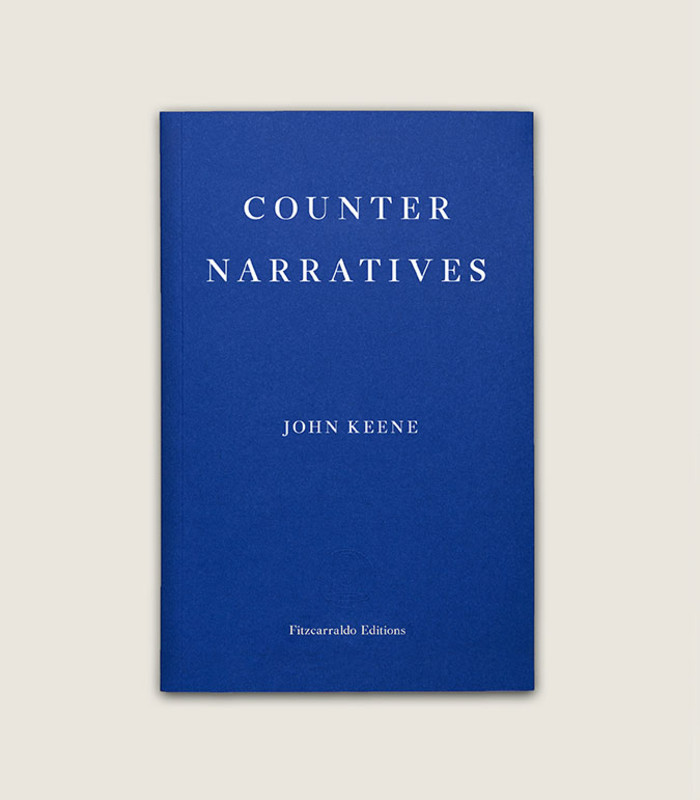
I want to offer my deep thanks to Nate West for his probing, laudatory review of Counternarratives, which is now up at the arts and letters site Music & Literature. His reading, which opens with a discussion of the contemporary cleavage among writers between those who adhere to a conception that the bourgeois imagination is sufficient (Jonathan Franzen, for example), and others who believe in the necessity of confronting, through a variety of formal and stylistic means, the effects of history and politics (the late Edouard Levé, W. G. Sebald, and I'd add, Roberto Bolaño), as a way of talking about how he believes Counternarratives addresses questions arising from this divide. I'll let J's Theaters dive into the review to find out where the critic takes this thread, but I want to note that West's thorough reading of the book, though not long, brims with insight, ultimately identifying something I have not really been asked about in any of the excellent reviews so far, which is to say, the political thread woven throughout all the stories.

Two quotes:

Keene’s Counternarratives offers a corrective to boilerplate that would forbid art from entering into the political. Its very title suggests that not only that the story has been told wrong, not only that it is not enough to tell other stories to be placed in their appropriate box (African-American, Post-Colonial) and thereby neutralized before being passed on to readers as ersatz probity while the real economic and political conditions that perpetuate injustice grind on unaffected; but rather that, for literature to continue to fulfill its vocation, the record has to be set straight. The political is not imposed on these tales from above; instead, a full account of the character’ life histories cannot be given without recourse to the political. Even their names are imbued with relations of power

and

Throughout the book, Keene plays with the possibilities of his title: Counternarratives serves as the heading for the first group of stories, Encounternarratives the second. The final section, Counternarrative, implies a more conceptual approach—the opposition to narrative, or the narrative that exists solely by opposition. It consists of a single story, Lions. In a conversation between a dictator and his muffled victim, the easy continuity between ideology and demagoguery and the inexhaustible lure of corruption come to life in a cell that could equally lie in Zimbabwe, in Uganda, or in Equatorial Guinea. The two figures speak of their youthful idealism, their yen for Fanon and Amilcar Cabral; of the depraved luxury of power and rapine; of boyhood love incompatible with the struggle for dominance; of what might have been, had Africa been untouched by Western hands.

Do check it out, and many thanks to Music & Literature!

Tuesday, January 27, 2015

2 New Hilst Reviews: The Quarterly Conversation & Three Percent

Literary translation is, as anyone who engages in it knows, a labor of love. The financial rewards are minimal, and outside of the case of some highly regarded translators (Gregory Rabassa, Susan Jill Levine, etc.), many US readers may have no idea of who has translated the non-English works they deeply admire. Perhaps readers do recall that Chris Andrews and Natasha Wimmer have dazzlingly captured the richness of Roberto Bolaño, but can anyone who professes to love Karl Ove Knausgård's My Struggle, for example, name the translator(s) who transformed the six Norwegian volumes of his Min Kamp into English? It's therefore always heartening when a review notices the challenges and successes of a translation, particular with regard to a writer like Hilst who, as at least one critic has noted, was known to baffle even her fellow Brazilian readers.

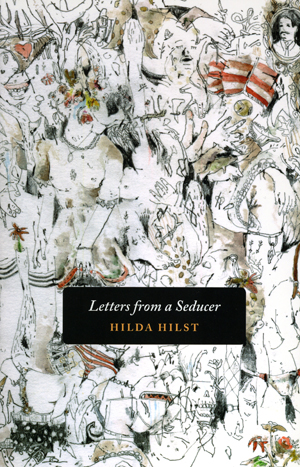
In "In the Funnel of Infinity: Life Portraits by Hilda Hilst," which appears in The Quarterly Conversation, critic and translator Christine Craig reads and writes about all three of the extant English translations of Hilst's prose works: the first one to be published, the novel The Obscene Madame D., translated collaboratively by Rachel Gontijo Araújo and Nathanaël (Nightboat, 2012); the novella With My Dog Eyes by Hilda Hilst, translated by Adam Morris (Melville House Press, 2014); and Letters from a Seducer by Hilda Hilst, translated by me (Nightboat, 2014). While most of the joint reviews of these books have focused primarily on the first two, Craig, in her thorough and insightful analysis of Hilst's themes and ideas, devotes a number of paragraphs to Letters, and provides one of the best reading yet I've seen of what Hilst's work is doing.

Craig examines many of the thresholds Hilst's novels explore and exploit, beginning with the psychological torment caused by the divergence between the two halves of the human, the animal and the psychic/symbolic, that her avatar Ernest Becker, the dedicatee of With My Dog Eyes, investigated in his philosophically profound and psychologically invaluable anthropological studies, particularly The Denial of Death. As a symbolic creature with psychological and affective interiority, man is the animal that suffers from the knowledge of our eventual death, which can lead to mental illness, a perception that Hilst understood because of her personal history, and which she wove extensively into the fabric of her texts.

Craig goes on to assess Hilst's understanding of the line between meaningful and meaningless language, and her inverting of the idea of "saint[hood]" as something beyond human limits, "the symbolic equivalent of death," often marked by the disgusting. At one point, citing my mention of Deleuze and Guattari in the Music & Literature roundtable from last year, she expands upon the reference, via Brian Massumi's reading of Deleuze, in order to show how Hilst's fiction sits at the nexus between "transcendence (orgasm's explosion of possibilities)" and "immanentism (life's sad remainder: the abandoned fish)." To quote her:
In “The Autonomy of Affect,” Massumi describes it as the simultaneous point of emergence and vanishing of “the unclassifiable, the unassimilable, the never-yet felt, the felt for less than half a second, again for the first time—the new.”

In his own writing, Karl is plagued by a “crazy urge” to reproduce the fundamental language of Daniel Schreber as described in Memoirs of My Nervous Illness. It is, as Karl writes, the desire “to not make sense of some things, some words, of my own life.” In his memoirs, Schreber, a schizophrenic former judge, painstakingly explains, with ample footnotes, his own personal delusional system, according to which his body has been overwhelmed by “nerves of voluptuousness”—nerves which, according to Schreber, naturally occur on all surfaces of the female body but which, on the male body, remain concentrated in the genitals. The propagation of Schreber’s own nerves has effectively turned him female (“unmanned” him, as he writes). What’s more, his overabundant nerves are constantly under invasion by God’s penetrating “rays,” agitated into a state of insupportable vibration—the source of his “nervous illness.”

Schreber’s fundamental language, or nerve-language, in which Karl would aspire to write, is the vibratory language of euphemism and coded paradox through which God’s rays “speak” to Schreber’s nerves and against which Schreber’s only defense is not thinking, or more precisely, the cultivation of “not-thinking-of-anything-thoughts” through semantic satiation: he repeats words until they grow meaningless and his thoughts turn empty and mechanical. Schreber reasons that if he can cease thinking entirely he might trick God into believing him dead.
There is also this gem about my translation, though the credit does go to Hilst, whose lead I followed:

Letters from a Seducer brings us directly into the work of the two fictitious writers, Karl and Stamatius (“Tiu”). We first get to know Karl—depraved “aristocrat” and widely published author—through his love letters to a distant, cloistered sister, Cordelia, in which he speculates about her implied affair with their father, supposed to have occurred when they were both teenagers and both in love with him. Suffice it to say Karl has his doubts. Prove it, he says: “Prove to me you had in your hairy cavern the big paternal cock and curls.” Karl has a seemingly endless supply of sly, poetic euphemisms for his sister’s vagina, but his best is perhaps: “your purse, your poor pussy so without pursuers”—a turn of phrase for which translator John Keene (and not Karl) actually deserves our applause.
Madeleine LaRue, Associate Editor of Music and Literature, in her post "The Books I Haven't Forgotten, Or In Lieu of a Plot," on the January 25, 2015 weblog Three Percent, cogently and succinctly discusses four translated books from 2014, the first two from New York Review Books, Last Words from Montparnasse, by Qiu Miaojin, translated by Ari Larissa Heinrich, and The Woman Who Borrowed Memories: Selected Stories, by Tove Jansson, translated by Thomas Teal and Silvester Mazzarella; the third The Elusive Moth, by Ingrid Winterbach, translated by Iris Gouws, from Open Letters Press; and Hilst's Letters. All she recommends as worth reading, even though the site had previously not devoted a freestanding review to any of them. About Hilst's Letters she says:
And one more word on my most recent read: Like Last Words from Montmartre, Letters from a Seducer by Hilda Hilst (translated from the Portuguese by John Keene) is passionate and epistolary, but its tone couldn’t be more different. Letters from a Seducer is an irreverent catalogue of outrageous, theatrical sexualities. Hilst delights in breaking taboos and detailing fetishistic obsessions, making constant fun of phallocentrism and bourgeois sensibilities. But she does it with a good sense of humor and often great literary panache. (Translator John Keene deserves praise for the number of euphemisms he’s managed to generate for various body parts alone.) Behind the absurdity are also flashes of deep feeling, comical desperation in the face of writing, and these meditations lend Hilst’s short novel staying power as literature, and not only as (in the author’s own words) “brilliant pornography.”
I'll take the praise, and note that Hilst actually uses "euphemisms," or rather, quite striking metaphors, many of them in current use in contemporary Brazilian popular and vernacular idioms, and that those body parts--and sexual acts--appear with such profusion in the text that I sometimes had to duck just to get to the next sentence! Now doesn't that make you want to read it?

Friday, April 25, 2014

First Review of Hilst Translations


A few posts back I mentioned that the somewhat altered and edited version of an online roundtable discussion about Hilda Hilst was now live on the website Music & Literature, but I had not realized that in early April, in preparation for the roundtable, writer and critic Adam Z. Levy posted an insightful, well-considered and very praiseworthy review both of my translation of Hilda Hilst's Letters from a Seducer (Nightboat Books/A Bolha Editor, 2014) and of scholar Adam Morris's recent superb translation of Hilst's earlier novella, With My Dog-Eyes (Melville House, 2014) about a mathematician whose eyesight and consciousness are disintegrating.

Some quotes from Levy's review (which heartened me tremendously when it singled out my rendering both of Hilst's seemingly inexhaustible lexicon of terms for sexual organs, as well as of the multiple registers of idiom and discourse in the character Karl's letters, effectively capturing their often absurd--and I do mean absurd--humor):

If the abnegation of traditional values and hierarchies runs through Hilst’s life, her attempt to find a literary analogue becomes clear with the arrival in English of two more of her novels: With My Dog-Eyes (published in Brazil in 1986, and this month in Adam Morris’s translation) and Letters from a Seducer (translated by John Keene). Letters from a Seducer is the third book in her “pornographic tetralogy,” which solidified her notoriety upon its Brazilian release in 1991. Included in the quartet are a book of poems and three novels (O Caderno Rosa de Lory Lamby, Contos D’Escárni / Textos Grotescos, and Cartas de um sedutor). Though Hilst’s later writing is considered radically different than her earlier work, the break represented by the tetralogy is merely an intensification and deepening of themes Hilst had long explored. Her “pornographic” books are united by the violence with which she works to undo the grammar of systems of confinement—language, gender, sexuality, and form—and the tenderness and comedy with which she scours the bleakness of circumstance for something that an optimist might call hope.

and

There is an Ouroboric quality to Kéres’s descent from genius to madness, concurrent with the novel’s own formal descent from coherence to chaos. Many of the pleasures and challenges of reading Hilst’s fiction can be found in this loop. By the end of the book’s sixty-two pages, Kéres has fractured and dissociated almost entirely from himself. Hilst renders this with a mix of first- and third-person narration, with Kéres hovering over himself—and over the text—as an intermediary between the reader and the professor’s thoughts:
Amós Kéres. From here I can hear him comparing the lucidity of an instant to the opacity of infinite days, I can hear him thinking of the various manners of madness and suicide. The madness of the Search, which is made of concentric circles and never arrives at the center, the obscuring, incarnate illusion of finding and understanding . . . From here can I hear him thinking how should I kill myself? or how should I kill in me the various forms of madness and be at the same time tender and lucid, creative and patient, and survive?
As Kéres fractures and becomes increasingly diffuse, Adam Morris does an impressive job handling the sudden shifts in perspective and the disorienting rhythms of the text. Toward the end, it is almost impossible to know whom to attribute various lines of exposition and thought, as though Kéres himself were a poem emptied of signification, and Hilst seems to ask whether this is liberation or the essence of madness itself.

and

In the back of my book, in a column that carries over to a second page, I noted the following euphemisms that Hilst uses for penis: catfish, pole, blunt, harmonica, banana, pod, thrush (as in “to pluck one’s thrush”), piece, club, table leg, rosy mallet, bat, tombstone, creeper, strap, box, nib, basket, and gourd. There is also starfruit-loquat-hole, rosy pulp, poompoom, dove, hairy cavern, butterfly, chocha, and petunia, where female genitalia are concerned. 
But the pornographic nature of the novel reaches further than the physical. The three short sections that constitute Letters from a Seducer are narrated by two men: Karl, the seducer of the title, and Stamatius (Tiu, for short) an impoverished writer who is resentful of Karl’s money and manner. Karl’s letters are the most accessible and the most enjoyable, although enjoyment and accessibility are categories of which I imagine Hilst herself would be suspicious. The letters are lustfully written to Karl’s forty-year-old sister, Cordélia (named with reference to King Lear), who lives alone in the country. “Cordélia, my sister, come out of your cloister / The countryside ages women and cows,” one of Karl’s teasing lyrics goes. Karl’s own cloister is his family’s estate in an unnamed Brazilian city, where he lives with two German servants who putter about the house, muttering passages of Jean Genet by heart. Karl’s voice is arch and affected, often to the point of hilarious parody, but Hilst endows him with a clever self-consciousness and serial seducer’s charm. That John Keene’s translation captures the humor of Karl’s constant suggestiveness and change in register is a remarkable achievement of its own.

If you haven't picked up either book--they're short!--please do, and also do not forget the brief, enthralling The Obscene Madame D, the first of Hilst's works to appear in book form in English, translated collaboratively and with great panache by Nathanaël and Rachel Gontijo Araújo (Nightboat Books / A Bolha Editor, 2012)!