Showing posts with label Letters from a Seducer. Show all posts

Friday, April 17, 2015

Hilst Translation Makes Longlist + New Counternarratives Review in Harper's

Hilda Hilst
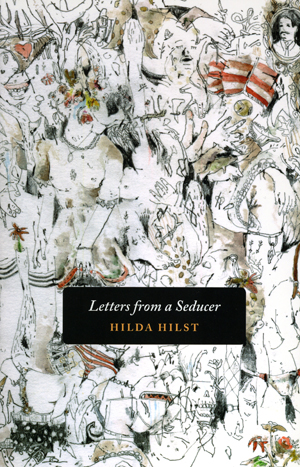
Last February Nightboat Books published my translation of Hilda Hilst's Letters from a Seducer (Nightboat Books), and despite its formal daring and thematic outrageousness (it contains an insatiable character named "Little Butthole," which should give you a clue about how wild it is), I have worried from time to time that it might fall into the literary publishing rabbit hole. So many books, and not so many translations, but without a champion a book can and may disappear. Any positive news about it, therefore, is welcome. It was extremely positively and welcome news to learn, then, that the book had made the Longlist for the 2015 Best Translated Book in Fiction Award, which is sponsored by the Center for translation at the University of Rochester. Many thanks to the Center, and especially to editor, curator and critic Daniel Medin, a member of the judges' panel, who has written and spoken favorably about the translation in the past and again for this award.

As part of the process of selection for the next stages, including the finalist list, which will be named on May 5, and the award, to be given out on May 25, judges present arguments, in a variety of formats, for why certain books deserve to advance and win. Daniel interviewed me about Letters, and you can read the entire exchange here. It isn't very long, and gives a brief overview of Hilst's work, including my favorite passage in Portuguese. (NB: A stray apostrophe crept into the word "wont," though I meant the older adjectival form, meaning "likely," not the contracted future verb form.) A snippet:
DM: Letters from a Seducer is a part of Hilst’s famous “pornographic tetralogy.” How are these works different from what she was had been doing before? What distinguishes Letters from the others? 
 JK: Let me begin by saying that all of Hilst’s prose fiction is experimental, from her initial fiction text, Fluxo-Floema (1970), on, and is informed by her prior primary focus as a poet and a playwright. (She continued writing poetry throughout her life, I should note.) Her earliest poetry, published in the 1950s, is fairly conventional, but by the 1960s you can detect subversive notes, experiments with earlier Lusophone (and Iberian) forms, etc., so that when she began writing prose, it was hardly surprising that she would not follow the standard route. Yet I think it’s fair to say that her fiction is distinctive even from parallel experiments that were happening in Brazilian literature at the time, as a comparison between her texts of the 1970s and those of her close friend, Lygia Fagundes Telles, one of the major fiction writers of Brazil and in the Portuguese language, will suggest. While a book like The Obscene Madame D (1982) does overtly treat sexual themes, in the “porno-chic” works, as she called them, she more openly and directly uses and plays with pornographic language and discourse, and the works themselves turn in part on themes that might be considered pornographic, except that Hilst’s artistry, irony and wit transform them into something quite different. Letters (1991) is the second novel and masterpiece of the four texts; one of them, Contos d’Escarnio: Textos Grotescos (1990) is a collection of stories; Bufólicas (1992) comprises poems; and O Caderno Rosa de Lory Lamby, or Lory Licky’s Pink Notebook (1990), as I think the brilliant translator Adam Morris dubbed it, is an extremely ludic, graphic precursor to Letters written in the voice of a child. (And possibly not publishable in the US, despite its relentless humor.) With Letters, Hilst reaches the pinnacle of the tetralogy and, I think, her art, fusing all the strands that have come before into a profound text about writing, living, sex, human mortality, and so on. It is also quite funny; she never sheds her humor, even at some of the most outrageous moments in the text, which is one of the things I really appreciate about her work.
Getting to the finalist stage and winning are both tremendous long shots, and the other long-list books represent exalted company, many by some of the best translators out there, of major living and deceased writers, but I am very happy that the book is getting some recognition, and if this brings more readers not just to this translation, but to the others, by Rachel Gontijo Araújo and Nathanaël, and to the one by Adam Morris, that will be a very good thing! Que fique mais da Hilst em inglês!

***

Miss La La at the Cirque
Fernando,
Edgar Degas, 1879
(National Gallery, London,
Oil on canvas.)
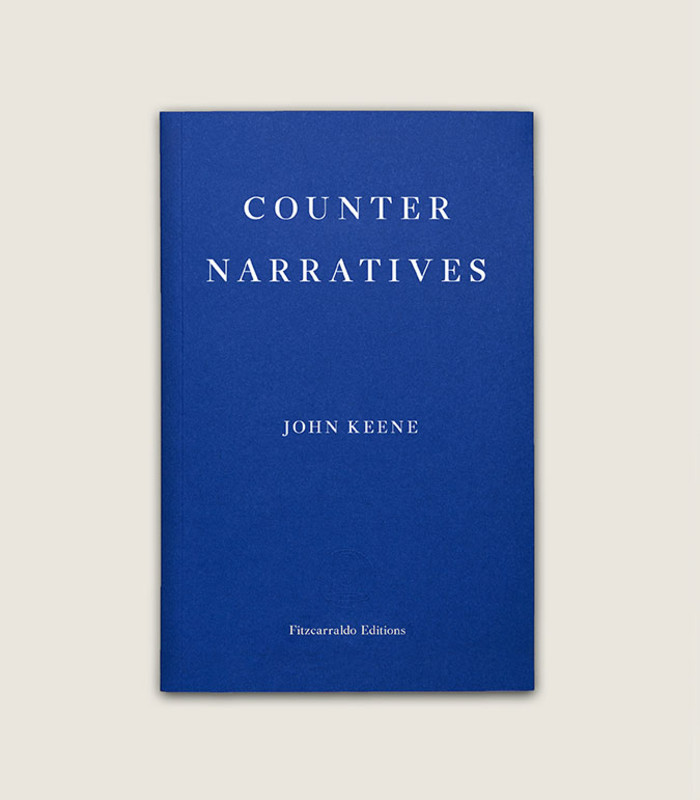
Reviews continue to come in for Counternarratives, and the most recent is the best by far. In the May 2015 Harper's Magazine, Christine Smallwood pens a thoroughgoing, engagingly thoughtful review of the book. (Her review unfortunately is only available for subscribers to Harper's, but it's in the newsstands now.) Framing the review with images of the Mississippi near Vicksburg, Mississippi, and Edgar Degas's famous 1879 painting Miss La La at the Cirque Fernando (the subject of my story "Acrobatique"), Smallwood begins with a discussion of Mark Twain's The Adventures of Huckleberry Finn and the homoerotics and racial dynamics of that text, noting its contemporary survival in the form of "bromances" (and, I'd add, the curdled buddy films that once starred Eddie Murphy and Danny Glover, and now feature Kevin Hart), as a way of shifting into a discussion of how my approach to Twain's text (and The Adventures of Tom Sawyer), "Rivers," like the rest of the collection, represents and embodies the concept of a counternarrative.

Smallwood writes, "John Keene takes aim at this sacred cow and shoots it straight in the hip," describing the story's plot and noting that this could have come off as "corny," but its execution transforms it into something else. (And I should note that I was a little nervous about taking on the Jim and Huckleberry story, and was surprised that almost no other black writers had done so--because it is so iconic? Because Twain's fame and reputation looms so large? Because it wasn't worth the time of doing so?--but also felt that imagining some aspects of Jim's life after that novel, a few glimpses, would be worth the risk.) She goes on offer the following beautiful assessment of the entire collection, for which I will forever be grateful: "Counternarratives is an extraordinary work of literature. Keene is a dense, intricate, magnificent writer," before going on to discuss my background a bit (though Christopher Stackhouse accidentally becomes "Charles") and more of the stories, even quoting several of them.

One quote:

In "The Aeronauts," for example, a Philadelphia freedman with an uncanny memory joins the Union Army Balloon Corps. The story ends with him in the balloon, feeling "something not quite fear and not quite elation, I can't put a name to it, I try to utter it but cannot." Naming it, Keene suggests, would only contain the moment, and make it less than what it is. His characters refuse to accept freedom that is given by others--they either take it by force or resist it altogether. In this way they are the avengers of Twain's Jim, who wasn't aware of his freedom until he had gone to great trouble to gain it a second time.

Again, many thanks to Harper's both for reviewing the book and for the superlative review, and I urge J's Theater readers to preorder a copy! The corrected galleys have been submitted, will be out now on May 21, 2015!

Tuesday, January 27, 2015

2 New Hilst Reviews: The Quarterly Conversation & Three Percent

Literary translation is, as anyone who engages in it knows, a labor of love. The financial rewards are minimal, and outside of the case of some highly regarded translators (Gregory Rabassa, Susan Jill Levine, etc.), many US readers may have no idea of who has translated the non-English works they deeply admire. Perhaps readers do recall that Chris Andrews and Natasha Wimmer have dazzlingly captured the richness of Roberto Bolaño, but can anyone who professes to love Karl Ove Knausgård's My Struggle, for example, name the translator(s) who transformed the six Norwegian volumes of his Min Kamp into English? It's therefore always heartening when a review notices the challenges and successes of a translation, particular with regard to a writer like Hilst who, as at least one critic has noted, was known to baffle even her fellow Brazilian readers.

In "In the Funnel of Infinity: Life Portraits by Hilda Hilst," which appears in The Quarterly Conversation, critic and translator Christine Craig reads and writes about all three of the extant English translations of Hilst's prose works: the first one to be published, the novel The Obscene Madame D., translated collaboratively by Rachel Gontijo Araújo and Nathanaël (Nightboat, 2012); the novella With My Dog Eyes by Hilda Hilst, translated by Adam Morris (Melville House Press, 2014); and Letters from a Seducer by Hilda Hilst, translated by me (Nightboat, 2014). While most of the joint reviews of these books have focused primarily on the first two, Craig, in her thorough and insightful analysis of Hilst's themes and ideas, devotes a number of paragraphs to Letters, and provides one of the best reading yet I've seen of what Hilst's work is doing.

Craig examines many of the thresholds Hilst's novels explore and exploit, beginning with the psychological torment caused by the divergence between the two halves of the human, the animal and the psychic/symbolic, that her avatar Ernest Becker, the dedicatee of With My Dog Eyes, investigated in his philosophically profound and psychologically invaluable anthropological studies, particularly The Denial of Death. As a symbolic creature with psychological and affective interiority, man is the animal that suffers from the knowledge of our eventual death, which can lead to mental illness, a perception that Hilst understood because of her personal history, and which she wove extensively into the fabric of her texts.

Craig goes on to assess Hilst's understanding of the line between meaningful and meaningless language, and her inverting of the idea of "saint[hood]" as something beyond human limits, "the symbolic equivalent of death," often marked by the disgusting. At one point, citing my mention of Deleuze and Guattari in the Music & Literature roundtable from last year, she expands upon the reference, via Brian Massumi's reading of Deleuze, in order to show how Hilst's fiction sits at the nexus between "transcendence (orgasm's explosion of possibilities)" and "immanentism (life's sad remainder: the abandoned fish)." To quote her:
In “The Autonomy of Affect,” Massumi describes it as the simultaneous point of emergence and vanishing of “the unclassifiable, the unassimilable, the never-yet felt, the felt for less than half a second, again for the first time—the new.”

In his own writing, Karl is plagued by a “crazy urge” to reproduce the fundamental language of Daniel Schreber as described in Memoirs of My Nervous Illness. It is, as Karl writes, the desire “to not make sense of some things, some words, of my own life.” In his memoirs, Schreber, a schizophrenic former judge, painstakingly explains, with ample footnotes, his own personal delusional system, according to which his body has been overwhelmed by “nerves of voluptuousness”—nerves which, according to Schreber, naturally occur on all surfaces of the female body but which, on the male body, remain concentrated in the genitals. The propagation of Schreber’s own nerves has effectively turned him female (“unmanned” him, as he writes). What’s more, his overabundant nerves are constantly under invasion by God’s penetrating “rays,” agitated into a state of insupportable vibration—the source of his “nervous illness.”

Schreber’s fundamental language, or nerve-language, in which Karl would aspire to write, is the vibratory language of euphemism and coded paradox through which God’s rays “speak” to Schreber’s nerves and against which Schreber’s only defense is not thinking, or more precisely, the cultivation of “not-thinking-of-anything-thoughts” through semantic satiation: he repeats words until they grow meaningless and his thoughts turn empty and mechanical. Schreber reasons that if he can cease thinking entirely he might trick God into believing him dead.
There is also this gem about my translation, though the credit does go to Hilst, whose lead I followed:

Letters from a Seducer brings us directly into the work of the two fictitious writers, Karl and Stamatius (“Tiu”). We first get to know Karl—depraved “aristocrat” and widely published author—through his love letters to a distant, cloistered sister, Cordelia, in which he speculates about her implied affair with their father, supposed to have occurred when they were both teenagers and both in love with him. Suffice it to say Karl has his doubts. Prove it, he says: “Prove to me you had in your hairy cavern the big paternal cock and curls.” Karl has a seemingly endless supply of sly, poetic euphemisms for his sister’s vagina, but his best is perhaps: “your purse, your poor pussy so without pursuers”—a turn of phrase for which translator John Keene (and not Karl) actually deserves our applause.
Madeleine LaRue, Associate Editor of Music and Literature, in her post "The Books I Haven't Forgotten, Or In Lieu of a Plot," on the January 25, 2015 weblog Three Percent, cogently and succinctly discusses four translated books from 2014, the first two from New York Review Books, Last Words from Montparnasse, by Qiu Miaojin, translated by Ari Larissa Heinrich, and The Woman Who Borrowed Memories: Selected Stories, by Tove Jansson, translated by Thomas Teal and Silvester Mazzarella; the third The Elusive Moth, by Ingrid Winterbach, translated by Iris Gouws, from Open Letters Press; and Hilst's Letters. All she recommends as worth reading, even though the site had previously not devoted a freestanding review to any of them. About Hilst's Letters she says:
And one more word on my most recent read: Like Last Words from Montmartre, Letters from a Seducer by Hilda Hilst (translated from the Portuguese by John Keene) is passionate and epistolary, but its tone couldn’t be more different. Letters from a Seducer is an irreverent catalogue of outrageous, theatrical sexualities. Hilst delights in breaking taboos and detailing fetishistic obsessions, making constant fun of phallocentrism and bourgeois sensibilities. But she does it with a good sense of humor and often great literary panache. (Translator John Keene deserves praise for the number of euphemisms he’s managed to generate for various body parts alone.) Behind the absurdity are also flashes of deep feeling, comical desperation in the face of writing, and these meditations lend Hilst’s short novel staying power as literature, and not only as (in the author’s own words) “brilliant pornography.”
I'll take the praise, and note that Hilst actually uses "euphemisms," or rather, quite striking metaphors, many of them in current use in contemporary Brazilian popular and vernacular idioms, and that those body parts--and sexual acts--appear with such profusion in the text that I sometimes had to duck just to get to the next sentence! Now doesn't that make you want to read it?

Thursday, March 13, 2014

Nightboat Books Launch Photos

Below are few photos from last night's Nightboat Books new publications launch at Callicoon Fine Arts on the Lower East Side. Many thanks to everyone who came out to hear and celebrate the release of Gracie Leavitt's first full collection of poems, Monkeys, Minor Planet, Average Star, which features a self-portrait by the late Emma Bee Bernstein on its cover (and a moving tribute poet, "Reverse," to Bernstein inside), and my translation of Hilda Hilst's Letters to a Seducer, which Nightboat published in conjunction with Brazilian publisher A Bolha Editora

Joining us were two friends and fellow writers, Claire Donato and Reggie Harris, who each read an incisive poem in the spirit of the books. We had a good crowd by the time the event began, and it was even fuller when artist Thomas Kovachevich, whose show is currently underway at Callicoon, presented his poem-without-words, a slow, remarkable, profound piece involving autonomously curling lens paper on blue fabric amidst a bed of water.  It felt especially fitting given the work already presented. Many thanks to everyone who came out and thanks also for buying the books!

I urge you to check out Thomas's exhibit at Callicoon if you're on the Lower East Side; it runs until March 30, 2014. Also, if you can, please do purchase (or urge your local public, college or university library to order!) copies of Gracie's collection and the Hilst novel.

At Callicoon before the reading
(poet & publisher Stephen Motika
at center) 
Some of the attendees before
the reading 
Stephen introducing the event
Thomas's collaborator
in the event pouring the water 
The laying out of
the azure fabric sheets
The collaborator places the
pieces of lens paper on the fabric
The paper begins its dance 
More paper 
A bearded, bowtied blogger
reading from the Hilst
(photo by C) 
Making a point of some
sort about Hilst
(photo by C)
Another photo of yours truly
and the full crowd
(Photo by Andrew Blackley--thanks!)