Friday, January 28, 2011

Encyclopedia Out + Jean Wyllys, Brazilian Congressman + Revolt Hits Egypt

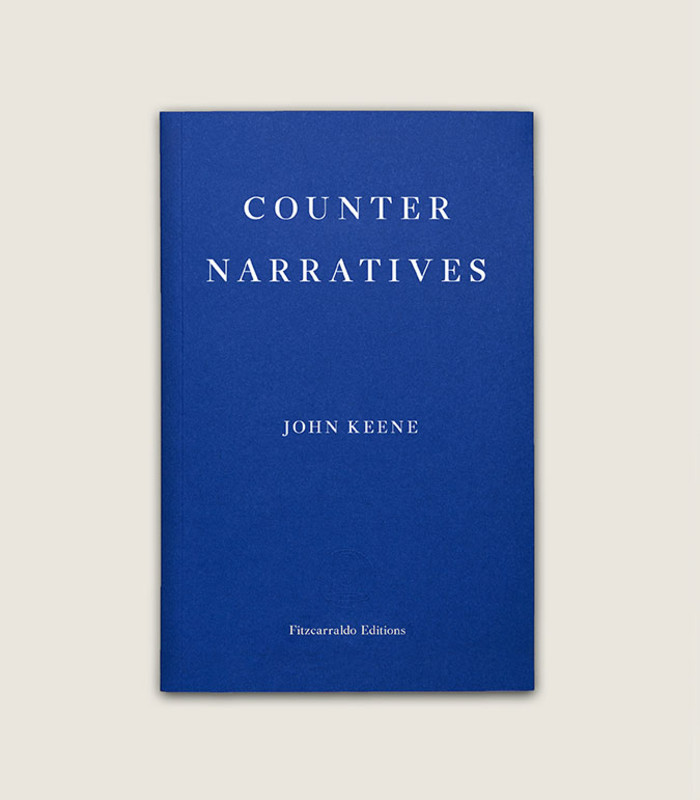
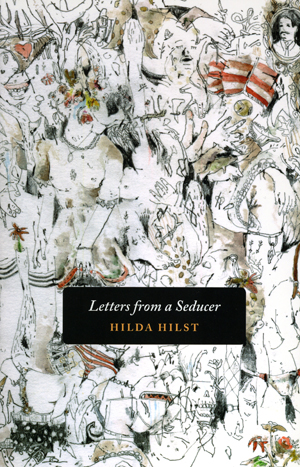
A while back I mentioned that the journal Encyclopedia's second volume, F-K, would soon be out, and it is now on bookstands and available for order ($25).  I've flipped through a copy of this newest volume and am delighted to say that like the first one, it is a beautifully designed and produced journal, but it's also an inventive, intellectually provocative anthology and a substantial (and hefty, in terms of size and weight) book.

tumblr13I'm also very pleased that my translations of two of Brazilian writer Jean Wyllys's microstories from his collection Aflitos (Fundação Casa Jorge Amado; Editora Globo, 2001), which won his native Bahia's Prêmio Copene de Cultura e Arte in 2001, appear in this volume. I began translating them in the middle of last decade, and about a year and a half ago completed a translation of the entire volume. I haven't yet found a publisher, but the experience of translating his very condensed, lyrical prose pieces, some of them closer to poetry than fiction, others nearer to horror in the brutal realities they depict, and all of which offer a fresh perspective on Brazilian and Bahian life, was instructive and creatively energizing.

I'm also glad to have undertaken this project translating Jean's work. As I've noted before, he was the first person to come out as gay on a Brazilian reality TV show--Big Brother 5, which he won in 2005--and after moving to Rio de Janeiro and returning to his roots as a journalist and professor for a few years, he recently ran on the Party of Socialism and Liberty (PSOL) ticket, representing a district in Rio, was elected in October and is now the first openly gay federal deputy (equivalent to a US Representative) to be seated in Brazil's lower house of Congress, the Chamber of Deputies.

I imagine he'll be a bit too busy to write more fiction anytime soon, but I hope he continues to do so, and I also hope his legislative and proposed political goals and career succeed, for him, his constituents and the Brazilian people.

---


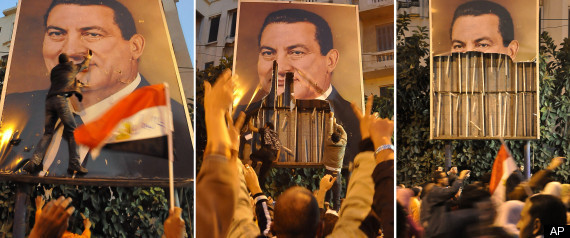
Not long ago I blogged about the revolt in Tunisia, which continues as I type this entry, and it was clear to me that if it could even partially succeed--and it has--its spirit would spread throughout other parts of the Middle East. And it has. The largest popular revolution appears to be unfolding in Egypt, where protesters comprising a sizable cross-section of that country's urban populace have staged sustained public protests against the unresponsive, dictatorial government of nonagenarian president-for-life Hosni Mubarak.  Economic stagnation, an authoritarian political systm and violent repression of dissidents have long created a volatile situation that has finally exploded, sparked in part by Tunisia's example, and it's unclear that Mubarak and the security forces will be able to turn back the clock.

On David Kato

David Kato (Photo: Frontline, CAHR)
Gukira has one of the best (as always), most thoughtful and considerate memorial posts I've read on David Kato (Kisule), the Ugandan teacher and LGBT rights activist, who had served as advocacy officer for Sexual Minorities Uganda (SMUG).

Kato was brutally beaten to death in his home on Wednesday, January 26, 2011. As the New York Times reports, Kato was one of a number of people Rolling Stone, a notorious Ugandan newspaper, identified as "homosexual" and targeted under the banner "Hang Them." He had been repeatedly threatened and attacked over the years, and had just won a legal decision against Rolling Stone. Uganda’s High Court ordered the magazine financially compensate those it had attacked and to stop publishing the names of people it claimed were gay.

His murder also occurred within the context of Uganda's parliamentary debates about making homosexuality a capital crime, a move directly fostered by US evangelicals, as the Times reported early in January of this year.  In fact it was shortly after a 2009 visit by US evangelicals that Uganda's Parliament began pushing a law to capitalize being gay, though pressure from the US led Ugandan president Yoweri Musaveni to disavow the law. It nevertheless could still be enacted. (Here's the Times's presentation of the views of four Ugandans, including a transman, on the issue.)

I won't even try to reprise Gukira's post, but I'll just quote a small section:
A quick look at his Facebook page tells one story. Early this morning, messages from January 3 and 4 congratulated David on the win against the Ugandan Rolling Stone. Just above them, expressions of loss and solidarity, of love and courage, of mourning. This juxtaposition enacts a certain kind of work to which I hope to return in this edit.

From what I know, which is to say, from the available evidence, it is not clear that a direct line can be traced from David’s activism to his murder. I write this not to be contrary, but because I think it’s important to be judicious, to be contextual. Simultaneously, and just as importantly, there is no evidence that his murder was not a result of his activism. For now, his death remains something that can be used in any number of ways.

Please do read the rest.

RIP, David Kato (1964-2011)


Wednesday, January 26, 2011

Nabokov's Butterfly Hypothesis + Poem: Nabokov

In the introduction to his brilliant study of MFA programs and their effects on American literature, The Program Era: Postwar Fiction and the Rise of Creative Writing (Harvard, 2010), UCLA professor Mark McGurl relates the anecdote of how, when Vladimir Nabokov (1899-1977) was proposed as a potential professor in Harvard's English department, the eminent scholar and linguist Roman Jakobson (1896-1982) responded negatively, stating, "I do respect very much the elephant, but would you give him the chair of Zoology?" I mention this not to launch into a discussion of the conflicts that have existed between creative writers and scholars, but rather to note how wrong Jakobson, in making his categorical statement, not only dismissed an entire group of people, but Nabokov in particular. Jakobson wasn't the only person to underestimate Nabokov's genius.

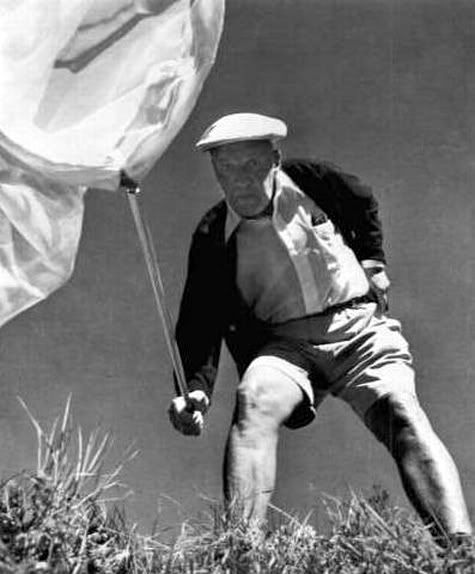
In the field of entomology, it turns out that Nabokov's theoretical insights were far reaching and predictive, far beyond, it's clear, the experimental capacity of his time.  A self-taught expert on butterflies who worked as the curator of lepidoptera at Harvard's Museum of Comparative Zoology, in 1945 he proposed a theory to explain the evolution of the butterflies he was studying, the Polyommatus blues (at left, photo Vlad Dinca, New York Times) suggesting that they reached the New World via Asia, in successive waves, over thousands of years. Trained entomologists of his era did not take this theory seriously, nor did several subsequent generations of professional scientists.  Over the last decade, however, a scientific team, using gene-sequencing, did decide to take his theories seriously, and it turns out, as was published last week in the Proceedings of the Royal Society of London, that Nabokov was correct.


According to Carl Zimmer's article in yesterday's The New York Times
Only in the 1990s did a team of scientists systematically review his work and recognize the strength of his classifications. Dr. [Naomi] Pierce, who became a Harvard biology professor and curator of lepidoptera in 1990, began looking closely at Nabokov’s work while preparing an exhibit to celebrate his 100th birthday in 1999. She was captivated by his idea of butterflies coming from Asia. “It was an amazing, bold hypothesis,” she said. “And I thought, ‘Oh, my God, we could test this.’ ”

***

Working with American and European lepidopterists, Dr. Pierce organized four separate expeditions into the Andes in search of blues. Back at her lab at Harvard, she and her colleagues sequenced the genes of the butterflies and used a computer to calculate the most likely relationships between them. They also compared the number of mutations each species had acquired to determine how long ago they had diverged from one another.

Monday, January 24, 2011

Sabin Howard's Pop-Up Gallery

Wandering around Chelsea a few weekends back when I was home for an event, I happened upon one of the empty storefronts (300 W. 22nd Street) I often passed during the prior summer and early fall, and noticed that a new pop-up exhibit had been installed, a series of bronzes and plaster sculptures by artist Sabin Howard. The show was entitled "Apollo."

I wasn't too fond of the work, which I found well-crafted but not especially original, but the atmosophere of this temporary gallery, which I'd photographed several times in its differing guises at the end of last year, did interest me, as did the crowd, which comprised friends of the artist, locals and tourists wandering in off the street to look at the pieces, and the curious who just wanted to see what was going. I took a number of photos, which give a sense of the show, and to fix for posterity (at least as long as this blog exists) the ephemerality that such a show embodies. I'm always surprised when more empty storefronts don't pursue this option, but then having spoken to some longtime shop proprietors, I know that rents in Manhattan (and parts of Chicago) are still too high, that some landlords would rather warehouse the empty spaces in the hopes of a massive payday than seek temporary rents, and that the ongoing credit crunch and economic crisis make renting prohibitive if you don't have the money to put down.

A temporary gallery in my neighborhood in Chicago didn't last the summer; it was bidding to be a lively neighborhood art venue before I left for the summer, and when I returned, the space was dark and cleared of even the slightest artistic touch. Perhaps someone could make a conceptual project of empty storefronts--that would be the concept, the evacuated, abandoned, foreclosed, humanless retail space. One could even call it "money," for the emptiness wouldn't mean an empty signifier, but rather the root cause of the void was the very thing that was lacking to fill it, or keeping it from being filled.  But back to Sabin Howard's show: I didn't stay to catch him unveiling one of the pieces, though I did capture its draped form in at least a few of my shots.
Outside "Apollo," Sabin Howard's pop-up sculpture exhibit 
Outside the exhibit
Plaster busts 
Two plaster busts
Trio of bronzes 
A trio of bronzes

Adam Pendleton's Band @ the Kitchen

Over the winter break I dropped by The Kitchen to check out artist Adam Pendleton's solo exhibit BANDI've followed Pendleton's work for awhile, and have regretted having missed several earlier shows of his in Chicago, all word art pieces at the Rhona Hoffman Gallery--2007's "Rendered in Black and Rendered," 2005's "Gorilla, My Love," and 2004's "It's about memory"--so I beat a path to Chelsea to catch this one before it closed on December 23, 2010.
From Adam Pendleton's "Band" @ the Kitchen
Curated by Rashida Bumbray, the Kitchen exhibition marked the US premiere of Pendleton's large-scale video installation and the final stage of a more extensive multi-platform exhibition, which debuted on September 17, 2009 at the Toronto International Film Festival and featured a rehearsal and live public concert by indie-postpunk band Deerhoof.  A December 2009-January 2010 performance and reading in Amsterdam, featuring the first edit of Toronto event footage along with work-in-progress sequences based on texts directly drawn from Jean-Luc Godard's famous 1968 quasi-documentary, Sympathy for the Devil, such as ones by Eldridge Cleaver, along with more associatively linked works, by writers like Gertrude Stein, was programmed by and held at the Kunstverein/de Appel Arts Center.
From Adam Pendleton's "Band" @ the Kitchen
Band reimagines film, replacing the Rolling Stones prepping and then playing their eponymous song with Deerhoof practicing and then performing the haunting "I Did Crimes for You" (from their new album Deerhoof vs. Evil, Polyvinyl, 2011) in refracted, multiscreen, asynchronous form. Pendleton's film also retains more than just the spirit of Godard's overtly radical, overtly politicized aesthetics in Sympathy, which juxtaposes imagined scenes of Black radicalism, informed by the work of Cleaver, Amiri Baraka and others with a performance by Godard's then-wife Anne Wiazemsky, as "Eve Democracy," an icon of Euro-American leftist politics and poetics. Band does also carry forward in formal and content terms this aspect of Godard's film. In post-production, Pendleton and editor Deco Dawson interlaced the Deerhoof footage with audio from a short documentary film entitled Teddy, created, to quote The Kitchen's press release, "as part of the Social Seminar, a multi-media training series developed by the National Institute of Mental Health with the U.S. Office of Education." Teddy, directed by Richard Wells and edited by Andrew Stein, portrayed a day in the life of a politically active 17-year-old black man; in Band Pendleton paired the audio track with clips from a late 1960s LA Police Department raid on a Black Panther office.

Saturday, January 22, 2011

Kanye West's Art Film

It's his video for "Runaway," but actually contains a condensed medley of many of his songs on his recent album, My Dark Twisted Fantasy, and I think it's one of the best music videos I've seen in decades; so good, in fact, that it approaches the status of art. If you aren't among the 8 million or so people who've seen it yet imagine a cross between Liquid Sky and The Man Who Fell To Earth but with a female phoenix, ballerinas, and an African last supper. Stretching for over half an hour. It really does work, believe me....
A still from the video for "Runaway"

Monday, January 17, 2011

Happy Martin Luther King Jr. Day

Last week Defense Department General Counsel Jeh Johnson claimed that were the late Reverend Dr. Martin Luther King, Jr. (at left, Riverfront Times) still alive, Rev. Dr. King would have supported the wars in Iraq and Afghanistan. Without hesitation a wide array of people across the internet decried this evidently nonsensical assertion, and cited many examples, from throughout his life and career, of his anti-war and anti-violence stances.

But why not go directly to Rev. Dr. King's words themselves? Here is one of his most important speeches, delivered on April 4, 1967 at Riverside Church in New York City, a year before his assassination, on the Vietnam War.  Rev. Dr. King had spoken many times at Riverside, often memorably, but this speech was a landmark for many reasons.  I sincerely hope the President and others who honor Rev. Dr. King's memory take note of this profound speech, among the bravest and most important he ever delivered.

Martin Luther King Jr.'s Speech at Riverside Church (with audio)

A snippet from the speech's end:

Now let us begin. Now let us rededicate ourselves to the long and bitter, but beautiful, struggle for a new world. This is the calling of the sons of God, and our brothers wait eagerly for our response. Shall we say the odds are too great? Shall we tell them the struggle is too hard? Will our message be that the forces of American life militate against their arrival as full men, and we send our deepest regrets? Or will there be another message -- of longing, of hope, of solidarity with their yearnings, of commitment to their cause, whatever the cost? The choice is ours, and though we might prefer it otherwise, we must choose in this crucial moment of human history.

As that noble bard of yesterday, James Russell Lowell, eloquently stated:

Once to every man and nation comes a moment to decide,
In the strife of truth and Falsehood, for the good or evil side;
Some great cause, God’s new Messiah offering each the bloom or blight,
And the choice goes by forever ‘twixt that darkness and that light.
Though the cause of evil prosper, yet ‘tis truth alone is strong
Though her portions be the scaffold, and upon the throne be wrong
Yet that scaffold sways the future, and behind the dim unknown
Standeth God within the shadow, keeping watch above his own.

And if we will only make the right choice, we will be able to transform this pending cosmic elegy into a creative psalm of peace. If we will make the right choice, we will be able to transform the jangling discords of our world into a beautiful symphony of brotherhood. If we will but make the right choice, we will be able to speed up the day, all over America and all over the world, when "justice will roll down like waters, and righteousness like a mighty stream."

Sunday, January 16, 2011

Google's Poetry Translation Software

The more my workload increases, the more I find myself dreaming of books, writing, reading, blogging, immersing myself in works of imaginative writing. But there simply is not enough time. Such is the irony of my life these days, but one result is the scarcity of posts here. I don't want to quit blogging, but sometimes I fear it's too difficult to keep it up. Ah well--it's a new year, so I'll keep trying.

***

Desparapluies, one of my brilliant former undergraduate students, works at Google (I think she's still there!), and I was thinking of her and her honors project, and of the countless works of undergraduate and graduate works I've read, as well as of the vast body of literature out there, including my own modest contributions, that would pose challenges to Google's new Poetry Translation software. Poetry, even the seemingly simplest of it, gives many readers a mental workout, so you need not extrapolate too wildly to consider how difficult it remains for artificial intelligence.

But why? Poetic language in almost every language has traditionally involved prosody, figuration, rhetorical devices, rhyme and other sonic devices, allusions and symbolic registers rooted in the language and culture in which it was produced, and the overall and often intricate interplay between all of these elements, in part because it arose out of orality, for which all of these aspects of poetry are required, and while computers have been increasingly able to perform extraordinary complex intellectual tasks, including readable, often idiomatic translation of prose, poetry and poetic language entails many more potentially insurmountable hurdles.  Even the idea of paraphrasing poetry, whether in translation or not, can present difficulties; what, for example, is the paraphrase--or, to put it another way, a précis or simple meaning rendered in prose--of Stéphane Mallarmé's famous poem, "Ses purs ongles très haut....," a sonnet most likely remembered for its dazzling use of the teleuton "-yx"?

Google software engineer Dmitriy Genzel and his team presented a paper at the Empirical Methods in Natural Language Processing (EMNLP) conference at MIT this past October, in which they focused on the "purely technical challenges around generating translations with fixed rhyme and meter schemes."  Part of the team's debate has centered on the importance of preserving form and meter in translating poetry, and in his blog post Genzel cites Vladimir Nabokov arguments about the impossibility of maintaining such features, while approvingly noting computer scientist Douglas Hofstadter's arguments on behalf of trying to do so.  As anyone who has read my many poetry translations on here or elsewhere knows, I agree wholeheartedly with Hofstadter.

Saturday, January 15, 2011

(E-)Revolution in Tunisia

Holly Pickett/NY Times
So the Tunisian people have driven out their corrupt, authoritarian president, Zine el Abidine Ben Ali, in office since 1987. Mohamed Ghannouchi, the prime minister, has stepped into the breach on his ouster, to form a coalition government and work with the former Speaker of the Parliament, Fouad Mebazaa (below, at left), who has now temporarily assumed the presidency according to the Tunisian Constitution. Mebazaa has promised elections within 60 days, but it remains unclear what sort of government will be formed, and by whom, especially given how harshly Ben Ali and his allies, many of whom presumably are still in the country, had restricted the opposition parties, especially those on the left and of a religious cast. In fact, Al Nahda, the Islamist Party, had been completely outlawed. Ben Ali's Constitutional Democratic Rally Party (Rassemblement Constitutionnel Democratique) or RCD, so long in control and so dominant, is now, it appears, thoroughly discredited.

What provoked this "Jasmine" revolution, which is reverberating throughout the Middle East, has been the frustration, building over a series of years but erupting a month ago, of millions of people, especially the young, the middle and working-classes and the poor, who faced a lack of jobs, rising costs for staples, constant repression in a police state, and no representation in and by a government that was robbing the country blind. Ben Ali's stage-managed elections were a sign of the problems; his family's steady enrichment a symptom of all that had been going wrong in Tunisia.  The specific spark seems to have been the self-immolation of Mohammed Bouazizi, an unemployed university graduate, who made his mortal protest after police stopped him from earning a subsistence living selling fruits and vegetables, because he lacked a permit.  News of his death spread via Facebook, engendering protests by unemployed university graduates like Bouazizi, and then, according to The New York Times, by workers and young professionals, which the Ben Ali government met with brutal, repressive responses.

Thus far, gun battles between the military and militias loyal to Ben Ali are continuing in and around key sites in the capital, Tunis and its suburb, the historical city of Carthage, with the military apparently backing the nascent government. Though he also may have aided Ben Ali's flight from Tunisia, the country's military's chief, General Rachid Ammar, had earlier made the dramatic and crucial decision to cease firing live ammunition against the protesters (initially labeled by the Western media as "rioters" and "looters"--sound famliar), which enabled Ben Ali's overthrow.  Military authorities have arrested Ben Ali's former Security Chief, Ali Seriati, who is alleged to have been promoting chaos, "murder and pillage," along with other leading figures in Ben Ali's government, including the former Interior Minister, Rafik Belhaj Kacem. (Is he any relation to the French philosopher, critic and novelist Mehdi Belhaj Kacem? Do any J's Theater readers know?)

Friday, January 14, 2011

RIP Ellen Stewart, Founder & Steward of LaMaMa

One of the truisms of this world is that someone somewhere is always leaving us. Years ago I realized that if I were to note the death of everyone I considered significant or admired, I could fill this blog up with nothing but such accounts--and I love reading obituaries, especially the fuller and more fulsome British versions--but that struck me as macabre and time-consuming, so, as regular J's Theater readers know, when I have time to blog I will post thoughtful but brief personal commemorations, and when time is as scarce as mountaintop air, I will simply post links and a short note.  I have little time today, so I'll be posting links to several obituaries of one of my personal hero(in)es, Ellen Stewart, the founder of La MaMa e.t.c., who died yesterday at age 91.

La MaMa e.t.c. (for Experimental Theater Club), which I am glad to be able to say I set foot in a few times, during the late 1990s (though I only smiled at Ms. Stewart, too afraid to utter a single world), is simply one of the most important theater and performance institutions in New York and the United States. Countless major actors, playwrights and performance artists got their start in its E. 9th St. basement and later first-floor spaces on E. 4th Street from 1962 onwards. Stewart, an African-American woman who had no theater experience when she started La MaMa and was working as a dress designer, directed and maintained this jewel with an almost unerring aesthetic compass and a determination that would make many a soldier jealous.  It has played an almost incalculable role in the development of Off and Off-Off Broadway theater, as well as in nurturing the possibilities of formal experimentation in a city and a larger culture that over the last 50 years has become increasingly hostile to anything non-commercial that isn't located within the walls of academe.

As I pointed out on a friend's Facebook link about Stewart's passing, one of the things that ought be noted is how crucial to the aesthetic, social and economic ecology of New York theater and performance, and national and global theater and performance this little downtown theater has been. Writers such as Adrienne Kennedy, Maria Irene Fornes, Sam Shepherd, Harvey Fierstein, Lanford Wilson, David and Amy Sedaris, and Tom Eyen, to name just a few, had some of their earliest productions in its theater, and, to quote the New York Times, acclaimed actors including "Al Pacino, Robert De Niro, Harvey Keitel, F. Murray Abraham, Olympia Dukakis, Richard Dreyfuss, Bette Midler, Diane Lane and Nick Nolte" appeared in its productions during its early years.  The Times's Ben Brantley, in his appraisal of Stewart, notes how artists from around the world, sometimes significant figures from troubled regions, such as the Belarus Free Theatre and its current joint La MaMa-Under the Radar Festival production of Being Harold Pinter, circulated through Stewart's institution, making it a key node in an vital and thriving thick, material network of international artistic and intellectual exchange and relations.

The Public Theater has announced that it will dedicate the remainder of its 55th season to Ms. Stewart, and the Under the Radar Festival, which ends on January 16, has followed suit.

Ellen Stewart's Playbill obituary
Ellen Stewart's New York Times obituary
Ben Brantley's New York Times encomium to Ellen Stewart

Thursday, January 13, 2011

My "Subway Stories" in German Zine Show

Last year about this time, on a whim, I submitted a zine I'd offered for free on this blog (there was only one taker, eheu, who never sent me an address) to a zine exhibit open call at D21 Kunstraum in Leipzig, Germany.  The self-assembled, limited-edition zine, "Subway Stories," featured some of my iPhone drawings, with minimal text, though the images created something of an associative narrative.  I never heard anything back from the exhibit, "Thank You for Sharing," figured they were not interested and chalked it all up to experience. Last week, while cleaning up one of my email inboxes, I came across a mention of the show, and decided I would write the curator, Regine Ehleiter, just to find out if she had ever received my submission.  Things do sometimes get lost in the mail.

Lo and behold, not only had she received it, but the little zine was accepted and appeared in the May 2010 exhibit!  I never received an email or the acceptance letter, but these things happen. Ms. Ehleiter also told me that it was also listed in the printed documentation that the organizers finally finished last week (p. 37), and it will be mentioned in the publication at left, Thank You For Sharing, which will be released on Friday, January 21, 2011, at MZIN in Leipzig.  Ms. Ehleiter also kindly sent a link to pictures of the exhibition on Flickr, and to an article that appeared on their website, which listed my zine among the many others.  Although it appears that there won't be any more zine events at D21 Kunstraum, the zine collection, along with the display units developed by the four Leipzig designers, may travel to other sites in Germany and Europe. It would be great if they came to the US as well; perhaps a store/exhibition space like Printed Matter (a wonderful arts institution which I've never had even the slightest luck getting a response from) might be persuaded to partner with Ms. Ehleiter's organization. Perhaps someone (other than me!) could mention it to them.

Nevertheless, I was delighted by the news; I have never set foot in Germany, but I can now say that something I created has. Now, to "Subway Stories #2"....

Monday, January 10, 2011

Snow (Again) + The Attempted Assassination of Rep. Gabrielle Giffords

photoSnow, snow, everywhere snow. Or at least it feels like I'm trailing or it's trailing me here in Chicago. It wasn't snowing in Los Angeles, which I just returned from a few days ago, but it was chilly, though I can't complain because a little chill in the air is better than sliding across icy roadways as snow pour down from an infinite white sky. That was my experience this morning on the way to my first class. But I got there, and am now hoping that the snow here decides to trail off, soon.

***

I am not going to try to diagnose Jared Lee Loughner or offer some overarching rationale for why this past Saturday this 22-year-old evidently disturbed man attempted to assassinate US Representative (D-AZ) Gabrielle Giffords, who is now in critical care and still fighting for her life, though it increasingly appears as though she will make a strong recovery.  In his attempt to kill her he went on a rampage, murdering her aide, Gabe Zimmerman, 30; Federal judge John Roll, 63; Christina Taylor Green, a 9-year-old girl born on September 11, 200l, who was deeply interested in governmental affairs; Dorothy Murray, 76; Dorwin Stoddard, 76; and Phyllis Scheck, 79. He also wounded a number of other bystanders, making January 8th one of the most tragic days in 2011 America.

One thing that made this crime possible is the easily availability of semiautomatic weapons, such as the Glock that Loughner apparently was able to acquire without any problems.  Another, that many across the Net have pointed, is the extremist rhetoric that is now so common, though I would suggest that pointing to this backdrop does not mean that I am drawing a direct link and, as I've seen some do, I'd add that not forget such rhetoric isn't new in American history and that as recently as the 1990s not only was such rhetoric in wide circulation, but there was surge in private militias, attacks targeting racial, ethnic, sexual and religious minorities, and spectacularly horrific acts like the Oklahoma City Bombing, which killed over 100 people, occurred in 1995.

Let me make two micro points about rhetoric and discourse. First, rhetoric, one of the oldest aspects of verbal exchange (it precedes written language), is meant to have psychophysical effects. The way that one speaks can shape the way others act. This is why orators going back thousands of years were trained in the art of rhetoric. To speak of "rhetoric," even in its degraded contemporary form, then, is to speak of language with the potential make people think and act. We remember the best rhetoric: "Four score and seven years...," "Ask not what your country can do for you, but what you can do for your country," "I have a dream..." Second, anyone who has passed through or even near a lit crit class in the last 35 years has learned a little bit about "discourse," primarily via Foucault and his adepts. One lesson anyone who has paid attention learns (and I'm simplifying radically here) is that society, and people in society, change and are changed not simply by individual acts, history, material culture, etc., but also by the discourse that circulates--the language, the ideas, the memes, etc.--throughout an era in any given time. It shapes what people say, think, do, create, and so on. Foucault took the idea in very important and sometimes controversial directions, but it is now pretty much a given, at least in contemporary humanities scholarship, that discursive production, is something always to consider.

I thus do believe this extremist rhetoric and its discursive effects, aided and abetted by fanatics employing the media new and old, have increased, as has the failure of many in the corporate media, or in the upper reaches of the political left even to make any effort to counter it.  I also believe that the "eliminationist rhetoric" in particular, which New York Times columnist Paul Krugman wrote about on Monday, from politicians no less, is perhaps more prominent.  Yet let me make clear that I am not saying there is a direct causational link between the crazy ranting and the crazy acts. One of the tricks I've noticed online over the past few days is people on the right citing President Obama's "if they bring a knife, we bring a  gun" remark as a counterweight, missing the point that this is an old saw, composed of two metonyms and defensive in its meaning, as opposed to a direct offensive call for violence against opponents, or for revolutionary violence (Sharron Angle's "Second Amendment" solutions), etc.

Wednesday, January 05, 2011

New Year Links

I have been intending to blog more this year than I did last year, but the first week of the new year has coincided with the first week of classes (my first two, the introductory fiction writing course and the course on writing and publishing for senior writing majors, were on Tuesday), and now I am off to the Modern Language Association's annual convention in Los Angeles, so I haven't had any time to focus on any of the topics I've wanted to. Instead, here are a few links:


The new Congress opens, with GOP controlling the House and Democrats running the Senate

Mass die-offs of birds, crabs, fish across globe alarming scientists, observers

Whither progressivism in the United States from hereout?

After a lifetime of activism, Jean Quan takes office as Oakland's new mayor

Scholar bowdlerizes Huck Finn, changing n-word to slave

Michael Berubé on how conservatives have adopted postmodernism to ill ends

The very rich are very, very different from you and me (or maybe just me)

Republican Allen West joins Congressional Black Caucus, Tim Scott will not

Curtis Mayfield, blackness, autonomy, and resistance

Ivory Coast deadlocked, violence escalates, as Gbagbo refuses to concede

Is Sudan on the verge of a split into Muslim North, oil-rich Christian South?

And, as a bit of lagniappe, a rare random photo:

FRS workers' electric slide outside of the Apple Store, 14th St., NY

Saturday, January 01, 2011

Happy New Year!

Happy New Year!
Feliz año nuevo
Feliz Ano Novo
Bonne année
Buon Anno e tanti auguri
Kull 'aam wa-antum bikhayr
Aliheli'sdi Itse Udetiyvasadisv
Na MwakaMweru wi Gikeno
Feliĉan novan jaron
聖誕快樂 新年快樂 [圣诞快乐 新年快乐]
Bliain úr faoi shéan is faoi mise duit
Nava Varsh Ki Haardik Shubh Kaamnaayen
Ein gesundes neues Jahr
Mwaka Mwena
Pudhu Varusha Vaazhthukkal
Afe nhyia pa
Ufaaveri aa ahareh
Er sala we pîroz be
سال نو
С наступающим Новым Годом
šťastný nový rok
Manigong Bagong Taon sa inyong lahat
Feliç Any Nou
Yeni yılınızı kutlar, sağlık ve başarılar dileriz
نايا سال مبارک هو
Emnandi Nonyaka Omtsha Ozele Iintsikelelo
Subha Aluth Awrudhak Vewa
Chronia polla
Szczesliwego Nowego Roku
Kia pai te Tau Hou e heke mai nei
Shinnen omedeto goziamasu (クリスマスと新年おめでとうございます)
IHozhi Naghai
a manuia le Tausaga Fou
Paglaun Ukiutchiaq
Naya Saal Mubarak Ho

(International greetings courtesy of Omniglot and Jennifer's Polyglot Links; please note a few of the phrases may also contain Christmas greetings)

Sunday, December 26, 2010

Happy Kwanzaa + East Coast Blizzard

HAPPY KWANZAA! Habari gani.
Photo courtesy of the Official Kwanzaa website.

Kwanzaa, which has been around since I was a year old or so, is not a holiday I've regularly celebrated, though occasionally I have participated in friends' and community-based Kwanzaa observations in the past. More than anything I try to take its seven principles (the Nguzo Saba) to heart, and not just during the designated holiday week. The principles are ones I remember memorizing as a child: Umoja (unity), Kujichagulia (self-determination), Ujima (collective work and responsibility), Ujamaa (cooperative economics), Nia (purpose), Kuumba (creativity), and Imani (faith).
These were concepts I not only memorized, but steeped in growing up in the 1970s, an era when various strands of political and social "liberation," collective economic principles, and cultural nationalism and resistence were in the air.

While this new decade marks a distinctly different moment, I continue to believe that many of these principles remain aluable not only for African Americans and for black people across the globe, but also for people of all races throughout this and other societies, especially now that we face sustained economic, political and cultural assaults particularly from those who already have most of the power and money.  Even if you don't celebrate Kwanzaa, do consider how these principles might apply to you and how you can apply them in your life and to the communities you belong to.

For a bit of comedy (or outrage, depending) around Kwanzaa, there's always Food Network star Sandra Lee's (in)famous Kwanzaa cake (which food writer Denise Vivaldo apparently created out of the air), in all its awfulness (and yet I'm strangely drawn to it):


***

I've been scoffing about the hoopla surrounding the current East Coast blizzard, since Chicago has already received multiple snowstorms, including a severe one that delayed my return a few weeks ago, but it really is coming down here in Jersey City. And it's cold, almost Chicago cold. Earlier today it was 24°F and now it's 21°F. It was a comparatively balmy 27°F in Chicago.

When I peeked out back, I saw easily over a foot of snow, and a view from the front door confirms the same.  According to the news, over 14 inches have fallen not too far south of here.  All of the local airports are closed, as are Amtrak from Maine to New York, and the Long Island Railroad also has been shut down.  The Philadelphia Eagles even canceled tonight's game against the Green Bay Packers, though I seem to remember teams playing in blizzards in past years, and even played in snow myself as a teenager, but perhaps the winds truly were too strong, and players, who make a lot more than they once did, have it in their contracts that they won't play in snow bowls if they can help it.

The trains that allow people to ride "in a hole in the ground," the MTA subway, are running, however, as are New York City's buses, but people all across the metro area have gotten stranded in snowdrifts. (I assume the PATH trains are still running, perhaps on the reduced schedule that the New Jersey Transit trains are.)  As I finish this entry, it's still snowing and the snowfall is forecast to continue until tomorrow morning, which means a day of digging out. Since early December, I've more than enough practice.

East Coast snowstorm, at night
Snow in Jersey City, tonight
East Coast snowstorm, at night
Snow in Jersey City, tonight
East Coast snowstorm, by day
Snow in Jersey City, late this afternoon
East Coast snowstorm, by day
Snow in Jersey City, late this afternoon
Snow in Chicago
Snow in Chicago, December 6
Chicago snow
Snow in Chicago, December 9
Chicago snow
Snow in Chicago, December 9

Saturday, December 25, 2010

Happy Holidays & Merry Christmas

Happy Holidays - Merry Christmas - Happy Hanukkah - Happy Kwanzaa - Best Wishes For This Season and Always!

Wednesday, December 22, 2010

Rugby League Four Nations Tournament 2010 + Casula Powerhouse Body Pacifica Calendar

It's the holidays, which means its time for what one J's Theater reader once charitably called "rugby porn." Not real pornography, of course, just shots of ruggers running, tackling, scoring...and whatever else it is they do on the field. This year's Gillette Rugby League Four Nations tournament occurred in Australia and New Zealand in October and November 2010, months in which I was working diligently and postly lightly. This year's participants were Australia, New Zealand, England, and the winners of the 2009 Pacific Cup, Papua New Guinea.

I'll skip all the tournament round-robin play, which amounted to 7 games, to say that the final pitted Australia against New Zealand, and the Kiwis won in a shocker to the dominant Aussie team, 16-12.  And now, that means photos!

Sam Thaiday of Australia

England's side
Frank-Paul Nuuausala of the Kiwis
Kiwi Shaun Kenny-Dowell being tackled by Michael Mark of Papua New Guinea
Paul Aiton of PNG being tackled by Kangaroos
Kangaroo Lote Tuqiri, vs. PNG
Paul Aiton of PNG facing England
PNG celebrating
Kiwis' Benji Marshall, against England
Papuans getting love from a fan
Aussies tackle an Englishman

Tuesday, December 21, 2010

Darnton's The Library: 3 Jeremiads + Brathwaite's Elegguas + National Book Foundation's New Reading Prize

Last spring I checked out from the university's library the esteemed Enlightenment historian and (Harvard University) librarian Robert Darnton's The Case for Books: Past, Present, and Future (New York: PublicAffairs, 2009) to gauge his arguments about the present and future state of the world of books and literature for my own edification and to preview it for a class. Darnton, one of the most important figures in his fields, has a gift for subtle argumentation and narration, and I ended up skimming the book, which replicated in longer and more polished form a number of the essays he has been publishing along these same lines in the New York Review of Books, for the last several years. Many concern the role of the computer behemoth Google, and its relationship to the publishing and library worlds, and he has also made a passionate case in the pages of the NYR for a national (which would also be an international) digital library, drawing from the resources of private libraries like the one he heads, public ones like the unmatched Library of Congress, and the trove of 7 million and counting books that Google has already scanned in, with the cooperation of institutions like Harvard and the New York Public Library, but also against the wishes of some publishers and authors, who successfully prosecuted a lawsuit to gain compensation from Google for copyright infringement.

In the current issue of the NYR, in "The Library: Three Jeremiads," Darnton returns to the arguments he has made before, but this time with a trio of "jeremiads," as he calls them, concerning three pressing economic and resource-related issues that American research libraries face which also negatively affect scholarly publishing; universities and college library collections, along with those of public libraries; library patrons, which is to say, readers; and, to a degree not yet fully understood, the humanities, intellectual life, and knowledge production themselves. The first two of Darnton's jeremiad's focus on the exorbitant cost and terms, verging on extortion, of subscriptions to scholarly journals, especially in the sciences, relative to other kinds of texts, which has forced libraries to cut their purchase of scholarly monographs, thus harming libraries' budgets and university presses' bottom lines. Over the longer haul, this economic problem, juxtaposed with constrained university and research library budgets, threatens the sustainability of the academic research enterprise as a whole.  To give a sense of the astronomical prices charged by some publishers, information about which many professors are completely unaware and which have far exceeded the cost of inflation, the chemistry journal Tetrahedron costs $39,082 per year, while The Journal of Comparative Neurology costs $27,465 per year, and both, like many journals from a given publisher, must be purchased in bundles, with high kill fees to end subscriptions for specific journals and so forth. Humanities and social science journals total less per year but are still high and part of this system, with the result that the average cost in 2009 of a US journal title was $2,031 and $4,753 for a non-US title, and that year the journal publishing giant Elsevier made $1.1 billion in profits.  Moreover, there is little transparency in this system, according to Darnton, giving the journal publishers an advantage over libraries, which, for the sake of the scholars they serve, cannot opt out.

Scholars and librarians have attempted to respond, with mixed reuslts.  In the case of the Mellon Foundation-funded Gutenberg-e program, which sought to publish digital monographs of award-winning PhD dissertations in scholarly areas under greatest threat, the potential was great but it did not work out as planned, and the project is now defunct; in the case of digital, open-access scientific journals, there has been some success after scientists at University of California-Berkeley and Stanford circulated a petition in 2001 calling for colleagues to patronize only these journals. The publisher BioMed Central, according to Darnton, has shown since 1999 that this model can work. But the larger question of the effects on libraries and particularly on the humanities and social sciences remains. Darnton had been holding out hope for the Compact for Open-Access Publishing Equity (COPE), founded this year, would lead universities towards the open-access model in terms of publishing, and also subsidize authors who could not get grants or subvention money from their home institutions, with the texts ultimately available in both digital and print form via the Espresso Book Machine, about which I've written on here. But, and this is the core of his third jeremiad, there loometh Google.

Monday, December 20, 2010

Carmen Herrera Paints On + Wojnarowicz Film to Travel

It sometimes is the case that great artists, especially highly original ones or who do not fit the artworld's templates and expectations, may work an entire lifetime and get little or no recognition or notice, and less remuneration.  Okay, that sounds a bit depressing, but here's a positive story, about Cuban-born, New York-based artist Carmen Herrera (1915-), discovered at age 89, that has been reported several times over the last year, though I like these two pieces, one in The Telegraph and the other in The Guardian UK, most of the ones I've read about this artist.  Both show Herrera to be a hoot, as sharp as a knifeblade and as candid as an open window, with a wit and way with words. (Her poor assistant.) But she also sounds like she could be fun to spend some time with, before you became a bother and prevented her from doing her work, which she is evidently (and thankfully) going to do, with aplomb, until she can't any more. So, take it away, Carmen Herrera! (from the The Telegraph interview, conducted by Helena de Bertodano, "Carmen Herrera: 'Is It a Dream?" reposted at Repeating Islands (by Lisa Paravisini):

‘It’s a very selfish way of doing things – I [Herrera] have to work on it for a while before I come to a decision. Sometimes it takes weeks and sometimes I get stuck.

I get very mad and sometimes I win and sometimes the picture wins. I hate being interrupted when I am working but now I am interrupted all the time.’ She looks at me accusingly and laughs.

‘Really, fame is ridiculous. I didn’t used to bother anyone and no one bothered me. Now I am paying because they are paying me.

‘The money is useful because at the end of life, to my amazement, you need a lot of help. Otherwise I would end up in a nursing home. And I dread that.’

Herrera has four helpers who rotate around the clock, enabling her to stay in the home she has occupied for decades.

I ask her when she moved in. ‘About 18 years ago,’ she says. Bechara, who sits in on part of the interview, intervenes. ‘Come on, darling, 18 years ago! You came here in 1968.’

‘You are very nasty, Tony,’ says Herrera. ‘When you are 95 you will forget your own name.’

If you happen to be in London, her work is currently on exhibit alongside work by Peter Joseph at Lisson Gallery, London NW1, until 29 January 2011.

Red with White Triangle (1961)
***

As has been widely reported, the National Portrait Gallery at the Smithsonian Institution bowed to crass political pressure when it removed the 4-minute excerpt of late artist David Wojnarowicz's (1954-1992) film "A Fire In My Belly" from its landmark queer portraiture exhibit, "Hide/Seek: Difference and Desire in American Portraiture." As the Chicago Tribune's Lauren Vieira reported on Saturday, it was only a month into the show's run when the Catholic League for Religious and Civil Rights, the outfit run by Bill Donohue, denounced the film as "hate speech," based on an 11-second clip in which ants crawl across a crucifix.  Shades of L'Age D'Or, etc. The lachrymose incoming Speaker of the House, John Boehner (R-OH), also slammed the work as a waste of taxpayers' money. Said the museum in a December 6th statement, the "Hide/Seek" exhibit would "continue as planned," until February 13, 2010, without Wojnarowicz's film, which allegedly "distracted from the overall exhibition." Ah, thuggery.

Sunday, December 19, 2010

"Disunion" (Civil War History Series) in the New York Times


I'm going to sing the praises of The New York Times today, and note that since October 30, 2010, it has been publishing one of the best and most informative series of articles, mini-essays, and nonfiction stories (tales, in the older sense), under the title "Disunion," that I have read in any newspaper, journal or other periodical anywhere, ever. The pieces, along with a timeline, interactive maps and documents, and photos and engravings, commemorate the 150th anniversary of the breakup of the United States, in 1860, from period leading up to the election of Abraham Lincoln, to the chain of state secessions that provoked the four-year US Civil War (1861-1865). Each day one of several eminent and less well known historians, archivists and writers (Adam Goodheart, Ted Widmer, Susan Schulten, Jill Lepore, Jamie Malanowski, etc.) produces a short imaginative, usually narrative entry, based on their own or others' historical research, journalistic and archival documentation, and so forth, that fills in key gaps about how the North and South split, or rather, the cultural roots of the national divorce, in which North pressed its political, economic and sociocultural case to represent the nearly 100-year-old country's best interests, prevent its dissolution and end slavery, while the South hewed to the interests of its slave-owning leaders and began the process of secession to defend this odious institution. Some are more engaging than others, many incorporate the various trends underway in contemporary historiography (material, cultural and political history, the role of various discourses, the role of race and racism, feminist historiography to some degree, historical theorization and cultural theory, and quantitative methods), yet present vivid stories of our national unbecoming and becoming.

Others have focused on the particulars of candidate and then elected-but-not-yet-inaugurated new president Abraham Lincoln, the first Republican to hold office, shrewdly announced one approach publicly but manipulated his fellow party members behind the scenes; how Southern leaders, like Senators Jefferson Davis of Mississippi, James Henry Hammond of South Carolina, and Robert Toombs of Georgia, and plantocrats like Robert Barnwell Rhett, uttered rhetoric as harsh as any heard today espousing a desire to defend slavery at all costs, white supremacy as the social, cultural and political ideals of the Confederacy to come, and, in Toombs' case, the possible extermination of all black people if the Southerners did not get their way; how leading authors, like Walt Whitman and Herman Melville, discursively and creatively imagined this moment of national fracture; and how famous former US residents, like Giuseppe Garibaldi, a revolutionary in Brazil (Rio Grande do Sul) the founding hero of a united Italy, were linked directly what was occurring on these shores.

In today's paper, Harvard historian Lepore historicizes Henry Wadsworth Longfellow's "Paul Revere's Ride" to show how it was as much about preparation for the coming war as about the Revolutionary era hero, and writer and memoirist Edward Ball shows that South Carolina, the first southern state to secede (and which will celebrate the 150th anniversary of its secession tomorrow), made clear in its articles of secession that the right to enslave fellow human beings as property was central to its traitorous fissure.

One of Goodheart's entry, one of the most moving and riveting I have read yet, described Harriet Tubman's final pre-war journey south, to rescue her sister and niece and nephew in Maryland. Yet when Tubman learned that her sister had died and then her family members did not turn up at the appointed meeting place, Tubman helped a couple escape, which entailed a drama fitting of the best narrative poem or short story one might imagine (an allegedly "crazed" white man was repeated walking about and mumbling to himself in a clearing near where Tubman and the fugitives had hidden, and after a while Tubman realized he was giving them secret instructions about how to get away!). Tubman, the couple and their infant, who had to be drugged to remain quiet, did make it across the Mason-Dixon line, they heading on to Canada and she back to her home in Auburn, New York, and this story, which I have read about in more than one book, came to life for me again in a way that felt as fresh and thrilling as any version I'd heard of it before.