Showing posts with label MLA. Show all posts

Monday, January 20, 2014

Two Events in Chicago: New Translation & Red Rover Series Vulnerable Rumble Performance

UPDATED: See: corrected "Codes of Vulnerability."

January, to those in the literary studies and related fields, means the annual conference of the Modern Language Association (MLA). This year's gathering took place in Chicago, but instead of heading to give a paper, sit on a hiring committee or interview for a job, I headed to attend two off-site events, one focused on translation and organized by Patrick Durgin, a poet and publisher of Kenning Editions on January 10, the second an experimental reading that the Red Rover Series organized at the Outer Space Studios in Wicker Park on January 11. Given the bad run of weather in the Midwest and more than a decade of familiarity with sudden snowstorms and treacherously icy runways, I was concerned about whether I would even get there by the time of my evening event, and my concern was not misplaced, because the first leg of my connecting flight, from Newark to Philadelphia, was delayed by 1 1/2 hours, which meant that I had to run--literally, sprint, with my bad knees--to my departing gate, which in Philadelphia's airport requires transport via a winding, slow bus! I barely made the flight (by minutes), landed in Chicago, picked up my rental car, and then spent 2 1/2 hours in driving iced rain, in part because I hopped on the expressway and a fire on a CTA train (on which my cousin's husband was riding to his job at the airport!) necessitated a partial shutdown of the highway, which meant that after being stuck in gluelike traffic I had to divert via local roads to my hotel, gliding across sheets of ice, past mountains of snow (Chicago had gotten 9 inches in its last snowfalls) and amidst crazy driving....I arrived at my first scheduled event a bit out of harried, but thankfully, in one piece, and on time (7:30 pm).

The translation event, pithily titled New Translation, was held at the School of the Art Institute of Chicago's Sharp Building on Friday. The translators included Nathanaël (speaking, with her usual cogency and grace, about translating Hervé Guibert from French), Anna Deeny (speaking about translating several different Hispanophone writers, including Alejandra Pizarnik and Raúl Zurita from Spanish), Daniel Borzutzky (speaking about translating Zurita and Gabriel Soto Román from Spanish), Urayoán Noel (speaking about translating Amanda Berenguer's "concrete poetry," which he defined in relation to the usual connotations of this term, from Spanish), Jonathan Stalling (speaking about several different authors from Chinese and his creation of a "phonotactic" structure to do so), Jennifer Scappettone (speaking about translating F. T. Marinetti's "aerofiction" and "aeropoetry" from Italian), Joshua Clover (speaking about translating--which he called the "last gasp of close reading"--Jean-Marie Gleize from French), and I. Translator Johannes Göransson was unable to attend. 

The event unfolded without a moderator; we were to time ourselves, reading a small amount of our translations and speaking about the process and anything else related to the topic, theoretic, critical, scholarly, or otherwise. With 8 translators, however, things went long, though everyone offered up insightful comments about their practice and the texts they were translating. Daniel Borzutzky in particular offered one of the most clarifying presentations, linking our presence in Chicago to the Chicago School of Economics, which used Chile, Raúl Zurita's and Daniel's native country, then under the control of a military dictatorship, as its testing ground, with sometimes disastrous, often problematic results (its Social Security program, its huge inequality gap several decades ago, etc.), and was now using turning those same neoliberal policies back on the US, in particular Chicago, under the tenure of "liberal" Democratic mayor Rahm Emanuel. Another really interesting point he made, echoed by others, was how transgressive Zurita's writing about nature was, in light of the Pinochet dictatorship and its severe censorial constraints.

I ended up going last, and so restricted my comments to the minimum, instead reading a few sections of Hilst as well as a little of her Portuguese to convey the rhythmic and sonic challenges her work posed even for Lusophones reading it aloud. I also noted how she played with the idea contained in the word "oco" (hollow, hole) throughout, telling the reader that Stamatius, both through her use of words echoing this one ("coco," "trouco," "toco," "pouco"--all of which contain the sound of "oco," or "OH-koo") and by having one of the protagonists, Stamatius/Tiu, tell the readers he was going into his own "hollow," and then titling the final section of the novel "De outros ocos" ("Of Other Hollows"). I also answered a question about Hilst's use of a pornographic linguistic register and discourse, to which Nathanaël, who with Rachel Gontijo Araújo collaboratively translated Hilst's The Obscene Madame D, added important information. It was an excellent event, and afterwards most of us headed a few doors down for dinner and drinks, and multilingual conversation.

A snapshot of the panel (© Jennifer Scappettone)
Poet, critic and Cal Arts professor Christine Wertheim,
before the event began
The translators, from left: Urayoán Noel, Daniel Borzutzky,
Anna Deeny, looking down, Nathanaël, and assorted attendees
(Joshua Corey is wearing glasses)
More of the attendees (translator Steven Teref sits
next to Christine Wertheim at right)
Patrick Durgin, organizer
Joshua Clover, Jonathan Stalling, Urayoán Noel

***

The second event that brought me to Chicago was "The Vulnerable Rumble," a reading-performance organized by local poets and activists Jen Karmin and Laura Goldstein, along with Laura Mullen in from Louisiana, as part of their Red Rover Series. Established back in 2005 by Jennifer and Amina Cain, the Red Rover Series has insistently fostered innovative poetic practice and performance or, as the series subtitle states, "[readings that play with reading]." During my decade in Chicago I was fortunate to catch a number of their events and participate in several of them; we even partnered together on May 2011's "Poetry for Labor" event at Haymarket Square downtown. Saturday's gathering, held at the Outer Space Studio, the upstairs artist-run performance space in the Wicker Park neighborhood, was #71, and staged as a special event for (and in response to?) the MLA's theme of "Vulnerable Times," or, in MLA President Marianne Hirsch's words
Vulnerable Times addresses vulnerabilities of life, the planet, and our professional disciplines, in our own time and throughout history. Its aim is to illuminate acts of imagination and forms of solidarity and resistance that promote social change."
As always, Jen, Laura and Laura thought carefully and creatively about this theme, and devised an open, aleatory program that, as I told Carla Harryman (one of the liveliest and most daring participants, whom I'd read for years but never met until this event), felt akin to what one might have encountered decades (the 1960s-1980s) ago, before poetry readings turned into tidy, academic-friendly affairs. Or, as I thought to myself, somewhat like the vibrant performances that Thomas Sayers Ellis thought up from time to time for the Dark Room Writers Collective. 

Some two dozen-plus poets--Kazim AliAmaranth BorsukAmy CatanzanoB. K. FischerChris GlomskiAlan GoldingRob Halpern, Carla Harryman, Lyn Hejinian, Douglas KearneyPhilip Metres, Laura Moriarty, Ladan OsmanDanielle PafundaLily Robert-Foley, Kenyatta RogersHeta RundrenJennifer Scappettone, Evie Shockley, Jonathan StallingDivya Victor, Barrett Watten, Christine Wertheim, Keith Wilson, Ronaldo V. Wilson, and Kate Zambreno, as well as Jen, Laura and Laura--were scheduled to perform. Whether all of us did I cannot say; the poets I know from the list above all did make appearances, but several of I know but never met I cannot say for sure read. At any rate, while Red Rover has more than once presented readings that break the usual form of reading, I could not remember one I'd attended--and none I'd ever participated in--that included so many poets and with such a free-form approach. 

Laura, Jennifer and Laura imaginatively theorized and wrote the event's aims and approach in their "a vulnerable manifesto," which they read from at the evening's start, pointing out "often an order that allows one voice at a time to be heard, or one voice, the automatic discomfort at interruption- the exposure of muted layers that slide up against brains not programmed with patience." And: "if i hold you off for a minute before i must succumb, will i experience the rare sensation of my voice as presence? it's all i can think of in this moment but maybe you will think of more. i think more can happen that we haven't thought of yet, i'm sure." More specifically, all of the participants received a list of nine loose guidelines, or "Codes of Vulnerability," which were also posted around the studio space. 

1. The curators announce the beginning and end of the performance.
2. Readers self-determine the order by choosing when to appear onstage.
3. The evening proceeds by readers interrupting each other to take turns onstage. 
4. Readers can choose to stand in silence, as a signal that they will soon begin.
5. If a reader does not wish to be interrupted, shake head or make a stop signal with hand.
6. Readers can halt or disable their own live readings. 
7. Duets and choral readings are divine, welcome co-readers by waving hands forward.
8. Readers can reappear and read more than once.
9. Strategies are encouraged to respect each reader’s time and space for the work to be heard. 
10. Failure is also encouraged.  See Judith Halberstam’s The Queer Art of Failure,
“Work together. Revel in difference. Fight exploitation. Decode ideology. Invest in resistance.” 
Indication by raising the hand or shaking one's head. Duets and choral readings. Self-halting and disabling. Strategies to encourage reader time. Failure. What principles, and I say that without irony. Oh, if only more poets would internalize many of these! What became clear as the evening proceeded was that many of us did, and rather quickly; there were some who read briefly, some who leapt in and then out, some who paired up more than once but never too long, some who added a theatrical or performative element to change the reading dynamics, and a few who seemed to step right back into the usual holding-of-the-floor at length, as if any other approach would not do. But, as Jennifer said and underlined, even failure at these "codes" was acceptable, so anything went.

One other interesting and important element was the presence of a stool featuring the works of Amiri Baraka, who'd passed away only days before. In a note to participants, Jen Karmin called attention to Baraka's death, and several of us decided that, if we could, we'd honor him by reading his work. To facilitate this for everyone, Jen provided several Baraka texts, including Dutchman, which factored in several times later on, and, I think--though I could have this wrong--The Amiri Baraka Reader. I made a point of creating a .pdf featuring several Baraka poems, as well as my own, and determined that before I read anything I'd written, I'd bring him into the space with me, and for all of us.

There were many highlights, but the event launched with performances that set the tone for what might follow. First, Christine Wertheim, crouched in the front left corner of the room, took one of Jen Karmin's hands (I believe it was Jen's) and began a cry-wail that turned into a series of repeating lines, after which Lily Robert-Foley and Heta Rundren, emerging from their seats along the right wall's floor, rose and began an antiphonal song-chant that instantly shifted the tone and atmosphere. In an order I cannot recall, Kazim Ali moved into the front of the space, and shortly thereafter Doug Kearney glided through the packed crowd reading Amiri Baraka's "Ka'Ba." Someone from Robert Halpern's Music for Porn before Halpern did, reminding me of Halpern's reading last year at Poets House in NYC, and later Halpern himself read from the text himself--or did someone else also read from it? Yes: Lily Robert-Foley.

Amy Catanzano read a long, funny piece that riffed off net-speech. Jonathan Stalling sat and read/sang softly, intently in Chinese. Doug, Ronaldo V. Wilson and Amaranth Borsuk read in tandem, and Lyn Hejinian read twice with others: once with Barrett Watten, and once, towards the night's end, with Jennifer Scappettone, partially to the accompaniment of "Planet Rock" (I think), played by Ronaldo on his computer. Phil Metres, who was sitting beside me, read while on his hands and knees, and tore up and handed out pages from one of his books. I got one and erased some of the words, but I did not read them. His "The Blues of Charles Graner," exploring the horrors of the participants in Abu Ghraib, became:

The Blues

the Christian
knows
but the corrections
officer can't
help love
a grown man
piss him

Later on, B. K. Fischer (I think) read, as Jen Karmin and Evie Shockley pulled at opposite ends of the rope, and then Evie, the floor hers alone, read a powerful poem, playing artfully with repetition, recursion and subtraction. Ronaldo ended the evening wearing a black mask, a paisley scarf wrapped around his head, on his side, as Jen (and Laura G.?) intervened by removing chairs. It was over. We all applauded.

(I should also note that I finally met a poet I'd first heard about when I was 18 years old, from her son,  who was one of the first people I met in my freshman year of college: Lyn Hejinian. A very good friend, Dorothy Wang, who attended the event, had mentioned meeting up with Lyn Hejinian the day before, and said she would be reading at this event, which I almost could not believe--after all these years, after quoting her in my first book, after reading and following her work for decades, I would actually meet this extraordinary poet in the flesh! I finally did meet her, and she was as lovely and gracious as I imagined. So that was another highlight of the evening for me.)

At some point early on, Carla Harryman--celebrating her birthday!--rose and inspected a plastic pot featuring various implements (a jump rope, a cone hat, a kazoo with streamers), and then, with Baraka's Dutchman, interrupted someone reading. There was a chair (visible in the photos below), and when things slowed a bit, I rose, suppressing my anxiety about interrupting anyone and just inserting myself into the proceedings, and, with Baraka's "An Agony. As Now," one of my favorites of his early poems, she and and I went back and forth, she reading Lula's lines from Dutchman, and I channeling Baraka. We performed the exchange, which seemed fitting given the format and the texts. I even felt like Clay/Baraka declaiming! I decided to practice a bit of self-curtailment and near the end of the poem I stopped. Maybe I even uttered this. I think it just felt too strange simply to walk off, though that is what I did. Did someone else join Carla Harryman? Did she stop too? Did anyone raise her or his hand? Did anyone nod a head to bring others up? I want to think someone did. Interruption was less frequent than patience and politeness mixed with volition about taking the floor. It worked.

Later Christine began reading from Dutchman. I thought about another Baraka poem, "SOS." Or "Letter to E. Franklin Frazier," which cuts me to the bone, to read with her. Or the poem I worked on listening to others. Or one of the ones I'd purposefully brought. But I stayed in my seat because some inner mechanism said, you have had your turn, and let others have the floor. So I sat and listened and watched and wrote. But I was utterly in the moment. It was thrilling, in the true sense of that word, and wonderful--full of wonder--in the deep sense of that word too. Like: I wonder if people are also finding this as fun as I am. I wonder if mixed in with the fun is a kind of anxiety about what might come next. I wonder when the poets I know who haven't gone will get up and should I act in some way to ensure they get a chance? I wonder how people are responding to this resetting of power, and authority, and exchange? I wonder if the men will respect the codes? They (we) did, and I thought it a remarkable event. Afterwards others concurred, or that's what I thought I heard. I want to do it again. And in the break I heartily thank Jen, Laura and Laura, and all the other participants as well as everyone else present, in the audience, for making it such a marvelous experience. Because that's what it was. An experience, with the emphasis on the root of that word that links to experiment. As the Red Rover Series has succeeded in pulling off, for nearly ten years.

A few photos (I aimed the lens at the light sources so some of the photos are a bit dark.)

Jennifer Scappettone and Christine Wertheim
Kate Zambreno holding forth
Carla Harryman
Alan Golding
Barrett Watten and Lyn Hejinian
(with Evie Shockley, Danielle Pafunda
and Christine in back)
Amaranth Borsuk, Douglas Kearney
and Ronaldo Wilson
B. K. Fischer, Phil Metres (kneeling)
and Jen Karmin
Some of the performance
Ronaldo V. Wilson
Ronaldo, at the evening's
conclusion
The door to the wonderful

Thursday, January 02, 2014

The New Year + Great Early News About Hilst Translation

It feels both strange and exciting to note here that we are now in 2014; this past year seemed to unfold glacially, with ample amounts of time cocooning everything (MLA, AWP, the spring semester, writing this summer, etc.). Perhaps time felt this way because I was still in the midst of transitioning to new--or returning to prior--life rhythms and, like everyone around me, also  recovering from the psychic effects of the fall 2012 hurricane. Time at various points seemed to stand still. This past fall, however, accelerated much more quickly than last year (again, perhaps because we avoided nature's violent, watery intermission), and December in particular raced by so fast it was over before I knew it.

The year brought good news, some of which I'll talk about soon, but very sad news closer to home as well. Three friends, all under 50, passed away: Donald Agarrat, whom I memorialized several months ago, and more recently, my former colleague José Estéban Múñoz, with whom I served on the board of the Center for Lesbian and Gay Studies (CLAGS) in the late 1990s, and Gerard Fergerson, for many years one of my dearest friends, and among the smartest and most dynamic people I have ever known in life, who incidentally, among the many wonderful things he did for me, introduced me to CLAGS. I will post tributes to both of them very soon. Another person that I knew from the time I was in my early 20s, the activist, writer, editor, journalist, and bookstore founder, John Mitzel, also passed away after a long illness in Boston.

As of the second week of December, classes concluded, and as of January 1, I relinquish my post as Acting Chair of AAAS to my predecessor. The fall undergraduate English course, "Introduction to Literary Studies," provoked my usual pangs of apprehension when I learned I'd be teaching it, but it turned out quite well in the end, if my students' coursework, responses and comments are any indication. As far as the Acting Chair stint went, it turned out to be a lot more work than I'd envisioned (though isn't that always the case?), but it was also an excellent introduction to the university system's innards, and I had the opportunity to tackle a few important projects, which I resolved successfully, as well as initiate some exciting events for this upcoming semester.

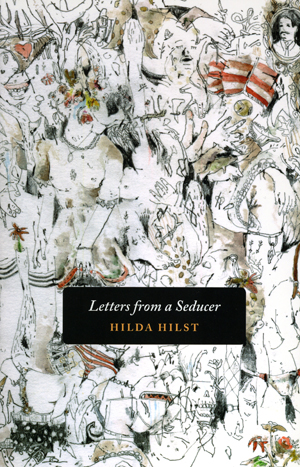
Somehow or other I completed not just the translation but multiple revisions of the Hilda Hilst novel, Letters from a Seducer (Cartas de um sedutor), jointly published by Nightboat Books and A Bolha Editora, and it has not only been repeatedly proofed, blurbed (by Dodie Bellamy, Samuel R. Delany, and Ronaldo V. Wilson!), but has gone to the printer and should be out very soon (the schedule date is now February 4, 2014). (You can even order it from distributor University Presses of New England/UPNEBarnes & Noble or that other behemoth site that I will pass on naming. You know which one I mean.) I have said publicly that it probably was a bit insane to have agreed to translate that book, which even in the Portuguese is no two-step, during a period when I had two sizable classes and lots of other pending duties, but looking back I'm glad I did, and am even happier about the resulting text.


I do wonder how readers who have been enthusiastic about the first Hilst novel that appeared in English, The Obscene Madame D (A obscena senhora D), beautifully and collaboratively translated by Nathanaël and Rachel Gontijo Araújo, will respond to this one, especially given that it is far more sexually transgressive and explicit, the language thornier--there are moments in the text that look wrong even in Portuguese, à la Clarice Lispector, though they are exactly what Hilst intended--and the structure of the novel far more experimental.

In fact, in Letters from a Seducer Hilst produces an anti-novel . I was trying to think of a musical comparison, and instantly and interestingly enough, at least to me, the post-modern work of the late Russian composer Alfred Schnittke came immediately to mind; he is best known for combining an conventional styles (for example, preexisting or pastiche versions of baroque compositions) with one or more very different, disparate styles, holding them all together via a compelling associative vision, profound craft and wit, and, to a huge degree, the willingness of the listener to accept, if not fully grasp, what he's up to and go along. That's what Hilst does in and with this novel, though in it she attempts and achieves many other things as well. In fact the book feels like it could serve as a source text for a course I taught years at at Northwestern on contemporary aesthetics and what I called "danger zones"; in it she treats in various ways aspects of conventional aesthetic theory, as well as those touchier areas I specifically focused on, including pornography, sentimentality, horror, conceptualism, and, to a lesser degree, the posthuman.

Although the translation is not yet on bookshelves it has received some early praise in draft form. Translator, editor, program director, and scholar Daniel Medin wrote the following in the December 17, 2013 edition of Three Percent: a resource for international literature at the University of Rochester:

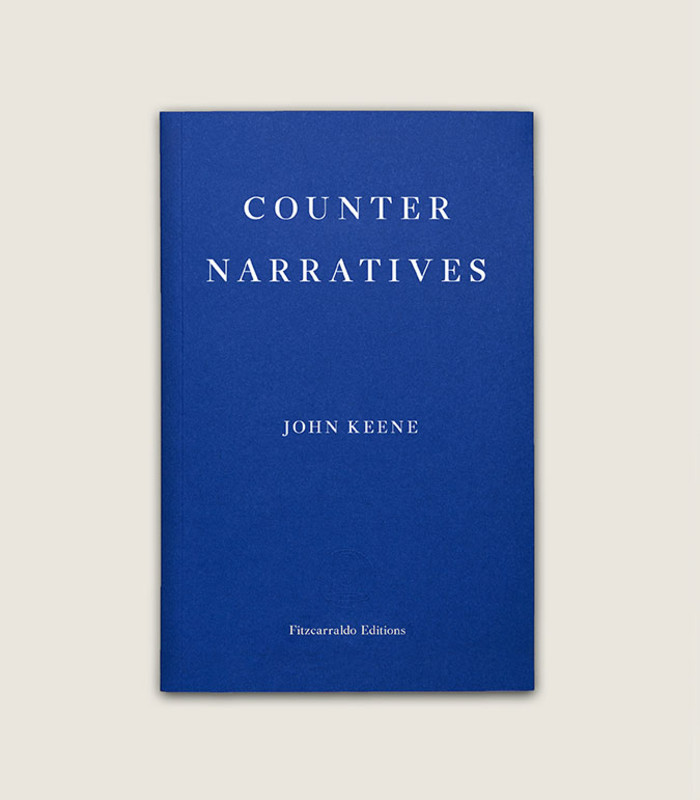
Occasionally, a work of brilliance will make it possible for a virtuosic translator to outdo, line for line, a great deal of what’s recently appeared in her target language. In 2012, the English of George Szirtes for Satantango’s Hungarian struck me as superior to the sentences of most novels written that year in English. The same’s true of John Keene’s version of Letters from a Seducer by Hilda Hilst. Scheduled to appear this month, it was perhaps my most unforgettable reading experience of 2013. I’m terribly eager to read more Hilst now—and impatient to get my hands on Keene’sAnnotations too.

Medin and Scott Esposito also discuss the translation in their podcast at Two Lines Press. A snippet of the translation will appear in an upcoming edition (No. 10, I believe) of the The White Review.

I am looking forward to discussing and possibly reading from it at an upcoming panel on translation that will take place in Chicago, on January 10th, during the Modern Language Association's annual convention. The event, New Writing in Translation, a roundtable, will take place at 7:30 PM in the Sharp Building of the School of the Art Institute of Chicago, 37 S. Wabash Avenue. As the organizer describes it, "this roundtable event will consist in a self-guided survey of recent translation projects by leading contemporaries in the field. Rather than being led by generalizable themes in the theory and practice of translation, each participant will read a brief excerpt from a recent translation project and then discuss the vicissitudes of working on it." The Writing (MFAW) Program of SAIC will host the event, and other participants include Daniel Borzutzky, Jen Scappettone, Anna Deeny, and Joshua Clover.

Lastly, I will be reading with Vincent Czyz at Word-Jersey City on January 15, 2014. I believe we both will read a little poetry and I'll be reading from the Hilst as well, so if you are in Jersey City, please join us.

Monday, January 07, 2013

MLA 2013 Panel on Black Poetics

Gathering audience, Black Poetics panel, MLA
The Black Poetics panel audience, before the room filled to capacity
So the 2013 Modern Language Association conference, held this year in Boston, has come and gone, and though I have more than once felt not just MLAlienation but also that sensation that those of us who write criticism and are conversant in and with theory, but who primarily live and work as creative writers also feel, I nevertheless headed north, was able to meet up with wonderful students and former colleagues, participated on a great panel on Black Poetics, chaired by Jennifer DeVere Brody (Stanford University), and comprising Marcellus Blount (Columbia University) and Meta DuEwa Jones (University of Texas), all superlative scholars, thus making me a bit of an interloper, and in the end I think all in all it went well. (There was even positive real-time Twitter commentary on the panel, and on my paper.) The topic of Black Poetics is vast; many are the byways down which you might travel in discussing the very concept, which would in part begin with definitions of "black" and "poetics." Jennifer's focus was on form, and both Marcellus and Meta spoke specifically on questions of "form" and "formalism," in contemporary black poetics.

Last year, as Jennifer was assembling the panel, I asked if I might steer my talk more to the issue of black digital poetics, or black digital literature, and Jennifer agreed that that would be interesting, so that's where I went, giving a refined version of the paper, "The Work of Black Poetry in the Age of Digital Reproducibility," that I first presented at MESEA in Barcelona this past June. The Poetry and Poetics Colloquium at Northwestern's excellent conversations only reinforced my desire to pursue the paper, and some of the many excellent exchanges led or sustained by Keguro Macharia also got me thinking hard about the topic. I attempted to contextualize the topic, historicize it, theorize it a bit, and then present one example of it, Mendi Lewis Obadike's online digital work from the late 1990s. The panel's audience was packed, with many amazing poets and scholars (including Keguro, January Gill O'Neill, Maryemma Graham, and many more) I knew, some senior, some junior, but so many really smart people, so I was a bit dazed even before I took the podium. But I finished, and when I finished, I felt clear-headed enough to respond to some of the questions directed my way, among them Aldon Nielsen's, which zeroed in on the fact of funding for an online archive of black digital poetry and poetics. Where would it come from? I urged (some in) the audience to consider setting one up, and as I also exhorted in my paper, it must be easily accessible and free, which would, I think, have the effect of both making available and visible some of the fascinating online poetic work people are undertaking, and jumpstarting a range of projects from here on out.

Another questioner, Robin Coste Lewis, I think, inquired about teaching the work of a poet like Douglas Kearney, and it struck me even as I was preparing the paper--and I answered along these lines to Robin--that an app like Faber & Faber's The Waste Land offered one possible vision of what a poet like Doug, whose texts, as poetic objects, possess tremendous vitality, but whose performances add to, expand and transform those texts dynamically, might consider. An tablet-ready or mobile app could include versions of the poem, but also a digital version of the poem, programmed by Doug and someone deeply knowledgeable about code, which could "eventilize" (to use scholar Nathan Brown's term) some of the poems in ways neither the text nor the video of the performance exactly can, since each represents a distinct and different medium. Instead, we might now think about the digital as making available a new format, to use David Joselit's concept, which would both present the existing media in which Doug's poetry exists while also expanding its possibilities and his (and black) poetics.

I unfortunately had to run--I mean, I really had to run!--out before the session had fully ended, to catch a train back to New York, so as to get home in time (MANY thanks to Evie Shockley and Stephane Robolin, who rode back from MLA with me, since the PATH was not running past 10 pm and C wasn't feeling well) to catch another train from New York to another destination first thing the next morning, as the possibility of traveling from Boston to my destination by any means other than car was nonexistent, but I was glad to have been able to present at this year's MLA, see that Boston has not changed all that much (except for more pleasant people in its Copley Square restaurants), and not wonder, as I have done more than once at past conferences, what on earth am I doing here?

(PS: As William Pannapacker also notes on the Chronicle of Higher Education's site, this was the year the Digital Humanities really broke out at MLA, as did recognition of the importance of Tweeting and blogging, so....)
Me, at MLA 2013 (photo by Jan Gill O'Neill)
Yours truly, photographed by January Gill O'Neill

Saturday, April 07, 2012

Microeconomics of American Poetry + MLA Rankings of American Writers

Tomas Tranströmer (center), receiving the 2011 Nobel Prize for Literature
Many a--or any--writerof but the most impenetrable fictional prose (and agent of said) can look at the success of a J. K. Rowling or Stephenie Meyer or Suzanne Collins, or all of the writers, including Toni Morrison, Cormac McCarthy, and Ursula Hegi, who graced the Oprah Winfrey Show after being picked by her book club, and imagine that they might be the next one, the one, to galvanize minds, hearts and wallets, just as nonfiction writers can take their pick of journalists, biographers, advice columnists, memoirists, and memory-fabulists, and imagine a book that becomes indispensible and flies off the shelves, but for poets, this truly is as rare as a lump of coal that spontaneously turns into a diamond.  It does happen, and to prose writers of diverse gifts and varying complexity; this is the subtext, I have known since graduate school, and sometimes the topic of discussion, of every fiction and nonfiction workshop, though most fiction and nonfiction teachers, this one included, strive to keep the focus on the work and the genre themselves.

Last December I came across Rachel Friedman's New York Magazine listicle, entitled "Livelihood of the Poets," about the microeconomics of poetry, which I could not find the time to post to this blog, but which I am now linking to, since Poetry Month is better than never. Friedman's focus was the sales bump and monetary rewards the most recent Nobel Laureate, Tomas Tranströmer, garnered, but the glib piece, comprising selective charts and minimal commentary, mainly served to show how financially unrewarding the poetry field, narrow understood as teaching and selling books, can be. Even accounting for downscaled projections, Friedman's numbers--which I have not verified--do open the eyes. Here are just a few, but if you click on the link above, you can see the rest of the short piece for yourself. One thing they underline is why so many poets nowadays have a back-up plan of getting, at the very least an MFA or a PhD, why so many hustle books and journals and zines out like pancakes, why the stakes of publishing and being publicly championed really are higher than many non-poets might imagine or admit, and why so many poets are looking for angles, on themselves, their work, the world, anything. Unless you're rich or know how to set your work to (country) music, you'd better scramble, or you'll starve. But back to Friedman; the snarky titles are hers, not mine, as are the typos.

THE WASTELAND
Estimated poetry M.F.A.’s [sic] awarded, according to M.F.A.-world blogger Seth Abramson, in …
2001: 700
2006: 1,000
2011: 1,400
Approximate number of jobs available to teach [sic] M.F.A. programs: 750

and

WIDELY KNOWN IN NARROW CIRCLES
Best-selling poetry books of 2011

Horoscopes for the Dead / Billy Collins
Copies sold: 18,406
*Author’s est. earnings: $44, 177

Leavings / Wendell Berry
Copies sold: 2, 928
*Author’s est. earnings: $4,377

Come, Thief / Jane Hirshfield
Copies sold: 2,250
*Author’s est. earnings: $5,625

*Assumes a 10 percent royalty rate.

282,000 Copies of Tim Tebow’s autobiography, Through My Eyes, sold since its May release.
Poetizing ain't no jive. Be kind, buy some books of poetry by LIVING POETS as well as the not-so-living ones, and please read them. As a former professor (and very acclaimed fiction writer) of mine told me and my fellow fiction-writing classmates, "You can always learn from the poets." Even (especially) if you're a poet, even if not.

‡‡‡

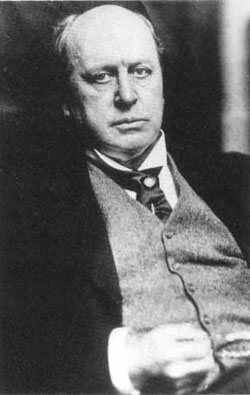
Henry James
The other day Reggie H. sent me a link to D. G. Myers's Commentary (yes, I am still rinsing out my eyes) literary blog post, "MLA Rankings of American Writers," for which I thank(ed) Mr. Reggie H. and which I duly Tweeted, as I am wont to do with such things.  Myers decided to review the Modern Language Association's International Bibliography, to cull those writers receiving the most frequent focus of scholarly attention since 1987, i.e., the apogee of the "culture wars" era. (Allan Bloom would issue his The Closing of the American Mind  Let me note that Myers is clear that this is not an MLA-sanctioned or supported ranking, but that he--who disaffiliated himself from the organization a decade ago--compiled it himself.

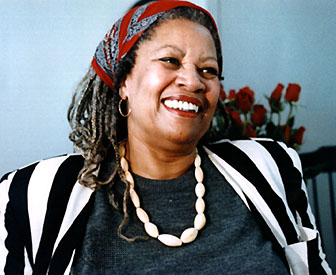
Toni Morrison
He also notes that despite all the brouhaha about radical literary academe's alleged fixation on the race-sex-gender triad (all of which should be part of any discussion of any book, along with class, etc.), on identity politics, on "the culture of resentment," or the "school of resentment," or whatever guff Harold Bloom and similar dinosaurs are spewing out at the current moment, and despite the worry even among some alleged "liberal"-leaning types that the Anglophone masters have been dethroned, it turns out that--guess what, haters!--many, many familiar names still top the list. AND MOST ARE MEN. I need not tell you their race, either. Are you ready? Here goes:

( 1.) Henry James (3,188 items) [+1]
( 2.) William Faulkner (2,955) [-1]
( 3.) T. S. Eliot (2,659) [+1]
( 4.) Herman Melville (2,579) [-1]
( 5.) Vladimir Nabokov (2,290) [+5]
( 6.) Ernest Hemingway (2,220) [-0-]
( 7.) Edgar Allan Poe (1,958) [-2]
( 8.) Toni Morrison (1,950) [+9]
( 9.) Nathaniel Hawthorne (1,751) [-4]
(10.) Walt Whitman (1,647) [-2]
(11.) Emily Dickinson (1,623) [+2]
(12.) Ezra Pound (1,620) [-3]
(13.) Willa Cather (1,482) [+5]
(14.) Ralph Waldo Emerson (1,326) [-3]
(15.) Wallace Stevens (1,122) [-1]
(16.) Edith Wharton (1,087) [+5]
(17.) Henry David Thoreau (1,076) [-5]
(18.) F. Scott Fitzgerald (1,002) [-3]
(19.) Flannery O’Connor (935) [+3]
(20.) Mark Twain (882) [-4]
(21.) John Steinbeck (823) [+2]
(22.) William Carlos Williams (772) [-0-]
(23.) Saul Bellow (706) [+2]
(24.) Richard Wright (670) [+2]
(25.) Robert Frost (661) [-5]

There are only 5 women, 2 black folks--and 1 person who could be considered latino (Williams) on this list, though I would argue that he usually is not. Not 20 women and 10 black people (or any latinos or latinas, any asian-americans, etc.). There are also 2 openly queer people--Walt Whitman and Willa Cather--on this list. Not 15, etc.  One of these women also is one of the black people, and she is still writing and living among us, and her name is Toni Morrison, and she received the Nobel Prize in Literature. (She is the only living person on this list.) The other four women are all deceased; one wrote brilliantly in obscurity in the 19th century, two at the turn of the 20th, the last was one of the greatest short-story writers the United States has produced. So there you go: these are who literary scholars are writing about, not whose books are flying off shelves, not whom Harold Bloom (or Helen Vendler or anyone else including people claiming to be open-minded but basically reinscribing this same tired reactionary rhetoric) is convinced no longer even makes her or his way into a dissertation, let alone a classroom, not the who the people who are endlessly whining about the leftist, anti-Western canon, Marxist, Socialistic professoriate claim have supplanted these hardy souls, etc. I would imagine that were Myers or anyone else to do a similar survey of the most frequently appearing British authors since 1987, we could probably guess who would appear in the top 25 (the first gentleman's name, I would surmise, begins with an "S" and ends with an "e," and rhymes with "Bakes here"....)

If and when you hear anyone who has not recently set foot in an English department that teaches American literature or trains people to do so start yapping about how faculty and graduate students in American literature are studying everyone but the folks above--THE CANON, as it has existed for some time--please direct them not even to this blogpost, but to Myers, since they're more likely to believe him than me.

(BTW, do look at the comments. Some are, as such outbursts of expressivity on such sites always are, priceless.)

Friday, January 06, 2012

Thinking About the MLA, Queer Theory, Literary Study

I described this quarter's movement thus far--it's been only one week and had I followed the suggested teaching schedule I would have taught 7 class sessions, instead of 4--to a colleague at another university as akin to being on, and simultaneously racing, a maglev train, and I won't get off it or be able to lower my pace until late March. So my posting may be very intermittent until then. Last year at this time, and just days into the new quarter I was heading to Los Angeles to undertake my responsibilities on a hiring committee that was interviewing people at the annual conference of the Modern Language Association. I spent most of my few days there in a single large room, asking tough questions of very smart and interesting people, and my evenings recuperating, and that's all I'll say about that, other than great hires emerged from the experience. One highlight of the trip, however, was having the opportunity finally to meet and hang out with poet-genius Will Alexander, which was a delight (and when I returned to Los Angeles last spring, I spent an afternoon not far from the UCLA campus with him and Chris Stackhouse), and also with several old friends, among them my former Dark Room Collectivist, writer and scholar Bethany White, and my former co-worker, the multiplatform artist Ella Turenne.  I don't think I had time to attend a single MLA panel or reading, though I did run across many anxious colleagues who appeared to be presenting at or excited about one or the other.

This year, no MLA. I had no reason to go beyond wanting to see, once and for all, the city of Seattle, which I've never set foot in. (Nor have I ever visited Portland, which I want to visit even more after a mini-marathon of the Carrie Brownstein-Fred Armisen zaniness known as Portlandia. The show is so bizarre and hilarious that it probably has planted an irrevocably skewed vision of the city in my head and any time spent there will be a let-down, but nevertheless, I'd love to go there.)  Nevertheless, I did see that, according to Stacey Patton in The Chronicle of Higher Education, at this year's conference the major focus will be a justification of why teaching literature--and by extension, the humanities and cultural studies--matters. As many a major scholar (Judith Halberstam, Rita Felski, etc.) has articulated far better than I, literary studies faculty have for decades now not made a compelling or convincing case, particularly to those outside academe, for studying literature or for the importance of various critical and methodological approaches, which have become caricatures in portrayals by people on the right and even among journalists and non-academics.  This is not to deny that a good many scholars and literary critics have engaged people outside academe and some, like bell hooks or Stephen Greenblatt, to name two, regularly reach audiences outside university and college walls.  But I do sometimes think that important conversations occurring within academe often don't filter out, and that the many valuable aspects of these conversations are not self-evident without some explanation, some guidance, some justification, however rendered, to people outside academe. 

We live in an age and in a society in which "expert" knowledge is viewed with perhaps more skepticism than an any other time over the last 200 years (and I certainly do acknowledge that this is perhaps a bit hyperbolic and that, as Richard Hofstadter pointed out half a decade ago, the US in particular has always possessed a strong anti-intellectual strain, even as it has produced some of the major thinkers, scholars, and creative people to have emerged over the last two centuries). Just saying that scholarly and critical work, especially literary scholarship and criticism, and the teaching of literature, are important, or that it's necessary for professors to pore over a given work, and to teach students how to do so, to do so with them, to guide them in doing so, holds less weight with many outside academe than it once did.  Yet, as I have pointed out more than once to my students and to friends and colleagues, our contemporary political sphere undoubtedly draws a great deal--too much--of its water from the well of a not-very-good work of prose fiction, a novel, Atlas Shrugged, by Ayn Rand. I would venture that far more people animated by Rand's thought and ideology have read this work or her other creative texts, like the better written but still stilted The Fountainhead than have puzzled through her more overtly economic or philosophical treatises. In fact, these books are among the most effective vessels of and for her ideas; what someone teaching literature can do is explain, perhaps in ways that someone who doesn't do so, is why and how.

One area where this intra-academic knowledge in some ways appears to to have filtered out and yet at others has not is with what is now falls under the broader rubric of queer studies. In the current issue of the Chronicle, both Michael Warner, chair of Yale's English department and a major scholar and critic, and William Germano, dean of the faculty of humanities and social sciences at Cooper Union, muse on the end of Duke University's Series Q, an imprint of influential books in queer studies--and lesbian and gay studies before that--and on the current state of the field, which, it has struck me as I have begun teaching what I think is the first course in my current department in LGBTQ literature and theory ("American LGBTQ Literature Since Stonewall"), and here I echo both Warner and Germano, is as germane as ever.  In some ways, the popular discourse about lgbtq issues is much further along than it was when I was an undergraduate in the late mid-to-late 1980s, or when I was in graduate school in the mid-to-late 1990s. But in as much as some of the key insights of many figures of that era have diffused throughout popular discourse, and we are further along politically and socially, I and anyone else who opens her or his eyes on a daily basis can see how certain things still carry over. It is no longer surprising to me how frequently people adhere to binary notions of sexuality; how frequently offensive terms like "tranny" are tossed about, and how transvestitism, transsexualism, and transgenderism pose a quandary for many; how confused many people still are about the differences between sex, sexual orientation, sexual object choice, and so forth; and how the unrepressed, the normative--heteronormativities and now, homonormativities--not only never left, but in some quarters are thriving. Outside of Logo and MTV, turn on the TV, and what do you see? I think the answer to this question is clear enough.

Lesbian and gay studies, and queer studies coming shortly thereafter, unpacked and examined a great deal of what lies at the core of these issues, and for some in the academy, I sometimes think it really may feel as if the matter, the issues, were long settled. (Or maybe that's just my perspective as I listen to people talk about lgbtq issues within academe vs. outside it.) But in fact, it's not even settled in academe itself. I can recall, as I told my class on Wednesday, how a colleague on the board of the Center for Lesbian and Gay Studies at the City University of New York Graduate Center in the late 1990s spoke enthusiastically of a "post-gay" moment, and many, perhaps most people present, agreed with him. In many senses, particularly in the wake of queer theory and queer studies, we were at a point where we could speak, at least in academic terms, of moving away from the sorts of identitarian-dentificatory-based (i.e., linked to individual psychologies, with  communities arising from these identifications) ways of thinking about the world to approaches that examined larger structures, institutions, the fluidities and mobilities and intersectionalities of self-fashioning and presentation, of performance in the world, in varying contexts, and this was, certainly, exhilarating. But those older approaches were not without their value, because outside the walls of academe, they were and still are in contestation. 

Think about the It Gets Better series of videos and the discourse around this, and how there's little discussion of how other issues, like race and ethnicity, class, gender variance and dissidence, and so forth, factor into how young people not only may be treated but whether or not they'll be able to deal with bullying, homophobic, and heterosexist violence and oppression.  It may get "better" if you are young and white and male-identified and queer and upper-middle-class, and have support networks around you, but if not, then what? That is not to say things are hopeless, but rather that the insights of lesbian, gay, bisexual and transgender studies, and queer studies, especially as they have explored the state of the world with increasingly greater nuance, do offer ways of addressing some of the questions the standard responses in the It Gets Better videos have set forth.

I say all of this to suggest that teaching literature and the insights gained from doing so over the last century have have many purposes, offer many tools, in the world.  One, as the Chronicle article says Stephen Greenblatt suggests, is bringing us towards an understanding of "aesthetic pleasure" and appreciation. Implicit in the idea of the "aesthetic," as not only Clyde Taylor, who wrote a superb critical book some years ago about the European idea of the aesthetic and its multiple, sometimes problematic valences, but going millennia back, Plato and Aristotle themselves would suggest, are questions of the political, the economic, the social and cultural. Literature can help us to better understand these aspects of the world; it never appears in a vacuum and some of the most important things that professors teaching literature do include (but are not limited to) introducing students to works they have not read before; guiding them through and teaching them new ways of reading those works--including ways that they may already be familiar with; helping them understand how those works function in relation to other works, to the times in which they were written, to other periods and times, and to the present moment; exploring the various registers of literary texts, for every work operates on a variety of frequencies, some quite obvious, some quite hidden; and inculcating the multiple potentialities and worths, which should include skepticism of those very values at times, of literature, art and the humanities as human enterprises, of reading and writing, of language and languages themselves, which constitute the primary ways we as human animals, all of us, not just some select few of us, communicate. Of course, as I said, scholars far more distinguished than I have already hashed this out with brio and panache, and are certainly doing so at the MLA right now (or have been doing so). But in case any J's Theater readers wonder what people do in literature classrooms, it's a lot more important and engaging than tossing around gobbledygook. It goes to the very heart of who we are as human beings and creatures in this large and vast world.