Showing posts with label reviews. Show all posts

Saturday, February 27, 2021

16th Blogiversary

The Translation Project's Black
History Month tweet, from February 21, 2021,
 highlighting my essay "Translating Poetry,
Translating Blackness"

Happy Black History Month and Happy Almost-End-of-February 2021. We are almost a year into the Covid-19 pandemic, and it has been over a year since I posted on this blog. It sometimes amazes me that more than a decade and a half has passed since I first began blogging, back in 2005, during what was a decidedly different time in the online world. Social media platforms as we know them barely existed; blogging was still a somewhat new and exciting activity, though the bloggers who inspired me had been blogging for several years; and people read and commented on blogs, including this one. I have over 2,000 non-spam comments attesting to that. 

16 years later, blogs and blogging do still exist, and the term "the blogs" is often bandied about on reality shows as a catch-all for any site, blog or not. This is the case despite that period perhaps ten years ago when some in the media trumpeted blogging's demise, and despite the proliferation of quasi-blog-like sites, like Tumblr and Instagram, the former of which has done away with words altogether, and both of which are now part of many peoples' daily consumption, even if blogs as they once existed--as they existed in 2005--seldom are. I won't rehearse my blogging history, which is available via a search of this prior blogiversary posts on blog (I started off blogging about poetry and the arts, etc.), but blogging here was, at least for that first year, and certainly for the next decade or so, a vital experience for pondering the sometimes imponderable, conveying some of my enthusiasms and interests, especially across the arts, posting translations, sharing photographs (from daily life, events I attended, my random walks through NYC, Chicago and elsewhere), and just having a scratchpad to play, in written form.

Things began to change demonstrably, I think, in 2014-2015 when I began chairing a department. My free time increasingly disappeared, which meant that that I had to rearrange my priorities, with some things suffering more than others, among them blogging. (A colleague queried whether I had In 2013, my second year at Rutgers-Newark (I was acting chair for part of that year) I blogged 140 times; by 2014 it had fallen to 59. I made an effort over the next few years to blog a bit more and got up to 78 and 71 blog posts, successively, in 2015 and 2016, but my entries plummeted in 2017. In 2018, I again made a strong push to blog, and nearly reached 100 posts, but most of them that year appeared during National Poetry Month, and by the end of the year, I was down to a 1-a-month trickle. Two years ago I only managed six posts, a miracle I sometimes think, in that I had one of my busiest and most draining years in academe, and I think I consciously tried to post something, though the results were, as the total underscores, paltry. 

This past year, the Covid-19 pandemic, which is still very much with us, didn't result in a flood of posts, but rather a feeling of PTSD-style wordlessness, at least in terms of blogging, that I am still trying to process. I had a few blog stubs I began, and I will try to finish some of them, even if they consist mostly of links and images, but I also feel like the silence--the absence of posts--is testimony to what has transpired over these last 17 months (since February of 2020). Most of the people who were blogging when I began or who started during the last 16 no longer do so, at least regularly, though Gukira bucks that trend, with entries that are always rich, subtle, lyrical, and distinctive, however brief. This month he continues his readings of Dionne Brand's remarkable 2018 collection The Blue Clerk. I keep thinking that I will again be able to find the time and focus to blog, but I also increasingly feel, as I pointed out in a blog several years back, reading itself appears  fallen by the wayside, and videos, whether on Youtube or IG's stories--which Facebook, tellingly, has adopted, even though it owns Instagram--or TikTok, accompanied by music and each with its own distinctive set of active participants, have become increasingly predominant, so perhaps even occasional posts, as loose and free as possible, might be the thing to aim for.

One of the many types of blog posts I tried to include over the years entailed reviews, of films, series videos, and books of course, and I feel proudest of some of those, which still hold up. One of my most read posts (4,100 views) is a short review of Christopher Honoré's 2010 feature film Homme au bain, starring the writer Dennis Cooper and the porn star François Sagat. Perhaps its stars drew more readers than most of my other posts, though I think it provided a helpful introduction to the film, the best I have seen by Honoré. I also have been able to write about more recent offerings like Terence Nance's 2018 Afrofuturist masterpiece series Random Acts of Flyness (one of the strangest and most original things I have ever seen on TV), Boots Riley's 2018 film Sorry to Bother You (I dream of more films like this!), and John Trengove's 2018 film Inxeba (Wound), which also spurred a series of typically, thoughtfully dazzling responses from Gukira (Ke'guro). One of my favorite films, which I haven't seen in years, is Tsai Ming-Liang's slow, astonishing Goodbye, Dragon Inn. I remember watching it and thinking, the viewership for a film like this is probably very small, but I most certainly am one of those cineastic people, yet in reviewing it, I tried to make it legible for a wider array of potential viewers. Perhaps if and when I find the opportunity I'll try a few more reviews this year, so keep an eye out.

I'll wind down here, and say that I feel like I've accomplished something just by posting something on this blog today. (I also deleted a slew of spam comments, which also felt like an achievement!) I am still chairing and teaching (including a graduate novel workshop this semester) and supervising theses, all via Zoom (like everyone else), every day of every week feels even more busy than usual (each seems to be triple-booked at a minimum in terms of Zoom meetings, calls, etc.), and my stack of required reading grows and grows, but it feels invigorating even to have gotten this far in this post. It is here. It is done. & I am going to try to post more.


Tuesday, August 09, 2016

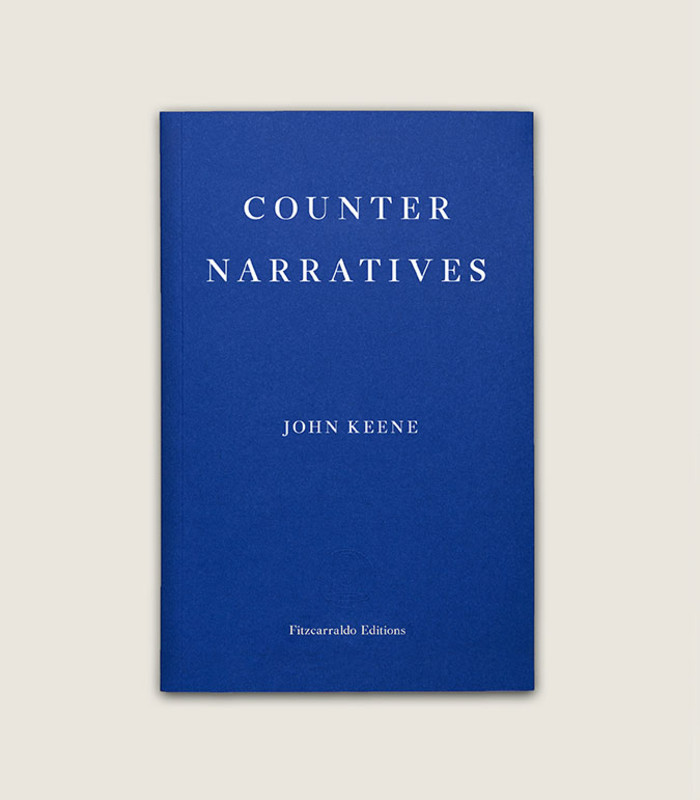
Counternarratives' TLS Trifecta + Cosmonauts Avenue Review

In its British version Counternarratives continues to earn reviews, and I am very happy to report a rare trifecta in the Times Literary Supplement. (I say this not to humblebrag but out of real astonishment; other than the Wall Street Journal, not a single major US newspaper save the Wall Street Journal reviewed Counternarratives, though thankfully many magazines, journals and independent reviews more than made up for the big press's silence.) To the TLS, I say thank you, and thanks again!

First, critic Kate Webb published the longest, most rhapsodic and perspicacious of the three, entitled "Exceed Every Limit." It was one of the best reviews the book has received so far. Here is one quote I particularly enjoy, as she identifies one of my key intellectual-genealogical through-lines, via the greats Edward Said and Paul Gilroy. She also teaches me a new word, "polytych":

As its title suggests, Counternarratives contains “writing back” of the kind Edward Said once proposed; its stories are imbued with potent dialectical energy, bringing to mind Paul Gilroy’s key idea of the “Black Atlantic as a counte­­r­­culture of modernity”. Keene is not simply an oppositional writer, however: in his richly detailed accounts of black lives through history, dividing lines are continually crossed. So there are escapologists and prophets, motifs of cultural appropriation, false consciousness, prohibited desire, illicit knowledge, forbidden artistry, and everywhere the struggle for transcendence. Counternarratives consists of thirteen individual fictions – some of flashing brevity, others the length and intricacy of a novella. Together they act like a polytych: each story has its own integrity but an underlying intellectual coherence allows the reader to intimate their author’s power and purpose, and to identify the arrival of a writer who, like one of his own characters, has “a will of lead and a satin tongue”.

Another very positive TLS notice came from fiction editor Toby Lichtig, who decided to create his own alternative Man Booker Prize longlist of the "top thirteen novels from the past year," and placing Counternarratives on it, with in the aim in part to include "a little bit more experimental writing" than this year's Man Booker Prize committee did. He mentions Kate Webb's review specifically in his comments:

Our [TLS] reviewer...was hugely impressed by this dazzling retelling of colonial history in the Americas, a "writing back" inspired by writers from Jean Rhys to Edward Said but achieved with a unique vision that is all the author's own. "We have", wrote Webb, "become accustomed in recent years to the revisionary spirit of much postcolonial fiction, but the ambition, erudition and epic sweep of John Keene’s remarkable new collection of stories, travelling from the beginnings of modernity to modernism, place it in a class of its own."

Lastly, as I mentioned a few posts ago, in TLS's suggested summer reading list, critic and author Ben Eastham placed it "at the summit" of his book stack, adding:

Keene is among the contemporary American writers pushing at the boundaries of fiction, his angry, exhilarating stories about race and American history another counter-example (if it were needed) to the lazy assumption that literary innovation should be confined to the ivory tower.
To Webb, Lichtig and Eastham, and to the TLS I offer my heartfelt thanks!

***

I am always surprised when people ask me if it is OK to conduct an interview, because until Counternarratives I had participated in so few, and I relish opportunities to answer questions, no matter how challenging, about my work.  For me these interviews are always conversations, and if they bring more readers to my writing or to that of the interviewer or interviewers, or to any of the people I mention in passing, so much the better.

One fruit of such a conversation recently appeared in Cosmonauts Avenue, which published a chat I had with one of my and our brilliant Rutgers-Newark MFA students, Soili Smith, who when she's not producing writing of impressive depth and philosophical heft, is supervising tree planting in British Columbia. It was a joy to speak with Soili, and I hope readers found something interesting in the interview, which actually covers some new ground, I think!

A long quote, about novellas--we can never have enough of that form, can we?:
SS: I know I’ve asked you about this before, but I want to discuss novellas. I find in the world of literary journals and magazines, especially in the age of prolific digital publication, the novella is becoming a bit of a dirty word. I’ve heard it said that some publishers find novellas unmarketable to broad audiences. Counternarratives contains a number of stories that the book itself claims as novellas. What do you think the place for the novella is in literature? What’s its importance in your book?

JK: That’s a great question. Obviously there’s a long tradition of novella writing. Some of the greatest works, including in American literature, could be considered novellas. And it’s so bizarre to me, at a time when people express, in every venue you can think of, how much of a premium their time is, that there is this resistance to a form that is, of course, bigger than a short story, but is shorter than a 400 page novel. I love novels, and even did a sort of unconventional thing by writing a condensed 81 page novel [Annotations, New Directions Paperback]. But with [Counternarratives], well I’ll say this: part of the reason there are novellas in this book is that I used to teach an undergraduate Creative Writing course at Northwestern in which we required—for the Fiction majors—that in the first half of the year they write three or four short stories that they revised, and then in the second half we had this insane but wonderful requirement that they write a novella. I used to tell people about this and they would say, John you’re making this up, because it’s so improbable. But the students did it! Year after year, and it was invigorating but also brutal, because when you’ve got fifteen to seventeen students writing novellas, you have to read all those novellas. And you don’t just have to read one draft, you read multiple drafts. There was one point where I taught this class and I really thought I was going blind. Later on I realized, okay, I’m asking these students to do this, I read novellas all the time, why don’t I try to do this? What is it to write a novella? And it was exhilarating. There are several in the book: “Our Lady of Sorrows,” I think “The Aeronauts” could be one, and then “A Letter on the Trials of the Counterreformation in New Lisbon.” I feel like what those do in the space of this book, is they kind of press the limits of form and contemporary American storytelling. Just as those very brief, almost poetic, lyrical pieces suggest the possibilities of condensation, the novellas demonstrate the possibilities of expansion. So without writing a full novel, what might you do with this form? What’s possible? Can we write an epic in short fiction? And because all of these stories speak to each other, you have the lyric brevity and narrative density and expansion in conversation in interesting ways. I highly encourage [novella writing], but I will say publishers in general, I mean New Directions does publish a certain number of novellas every year. Melville House does as well, and Nightboat Books too, just to name a few publishers, but in general, there is a real hesitancy about it, which I personally don’t understand. I think a lot of it has to do, again, with conventions in American literary life, publishing culture, commercial culture. If you look at a book like Seize the Day by Saul Bellow, which is a remarkable book, it’s hilarious, devastating, and it’s a novella. And Henry James wrote novellas. I mean…

Wednesday, September 16, 2015

Reading @ Rutgers-Newark + New Reviews & Interviews

On Monday, as I mentioned in my post about my HuffPost Live appearance, I gave a reading at Rutgers-Newark as part of the African American and African Studies Fall 2015 event series. This was actually the second time I read from Counternarratives at the university, though the first since the book was published back in May. Previously I had read "Mannahatta" at the MFA program reading back in 2013, but this time, I read "Acrobatique," and, for an encore, two short sections from "The Aeronauts."

Though the reading coincided with the MFA program's workshop period, a full crowd filled the room, with many colleagues and students present, as well as members of the Newark community; the question and answer session was lively; and I sold and signed a handful of books. A free reception with lots of delicious food followed.

Below is a short film by Justine Hunter with some video clips and a voice-over of me reading. Many thanks to Justine, and to departmental administrator Christina Strasburger and administrative assistant Rabeya Rahman, as well the Dana Library, for making this wonderful event possible!


***

The good reviews keep rolling in, thank the gods. Brad Johnson, a bookseller and critic, penned and published one the most laudatory reviews of Counternarratives to appear thus far, in The Quarterly Conversation. I am especially pleased that Johnson connected the collection's themes to today's local and national events, and identified the political consciousness informing the stories. Like several other readers, he views it almost as a novel in stories: A quote:
This is the context of John Keene’s ambitious collection of stories and novellas, Counternarratives. Though many of these were published elsewhere, together they read very much like the multi-genre, patchwork novels of Alexander Kluge—or perhaps more grandly still, László Krasznahorkai’s recent Seiobo There Below, a work bound not by plotted coherence but by a conceptual aesthetic thriving on difference. This is to say, while Counternarratives makes no claim to being a “novel of short stories,” its epic sweep and conceptual unity bear the marks. Indeed, one might speculate further that this “story collection” lives up to its title and effectively challenges—like Kluge and Krasznahorkai (among others)—the commonplace sense of how a novel should look and what it should do.

In Front Porch Journal, a journal published by MFA students at Texas State University, critic Patrick Cline praised Counternarratives, with a focus on its aesthetics, which we discussed further in a conversation with Book Reviews editor Michaela Hansen. One quote:
To this reader, the chameleon-like range of the writing is impressive. The book as a whole feels like an entry from Oulipo, the French writer’s collective devoted to prompts and restrictions, but like a really good Oulipo book. One whose writer is invigorated by the challenge posed by each prompt, and uses each as an opportunity to explore his pet themes—freedom and control, legacy and hauntings, the influences of religion, and queer love throughout history. Each story is a surprise and a success, and cumulatively they come together to feel vital. This is an important book—it’s important to own, to read, to teach, and to slip in your shelf beside the classic narratives that it’s in conversation with.
In Full Stop, reviewer Patrick Disselhorst offers kudos through and amid a perceptive reading of Counternarratives that gets the relationship between the written and the oral, the constructedness of narration and of lives, and the power of fiction to reorient not just our thinking, but our vision of the world. He writes of a sentence in the first story, "Mannahatta":
Keene’s long sentence meanders and searches for something to grasp ahold of. But, the lack of specificity, the lack of demarcations, is inherent to his character’s predicament. Rodriquez [sic], Keene alerts the reader in the introductory note to the story’s initial publication in TriQuarterly, as “a mulatto . . . of San Domingo,” the son of a Portuguese father and African mother, complicates the reader’s understanding of New York. The first settler of the city, simultaneously African, Dominican, and Latin American, is underrecognized, but in this story, he emerges, “never to return to the Jonge Tobias, or any other ship, nor to the narrow alleys of Amsterdam or his native Hispaniola.” Rodriquez [sic] functions as our introductory figure to the text — a man of African descent arrives as a settler, and along with him, an alternative understanding of how the Americas were initially constituted. Keene trains the reader to be alert to openness; to view things singularly involves a lack of foresight in watching figures or situations brush up against received knowledge.
***

Three of the best interviews and conversations I've participated in have recently been published. In conjunction with the Front Porch Journal review, which I link to above, I chatted with Book Reviews Editor Michaela Hansen and reviewer Patrick Cline, who sent me a set of questions, and then sent a few more based on my first set of responses. In this interview, titled "Countering the Narrative," I love how much they delved into the stories and how curious Patrick was about the relevance and effects of a post-modernist approach:

FP: Hmm, I suppose it’s the stylistic pastiches of “Encounternarratives” that I’m asking about. The styles invoked seem to correspond to the historical moment of each story—an impressionistic style in “Acrobatique” to capture an impressionist subject, the cacophony of languages in “Cold” at a time when it seemed that art was working to capture exactly that (e.g. Dada, Eliot)—as well as the subjects. I think what I was most struck by was that the stories seem to exhibit no fear of Yvor Winters’ “imitative fallacy”—that they’re fully willing to invent new stylistic modes simply to accurately capture varieties of experience, without reflexively casting doubt their ability to do so. I’m wondering if the justification of pastiche affords them this boldness. 
JK: Your identification of the historicization embedded in the stories’ forms is a great one. I do wonder, though are these fully stylistic “pastiches”? Of Modernist prose? Or does “pastiche” function as one of many modes in them and all the volume’s narratives? I see the forms and styles as apt textual embodiments and enactments of the stories’ themes. To put it another way, the prose forms and texts here serve not merely as presentations but as partial representations of the narratives they convey, which is to say, they possess a mimetic function or component, which is, admittedly, fairly uncommon in contemporary American literature. With “Acrobatique,” the prose visually mirrors the story’s progression but also its central ideas. In popular memory, the specificity of Miss La La had become as lost to us as any single thread within the vast tapestry of Degas’s artistic output. That recovered thread, via my imagination, is the one the story hangs on. As for Winters, I suppose I read his “imitative fallacy” as too proscriptive, which is always a spur to defiance. How did Caliban put it in The Tempest? “I’ll have none on’t.” Or as Elizabeth Alexander has written, “Oh language/my trinket, my dialect bucket,/my bracelet of flesh.” If we listened too closely to Winters, we’d lose a sizable swath of our literary treasures, and not just those from modernism—or post-modernism—o

Earlier this summer, writer and reviewer Blake Butler conducted an interview with me for VICE. We spoke by phone around the time of the book launches, and some of what we discussed I've since repeated several times, but the conversation was free-wheeling and I felt particularly expansive at times. At one point we discussed current approaches to teaching Mark Twain's The Adventures of Huckleberry Finn:
I remember maybe it was like five years ago when they were trying to get the racial slurs removed from Huck Finn, or at least change them to a different word. Do you think of a practice like that versus going in and exposing the trouble from a completely different way?  
I feel like we shouldn't whitewash anything. Because Huckleberry Finn, and any number of such books, are artifacts of our history. And I think if you're teaching it to a younger person then the teacher should frame it. You don't want to say, "This is a bad book, this is a good book." You want to say: "This term will appear here, and we want to understand why it is in here. So one of the things we are going to think about while we're reading—and it's not going to be easy—[is] why do you think this term appears in here and what does it tell us about the moment, the era, the time in which it was written?" I think this is actually very, very powerful for students. But it's the role of the teacher to contextualize and assist the students in understanding why a book reads the way it does. This is not just in the matter of race and racism, but gender and misogyny, and homophobia and classism in certain kinds of books. Because if a book is a very good book on most levels, we want to understand not only why it's a good book and its successes, but also what are its failures? What is problematic about it? Not just a book, but any work of art. What is succeeding in it, and also what isn't succeeding?

Last but not least, while at Image Text Ithaca I participated in a long, remarkable conversation with poet, critic and scholar Tonya Foster, whose new, stellar collection of poems A Swarm of Bees in High Court has just been published by New York publisher Belladonna*. The conversation appears in the new Fall 2015 issue of BOMB Magazine, and so is not online yet (I think it'll appear in full once the next issue goes to press), but an excerpt, titled "Haikus of Grief, Silence in Harlem," did appear on LitHub, the new aggregator site sponsored by several major New York publishers.

Though it's a tiny sliver of our exchange, and zeroes in on questions of grief and trauma in Tonya's collection, it offers a distilled taste of what we both were thinking and had to say. I can't wait to post the full version, and please do grab a copy of BOMB to read it if you can.

From LitHub:


John Keene: In the notes at the end of your new poetry book, A Swarm of Bees in High Court, you describe it as “a biography of life in the day of a particular neighborhood,” and you use the phrase “the multiple as subject and as swarm of actors.” Based on those descriptions you could have written a nonfiction text or a more literal reflection, but you’re capturing this world in a lyric mode, undertaking compelling things with form.

What really comes through is a play of both the ear—sound, music, and noise, in the positive sense of the term, as distortion—and also the eye. Could you talk about how you decided to go with the haiku-like form, which you stick to at certain points, and you break in others? At the very end we get a little section of prose, almost like a fable.

Tonya: The first thing that comes to mind is Amiri Baraka saying, “You know, I would read poems in The New Yorker and think, I can’t write poems like that.” (laughter) The work of the book began when someone asked me to write about 9/11, and I thought, What? It just seemed bizarre.

How do you write about grief when you’re in the middle of it? How do you imagine or traverse that necessary distance? I had been writing erotic haiku to a man I liked. And someone else said, “Why don’t you write haiku about 9/11?” I thought, Okay, I could do that and not weep, right? I could write these little condensed pieces about New York at that period. It was a time when there were these condensed, very tense encounters with the images of people who were missing—but not only with them; you were also encountering the people missing them, looking for them.

Thursday, July 02, 2015

Book Launch III @ McNally Jackson + Flavorwire/WSJ/Time Out Reviews & Picks

Last night marked the last and final leg of my launch of Counternarratives. At McNally Jackson Bookstore in Manhattan, I read and participated in a conversation with the super-smart writer and Harper's New Books columnist Christine Smallwood. The room was packed, so many friends, colleagues and former students were there, and the dialogue with Christine, whom I'd never met before but am glad to have had the opportunity to chat with, was lively, in no small part because of Christine's excellent questions, and, I hope for those present, entertaining and informative. We also sold a great number of books!

Many, many thanks to Alice Whitwham and Valerie Slaughter at McNally Jackson and to the store; to Christine Smallwood again for her extraordinary review of Counternarratives and for participating last night; to New Directions for making the book and this event possible; and to everyone who has supported me in any and every way along the way, including by attending these three readings. I hope to see friends and readers who could not attend at events down the road, and I'll post future reading dates as those firm up (there are several under plan for this fall)! Again, thanks so much!

Some photos (all by C):

Reading
A sliver of the audience
Christine Smallwood and I in conversation

Signing books 
Signing (never loses its thrill)
+++

From the delightful artist Kate Gavino's Tumblr site, Last Night's Reading:


Check out her Tumblr blog for many more readings and writers!

+++

More good news on the reviews and book selection front. First, on Flavorwire Jonathan Sturgeon selected Counternarratives as one of its "15 Best Works of Fiction of 2015 So Far"! I will simply quote the entire blurb, which is about as good as these mini-reviews get.

Richly conceived and brilliantly executed, the most original set of fictions to be released so far this year, John Keene’s Counternarratives does for American literature what Alexander Kluge’s fiction has done for German literature — it reopens its future by laying bare its ideological roots. The long narrative “An Outtake From the Ideological Origins of the American Revolution,” which documents the lost story of a runaway slave — as if this story were cut from Bernard Bailyn’s Pulitzer Prize-winning history — is a masterpiece of short fiction.
I particularly love the mention of Kluge, who is one of my favorite writers, and whose work I've written about many times and even translated on this blog.

Second, critic Sam Sacks delivered a strong affirmation in his June 26, 2015 Wall Street Journal review of Counternarratives. Pairing his discussion of the story collection with Iranian writer Bahiyyah Nakhjavani's novel The Woman Who Read Too Much (Redwood, 2015), which he praises highly, Sacks says of Counternarratives
He exerts superb control over his stories, costuming them in the style of Jorge Luis Borges as dispassionate archival documents—found diaries, newspaper clippings, obscure scholarly texts; Carmel’s story is literally structured as a footnote to a reference work on early American Catholicism. Yet Mr. Keene preserves the undercurrent of excitement and pathos that accompanies his characters’ persecution and their gropings toward freedom. The book’s post-colonial angle may not be wholly new, but storytelling prowess is something that never grows old.

First Kluge, now Borges. That's empyrean company!

Last, the exemplary folks at Park Slope Community Bookstore, which hosted my first launch reading, selected Counternarratives for Time Out New York's list of "15 books you should read this summer." Again, fantastic company, with wordsmiths of the highest caliber, including Naomi Jackson (whose debut book The Star Side of Bird Hill just appeared from Penguin), Celeste Ng, Siri Hustvedt, Kamel Daoud, Neil Gaiman, and Ian McEwan.

Thanks a gazillion to these reviewers and listmakers! I'll keep knocking on wood, and I ask that you keep reading and telling people about Counternarratives.

Sunday, February 24, 2008

Reviews: Persepolis, 4 Weeks, The Longing

I've been meaning to write a review of Persepolis for a week now, so here are few thoughts about most of the films I've seen of late. Reading the archives of this site, I cannot believe how many movies I used to go to or watch in a given week, but then I used to write a lot more and read for pleasure as well....



PersepolisTwo weeks ago, I saw Persepolis (2007, Vincent Paronnaud and Marjanie Satrapi, directors, based on the novels by Satrapi), the very faithful film adaptation of Marjane Satrapi's acclaimed graphic novels, Persepolis 1-4, which appeared from 2000 to 2003 in their original French, and then in translation as Persepolis: The Story of a Childhood (2003) and Persepolis 2: The Story of Return (2004), both from Pantheon. A good friend of mine, Phoebe M., originally recommended the first English translation, and I quickly fell in love with it, incorporating it into a literature course I taught a few years back. The books together narrate the unfolding of Satrapi's childhood and adolescence against the backdrop of political and social upheavals that occurred in her native Iran from the late 1977s, the last years of the Western-oriented and supported, authoritarian Shah, Mohammed Reza Pahlavi, through his fall and exile, which culminated in the Islamic Revolution of 1979-1980, and the subsequent, brutal 8-year Iran-Iraq War, launched by Saddam Hussein with the backing of then US-president Ronald Reagan and VP George H. W. Bush. (Reagan's administration later engaged in an illegal arms trade with Iran to fund the Nicaraguan contras, which exploded as the Iran Contra scandal, but none of this is part of Satrapi's interest or focus.)

In the film as in the book, Satrapi introduces us to her upper-bourgeois progressive, left-leaning family, including her liberated and often funny but deeply wise grandmother, widowed as a result of the Shah's machinations, her politically connected father, her mother, and other family members who initially embraced the Shah's overthrow only to find themselves in the crosshairs of the new regime, which grew increasingly severe, as the external threat (of war) combined with its internal, societal obsession with a puritanical understanding of faith and practice. Satrapi conveys the normalcy she as a upper-middle-class child is able to establish amidst this turmoil, which results in teenage rebellion and resistance fueled, in part, by Western culture in the form of punk rock music. (As a child of privilege (her mother is a descendent of the 19th century Shah, Satrapi naturalizes her own class and subject position, and one of the things I wanted to know about both in the book and the movie was how Iranian women and girls of other classes, especially the working-class and poor, experienced this period.) Eventually, her parents become so worried about her outspokenness that they send her off at age 14 to Vienna, Austria, where she develops tenuous friendships and hungers for the stability of home. She returns, marries, divorces, and then sets off again for Europe, this time wiser and surer of herself and her abilities, but also tempered by a deeper understanding and love of her troubled country. The genius of the graphic novels lies in Satrapi's imagery, which manages to be simultaneously pared down, both in color and formal terms, and richly evocative, in the the skillful narration of what is essentially a straightforward, moving memoir, and, in the seamless melding of the two.

The film, as I note above, almost directly mirrors the books, so the real novelty lies in the black-and-white animation, which removes the competitive and productive tension all graphic novels generate between the words as a conventional narrative text and the imagery, which often tells a parallel and sometimes different story, in favor of what is essentially a superbly rendered animated film for adults. Major French actors, including Catherine Deneuve (Mrs. Satrapi), Chiara Mastroianni (adult Marjane) and Simon Abkarian (Mr. Satrapi) provide the voices, and there's never a moment when the film flags or falters. A colleague who also saw the film mentioned that she wished there'd been something else, new, added, but for me, the transformation, which entailed considerable artistry in maintaining all that was best in the books while translating it into cinematic terms, succeeded tremendously. I'd read that the initial plans to dub the film with English-speaking actors has been dropped, but I hope that it occurs, not because I want to lose La Deneuve's dulcet tones, but because I think an English-language version may be more likely to reach many people in the US who know little to nothing about Iran and fail to see people like Satrapi's family (or Azar Nafisi's, whose Reading Lolita in Tehran offers a similarly personal though divergent take on the same era), whose humanity, whose very being, gets lost in fear-laden political abstractions.



Annamaria MarincaA few nights ago I saw 4 Weeks, 3 Months, 2 Days, the new and heralded film by Romanian director Cristian Mungiu. I'd been told that the film had moments of real horror, which I mistook for a "horror film," but after seeing it, I realized that the horror is ethical in nature, and definitely present, in both the theme and the plot. What's more, this is one of the most truthful and thought-provoking films I've ever seen in a while, and it treats the topic of abortion with the complexity it deserves, rather than the false choices and cop-outs (Juno, Knocked Up, etc.) that Hollywood is so fond of. I'd add that 4 Weeks could stand as one powerful though extremely disturbing response to anyone who wants to ban or severely limit abortions, birth control medications, or RU-486 and similar drugs but has not considered or refuses to consider the implications.

The scenario in brief is this: during the latter days of the Ceaucescu Communist dictatorship in Romania, a female college student, Gabita Dragut (Laura Vasiliu), with the aid of her much more outgoing and self-assured roommate friend, Otilia (Annamaria Marinca, above, RevisionCinema.com) seeks an abortion, which is criminalized. Ceaucescu fetishized childbearing and punished both the pregnant woman and the abortionist, as well as anyone assisting them, if they were caught. The pregnant young woman is no icon or heroine, but a passive-aggressive, manipulative, dissembling mess, which becomes quite important when we learn the awful ramifications of her approach to acquiring and then trying to deal with an unspeakably sleazy male abortionist, Viorel "Bebe," aka Mr. Bebe (Vlad Ivanov). Mungiu first presents Bebe as reasonable, almost sympathetic (he takes time to look after his mother, though the scene shows his harsh edges which, to my viewing, only augured trouble) and, given the circumstances, almost professional. But then he makes a shocking demand that only underlines the extreme vulnerability of the young women, and cruelty of the system they're living in and under. Yet from this point forward we witness in Otilia a fierce determination that sits beside an almost unvoiceable disgust and horror, a disgust at what she has been forced to submit to, at what she's allowed to occur, at what her boyfriend, whose snobbish urbane family casually treats her like a country bumpkin, cannot even begin to fathom, despite his obvious love for her. There's also disgust, verging on rage, that merges not with sympathy for, but with empathy--which it can only be, as she is as deeply implicated and involved in what transpires--with Gabita, and the ensuing portion of the film, whose details I cannot reveal, shows Otilia operating almost by sheer force of will, and pushes the notions of ethics and empathy to a near breaking-point. The acting by the leads is excellent, but Marinca especially burns a hole in the screen with her ferocity and determination, while Vasiliu's pusillanimous neediness raises your hackles as it's meant to. This is acting.

At least twice during the latter portion of the film, which pivots on several moments of rising suspense, I sat in uneasy, sometimes stunned silence. There is a moment where Otilia is wandering through the barely-lit streets of Bucharest, on a mission in the most literal sense, and the screen grows so dark it's almost unclear what's going on, and worse, what might happen, which induces a feeling of dread--pending horror--that's almost visceral. The film's conclusion includes a little joke, like a steam gauge quickly opened, that barely relieves all that has come before it, but it and the plate of food that embodying it serve as objective correlatives to what you eventually surmise: people, in this case women, may get by, may get on with their lives, may even still be able to live and hope and love, with a little or, in this case, a lot of help from their friends, after suffering, even under the harshest circumstances.

In this sense, the film was a provocative thematic companion to Persepolis, and I'm glad I saw them. Both films deserved Oscars tonight, but as of this entry, the first lost in its category, and the second was not nominated at all. I'll say it: typical!



SehnsuchtThough only 2 years old at most, my DVD player finally gave out, so I've been watching rented films on my computer, whose screen its on its last flicker. One film I rented recently, daring my computer not to fail, was Jürgen Brüning's 2003 film, The Longing (Saudade-Sehnsucht). I got it because of the Brazilian them, but I would not recommend this horribly acted, poorly plotted, melodramatic and maudlin wreck to anyone, except that it contains one scene that nearly makes up for the entire rest--waste--of the film. But you have to sit through the rest to get to it, and if you're not interested in depictions of Afrobrazilian gay people, then skip the film completely.

To summarize the plot, three 30-ish German guys are staying at an estate in Paraty (the picturesque historical town southwest of Rio de Janeiro, on the way to São Paulo state and city) belonging to the father of one of them, the spoiled and sulking Cyrus (Tarik Qazi), who is seeking his mother. The other two are a former hiphop (!) musician, Tim (Daniel Bätscher) who also mopes about when not blaring his awful raps, and the tragic blond Erik (Hendrik Schneider), who has lost money on the stock market and complains about being broke. To make money, the trio tape themselves having frolicking and broadcast it on the Net. (I'm not making this up.) They collectively treat the Afrobrazilian maid, Maria (naturally, played by Maria Lucia da Silva Ludwig), an adherent of the syncretic spiritualist faith Macumba (naturally), like she's an idiot, though you quickly learn she and a friend, also Afrobrazilian, hold a mutually dim view of these three. And rightly so. Things unravel from here, at least for Erik, who's involved in a deadly accident on the beach after a near rape (!), then, while in his own fit of guilt and pining, falls in love with an Afrobrazilian telenovela actor, Miguel (Aldri d'Anunciação) who just happens to hanging around a park in downtown Paraty, and, implausibilities of implausibilities, is also the brother of the man that dies in the encounter with Erik. At the funeral, Miguel's mother, played by the (very) famous and ageless Afrobrazilian actress Zezé Motta (star of Xica da Silva and other notable films--she was a replacement for Sonia Braga, who had the great sense to stay far away from this debacle), thinks Erik was her late son's friend and...well, it's just not worth going into. Suffice it say that somehow Maria, after taking Cyrus and Tim to a Macumba ceremony, with they both praise and mock, links up the hiphopper manqué links up with a real local hiphop group (his longing), and aids Cyrus in seeking his vanished mother (his longing). She isn't able to do much for Erik, who traipses after Miguel to Rio, where the telenovela is filmed, out of love.

There are more implausibilities, including a plane crash and so forth, but it's in Rio that the truly interesting scene occurs. Somehow or other, Miguel, who blurts out interesting comments about the plight of Afrobrazilians, decides to attend a meeting of a Black gay group. At this meeting, which is, I remember correctly, male and trans, a fiery young group leader, Fabio (Sérgio Menezes), holds forth on the social, political and cultural marginalization of Black Brazilians, gay Brazilians, and then gay Afrobrazilians. His disquisition is transfixing, and immediately made me wonder whether this was a documentary scene in an otherwise fiction film, or a fictional rendering of a real event. I also wondered whether the director, Brüning, had written his words, whether they were extemporaneous, or improvised, and whether such a speech, and moment, had ever been rendered in a Brazilian film. Of course I wanted to see more about this, which could have been its own documentary, short or feature, and which had the only decent acting in the entire film, but it was over in an eyeblink. Also fascinating was the fact that in the audience are identifical twin drag performers, the Dolly-Twins (Márcio and Marcelo Rodrigues), whose ultra-blasé responses and expressions provide a comical dose of irony, though they do keep listening until Fabio finishes and then jointly give him their "beijos" (kisses) before leaving to prepare for their star turn at a local bathhouse later on. The blond beloved shows up, in about as clumsy an irony as is possible, Fabio mildly reads Miguel, the lovers embrace, and the scene is over. We get no context for the scene except that Miguel is already portrayed as politically aware and that, to the extent that it's possible, he's partially out. But I kept thinking, what led Brüning to cram the scene in this film? Was it a desire to color the other narrative, along with familiarity with a similar group, Quimbanda Dudu, which exists in Bahia, and which is affiliated with Bahia's longstanding, activist organization Grupo Gay da Bahia? Have films of any sort been made about either group, or about Rio's gay rights group Arco Íris (Rainbow), or the ones in São Paulo? And given the rarity of representations of out Afrobrazilian LGBTQs, especially politically conscious ones, in documentary or fiction films, doesn't this warrant greater interest? It manages to queer an already queer film in ways I imagine the director never imagined. Nothing I've read about this film addresses this moment, which verges on breaking the diegetic trajectory of the movie.

In the accompanying documentary on the making of the film, Brüning does say that all his films are flawed, thus explaining the majority of what's on the screen, but with this one he wanted to portray something different about Black Brazilians than we usually see. (In the same documentary, Annunciação says that depictions of gays in Brazilian films are rare, though there are some high profile examples, in films such as Madame Satã, Carandiru, etc.) He certainly does that in this one scene, and it's a shame that he didn't decide to scrap the rest of what surrounds it and build on what I'm assuming is a minor cinematic revelation.