Showing posts with label cognitive science. Show all posts

Tuesday, July 16, 2013

Fiction As An Aid to Thinking, or: Jacobs on Ambiguity

It has been a while since I've posted on current cognitive and brain science research that underlines the importance and power of imaginative writing, particularly fictional narratives, but then I came across Tom Jacobs' article last month in Pacific Standard, "Want to Learn How to Think? Read More," and realized I ought to write a little here about the work Jacobs discusses, and some of its implications. I should start by pointing that Jacobs' title misleads; he is writing not so much about learning how to think as about the distinctive ways researchers have found that reading certain kinds of texts, particularly fictional ones, shape and affect our thinking.

In his Pacific Standard article he focuses on recent findings by three psychologists at the University of Toronto, led by Maja Djikic, Senior Research Scholar and Director of the Self-Development Laboratory at Toronto's Rotman School of Management, who, in a paper they co-published earlier this year in The Creativity Research Journal, "Opening the Closed Mind: The Effect of Exposure to Literature on the Need for Closure," discovered that people reading works of fiction, as opposed to works of nonfiction, tended when tested afterward to show more capacity for ambiguity as opposed to a need for order and cognitive closure.

In the experiment, Djikic and colleagues had 100 Toronto undergraduates read one of either 8 short stories, by major fiction writers including Wallace Stegner and Jean Stafford, or one of 8 short nonfiction pieces by major nonfiction writers such as George Bernard Shaw and Stephen Jay Gould.  Afterwards the study participants completed a survey measuring their "need for certainty and stability," based on questions such as "I don't like situations that are uncertain," and what Djikic and her co-researchers found was that the students reading the works of fiction scored "significantly" lower than those reading the nonfiction.

What the researchers also registered was that among self-described frequent readers of fiction or nonfiction, the effect was "particularly pronounced." They posited that this might be an effect of fiction's not requiring a reader to come to a definite conclusion (though we often do, or wrestle with one), and a result of the imaginative simulation of thinking styles--and I would add, behavior, spatial experiences, perceptions, etc.--of characters of all kinds. Jacobs quotes the paper, which says:

One can think along and even feel along with Humbert Humbert in Lolita, no matter how offensive one finds this character. This double release—of thinking through events without concerns for urgency and permanence, and thinking in ways that are different than one’s own—may produce effects of opening the mind.

I would add, as I have before in prior entries on this topic, that global and local effects of works of fiction work on our minds in various ways. Not only in terms of simulative thinking, but also in the ways that characterization, voice and plot, to pick three key elements, generate cognitive embodiment and mirroring effects. I would also point out that drilling down to the granular level, language itself is crucial here. Specific words and their effects, perceived through the ascending matrices of phonemic arrangement up through syntactic effects to the level of paragraphs, on up to the movement of the narrative itself, work, often unconsciously, in and on our minds.

Jacobs ends by gesturing, as so many articles of this type do, by putting the empirical in service of the instrumental, particularly government and corporate educational policy. He cites Djikic and her colleagues appeal, in their paper, for a rethinking of the current approach of diminished funding for and support of the arts and humanities, which is occurring at every educational level across the US. Additionally, at a moment when there are discussions about the "crisis" in the humanities (which is to say, discussions about alleged shrinking enrollments and majors, as well as decreased funding), and at a moment where science, technology, engineering and mathematics (STEM) study, in the service of the domestic and global careers and economies, dominate, the findings of Djikic and her colleagues, offer an important counterpoint.

Moreover, like similar studies I have posted about before, these findings should remind us that literature, especially imaginative writing and especially fiction, poetry and drama, are anything but frivolous and unworthy of our attention, that we still do not fully understand how they work, even after centuries of exploring them, and that counter to what someone like Lee Siegel says, they are very much worth not just enjoying as entertainment, but examining in a variety of ways within academe. They are among the oldest and demonstrably powerful creative technologies that human beings have created, and we should not forget this.

Sunday, January 20, 2013

Poetry Makes Something Happen + Poem: Marianne Moore

"Poetry makes nothing happen," or so writes W. H. Auden in his famous elegy, "In Memory of W. B. Yeats," though he went on to qualify this oft-quoted fragment with a much cannier and profounder understanding of poetry, noting that

                                it survives
     In the valley of its making where executives
     Would never want to tamper, flows on south
     From ranches of isolation and the busy griefs,
     Raw towns that we believe and die in; it survives,
     A way of happening, a mouth.

That is to say, by its very existence and presence, by our engagement with it, poetry creates a reality--or many, aesthetic, discursive, imaginative, material, social, historical, ontological--that is significant, that does make something "happen," though we usually don't credit it beyond its immediate effects on us as listeners and readers.  Poetry is a "way of happening," a "mouth"--processual, sensuous, truth-telling, connected to the root sources of our understanding of the world--that we would do well to listen to. It is a means of knowledge, sensuous and real even as it foregrounds its artifice. It cannot offer the only truth or means to reality, but it provides one of them. Thus Plato feared it, and Aristotle lauded it. About it "men die miserably every day / for lack / of what is found there," the speaker in William Carlos Williams's "Asphodel, that Greeny Flower" astutely notes; the "new," the real "news" lies in those "despised poems": the deeper truths, a deeper awareness not just of language, but of the world, the self, ourselves.

But all of this sounds like a poetry advocate trying to make the case for why we ought to read poems. Like lemons for the kidneys, or cucumbers for the skin, or whole oats for digestion, or apples for combatting colds and staying thin, this verges on a prescription, which doesn't make poetry so palatable. Especially because it often seems like it should be simple, but, as the quote from Auden above makes clear, it often isn't. Especially when it is doing the many things poetry can do all at once. What I am saying about poetry, also applies to fiction and other literary forms. For poetry it is language, its use and arrangement, for prose fictional forms it is language and the various tools and techniques of narrative, but in both cases, as well as for related and analogous genres (drama, creative nonfiction, narrative cinema and video, long-form narrative TV, etc.), more goes on that mere entertainment. They are "good" for us, not just in the cathartic sense, as Aristotle suggested, but they have specific effects on the mind that we still have not fully reckoned with.

In the past I have blogged before about psychological and cognitive scientific research showing that fiction can provoke feelings of aggression and empathyfictional narratives create powerful physical virtuality for readers; nonsensical and syntactically difficult texts providing important spurs for thought; mirror neurons are a key factor in our processing embodied reality; embodied cognition is so powerful that our bodies even respond with movement to certain metaphorical cues; poetry itself slows down our eye movements as we read it; and that, at a more holistic level, neuroaesthetics is a growing field, and Nobel laureate Eric Kandel has written an important book about it. I even reviewed James Geary's excellent book on metaphor and how it is considerably more potent on our brains and bodies than most of us imagine. Now comes another article showing the yet more powerful effects of literary texts, or certain ones at least: poetry by William Shakespeare, William Wordsworth, T. S. Eliot, and other canonical Euro-American Anglophone writers.

According to Julie Henry, an education reporter for the Telegraph, Liverpool University literary scholars and cognitive scientists working together have found that poetry and dramatic texts by Shakespeare, Wordsworth and others has "beneficial" effects on the mind, in part because of the complexity of the texts' linguistic organization arrests and holds the reader's attention, even if briefly, provoking self-reflection as a result. As with many of the other studies, the brain researchers used scanning devices to monitor brain activity while conducting a series of tests, and they found that when they presented the test subjects with the poetic and dramatic texts versus more straightforward prose versions, the poetic texts triggered more electrical activity in the brain, particularly when the test subjects encountered "unusual words, surprising phrases or difficult sentence structure."

Yet this temporary electrical activity did persist beyond the initial flicker, leading the subjects to continue reading the texts. Poetry in particular increases activity in the right hemisphere of the brain, Henry states, "an area concerned with 'autobiographical memory,'" suggesting that poems aid readers in thinking about and understanding their own lives in relation to what they have read. One of the researchers, English professor Philip Davis, will reportedly tell a conference this week that "Serious literature acts like a rocket booster to the brain," reorganizing it in vital ways. "[Poetry] is a matter of deep versions of experience that add the emotional and biographical to the cognitive." (This appears to be true of fiction as well.) Yet Henry adds that the researchers claim this means that classic literary texts were more valuable than self-help books, though this appears to be a bit of scientism running amok, and she doesn't give evidence for this. Davis's assertion appears to be borne out by many of the studies I point to in the links above, and in overviews by writers like Geary, George Lakoff, Steven Pinker, and others. But what about a self-help book written using the techniques of poetry or fiction, or written as poetry or fiction (cf. Thomas Traherne's deeply meditative work, or John Ashbery's semi-parodic, playful version in Three Poems)? Perhaps the researchers' claims go a bit too far, or are simply not precise enough.

Nevertheless, Henry's article underpins the reality that we ought to read Auden's fragment not just more carfully, but ironically at the very least, for he, like every poet of worth, certainly has been aware, at least at some point regard her or his own poetry, as well as regarding the poetry they admire, that poetry, and literary language and texts more broadly do make things happen, even if not in the immediate sense that some poets--and writers in general--might like. Or that tyrants and philosophers might not. You might even point to one of the world's most poetic books, The Holy Bible, especially the King James version, which, for anyone who has (had to) read it, has decided cognitive effects, sometimes hypnotic, and these cannot all be chalked up merely to social, cultural and sometimes political and economic traditions and contexts. Reading certain sections of the Bible can be entrancing; I would imagine they spark the same sorts of electrical activity, and effects that Davis describes above.

This got me thinking about a poem fragment that Geoffrey Jacques sent in a recent email, which brought back almost immediately thought not with complete clarity the following poem, which I hope some enterprising brain scientist studies in relation to the topic above. If you have never read it, you are in for a treat. Many of the poems I've posted on here would also be worthy of study in this regard, but I am posting this one since Geoffrey cited it and it is does promote a decent amount of mind work. Read it aloud and see if you can do so without stumbling, listening to the words as you do so, before you begin analyzing it, if you can. I can assure you that it's doing something (good) to and for your brain, even if just making you more attentive to words, sounds, and language's power. But of course it's doing far, far more than that. Eliminating the need for self-help texts, analysis and therapy or more, I can't say. But a boost--or several kinds--is occurring.

The poem, a sonnet, by Marianne Moore (1887-1972, and native of Kirkwood, Missouri), "No Swan So Fine":

NO SWAN SO FINE

"No water so still as the
   dead fountains of Versailles." No swan,
with swart blind look askance
and gondoliering legs, so fine
   as the chintz china one with fawn-
brown eyes and toothed gold
collar on to show whose bird it was.

Lodged in the Louis Fifteenth
   candelabrum-tree of cockscomb-
tinted buttons, dahlias,
sea-urchins, and everlastings,
   it perches on the branching foam
of polished sculptured
flowers--at ease and tall. The king is dead.

Copyright © Marianne Moore, from The Complete Poems of Marianne Moore, New York: Penguin Books, 1982. All rights reserved.

Thursday, October 20, 2011

Fiction's Psychocognitive Effects, Part II + Toibín & Eugenides in Conversation

Last month I posted a little musing entitled "Can Fiction Improve Empathy and Provoke Aggression," which focused on some of the more recent findings by psychological researchers, cognitive scientists, and communications scholars on the neurocognitive effects of fictional works of art and entertainment, which, as I was mentioning to a colleague recently, suggest that at least on these and similar accounts, and despite lacking our extensive contemporary knowledge of how the brain functions, Plato, Aristotle, Nietzsche, and a few other past thinkers were in fact right, and some of the major 20th century literary theorists and philosophers who wrote about how language works were perhaps off track. The other day I came across a link to another such study, "Misinformation on TV Drama Can Gain Credibility," which reporter Tom Jacobs wrote up on Miller-McCune's newssite. Yet again, it seems, poetic and philosophical wisdom accrued over centuries is more correct than we might think.

Jacob focuses on a study, "The Delay Hypothesis: The Manifestation of Media Effects over Time," by University of Utah communications researcher Jakob Jensen, who looked at the effects of misinformation embedded in a fictional TV show.  Jensen and a research team had 147 students watch an episode of Boston Legal that contained misinformation about EpiPens, which are used to deliver safe doses of epinephrine to people suffering from various kinds of anaphylactic or similar allergic reactions or shocks. In the episode, however, the delivery went awry, a narrative twist that upset EpiPen advocacy groups.  Immediately after the episode, Jensen gave all the students a questionnaire exploring how they related to the characters, how real the show seemed, and how deeply it drew them into its world. He then gave half of the students a questionnaire on the efficacy and safety of EpiPens.

Two weeks later, Jensen and his team mailed all the students a survey on the show, but only asked those who had not previously received the second part of the questionnaire their thoughts on the efficacy of the EpiPens. As it turned out, "individuals queried two weeks after exposure to the television program were more likely to endorse the false belief than those queried immediately after exposure."  This mirrored the results of a 2007 study by University of Cologne researchers Markus Appel and Tobias Richter. As Jensen and his colleagues note, "Two studies have now shown that fiction (written and televised) can produce a delayed message effect," a potentially problematic outcome given that "people are bombarded by mass media every day all over the world, and a sizeable (and growing) body of mass communication research has demonstrated that much of this content is distorted in a multitude of ways."

In essence Jensen was observing a "sleeper effect," in which a piece information in sediments in our minds and we forget it came from an unreliable source, or misinformation sediments and we forget not just the source but that it's misinformation.  Jacobs points out that the "sleeper effect" was first proposed in the 1940s, and confirmed in a 2004 meta-analysis. Yet Plato feared this effect, among others--the "empathy" and the "aggression," as well as other possible modeled and reflective responses--in persuasive, imaginative fictional works, while Aristotle argued that in fact they could have positive, "cathartic" effects.  Many centuries later Nietzsche, among his many other insights, suggested that we engage in such truth-making, sometimes out of lies, half-truths and self-rationalizations, on a societal basis, thus creating truths and sometimes embedding them in various forms of narrative (including religion), however contrary they may be to the material facts around us. One response might be to reject such truths and facts altogether and create one's own, as more than one political operative, party and entire nation has done over the years.

In their 2007 paper, "Persuasive Effects of Fictional Narratives Increase of Over Time," Appel and Richter concluded:

The present study suggests that fictional narratives can have a persistent implicit influence on the way we view the world, and that these effects may last longer than the effects of typical explicit attempts to change beliefs by presenting claims and arguments. Apart from the unintended consequences this instance might have, fictional narratives are a powerful educational tool which on the one hand may be used in a planned and reasonable way to change beliefs and behavior concerning existential topics such as HIV or school education (Singhal et al., 2004). On the other hand, applied fictional persuasion also includes the marketing of political ideas and products in television soap operas without viewers’ awareness (e.g., Lilienthal, 2005) and similar phenomena.

When I discussed this with my graduate fiction class the other night, one student noted that one way to think about this was that fiction and fictional works were essentially propaganda, or could have propagandistic effects. I agreed and thought to myself that many an author, going back many centuries, had intuitively grasped this concept, and instantly thought, in terms of the Anglophone novel, of Samuel Richardson's thoughts about the possible salutary moral effects of works such as Clarissa and Pamela, to give an early example. But, so had many a philosopher, pope and tyrant understood this, which was perhaps one explanation why so many rulers and their censors had taken such extreme steps over the years, from proscribing works of fiction to burning them to proscribing and burning the authors behind them.  I also thought of the long history of important critical work by authors and scholars that raised questions about the effects of various kinds of representations, especially sexist, racist, homophobic, classist, and other discriminatory ones, and the not-infrequent dismissal of such questions based on flawed understandings, particularly of subtle, delayed and influential psychocognitive effects of fiction narratives and the representations embedded in them. To give one example, I was thinking of all of the deleterious representations, stretching throughout the history of Hollywood cinema, from its inauguration up through today, of African Americans, and how even in the face of rational challenges, the "sleeper effect" still plays a role. (This came up a few years ago when I assigned the Joan Crawford vehicle Mildred Pierce in my aesthetics class for the unit on "sentimentality," and we spent a portion of the class talking not about that concept but about the minstrelsy imposed, extraneously to the plot, on Butterfly McQueen's character, which was the sort of eruption that Tisa Bryant explored in her wonderful first book, Unexplained Presence.) One could make similar arguments for other groups. The same is true, I realized, for a good deal of American literature, which also got me thinking in a converse sense about the appeal to respectability among New Negro and early 20th black bourgeois leaders.

So, whether in the absence of intentional, conscious propagandizing, as with a J.W. von Goethe's The Sorrows of Young Werther, which precipitated a spate of suicides much as its young protagonist had subected himself to, or when it is overt, as with Ayn Rand, whose dreadful novels' spellbinding effects on so many often quite intelligent, sometimes extraordinarily smart minds, might perhaps now be clearer to the rest of us, the psychocognitive effects of fictional narratives, whatever the media or genre--stories and novels; films and videos; TV shows--still, it seems, tend to be understimated.  Fiction and fictions, then, and as I explored in the discussion this summer, of metaphor, which is to say LANGUAGE in its various imaginative forms, modes and genres, is more important and powerful than we tend to credit it, thus raising some important ethical questions that I don't think writers discuss enough, on an individual basis, with each other, or with readers. (J. M. Coetzee directly poses and dramatizes some of these ethical questions around writing in his strange and powerful novel Elizabeth Costello.) Perhaps I'll pursue some of these questions on here at some point soon.

***

This piece reminded me of something I had been wanting to post, a brief conversation in the New York Times at the very beginning of this month, featuring two highly lauded contemporary fiction writers, Colm Toibín and Jeffrey Eugenides. In it they discuss their work and fiction as an art form, focusing especially on their choices of realism as a mode and genre. I wish the piece were longer. I also wish the NY Times would post more such conversations and less of its own reporters' narratives masquerading as news, but that is unlikely to happen, so at least I've gotten that out.

Says Eugenides:

The predicament of the contemporary novelist isn’t that different from the one in which my heroine finds herself in “The Marriage Plot.” You told me earlier that when Madeleine tells Leonard that she loves him, her avowal is open to being “read” or mocked. That is, she knows from structuralist theory that the words “I love you” are a trope and that romantic love is a social construct. And yet that doesn’t keep her from being desperately in love with Leonard. Isn’t this how a lot of novelists feel right now? We know from our Derrida that narrative is exhausted and character a fraud. We know that we might be “mocked” for persisting in writing realist fiction. But we keep on doing it! Because we think there is something about reality, and especially about human consciousness, that can be accurately described and that the novel is the best way to do it.

Ah yes, there is something about reality, and especially about human consciousness, that can be accurately described--but, Mr. Eugenides, as many a predecessor has shown and as the mind scientists above demonstrate, there are quite a few things about human consciousness than can be shaped and molded as well. And the novel is one way to do.

Friday, September 09, 2011

Can Fiction Improve Empathy and Provoke Aggression?

One of the newer areas of literary scholarly and critical inquiry, at least over the last 10 years, has involved exploring philosophical theories of mind, cognitive linguistics and neuroscience, each distinct, related but not always commensurate fieds, in relation to literature and the arts more broadly. What also has occurred over this same period is that psychologists and brain scientists have increasingly been thinking and conducting research on how the various artistic genres function and what effects they have, in a cognitive and biological sense. (Humanists and scientists in other older fields, such as philosophers going back to Plato, have extensively examined and theorized about the functions and operations of literature and the arts; aesthetics is one of the oldest rooms in the house of Western philosophy, and factors into philosophies across the globe.) I won't dare speak to the literary scholarship involving theories of mind and cognitive neuroscience, but I found two recent articles on psychologists' studies of fiction's effects quite fascinating, not only for what they have to say about the genre's power, but also for what one researcher argues the effects this new understanding about the art form might play, especially on public policy.

Before describing the studies, let me posit that many artists and many who appreciate the arts intuitively grasp how specific artistic genres and forms work.  This is no less true for architects or dancers as it is for poets or fiction writers.  For fiction writers in particular, I would also posit that many recognize in their own experience as writers and readers what's discussed in the studies mentioned below.  As I pointed out in my July review of James Geary's fine survey I is an Other: The Secret Life of Metaphor and How it Shapes the Way We See the World (New York: HarperCollins, 2011), sometimes what we grasp intuitively is correct, that our understanding of how things, especially language, function is, if not always empirically verified or verifiable, sometimes still right at a deeper level, and yet there remains so much still hidden to us and only slowly being revealed concerning how language works; there is so much that exceeds or eludes many of the popular or dominant theories, including some long held by major scholars and critics.  As Geary's book points out, othering--making oneself an other--is constitutively wired into language; it is built into our understanding of the world through language.  As he argues quite effective, the subject of his book, metaphor, turns out to be more than a mere trope or rhetorical device, but intimately connected to our mental and bodily experience in the world.

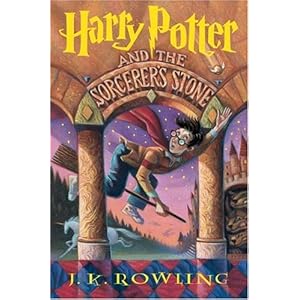
But what does this have to do with the articles I'm talking about? According to two studies recently cited in the Guardian, passages in fiction or fictional works in toto appear to "improve" and affect empathetic feeling in their readers. Concerning those fictional passages, Alison Flood relates how a University of Buffalo team, led by Shira Gabriel and Ariana Young, "gave 140 undergraduates passages from either [Stephanie] Meyer's Twilight or JK Rowling's Harry Potter and the Philosopher's Stone to read." In the former text (which I have not read), a character describes what it is like to be a vampire; in the latter, the young wizards are sorted into their respective Hogwarts Academy houses. The researchers then conducted successive computer tests, using personal pronouns and keywords, to measure identification with and as vampires, and then and as wizards. As it turns out, the study, published in Psychological Science, found that the students reading the text involving a description of vampirism were more likely to identify as vampires, while the students reading the text involving the youthful wizards self-identified as wizards. What the researchers also found was something that writers and readers have long known, which is that
"Belonging" to these fictional communities actually provided the same mood and life satisfaction people get from affiliations with real-life groups. "The current research suggests that books give readers more than an opportunity to tune out and submerge themselves in fantasy worlds. Books provide the opportunity for social connection and the blissful calm that comes from becoming a part of something larger than oneself for a precious, fleeting moment," Gabriel and Young write.
Eat your heart out, Facebook and Twitter!

In a second study Flood cites, University of Toronto psychologist and novelist Keith Oatley gave 166 readers either a translation of Anton Chekhov's actual story "The Lady with the Little Dog" (which my undergraduates and I will be reading and discussing in just a few weeks!) or a more linguistically neutral, documentary account of the plot and characters featured in the story. What Oatley found upon measuring readers' personality traits and emotions before and after the story was that those who read Chekhov's "unadulterated" story, a profound and deeply complex essay in imagination and feeling, were found "to have gone through greater changes in personality--empathising with the characters and thus becoming a little more like them," while those reading the documentary account were less likely to have done so. (I also thought of Rainer Maria Rilke's extraordinary poem "The Archaic Torso of Apollo," which lyricizes and dramatizes what this study demonstrates; the experience with the statue marks the speaker not just empathetically, but transforms him, leading to that final, arresting line: "du mußt dein Leben ändern": you must change your life, but also: you must make yourself an other/another ("other" in German is ander).)

To quote Oatley:

"I think the reason fiction but not non-fiction has the effect of improving empathy is because fiction is primarily about selves interacting with other selves in the social world," said Oatley. "The subject matter of fiction is constantly about why she did this, or if that's the case what should he do now, and so on. With fiction we enter into a world in which this way of thinking predominates. We can think about it in terms of the psychological concept of expertise. If I read fiction, this kind of social thinking is what I get better at. If I read genetics or astronomy, I get more expert at genetics or astronomy. In fiction, also, we are able to understand characters' actions from their interior point of view, by entering into their situations and minds, rather than the more exterior view of them that we usually have. And it turns out that psychologically there is a big difference between these two points of view. We usually take the exterior view of others, but that's too limited.
Or to put it another way: reading fiction allows us to enter those other lifeworlds quite deeply, imaginatively, psychologically and affectively; we become those other people, or identify with them, even if negatively.  We become part of the fictional world, even if temporarily; we change our lives, if only in the moments while in and shortly after leaving a fictional text. (I would argue this occurs in an engagement with other works of art too, as many others have written far more eloquently and persuasively than I ever could.)  A connection occurs--our inner and outer worlds fuse in the experience of reading the text, we draw upon and redraw the fictional world in our heads. And we leave it changed, even if temporarily. (Think of J. W. G. von Goethe's The Sorrows of Young Werther, and its powerful, often deleterious effects on the youth of Romantic-era Germany; think of the Victorian era concerns about the effects of fiction on young women, both good and bad; think of the Beat era's poetry and fictional narratives, which not only captured the experiences of youthful social and cultural rebellion, but provided pointers for readers. And so on.) To those who've read a bit of philosophy or literary theory of an older sort, doesn't this sound familiar?

But it's not just empathy. In the September 7, 2011 issue of Miller-McCune, Tom Jacobs describes a  Brigham Young University research team study, led by psychologist Sarah Coyne, on the relationship between fictional accounts of two types of aggression and behavioral responses.  Coyne previously conducted studies on violence and popular culture, but had not previously studied fiction, so she focused on it in this one. According to Jacobs's article, the study shows that exposure to an account of violence in literature can effect an aggressive response to provocation.  Jacobs is clear to state that Coyne's study does not claim that "reading a fictional account of an aggressive action increases belligerent behavior," but that reading fiction containing one of two types of aggression, physical, or outright physically assaultive action, and "relational," or actions that upset a person's relationship in a group, resulted in responses marked by the particular type of aggression featured in the work.  In the first study, readers of material featuring physical aggression were more likely to respond with physical aggression when provoked during a video game test; in the second study, readers of texts featuring relational aggression responded with that form of aggression when provoked in a similar virtual game. As Jacobs says:
In both cases, provoked people who were given the opportunity to engage in a specific form of retaliatory violence were more likely to do so if they had just read a fictional account of similar activity.
He again notes that reading fiction does not increase aggressiveness, but that having a scene or mental experience, even fictional, of aggression--not a mere picture or mental image, as Wittgenstein might caution us to be wary of describing it, but something more complicated and nuanced, involving neural mirroring and affect, and embedded and embodied in language--can impact our subsequent behavior.  This also parallels what Geary suggested in terms of how certain words, terms, and figuration of many kinds, can affect and effect responses in us that we do not consciously register.

I mentioned that one aspect of these accounts that interested me was the implication one of the researchers, Keith Oatley, drew from the knowledge his study provided. He argues that his is the first "empirical finding" he knows of--though, as we see, there are apparently others--demonstrating a psychological effect produced by reading fiction.  What philosophers and literary scholars have long argued, he has demonstrated through a scientifically validated experiment, i.e., an empirical method.  Professor Oatley thus thinks we could--and ought--make the case that fiction writing might have instrumental value for readers--students, everyone--and thus "economic" value, in our society.  Oatley's specific argument is that "reading fiction improves understanding of others" in that it can improve interpersonal understanding, and thus might be useful in a range of fields, including business studies, law, and so on. While I agree that reading fiction can have instrumental value, I'm not sure I would go so far as to say it "improves understanding of others," let alone for everyone, because as I see the studies, what's going on is that it might not entail more understanding, but rather something antecedent to that, which is to say, pre-rational emotional connection and empathy, or, as the latter study suggests, negative behavioral responses to provocation.

Either way, what all these studies suggest is what writers and readers know--and what Plato warned about concerning poetry, which is to say, imaginative uses, in particular forms, of language--which that literature, and fiction specifically, are more important to and powerful for and on us than they're often taken to be, even by people interested in studying them.  In that sense, then, Oatley is writing--reading fiction is certainly worthwhile, and studying what it does is worthwhile too. Learning to read it, write it, and understand its effects are also truly worthwhile. (He does not discuss it at all, but we should also be aware of another instrumental possible use of this mode of language, which Geary suggests is possible: propaganda.)  I'll only add that none of these studies look at language at the micro level; none studied syntax, meter, pacing. None studied word choice, connotation, denotation, rhetoric. None studied figuration or tropes in any way. None of the three explore the narratives morphologically.  Instead, they look only at fictional narrative in the holistic or macro level, but suggest that fictional narrative, by itself--and the range in terms of talent, skill and art between the work of Stephanie Meyer and Anton Chekhov, I will dare to say, is great indeed--has powerful effects that should be explored more, and estimated in a different way.  I cannot think of a serious fiction writer or poet I know who doesn't already.

Monday, July 11, 2011

On Metaphor: Book Review: James Geary's *I Is an Other*

Twice today during his press conference on the debt limit talks, President Barack Obama used the word "entitlement" to describe the three major social safety net programs--Social Security, Medicare and Medicaid--that the Republicans and even he and some Democrats want to put on the chopping block. Considering the terms you might use to describe these programs, "entitlement," which has become the standard among both parties, journalists, economists, and many others, strikes me as a terrible choice, but it's as common as daylight before between dawn and noon. I mention Obama's invocation of "entitlement" not to debate his or Congress's plans, but as an opening gambit in discussing James Geary's excellent and thorough new generalist study, I is an Other: The Secret Life of Metaphor and How it Shapes the Way We See the World (New York: HarperCollins, 2011). Geary doesn't touch upon the term "entitlement" directly, but his larger argument demonstrates how such words work, and why they resonate for us in certain ways. What he does say is that if you take almost anything anyone says, you can pluck out metaphors almost every 10 to 25 words, or about 6 every minute. In this paragraph alone, I've used a number of them: "put on chopping block," "consider," "strikes me," "common as daylight" (a simile), "debate," "opening gambit," "demonstrate," "resonate," "pluck out," to name a few. We cannot communicate without it.

But first, back to entitlement: It's clear enough to me that the term is a naturalized metaphor, a noun deriving from the much older English verb "entitle," which appears in the 14th century, its origin Anglo-Norman, from entituler or entiteler, from the Latin intitulare, fr. in+titulus (title). "Entitle" originally meant to give a name or title to, as in a deed, right or claim, or for a text, though since the 1960s and the rise of pop psychology, "entitlement" has taken on a negative valence in psychology and the wider cultural discourse. We often speak of "entitled" people as those expecting something they they may or may not deserve. Yet even before pop psychology encoded in the word is the metaphorical idea of individuality and private ownership and authorship. "Entitlement's" metaphorical effects in politics are real. "Cutting entitlements" sounds far less troubling, and has a different cognitive and emotional effect on us, than appeals to "cutting the social safety net." This term is more obviously a metaphor: a "safety net" we can all easily visualize as something helpful—something we want--to catch us if we're on a trampoline or a highwire or any high place and might fall; the "social" involves a group of people, likely a community, which we also seek, at a prelinguistic level.

You might dismiss this as just so much ado about language and competing terms, or, more specifically, linguistic framing, as cognitive linguists like George Lakoff have rightly described it. But what Geary does, in 226 entertaining pages, plus ample end-notes, a fine bibliography, and a thorough index, is to show that in fact, the very use of terms like "entitlement" vs. "social safety net" affects--that is, impacts emotionally and psychologically—us at deep cognitive level, prelinguistically, in part because it plugs into our bodily experiences and understanding of the world. Take that "falling" aspect of the safety net: all humans, across languages, grasp the concept of falling and its dangers. Metaphors of "falling" often tend to be negative, across languages and cultures. The Biblical story of Adam and Eve's banishment from the Garden of Eden is also known as a "the Fall," but all kinds of negative processes and their outcomes often include ideas of "falling." Falling ill, falling from grace, falling short, falling under a spell, falling to pieces, and so on, are all metaphorical uses of the term, idioms that English speakers often don't think twice about. Yes here's falling for someone, and falling in love, but also falling out of it.

Geary shows in every chapter that metaphors are more than just figurative uses of language. As he argues, "Metaphor is a way of thought long before it is a way of with words." (p. 3). Even the word "metaphor" itself is a metaphor, deriving from the Greek term to "carry over" (meta, across + pherein, to carry, related to English's to bear). In linguistic terms, it is a substitution of one term for another ("your eyes are diamonds"), and in psychocognitive terms, it is a powerful system for making meaning, one of the most important for any language and our understanding of the world, by leveraging what we sense and name, to create new names and ideas. Throughout the book and in particular at the beginning of each chapter, Geary points that poets, perhaps more so than many, have profoundly grasped metaphor's implications, as it is intrinsic to the poetry as an art and literary form. French poet Arthur Rimbaud's main principle, Je es un autre, or I is an other, is "metaphor's defining maxim, its secret formula, and its principal equation." (2) Indeed, poet Robert Frost, in a 1930 Amherst College address, "Education in Poetry," urged students to study metaphor to be able to "evaluate the claims made by historians or scientists, newspaper editorialists aor political campaigners," noting that we often don't grasp when we're being "fooled" by metaphor. (35) Geary links Frost's and other poets insights to the larger issue of metaphor's power in structuring our thinking, helping us both to see and ravel patterns, often without our realizing it, for metaphor arises out of our most basic human--we could even say animal—experiences in the world.

Rather than a technical study of metaphor, of which there are many, Geary synthesizes a raft of studies and discussions about how metaphor works and works on us. Chapters explore how every language represents a kind of "fossil poetry" such that the naturalization of metaphors I describe above permits the construction and development of languages, and enables other kinds of innovation and creativity; how it relates to our grasp of the abstractions of numbers and finance (sometimes to deleterious effect, as in the endless analogies to the "family around the kitchen table"); how it operates at various levels in the mind and brain, because there is a growing scientific study of metaphor; how, as I noted above with the political use of "entitlement" and other metaphors can have profound ramifications in advertising and political framing; why certain metaphors are nonfunctional or just laughably bad; and why those old saws and platitudes we heard from parents and relatives guide for us, even when we might consciously reject them as, well, so much empty language.

Geary demonstrates, through deft argumentation and copious citations of studies, that it's our sensory experience in the world that informs our metaphorical, and thus linguistic understanding, world. We cannot help but think of the sun as good and night as bad, at a primal level, or orientate ourselves in space and link this to metaphors of up and down or directionality; we process colors and associate these metaphorically without fully understanding how this operation occurs. Interestingly he does not point out, as Lakoff has, that the central idea underpinning the post-structuralist perspective of language and our systems of signification, that they are fundamentally arbitrary, as Ferdinand de Saussure suggested at the turn of the 20th century, is deeply problematic and cognitively and biologically just wrong. I particularly enjoyed his discussions, which he moves through with clarity and verve ("move" being a metaphor), of psychological and cognitive experiments that involve linguistic and even visual priming, using metaphors, which determine test participants' responses without their having any clue about how the language affected and effected their behavior. To give one example, one experiment exploring corporal metaphor use aimed to explore the priming effects of the "nation = body" metaphor by having participants read an article

ostensibly from a popular science magazine, describing airborne bacteria as ubiquitous and harmful to human health. Another group read a similar article describing airborne bacteria as ubiquitous but harmless to human health.

Both groups then read parallel articles about the history of U.S. domestic issues than immigration. The only difference between the two articles was that one contained "nation = body" metaphors...and the other did not.

Both groups then answered two questionnaires. The first gauged their agreement with statements about immigration and the minimum wage....The second assessed their concerns about contamination....Subjects who read the article describing airborne bacteria as harmful reported being more concerned about contamination. No surprise there.

But the same people also expressed more negative views about immigration when America was metaphorically described as a body. Those who read the more netural description of U.S. domestic issues had more positive views of immigration, even though they read the article describing bacteria as harmful. Both group's views about the minimum wage were about the same because, unlike immigration, the "nation=body" metaphor does not attend that issue. (128-129)

Researchers realized that manipulating someone's attitude about one issue (health) affected that person's attitude about an unrelated issue (immigration) if they were linked metaphorically. This is only one of many examples Geary provides, going so far as to cite legendary figures like neuroscientist V. Ramachandran, famous for his "phantom-limb" studies, but whose basic insights into synesthesia and graphemes offer a way of understanding how metaphor works, linking this idea to Wolfgang Köhler's 1929 discovery of the "bouba-kiki" effect, in which he showed Tenerife islanders two shapes, one hard and spiky, one soft and bloblike, and asked them associate them with two made-up words, "takete" and "baluba"; participants overwhelmingly linked the former to the spiky shape, the latter to the softer blob, and Ramachandran and cognitive psychologist repeated Köhler's experiment with the words "kiki" for "takete" and "bouba" for "baluba," getting the same result, with 98% of research subjects linking "kiki" to the spiky shape and so on.

This brings me back to the relentless use of "entitlement," mindless in the case of many journalists, unintentionally harmful in the case of a brilliant, liberal economist like Paul Krugman because it's the technical term he and his peers have learned to use, and extremely destructive as it leaves the mouths of the President and top Congressional leaders who, like the many sworn enemies of the social safety net, want to "reform" it, "privatize" it, and outright "end" it. What Geary goes a long way to proving is that metaphor is hardly an "abusio," as the old rhetorical term suggested, or a throwaway figure best left to the poets and having no meaning beyond being clever and illustrative, as some anti-rhetoricians might argue, but rather a foundational aspect of our human experience of the world intimately and indissolubly linked to how we think and speak and act. Language matters, metaphors especially, Geary makes clear, more than the vast majority us ever imagine.