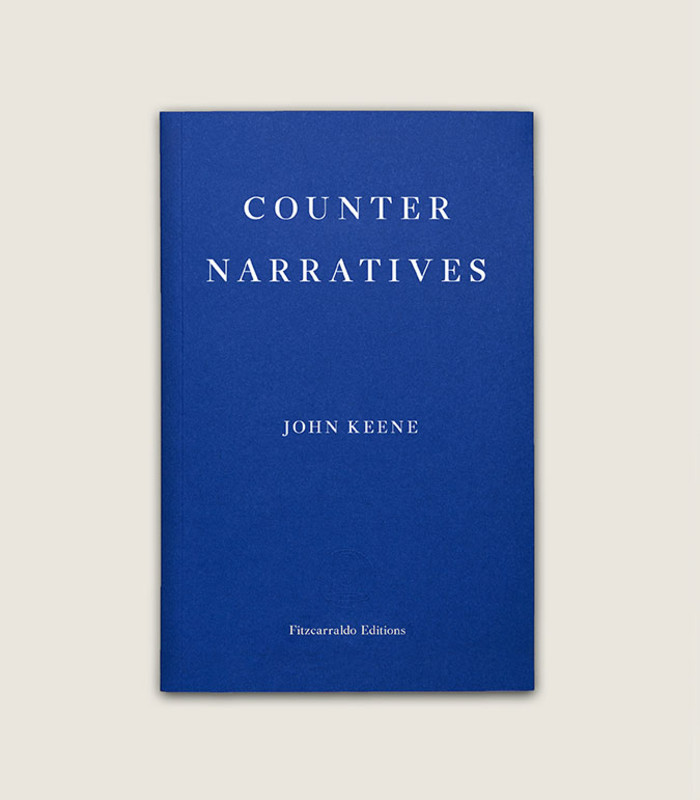
. It will, I believe, be published next year. Although I had written the bulk of the collection (13 stories, some as brief as one or two pages, two novella-length) over the last decade (or rather
crashed back in 2004), including six, I had a few more stories I wanted to include. As a result, amid my winter-spring teaching and mentoring duties, life, and all else, I wrote a few more stories, and in general I am very happy with the results.
I also am very happy that the publisher likes it very much, and did not make me change the title, since we are badly in need of counternarratives to the dominant discourses and narratives. In terms of current projects, I have several that I am working on, and will receive a sabbatical next spring to wrap at least one of them up, but I can say now, since I have either published excerpts or read from the works of fiction, and have published many of the poems, that I have two novels underway, one entitled
.
, and I just may repackage poems that were supposed to be part of an older collection that would fit under that title and see if I can publish those together. I have this fantasy that someone will publish a book of all these poems that can be read from both ends if you flip the book over, with a poem in the middle joining them, and maybe this will happen. But for now,
 |
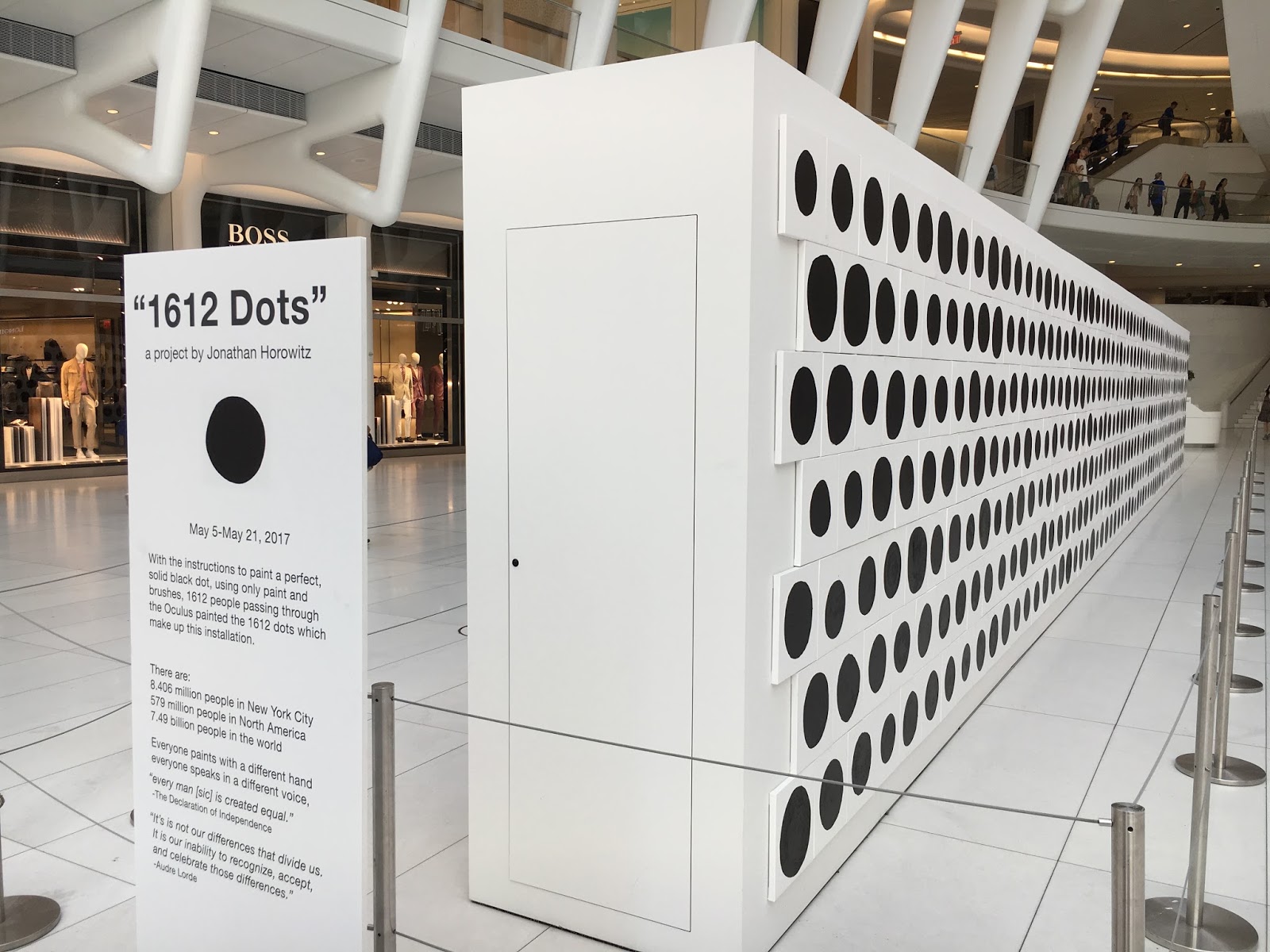
Oscar Murillo, 1 1/2 (lessons in aesthetics
& productivity), 2014, Marian Goodman Gallery, Paris) |
2) How does your work differ from others' work in the same genre?
The answer to this question has its strongest response in the texts themselves, and also finds itself undermined by my work, which challenges the fixed understanding of "genre," but I will repeat what a professor of mine in graduate school, a writer I admire very deeply, said about my work:
you are interested in history, and you are drawn to experimental forms. Usually these things don't go together but you find ways to make them work. Not all of my work deals with history--though everything we produce becomes historical at the moment of its production, no?--and my work is often formally experimental in some way, as well as in in terms of its content.
But it is the case that my work does often have some element that could be termed "experimental," depending upon how you define that term, and my first two books both manage to defy genres, though
Annotations often is called a "novel," when it could be viewed as a book of poetry or a memoir; and
Seismosis often is called a book of "poetry," when it could be viewed as a book of lyric essays (with some texts tending very strongly toward what our eyes would immediately define as verse) or art criticism.
Another writer I deeply admire, a Canadian author whose work is quite important to me, once noted that I do not repeat myself. I always think about this because I have more than once advised
my students to write a variation of the same book twice; use the first one to explore what it is you're trying to do, and then repeat it to perfect it. (Some writers write variations of the same book twenty times, and very well, so I'm not being snarky.) As a result you get two books out of one, you look much more productive, and of course, if you are paying attention to what you're doing, you do sharpen your tools and refine your art. I bore quickly of repeating the same thing consciously, though, and have tended to write slowly, so I unfortunately haven't been able to do this in the past, but I have picked up my pace considerably in the last few years, so we'll see.
In any case,
most of the texts in
Counternarratives do look and read like fictional stories, have lively protagonists and vivid plots (think
Madonna's distilled description of her work as centered on "sex, religion and death," and including battle scenes, escapes in the middle of the night, drownings, acrobatic performances, and more), and do unfold as stories usually do, except that with almost every one, something else intrudes, at the level of genre, discourse, characterization, plotting, the sentences themselves. One way of describing it might best draw upon a lecture I once heard
Jahan Ramazani give at
Northwestern, in which he was talking about the incorporation into poetry of non-poetic discourses, such as legal discourse, etc. I do this in
Seismosis with the language of mathematics (topology, to be exact, which I think only one person has ever mentioned to me--and he was a mathematician on my tenure committee at Northwestern!) and geology, as well as philosophy, art criticism, architecture, etc., but with these stories history often intrudes.
 |
Langston Hughes, Arna Bontemps,
Harold Jackman, 1942,
photo by Carl Van Vechten |
I can now say that a few years ago, I applied for a fellowship and a panel of fiction writers turned me down with comments about the fiction submission, expressing their bafflement at what it was. One very prescriptively (and proscriptively) said that if it was supposed to be history, fine, but if it was fiction, then I need to do XYZ. But given the long history of fiction writing in the US, let alone in English or any other language, wasn't this person attempting to impose her (or his) aesthetic standards on what I was up to? So it was a bit of vindication that in addition to individual stories being published in various periodicals and journals, they also will be published together in book form.
I'll end by saying that once this collection was already underway I realized I was unconsciously addressing a larger aesthetic problem a fellow fiction writer I greatly admire,
Dan Chaon, pointed out many years ago when he came to speak as the writer-in-residence at Northwestern (where he was an alumnus), and which was only just resurrected, for the thousandth time, in a review of new works by another fellow writer I tremendously admire, my former colleague, the extraordinary
Stuart Dybek; that was the particular forms and content of the contemporary American short story, which has evolved in such a way that it does not do many of the things that short stories in this country once did, one of which is have much if any plotting at all. Many of the stories in this collection do have plots, and I tried to allow myself great latitude in letting the plots unfold as they must.
3) Why do you write what you do?
In brief: in part to see the stories I cannot find on bookshelves, as
Toni Morrison once said, and also because of a deep inner compulsion.
4) How does your writing process work?
I write drafts of everything, sometimes many, read them aloud, share them with a few trusted friends who I know will offer helpful critiques, and then go back and try to be as ruthless an editor as I can. That doesn't always work, but I find that I catch things now that I used to let slip. If an editor for a publication suggests changes that I think will improve the work, I follow them. I have been quite fortunate in that regard.
I also like to write fiction in places where it's very quiet. I can write poetry or other kinds of prose elsewhere, but for fiction, I need something akin to silence or white noise (as in a cafe where there's no music beyond human voices) to enter deeply into my head. TV is a bane for drafting anything except email.
Stories may begin with a line written in pen or pencil, notes, a phrase that comes to me, a name. Or something I've read or overheard and recorded. I write poems both by hand and on my computer. Often after I have sent a draft to a fellow poet, I see something I need to change. So I have multiple drafts of poems and say on a daily basis--and I
mean this!--that I'm going to once again put them in spiral binders (I have a printer, a hole punch, etc.) so that I can keep them in order. This summer!
 |
Charles W. Gaines, Faces, Set #4:
Stephen W. Walls, 1978 |
For my next two writers, I am going to choose
Reggie Harris and
David Barclay Moore.
Reggie is an award-winning poet, fiction writer and blogger himself, as well as a librarian, curator of ideas and books, and one of the tech-savviest authors I know.
David is a talented photographer, author, screen-writer, and man about town, New York, his native St. Louis and elsewhere, who always seems to be in the center of exciting cultural spaces.