Tuesday, April 03, 2018

Poem: Tyehimba Jess

Tyehimba Jess
Several years ago, Tyehimba Jess (1965-), winner of last year's Pulitzer Prize in Poetry for his innovative, rich and complex collection Olio (Wave Books), published the following poem on "Poem-a-Day." In it, he calls forth a sculpture by the famous 19th century African American sculptor Edmonia Lewis (see below), a pioneering figure in the world of Western art. Lewis was the first Black woman  artist and first woman artist of Native American ancestry to gain international recognition and acclaim, in no small part for artworks that depicted Black subjects, though often with the features tempered for her white patrons and audience.

Jess, a friend and fellow former Cave Canem grad and NYU alum, excavates American and African American history, often in relation to major and lesser known Black figures who are artists and performers, whether working in the fine arts or vernacular and popular forms. The poem below, while differing in form from the page-crossing sonnets in Olio, offers a sense of his poetics, particularly his skillful use of voice and imagery, which also are on vivid display in his award-winning first book, Leadbelly. What I also like about the poem below is how he merges ekphrasis and dramatic monologue; it is the sculpture, as well as Hagar, the Biblical figure serving as a metonymic stand-in for Black women, and Lewis, who speak through the lines, figuratively and literally bringing the art work to life.

HAGAR IN THE WILDERNESS


by Tyehimba Jess


Carved Marble. Edmonia Lewis, 1875


My God is the living God,
God of the impertinent exile.
An outcast who carved me
into an outcast carved
by sheer and stony will
to wander the desert
in search of deliverance
the way a mother hunts
for her wayward child.
God of each eye fixed to heaven,
God of the fallen water jug,
of all the hope a vessel holds
before spilling to barren sand.
God of flesh hewn from earth
and hammered beneath a will
immaculate with the power
to bear life from the lifeless
like a well in a wasteland.
I’m made in the image of a God
that knows flight but stays me
rock still to tell a story ancient as
slavery, old as the first time
hands clasped together for mercy
and parted to find only their own
salty blessing of sweat.
I have been touched by my God
in my creation, I’ve known her caress
of anointing callus across my face. 
I know the lyric of her pulse
across these lips...  and yes,
I’ve kissed the fingertips
of my dark and mortal God.
She has shown me the truth
behind each chiseled blow
that’s carved me into this life,
the weight any woman might bear 
to stretch her mouth toward her
one true God, her own
beaten, marble song.

Edmonia Lewis (1845-1907) was an African/Native American expatriate sculptor who was phenomenally successful in Rome.

Copyright © 2013 by Tyehimba Jess. All rights reserved. This poem appeared in the Academy of American Poetry's Poem-A-Day on December 26, 2013.

And Lewis's "Hagar," also known as "Hagar in the Wilderness," 1875, carved marble, Smithsonian American Art Museum, Gift of Delta Sigma Theta Sorority, Inc., 1983.95.178


Monday, April 02, 2018

Poem: Cathy Song

Cathy Song, at the Island School,
April 17, 2015, from a post by
Peggy Ellenburg
(courtesy of The Voyager Voice)

Continuing the ekphrastic theme and poems about art, here is a diamond of a lyric by Cathy Song (1955-), a native of Hawai'i, whose first collection of poems, Picture Bride, received the Yale Series of Younger Poets Prize in 1982, making her the first Asian American poet to be so honored (a number of amazing poets have followed in her footsteps). She has gone on to publish four more collections, including Cloud Moving Hands, which appeared in 2007. She teaches in Hawai'i's "Poets in the Schools" program and says of her process and poetry as an art, "You've got to be willing to dismantle...to realize that poetry is something made outside of yourself." This poem, "Girl Powdering Her Neck," is based on Kitagawa Utamaro's ukiyo-e print "Girl Powdering Her Neck," which is in the Musée Guimet in Paris.

GIRL POWDERING HER NECK 

by Cathy Song
from an ukiyo-e print by Utamaro
The light is the inside 
sheen of an oyster shell, 
sponged with talc and vapor, 
moisture from a bath. 


A pair of slippers 
are placed outside 
the rice-paper doors. 
She kneels at a low table 
in the room, 
her legs folded beneath her 
as she sits on a buckwheat pillow. 


Her hair is black 
with hints of red, 
the color of seaweed 
spread over rocks. 


Morning begins the ritual 
wheel of the body, 
the application of translucent skins. 
She practices pleasure: 
the pressure of three fingertips 
applying powder. 
Fingerprints of pollen 
some other hand will trace. 


The peach-dyed kimono 
patterned with maple leaves 
drifting across the silk, 
falls from right to left 
in a diagonal, revealing 
the nape of her neck 
and the curve of a shoulder 
like the slope of a hill 
set deep in snow in a country 
of huge white solemn birds. 
Her face appears in the mirror, 
a reflection in a winter pond, 
rising to meet itself. 


She dips a corner of her sleeve 
like a brush into water 
to wipe the mirror; 
she is about to paint herself. 
The eyes narrow 
in a moment of self-scrutiny. 
The mouth parts 
as if desiring to disturb 
the placid plum face; 
break the symmetry of silence. 
But the berry-stained lips, 
stenciled into the mask of beauty, 
do not speak. 
Two chrysanthemums 
touch in the middle of the lake 
and drift apart.


Copyright © Cathy Song, from Picture Bride (New Haven: Yale University Press, 1983). All rights reserved.

Kitagawa Utamaro, "Girl Powdering Her Neck," ukiyo-e print, c. 1790, Musée Guimet in Paris

Sunday, April 01, 2018

Inter/National Poetry Month + Poem: W. H. Auden

W. H. Auden
Every month should be Poetry Month--and Fiction Month and Literature Month--we could go down the list, but since 1996, roughly a year after the Academy of American Poets, inspired by Black History Month (every month should be...) and Women's History Month (every month should be...), convened with poets, academics, booksellers, and poetry lovers to create a month dedicated specifically to poetry. During the first decade or so of this blog, I usually posted close to a poem a day each April, often inspired by one theme or another (poets in translation, etc.).

When I went to Cuba in April 2009, when it was almost impossible to post daily, I somehow managed to. (How did I manage to?) I've slacked off in recent years because the rest of my responsibilities have crowded in on my time, but throughout this month I hope to post some poetry, at least periodically. Though it may make "nothing happen," as W. H. Auden famously said, he also continued, if you stay with that same poem, "In Memory of W. B. Yeats," it eludes the grasp of executives (unless of course it's set to music) and "survives / a way of happening, a mouth." That is, it gives voice to experiences, to visions, to feelings, in its particular form of representation, sometimes otherwise incommunicable, that we need and must listen to.

I guess since I have cited and quoted Auden's great poem, I should direct J's Theater readers to my post from 2012, which features it, and here, instead, is another Auden gem, "Musée de Beaux Arts," which I had to read in junior high and did not fully understand, though I get it now. As with so many of Auden's poems, the politics seem fitting for today; art offers a picture and mirror of the human sorrows we endure, and yet, at the same time, like the mundanities of life, it exists amidst the most unspeakable horrors, includes those enacted by the "torturer" whom Auden directly names. Sometimes, as in Pieter Breughel the Elder's "The Fall of Icarus," which Auden saw in 1938 at the Musées Royaux des Beaux-Arts de Belgique, nearly a year before the start of the then-brewing Second World War, at the and which he discusses ekphrastically in the poem's second stanza, the two happen at the same time; there is the horror of the boy falling from the sky, even as the rest of life--and death--go about their business.

Perhaps that should be the month's theme: ekphrastic poems. (Have I already done that? Hmmm.) Happy Inter/National Poetry Month!

MUSÉE DES BEAUX ARTS


by W. H. Auden


About suffering they were never wrong,
The old Masters: how well they understood
Its human position: how it takes place
While someone else is eating or opening a window
                                 or just walking dully along;
How, when the aged are reverently, passionately waiting
For the miraculous birth, there always must be
Children who did not specially want it to happen, skating
On a pond at the edge of the wood:
They never forgot
That even the dreadful martyrdom must run its course
Anyhow in a corner, some untidy spot
Where the dogs go on with their doggy life and the torturer’s
                                                        horse
Scratches its innocent behind on a tree.

In Breughel’s Icarus, for instance: how everything turns away
Quite leisurely from the disaster; the ploughman may
Have heard the splash, the forsaken cry,
But for him it was not an important failure; the sun shone
As it had to on the white legs disappearing into the green
Water, and the expensive delicate ship that must have seen
Something amazing, a boy falling out of the sky,
Had somewhere to get to and sailed calmly on.

Copyright © W. H. Auden, from Another Time (New York: Random House, 1940). All rights reserved.

And, the painting once attributed to Pieter Breughel the Elder, "Landscape with the Fall of Icarus," oil on canvas, c. 1560s, Royal Museums of Fine Arts of Belgium.


Monday, March 26, 2018

A Few Comics

From time to time to amuse myself I draw comics, I guess you could call them. They're really visual gags. I've posted a few in the past, and here are three new ones. My apologies if any of the text isn't clear, but my usual handwriting can veer between post-calligraphy and hieroglyphics.

Please click on the image to see a larger version, and enjoy!

Hail the Combover


The Mustache Reigns


Cheshire Tillerson


All copyright © John Keene, 2018.

Wednesday, March 21, 2018

Prize Season (Republic of Consciousness, Whitings, Jhalaks, & Windham Campbell)

I've titled this post "Prize Season," but when it comes to literary awards in the US and UK, I should be more precise in noting that various honors now appear in a steadily rolling tide from January through December. Since they now tend not to go to the same author or presses, unless there's a consensus book or candidate whom the zeitgeist homes in on, this unfurling calendar is a good thing, especially for writers and independent publishers who tend to remain under the radar.

One such award is the UK-based Republic of Consciousness Prize for Small Presses, founded by writer and publisher Neil Griffiths and now in its second season. Griffiths established the prize to highlight innovative fiction by independent publishers, and more specifically as the prize's name indicates, to reward work that delves deeply into the consciousness of its characters, the worlds it creates. So far he and his jury have managed to do that, generating considerable excitement about British and Irish small press novels and collections of short stories. The Republic of Consciousness Prize proceeds from a fall longlist to a shortlist, and then names a winner early the next year. This year, the shortlist comprised the following six books:

Die, My Love by Ariana Harwicz, tr. Sarah Moses & Carolina Orloff (Charco Press)
Gaudy Bauble by Isabel Waidner (Dostoevsky Wannabe)
Blue Self-Portrait by Noémi Lefebvre, tr. Sophie Lewis (Les Fugitives)
We that are Young by Preti Taneja (Galley Beggar Press)
Attrib. and other stories by Eley Williams (Influx Press)
Darker with the Lights on by David Hayden (Little Island Press)


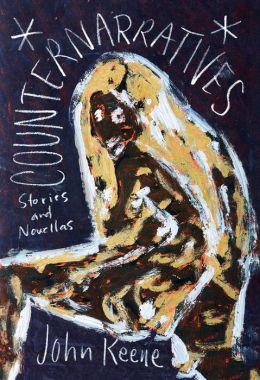
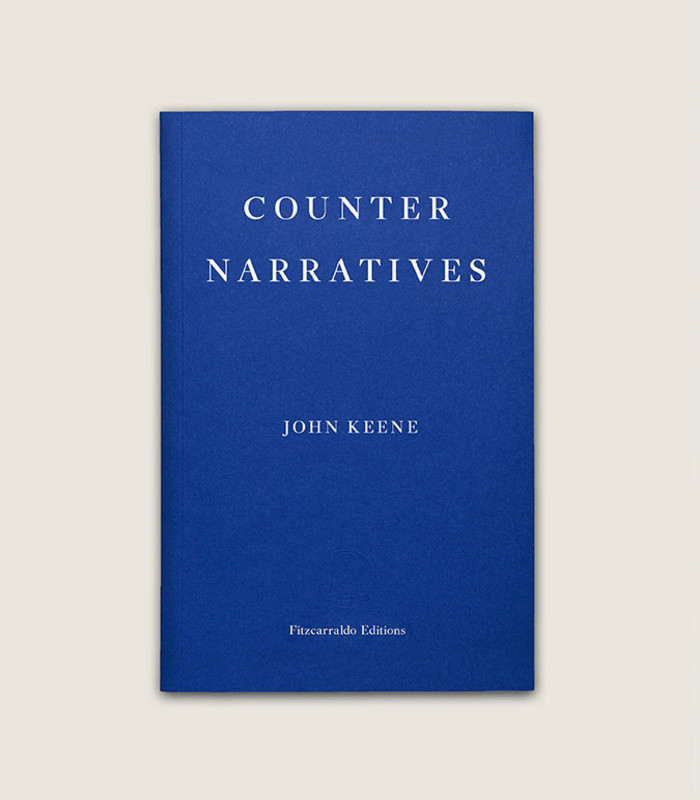
As tally shows, the prize also encompasses works in translation, a rarity among most prize competitions that are not specifically so designated. This year's winner was Influx Press, which published British writer Eley Williams' highly praised Attrib. and other stories. Williams' book has received extensive praise for its playfulness and profundity. Congratulations to the press and Williams, and I highly recommend her collection! (I should add that last year, my British publisher, Fitzcarraldo received the award for Counternarratives, a turn of events I still find astonishing; though I've met Jacques Testard, the founder and head of Fitzcarraldo, I do hope one of these days to return to the UK and participate in a reading over there.)

***

Another set of honors that graces the first quarter of each year are the Whiting Awards, awarded by the Mrs. Giles Whiting Foundation in New York. Since 1985, the Whitings have been given annual to ten emerging writers of promise, who are secretly nominated by figures in the literary and publishing world, and then selected by the foundation. This year's winners include some of the brightest new lights in contemporary American poetry, fiction, nonfiction, and drama:


  • poet and essayist Anne Boyer
  • fiction writer Patti Yumi Cottrell
  • playwright Nathan Alan Davis
  • playwright and director Hansol Jung
  • poet Rickey Laurentiis
  • playwright Antoinette Nwandu
  • poet Tommy Pico
  • author, dancer, performance artist, and musician Brontez Purnell
  • novelist Esmé Weijun Wang
  • fiction writer and public health scholar Weike Wang


2018 Whiting Award winners
Congratulations to all these writers and artists, and you can learn more about them and find links to their books at the Whiting site, linked above!

***

2017 Jhalak Prize shortlisted titles
Several years ago, authors Sunny Singh and Nikesh Shukla, working with the organization Media Diversified, and with the support of the Authors' Club and an anonymous donor, established the Jhalak Prize to honor outstanding writing by writers of color, or in British terminology, British and British-resident BAME (Black, Asian and Middle Eastern) writers. This is the only prize of its sort presented in Great Britain. The jury selects a longlist, shortlist, and then one winner, who receives a £1000 ($1413) prize. Like the Republic of Consciousness Prize, this was the Jhalak Prize's second iteration; last year, Jacob Ross received the inaugural prize for The Bone Readers (Peepal Tree Press), a crime thriller set in the Caribbean.

This year, on March 15, author Reni Eddo-Lodge received the 2017 Jhalak Prize for her collection of essays Why I'm No Longer Talking to White People About Race (Bloomsbury Circus). The Guardian described Eddo-Lodge's process of writing the book, which began with...a blog post!

Eddo-Lodge’s collection of essays began as a blogpost of the same title in 2014. Opening with her statement: “I’m no longer engaging with white people on the topic of race,” Eddo-Lodge wrote she could “no longer engage with the gulf of an emotional disconnect that white people display when a person of colour articulates our experiences. You can see their eyes shut down and harden. It’s like treacle is poured into their ears, blocking up their ear canals like they can no longer hear us.”

After the blog went viral, Eddo-Lodge spent five years writing the book about “not just the explicit side, but also the slippery side of racism – the bits that are hard to define, and the bits that make you doubt yourself”. Britain, she wrote, “is still profoundly uncomfortable with race and difference”.

Other writers on the shortlist include

  • Nadeem Aslam, The Golden Legend (Faber)
  • Kayo Chingonyi, Kumukanda (Chatto & Windus) 
  • Xiaolu Guo, Once Upon a Time in the East (Chatto & Windus)
  • Meena Kandasamy, When I Hit You: Or, A Portrait of the Writer as a Young Wife (Atlantic Books)
  • Kiran Millwood-Hargrave, The Island at the End of Everything (Chicken House)

Congratulations to Reni Eddo-Lodge, whose book I'm looking forward to reading, and to all of this year's Jhalak Prize-listed authors and titles!

***


Last but not least, I recently learned that I was among the newest cohort of recipients of this year's Windham Campbell Prizes, administered by the Beinecke Library at Yale University. Like the Whiting Awards, recipients cannot apply for these awards; a committee selects prize recipients from a set of nominees.

This year's recipients also include:

  • Sarah Bakewell, a nonfiction writer from the UK;
  • Lorna Goodison, a poet from Jamaica and Canada (who taught for many years in the US);
  • Lucas Hnath, a playwright and actor from the US;
  • Cathy Park Hong, a poet, essayist and my new Rutgers-Newark colleague, from the US;
  • Olivia Laing, a nonfiction writer from the UK;
  • Jennifer Nansubuga Makumbi, a fiction writer from Uganda and the UK; and
  • Suzan-Lori Parks, one of the major living US playwrights.

The prize committee calls out of the blue, so this award was even more of a surprise than usual. Additionally, for each recipient, they write a citation; mine, which was awarded for Fiction, reads, "With coruscating imagination, language and thought, John Keene experiments with concealed scenes from history and literature, stepping outside the confines of conventional narrative." That's about as fine and concise a summation of nearly all my work as anyone might devise.

Congratulations to all of my fellow Windham Campbell Prize recipients, many thanks to the nominators, prize committee, and foundation! There will be a series of events, including a prize ceremony, this upcoming September, so I will be sure to post more then.

Thursday, March 15, 2018

Cross-Posting: Song of Myself (Linda Norton)


Below is a reply that author, blogger and educator Linda Norton sent back in January 2018 via the FRSGA Yahoo account, in response to one of the vouchers I posted in December, which Karen Cantrell had previously responded to. The card read:


Here is her full response (note the references to an array of artists):

Song of Myself

Filmmaker, star, a doctor examining the culture—me on a walk. On the pavement, I notice an electric-blue Post-It from that batch I stole when I quit my job: “taylor * negritude * milk and you” – My dirty to-do list. I must have walked this way last week and dropped it.

In December sun, I hurry past the cathedral like it might get me. Then I saunter, Thoreau-like, sans-terre in California, and again I’m everything—the spinsters Thoreau disparaged, the turtles he saw copulating and tried to separate, the mother who saves him from civilization. Open to alms. My loneliness is like a poem by Fanny.

By this time my parka is off. In the co-op bakery when I get to the counter, the cashier is dazzled for a minute. “You look like Elizabeth Taylor.” But then he wonders if he’s right not to offer me the senior discount yet. “That’s right. Not yet.”

--Linda Norton; a response to a prompt on John Keene’s “Emotional Outreach” blog, 12/2017

Many thanks to Linda for her collaboration, and I will post most responses as they come in. Any readers of this blog should feel free to respond to the instructions above, and write a response along the lines of Linda's and forward it directly to fieldresearchgroup[AT]yahoo.com, or center your QR reader app and utilize the QR code below.


"Song of Myself," Copyright © Linda Norton, shared by permission with the Emotional Outreach/FRSGA blog, 2018.

Wednesday, March 14, 2018

Shakespeare & Co. To Open New Stores in NYC, Philly

The old Shakespeare & Co.
on Broadway (via Yelp)
Independent bookstores in New York City and elsewhere experienced a fatal period from the late 1990s through the early 2010s. A number of the iconic (Gotham Book Mart, A Different Light,  St. Marks Bookshop, Left Bank Books, Coloseum, Barnes & Noble flagship, etc.) and less well known indies and mini-chains (Posmans, Bent Pages, 12th Street Books, New York Bound Books, Revolution Books, Book Court, etc.) in the city shuttered their doors, sometimes with the promise or at least hope of reopening, and, as was the case with St. Mark's, eventually doing so only to close their doors permanently. Between the assault by larger chains, the exorbitant rental prices, the dip in readers, and other problems, the once bookstore-rich has become a comparative desert over the last 25 years, though some indie bookshops, like McNally-Jackson and Greenlight Books, and chains, like the financially precarious Barnes & Noble have hung on.

One survivor, now under new ownership, that is now on the verge of expanding is Shakespeare & Company. After having shrunk to a single store, its 939 Lexington Avenue space next to Hunter College on the Upper East Side, the holding company that took over the lease for the remaining store and bought its trademark in 2015 now plans to open two new Manhattan stores, one on the Upper West Side at 2020 Broadway (between 69th and 70th Streets), and a new one in the West Village, at 450 6th Avenue, near 11th Street, in what was the old Jefferson Market. Both have planned openings in the fall of 2018. Alongside these new stores, S&Co. also will open a café right outside the Hunter-68th Street 4/5/6 (Green line) train station, at Lexington Ave. and 68th Street. As the press release notes, the UWS store is a homecoming, since the first Shakespeare & Company opened in that neighborhood in 1982 and closed in 1996, but the West Village store will also be a significant return for the bookseller, since its Broadway storefront next to NYU's campus also had a major following up through its closing in 2014. (Other branches, in Brooklyn and on 23rd Street, had also disappeared.)

That branch was one of the first to carry my first book, Annotations, and it also is where I met the Canadian poet, director and intellectual James Oscar Jr., now in Montréal. He worked there, and we used to have long, illuminating conversations about literature, life and everything else. One other significant component of that old Broadway branch was its section featuring British imprints, which it updated and sold at reasonable prices. This is hardly a big deal today, when you can order books from almost everywhere in the world and get them in a reasonable amount of time, but in the mid-to-late 1990s, it was tough to find any bookstores, including most in NYC, that had British versions of US-published books, as well as rare finds that weren't available anywhere else, on the bookshelf. I can think of a number of volumes, including editions of novels by J. G. Ballard, Will Self and Peter Kalu, and several anthologies, that I found there and nowhere else.
The old Shakespeare & Co. on
Broadway, in Manhattan (via Yelp)
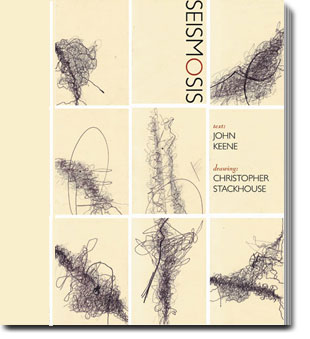
In addition to the New York openings, S&Co. plans to open a Philadelphia branch as well, in the Rittenhouse Square area of Center City, at 1632 Walnut Street. This will be the company's first store outside Manhattan. All the stores will have an Espresso Book Machine, which are produced by On Demand Books, a sister subsidiary to Shakespeare & Co. headed by CEO Dane Neller. McNally-Jackson currently has an Espresso Book Machine, which allows visitors not only to print published books on demand, but also self-publish books as well. S&Co. is already experimenting with customizable children's books, and will feature some of the self-published works near the Espresso Book Machines. I've watched books being printed up and have done so once myself at McNally-Jackson, and I find the process and machinery spell-binding. I think it may be a possible way to get Seismosis, now completely sold out and thus out of print, back into readers' hands (at far less than the $50-$100+ it now sells for online.)

One worrisome note is S&Co. CEO Dane Neller's comment that "My vision for Shakespeare & Co. has always been to create the biggest little bookshop in the world." (You can find a longer interview with Publishers Weekly here.) I understand the expansive dreams, but haven't we seen this before, with disastrous results on multiple levels? I immediately think of Barnes & Noble, which became a behemoth and drove many smaller chains and indie stores out of business, only to fall prey itself to an even more massive beast, Amazon, which has undercut bookstores and retailers of all sorts and continues to grow with abandon. Perhaps I'm reading too much into Neller's comments, but I sincerely hope that as the company grows, it takes into account the broader publishing and literary ecology. Jeremiah's Vanishing New York, which covered the closing of the Broadway store, features a brief, positive interview with Neller about the new stores.  My fingers are crossed that this will all work out!

Monday, March 12, 2018

AWP Presentation: Notes on Literary Style in Fiction

UPDATE: The full and corrected version of this essay is now up at LitHub, as "Elements of Literary Style." I'm keeping the introduction here, with one quote. Please check out the full version at LitHub, and many thanks again to Christian Kiefer, and to Jonny Diamond at LitHub, for agreeing to run the piece.

‡‡‡

Yesterday I mentioned that I would post my remarks for the AWP 2018 panel "Profundity as Purpose: Thoughts on Sentences, Vocabulary and Style," organized by writer and critic Christian Kiefer. Other panelists included Coffee House Press editor Caroline Casey; acclaimed writers Kim O'Neill and Christine Schutt. I should note that I slightly modified the introduction below when I read it aloud, and also read only a portion of the full set of notes, to which I added a few quotations, by panelists O'Neill and Schutt, based on their remarks and readings. Many thanks to Christian, Caroline, Kim, Christine, and everyone who attended the panel, which was held at 9 am on Saturday, and drew a full house. Many thanks to Christian and my fellow panelists, and to all who attended the event!

(I should also note that at the panel Caroline and I offered the name of some living authors whose styles exemplified what Christian, others on the panel, and I were talking about--ourselves included--but I decided not to list them here, because there are so many great fiction writers, and I do mention but a few of the many I admire and regularly read with enthusiasm in my notes. I encourage J's Theater readers to add names of distinctive living fiction stylists they admire in the comments, if you'd like, and I'll aim to post them at some point soon if there are more than a handful.)

Lastly, I also want to note another highlight of this year's AWP, which was attending the Jack Jones Literary Arts' welcome event at the Columbia Cafe in Tampa! Many thanks to Kima Jones and Allison Conner, and it was so much fun to meet everyone on Jack Jones' roster--which includes yours truly--and its fans!

‡‡‡

INTRODUCTION

I want to begin by thanking Christian for organizing this panel, and thank all of my fellow panelists for their thoughts on this topic, I initially thought I would write a short essay, but instead I decided to draft a series of provisional notes on the topic of literary style in fiction, interlaced with quotations on the topic by various writers of note. (You can find a number of these quotes online, as well as on the website "Some Literary Criticism Quotes," which is where I culled them.) Unless otherwise noted, however, the comments and thoughts are mine.

Two quotes:

Is there an ethics of style? How might we talk about it? What happens when we consider how one template for now-dominant literary styles, emphasizing craft and de-emphasizing politics, that are taught in many—most?—MFA and undergraduate programs, may have their possible origins in the US government-funded approaches instituted at Iowa and Stanford, as Eric Bennett argues us in his 2015 scholarly study Workshops of Empire: Stegner, Engle and American Creative Writing During the Cold War (University of Iowa Press)? Even setting this particular history to the side, as usually occurs in most creative writing programs, doesn’t every artistic act require some level of ethical inquiry? Are there styles and stylistic approaches we might label more ethical or less, and if so, why? Or might another way to speak of the ethics of style be to raise questions not just of historicity and genealogy, but also of the truth(fulness) of representations in relation to a given narrative? What role or roles do the larger social, political, economic, and cultural contexts hold in this line of questioning?

*

“In order to find his voice he must first have mastered style”

–A. Alvarez, The Writer’s Voice

*

Prose (fiction) should not be musical; this is the province of poetry. (“Poetry is music set to words” –Dennis O’Driscoll.) This is another dictum I have always worked under, and to some degree, because of my inner sensibility, against. Yet so much of the most memorable prose, not just poetry, appears to aspire to, as the old phrase goes, and often achieves the condition of music. What lines in prose fiction do you most readily recall? Even the ideas and statements that engrave themselves on your consciousness do so not just because of their aptness and timeliness, but because of how they were written, how they unfold, almost like lyrics or lyric, as prose.


Sunday, March 11, 2018

AWP Reading: Letters to the Future: Black WOMEN/Radical WRITING + Poem: Evie Shockley


I'm back from a few days at this year's annual Associated Writing Programs (AWP) conference, which was held over the last week in an unseasonably cool Tampa, Florida. AWP has grown considerably since I first attended it years ago, with several generations of new writers and students now attending, and though I find the sheer number of people and events overwhelming at times, I once again found it an enjoyable and invigorating event to attend since it provides an opportunity to see so many friends that I otherwise would not run into, and meet, hear and learn about the work of so many writers I was not already familiar with, or only knew in print and not in person. C joined me, and we had a great time over all.

R. Erica Doyle
I participated on two panels, one that I moderated, titled "Translating Blackness," sparked in part by my 2016 Poetry Foundation essay. It included translators and authors Aaron Coleman, Kristin Dykstra, Tiffany Higgins, and Lawrence Schimel; the second focused on style, and included Christian Kiefer (organizer and moderator), Caroline Casey, Kim O'Neill, and Christine Schutt. Both were full houses, I was happy to see, and I plan to post my notes for the second within the next few days. In lieu of the kinds of reports I've posted on this blog in the past, I thought I'd feature a few photos, and poem, from one of the events I attended, a reading and pre-launch of the forthcoming must-read anthology Letters to the Future: Black WOMEN/Radical WRITING, edited by Erica Hunt and Dawn Lundy Martin, and on bookshelves in June from Kore Press.

L-r: Ruth Ellen Kocher, Dawn Lundy
Martin, and Erica Hunt

According to its description on Kore Press's site, the collection

celebrates temporal, spatial, formal, and linguistically innovative literature. The anthology will collect late-modern and contemporary work by Black women from the United States, England, Canada, and the Caribbean—work that challenges readers to participate in meaning making. Because one contextual framework for the collection is “art as a form of epistemology,” we envision the writing in the anthology will be the kind of work driven by the writer’s desire to radically present, uncovering what she knows and does not know, as well as critically addressing the future.
It continues:

This anthology will help re-write the misnomer that innovative writing is white writing and do it with a particularly interest in gender. Is it a coincidence that #blacklivesmatter was coined and put into action by black queer women in the same moment that there is a proliferation of black women writing experimental work? We don’t think so. This anthology is part of our means of investigation, or of simply looking at, what we are doing together to re-write the future world as unfamiliar. Indeed, it is the familiar, the well-worn racial and racist past that is killing us.
The audience
The reading, on International Women's Day, took place at the Floridan Palace hotel, in downtown Tampa, and featured a handful of writers whose work appears in the collection, including LaTasha N. Nevada Diggs, R. Erica Doyle, Duriel Harris, Ruth Ellen Kocher, Tracie Morris, Evie Shockley, and giovanni singleton. Given this lineup, every poet's performance sparkled, and made a very strong case for getting a copy of the anthology, which will be perfect not just for reading from cover to cover, but in a wide array of courses.

Dawn Lundy Martin and Evie Shockley reading
Below is one of my Rutgers colleague Evie Shockley's poems, "What's Not to Liken," from the anthology, which I found especially moving, and a few photos from the event. The poem also appears in Evie's most recent collection, semiautomatic, Wesleyan University Press, 2017. This is one poetry collection you definitely want to add to your bookshelf; it is fantastic! You can pre-order the anthology at Kore Press's site, or via Small Press Distributors.

Copyright © Evie Shockley, from semiautomatic,
Middletown: Wesleyan University Press, 2017


Wednesday, March 07, 2018

Poem: Lucie Brock-Broido (RIP)

Lucie Brock-Broido
(Concord Poetry Center)
The award-winning poet Lucie Brock-Broido (1956-2018) passed away yesterday at the age of 61.

The Washington Post offers a brief obituary, with an overview of her work. The Poetry Foundation, which has links to a number of her poems, shares a deeper picture of her life and career.

Some years ago, when her collection The Master Letters, invoking her--and our--ancestral American poet Emily Dickinson, appeared in 1995, Brock-Broido, already praised for her distinctive voice, became one of the most highly regarded poets of her generation. She was, as many online testimonies underline, a beloved, rigorous teacher, and a crucial mentor for many.

In 2013, critic and poet Dan Chiasson thoughtfully discussed her collection Stay, Illusion, in The New Yorker; a good deal of his praise in that essay could stand for all of her work. is one of her poems, so many of which have unforgettable titles: "The Supernatural Is Only The Natural, Disclosed," from Ploughshares, Vol. 17, No. 2/3, Twentieth Anniversary Issue, Fall 1991, pp. 137-38.

May she rest and write in peace.


Tuesday, March 06, 2018

Around the Horn (Other Bloggers & Blogs)

It has been eons since I posted links to what other blogs and bloggers on my blogroll are up to, so here are some links to current blogs J's Theater readers might want to check out.

At Gukira: Without Predicate, Keguro reminds us that this year marks the 50th anniversary of Paulo Freire's landmark text The Pedagogy of the Oppressed, and notes that he will be blogging about it roughly once a month for the rest of the year. Anything Keguro blogs about is worth reading--and his essays on New Inquiry are no less brilliant--so I highly recommend checking back as he thinks through and theorizes, with the deepest and deftest touch, in relation to contemporary education in Kenya.

In The Public Gardens: Poems and History, writer Linda Norton shares excerpts from her forthcoming work Wite-Out. Here's a tiny quote:
In New York for a reading of Pressed Wafer authors. Went up to 125th and bought a black slip at H&M and had an over-priced lunch at a place where the eggs tasted like disinfectant. Then on to the Schomburg where, years ago, I worked on the Marcus Garvey papers. I visited an exhibit of WPA photos and eavesdropped. I left as it was getting dark. I’d heard that Harlem had become gentrified and white, but I saw very few white people up there. The trees were bare and I had all the haunting feelings about architecture and oncoming winter that I had when I lived here. Feelings I don’t have in California.
Definitely check out the rest of Linda's new project.

EJ Flavors, a blogger I've been following since before this blog existed (he was on it back in 2002), has a February mix (Cupid's Hunt) that you can download and listen to, if you want a little (more) love in the air.

coldhearted scientist وداد has an eyeblink of a post on labor, linked to another, that will become a collaborative article for the Academe blog.

Poet Mom is blogging again, and I'm glad she is.

Poet Harmony Holiday, at nonstophome, features a poem about Al Sharpton, among other treats.

Shigekuni is someone I learned about via that often deafening public forum known as Twitter; I immediately found his tweets intriguing, and he doesn't disappoint. Writing in several languages (German, English, among others), blogging about literature and the arts, brimming with engaging quotes, it's a blog I make a point to visit especially around Nobel Prize time. (I still have not written my post about this past year's Nobel laureate, Briton Kazuo Ishiguro.) His most recent post takes a peak at a 1967 dictionary of American slang. "The Mokers"....

Poet Guillermo Parra translates a prose poem by Antonia Palacios, from her 1989 collection Ficciones y affliciones.

At Heatstrings, the blog by poet and scholar Aldon Nielsen, you can find photos from the recent Louisville Conference on Literature and Culture after 1900. I have heard this is a conference to attend, so perhaps I will figure out a way to be there one of these upcoming years. As Aldon's photos show, some pretty superb writers and thinkers (I see Nourbese Philip, Nathaniel Mackey, etc.) did make the trip.

Edward Winkleman, whose blog appears under my Art Blogs links, writes about virtual reality and augmented reality/mixed reality, touching upon artists who are now using in their work. (I have a secret fear that eventually masses of us will be lying in dark rooms, immobilized by VR and a soma-like drug, as the overlords run amok--or even more so than they already are.)

Wednesday, February 28, 2018

"Words" on Academy of American Poets' Poem-A-Day


Today Twitter (naturally) brought some very good news: one of my poems, "Words," which the brilliant poet and critic Dawn Lundy Martin selected for the Academy of American Poet's "poem-a-day," was featured today on the last day in February and thus Black History Month. Many, many thanks to Dawn for contacting me about new poems, and thanks also to Mary Gannon and Maya Phillips at the Academy of American Poets for their work in publishing it on the site!

Though I have been writing and publishing poems for over 25 years, and though I have several books of poetry (two in collaboration with wonderful artists), I have never had any of my poetry featured on any of the US's major poetry organization sites (beyond Cave Canem). Essays? Yes. Biographical notes? Yes. References to my fiction? Yes. But poetry? No such luck. So this is a first and again, many thanks to Dawn, Mary and Maya.

The Academy's site also includes an audio track of me reading the poem, and my brief statement about it:

“I initially conceived this poem while participating in the Vulnerable Rumble, an amazing reading-performance organized by Laura Goldstein, Jennifer Karmin, and Laura Mullen, as part of the Red Rover Series at OuterSpace Studios in Chicago in January 2014. In the midst of the excellent poetry everyone was reading, I thought carefully about where the United States was in 2014 and where we might be heading. I started to mull over how we have been struggling to communicate with and understand one another—even at the level of basic language and art-making. We have misvalued and disvalued the power of words and their social, political, and economic meanings and effects. From this kernel I drafted the poem and, learning quite a bit from an Italian translator’s attempts to wrangle it into that language, I have revised it over the last couple of years.”

It feels especially appropriate for where we are today. I should add that the Vulnerable Rumble ranks amongthe most singular and thrilling readings I have ever participated in, and I wrote it up on this blog shortly after participating. I highly recommend that post and will share this paragraph:

Indication by raising the hand or shaking one's head. Duets and choral readings. Self-halting and disabling. Strategies to encourage reader time. Failure. What principles, and I say that without irony. Oh, if only more poets would internalize many of these! What became clear as the evening proceeded was that many of us did, and rather quickly; there were some who read briefly, some who leapt in and then out, some who paired up more than once but never too long, some who added a theatrical or performative element to change the reading dynamics, and a few who seemed to step right back into the usual holding-of-the-floor at length, as if any other approach would not do. But, as Jennifer [Karmin] said and underlined, even failure at these "codes" was acceptable, so anything went.
Out of that event came "Words"--and more.


Tuesday, February 27, 2018

J's Theater's 13th Blogiversary

A screenshot of my very
first post, from February
27, 2005 (Copyright © J's Theater)
On this date thirteen years ago, I started blogging at J's Theater. I've previously commemorated the date and written about why I began writing on this platform. In those and other posts, I discussed how my approach has changed over the years, and I've also commented a number of times about the fluctuation in the regularity of my posts. In brief: my teaching, mentoring and advising, and, in more recent years, administrative duties have sometimes led to sizable hiatuses or periods of silence. I've nevertheless tried to keep the blog going, in part because I enjoy blogging and it provides me with one of the few places to regularly and publicly share interests I have, especially if they fall outside the mainstream. What sometimes astonishes me is how much ground I've covered over the years, which includes posts I've completely forgotten about only to happen upon them when Googling some topic or other, and find that the blog is among the top links that appear.

From time to time, I with meet or speak with someone who speaks about the blog as primarily political, but rereading my posts since 2005, what stands out to me is the emphasis on culture, with cultural politics usually part of the equation. During my first year of blogging, which included 305 posts, I ranged widely, touching upon not only poetry and poets but artists, but also drawings and photos (many via Flickr, or from the web, so they're no longer visible); reviews of films, dancing performances, art shows, CDs and online audio sites, TV shows, plays; sports (primarily baseball, reports on the literary world and publishing industry; interviews, with domestic and international figures; numerous translations, by many others as well as my own original attempts; meta-commentaries on other bloggers and blogs; announcements of upcoming local and national events; obituaries and tributes; countless quotes by notable figures; random photos (always a popular feature here); and yes, discussions of politics. I've tried to maintain many of these foci over the years, the combinations changing in relation to my life at the time, while adding new ones. I probably do write less about TV and popular culture than I once did, and many of my favorite bloggers unfortunately have put their efforts to pasture or are no longer with us. There have also been strange occurrences, such as other blogs basically plagiarizing my posts and featuring them under other names; the specifics of the entries, however, makes the theft a bit nonsensical, but when has that ever stopped thieves?

What also continues to amaze me is how many people have visited the blog. According to the stat counter (which I had to reinstall when transferring J's Theater to Blogger's new platform) 745,059 people have visited the blog over the years. Blogger's analytics tell me, however, that there have been 1,061,061 (!) viewers over the lifetime of the blog. Last month, there were 29,566. The all-time most popular post remains the Julia de Burgos poem page (61,822 views), followed by my post about Vanessa Place and conceptual poetics (12,475); an entry on Allen Ginsberg (6,340); the 2007 Rugby World Cup (5,264); and my review of Christophe Honoré's film Homme au bain (4,147). Over this last week, the most read posts remain the one about de Burgos and Place, as well as one on William Butler Yeats and Federico García Lorca; the post about the new Locke biography and the Richard T. Greener statue, and my review of Inxeba (The Wound). Over the life of the blog, the most visitors have come from the US (556,277), Russia (92,407), Germany (54,849), France, Great Britain, Ukraine, Canada, China, Brazil, and the Netherlands, in descending order; over the last month, the visitors have primarily come from the same countries, with Italy, Estonia and Poland replacing Canada, China and Brazil. In sum, visitors from across the globe are checking out the new posts and some very old ones, which is heartening to see.

I intend to continue blogging for as long as it remains of interest and I have the time and energy to do so. At some point I probably should see if I can hire an assistant to cull through the posts and draw up a list categorizing and indexing them by date, subject, and so on. I am not sure how many translations of my own I've posted on here, but I often find ones I'd completely forgotten, including an entry featuring a poem by the late Dominican-immigrant writer Carlos Rodríguez (1951-2001). To my surprise, someone commented on the post this past January 16, under the title "Escritor de la nada," to say that there's an anthology out featuring 4-5 poems by Rodríguez was now out. They did not leave a name, but I have put on my list of books to seek out.

‡‡‡

It's also a little surprising, at least to me, to note that blogging as we know it is roughly only 21 years old. I noted the 10th anniversary of the platform and genre back in 2007. Perhaps it was around this time or not long after that some pundits began declaring blogging over and done, and yet just a few years after that, it had come back with such force that reality shows were touting the fact the some of their stars' occupations included "blogger." "The blogs" even became an epithet of sorts. Blogging has morphed several times since, with platforms like Tumblr including blogs with almost no words at all. There are still many wordsmiths still toiling out there, and, in the case of publications like The New York Review of Books, some of their more vital, relevant writing is appearing on their blog, NYR Daily.

In 2005, I also wrote about one of the important proto-bloggers, Clarice Lispector, whose formally inventive and topically expansive newspaper Crônicas are more like blogposts and less like the conventional opinion pieces one usually finds in contemporary US journalism. New Directions plans to publish one her most difficult and personal books, The Chandelier, later this spring.

Thursday, February 22, 2018

New Alain Locke Biography + Richard T. Greener Honored at University of South Carolina

When most people think of the Harlem Renaissance, they probably summon the names of its major literary and visual atists--Langston Hughes, Zora Neale Hurston, Claude McKay, Aaron Douglas, etc.--and even may note figures who were linked to but critical of some of its aspects, like W. E. B. DuBois. They also may recall the cultural shift under which it unfolded, "The New Negro Movement." But they may not know the name of the man who popularized the term "The New Negro," in a famous essay and in, perhaps most lastingly, in the title of his 1925 famous anthology, and who provided the intellectual foundation, and cultivated the networks out of which the Harlem Renaissance developed.

That man was Alain Leroy Locke (1885-1954), a Philadelphia native who attended Harvard College (AB 1907), became the first African American Rhodes Scholar, studied at the University of Berlin, and subsequently returned to Harvard to receive his Ph.D. in philosophy in 1918. Black, gay, physically unimposing, an adherent of the Bahá'í faith, and a gifted and productive thinker and writer, Locke not only provided the intellectual framework for the New Negro Movement and the Harlem Renaissance, through his championing of Black art and culture, and the idea of the Diaspora and its links to Africa, but he taught at Howard University from 1918 to 1925, when he was temporarily dismissed for teaching a course on race relations, and then, after reinstatement in 1928, until 1953, training generations of students, including Toni Morrison.

Jeffrey C. Stewart, a professor in the Department of Black Studies at University of California-Santa Barbara has just published a new, thorough biography of Locke, a scholar, critic, and cultural worker, situating him with the intellectual, social, political, and cultural contexts in which he lived. Titled The New Negro: The Life of Alain Locke (Oxford University Press, 2018), Stewart's study draws upon previously unavailable primary source material and interviews with Locke's colleagues, friends and associates. Divided into three sections, the first focusing on Locke's youth and eduction, the second on Locke's involvement with the Harlem Renaissance and his advancement of ideas of Black beauty and aesthetics, and the third exploring the latter portion of Locke's rich and fascinating life, Stewart's exploration of Locke's life and mind looks like it also will provide a richer illumination of the intellectual foundations of and complex relationships among members of the Harlem Renaissance and its many cultural legacies.

I have ordered a copy of Stewart's biography, which has received starred reviews from Kirkus and Booklist and a laudatory review in The New York Times, and am looking forward to reading it. (If I can, I may post a review on here.) I especially enjoyed listening to Professor Stewart discuss it on Midday in New York; you can hear that podcast here. You can also read Eugene Holley's excellent overview of Stewart's book on Publishers Weekly's website. Stewart's previous work includes several edited volumes about Locke, as well as the biography Paul Robeson: Artist and Citizen and 1001 Things Everyone Should Know About African American History, a text that, like the Locke biography, strikes me as particularly appropriate for our current moment.

***

The unveiling of the Richard T. Greener
statue, University of South Carolina
(TheState.com © Tracy Glantz tglantz@thestate.com)

Nearly half a century before Alain Locke graduated from Harvard, the first African American to enroll and successful receive a Harvard College degree left his name on the university's rolls, and proceeded to a remarkable life that, like Locke's, is now almost completely forgotten. Richard T. Greener, whom I'd previously blogged about when a contractor discovered a trunk of his belongings in a run-down Chicago home, was that first graduate (A.B. 1870), and, as part of his extraordinary journey, received a law degree from the University of South Carolina in 1876, during that brief period of post-Civil War Reconstruction, which meant a brief interlude of integration. From 1873 to 1877, Greener served as a professor at South Carolina, becoming the first African American professor there, and, once Reconstruction ended and white retrenchment and segregation resumed their hold, he moved to Howard University, where he would serve as the dean of the law school, before eventually entering government service as an agent in Vladivostok, Russia.

Democratic Congressman James Clyburn, at the unveiling
(TheState.com © Tracy Glantz tglantz@thestate.com)
Yesterday, the University of South Carolina unveiled a 9-foot tall statue honoring Greener as one its pioneering figures. Speakers, including Democratic Congressman and Minority Whip James Clyburn, praised his numerous contributions during his brief stay at the university, which included serving as professor of philosophy, while also teaching the classics, mathematics, and constitutional history and serving as USC's first librarian. The statue, by Jon Hair, stands next to the Thomas Cooper Library, which he led. While teaching Greener simultaneously enrolled in South Carolina's law school, graduating with honors, and was admitted to South Carolina's bar in 1876 and the DC bar in 1877. An advocate for racial equality, journalist, and secondary school educator as well, Greener later moved to DC, beginning his career at Howard in 1879, where he taught until 1881.

Evelyn Bausman, a grand-daughter
of Richard T. Greener, poses with
a statue of Greener that was
unveiled at The University of South Carolina.
(TheState.com © Tracy Glantz tglantz@thestate.com)

He would go on to open his own law practice, and later, after serving as US Consul to Bombay, India, became the first black US diplomat to a predominantly white country and the first American to hold his Russian post. Throughout, Greener kept writing and advocating on behalf of African Americans; ironically, his daughter, Belle da Costa Greene, would pass as a white woman in New York, and gained the confidence of and great influence with banker J. P. Morgan, becoming his chief manuscript advisor and eventually the first director of the Morgan Library. At a time when US municipalities, public and private institutions, and corporations are rethinking monuments to problematic historical figures and eras, like the Confederacy, the USC unveiling offers and enshrines a powerful and necessary counternarrative.

Richard T. Greener
(photo courtesy of Harvard
University Library)

In 2001, while celebrating its centenary, USC commissioned and staged a play, The White Problem, by Jon Tuttle, about Greener's time on campus. Then in 2013, the centenary of Greener's arrival at South Carolina, the university honored him by reintroducing him to the campus, complete with a ceremony (see below) on his behalf. Among the events to celebrate him, there was an official presentation of his law diploma and law license, which USC purchased from the Chicago trove. As for his first alma mater, Harvard installed a portrait of Greener in   its Annenberg Hall, located in its famous Memorial Hall (opened the year of Greener's graduation). In addition, the Cambridge Historical Commission mounted a plaque commemorating him on College House, in Harvard Square, at 1430 Massachusetts Avenue. You can learn more about Greener's life in Katherine Reynolds Chaddock's biography Uncompromising Activist: Richard Greener, First Black Graduate of Harvard College (Johns Hopkins, 2017).

Tuesday, February 20, 2018

Annotations, Soon In Portuguese

Annotations, my first book, appeared 23 years ago, when New Directions published it in the fall of 1995. In the intervening years, the brief, dense, lyrical novel--or poetic memoir, if you like--has, I'm thankful to say, attracted a steady readership and remains in print. Until recently, however, neither the book nor any portion of it has ever been translated into another language, as my other work has. An attempt shortly after the book was published in the US failed because the foreign publisher felt Annotations was perhaps too culturally specific. For my part, based on my own experience as a reader and translator, I have long wondered if the dense web of allusions, and the intricate, often lilting quality of the prose was the barrier. But unless you hear from the publisher and potential translators, you may never know what is or was going on.

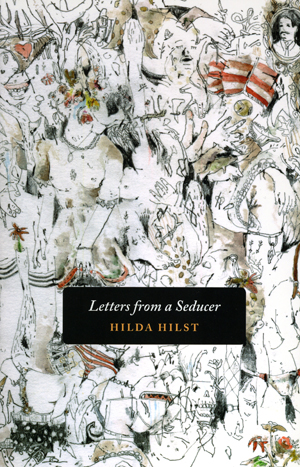
A few years ago, however, I learned that a planned publication of Annotations in Portuguese, or Anotações, was going to go forward. The publisher is A Bolha Editora, who co-published my translation into English of Brazilian writer Hilda Hilst's novel Letters from a Seducer in 2014 with Nightboat Books. Guided by writer, editor and genius Rachel Gontijo Araújo, A Bolha Editora is one of Brazil's exciting small presses, publishing both domestic and international authors, and have been based in the downtown Botafogo neighborhood of Rio de Janeiro since their founding (though I believe they may have recently moved to Brasília, the federal capital). Among the other authors and artists on A Bolha's roster are a number of prose and poetic experimentalists, including Claude Cahun, Kammal João, Bhanu Kapil, Tove Jansson, Douglas A. Martin, Adriano Motta, Jesse Moynihan, Nathanaël, Virgílio Neto, Gail Scott, and Studs Turkel.

Anotações' translator is Daniel Lühmann, originally from Poço de Caldas, Minas Gerais, Brazil, and now living in Lisbon. Daniel has previously translated the noted graphic novel, Snowpiercer (A Perfura de Neve) by Jacques Lob, Benjamin LeGrand and Jean-Marc Rochette, and Philip K. Dick's A Scanner Darkly (Um Reflexão na Escuridão), into Portuguese, and also makes intriguing performance videos, under the title "Pasarela" (Catwalk), which you can view on YouTube. If you read Portuguese, you can enjoy Mayra Azzi's short, informative profile of him on Revista Trip (the same site that featured the Thiago Borba images) going about his morning routine, with accompanying photos. Or if you are feeling especially tl;dr, you can see Azzi's photo series "Despertando com Daniel Lühmann" (Waking Up with Daniel Lühmann) at Cargo Collective.

Anotações, from A Bolha
Editora (image © A Bolha Editora
and Rodrigo Martins)
In terms of the translation process, he was a pleasure to work with, possessing not just a fine ear but a subtle eye, and we resolved some thorny issues involving vernacular terms and syntax, assonant, consonant and rhyming prose, and obscure references that American readers might be able to guess but Brazilians probably could not. (As was the case with the original version, it will have a glossary, though much expanded from the one I provided at the request of James Laughlin.)

Daniel even devised a solution to "Scaredy cat, scaredy cat, too scared to know where your shadow's at" that mirrors but is hardly an echo of the original. In the process, he even reminded me that I'd invented a few words in that text. His version will be of incalculable help to anyone translating Annotations into any other language, and, like the best translations, he creates a music akin to the original, but distinctively (Brazilian) Portuguese. To him, publisher, author and visionary Rachel Gontijo Araújo, and everyone at A Bolha Editora, I offer my deepest abraços e obrigadões.

The volume is slated to be out later this year, I think, and I think it's OK to show part of one of the covers (there may be two), which uses a original painting by Rio native Rodrigo Martins (cf. above).