Showing posts with label short stories. Show all posts

Friday, January 13, 2017

Kenward Elmslie's *The Orchid Stories* Book Launch

In 1973, Doubleday published Kenward Elmslie's (1929-) experimental, poetic prose collection The Orchid Stories. It is almost impossible to imagine Doubleday, or any of the large international or New York publishers, issuing such a work today. Exuberant as the hothouse orchid from which its title derives, complex, unspooling according to a logic all its own, and decidedly anti-commercial, it's no wonder that the collection, which might also be read as novel or novel-in-stories, went out of print, depriving readers of the opportunity to experience this series of provocations by Elmslie, one of most talented but also lesser known of the  New York School-affiliated writers.    

In The Orchid Stories Elmslie weaves together many strands of his long career, as a poet, fiction writer, librettist and song-writer, editor, and performance artist, creating a tapestry of compelling strangeness. It is a coming-of-age story narrated by a figure whose exact name eludes the reader the entire way through. Certain characters possess more than one name, and The exuberance, unflagging playfulness, and musical currents swirling within the prose make the text one to read and re-read--or rather, it may require rereading--aloud. And that is what several writers, I included, did on Wednesday night at the Poetry Project at St. Mark's Church, to launch the reprint, by New York publisher The Song Cave, of The Orchid Stories. (BOMB features a selection here.)

This new edition features an introduction by radio interviewer and critic Michael Silverblatt, who served as the evening's master of ceremonies, and introducing him was another member of the New York School's second generation, poet, fiction writer, essayist and critic Ron Padgett. The lineup included a number of luminaries who'd long known and even performed with Elmslie, including Ann Lauterbach, who read with breathless brio a section of prose set in Arkansas; Anne Waldman, performing another section as chant and song with Devin Waldman on saxophone and Ambrose Bye on piano, before she shared a song she'd performed more than once with Elmslie himself; and songwriter and longtime Fugs member Steven Taylor, who sang one of Elmslie's songs.

Not only had I never met Elmslie or heard him present his work live, but before I received a copy of The Orchid Stories, I'd only read several dozen of his poems. The collection has intrigued me and led me to read more of Elmslie's work. Although I did know that he had been described as the fifth--or sixth, if Barbara Guest were placed before him--I also had not realized that he was in the same cohort with John Ashbery and Frank O'Hara at Harvard, graduating in 1950, or that he'd been the partner of John LaTouche for a period of time, a fact that Silverblatt recounted in his introductory remarks. (You can read a shorter version of his introduction to The Orchid Stories at the Paris Review's site.) Lastly, as Silverblatt also shared, the great Nat King Cole recorded one of Elmslie's songs, "Love-wise," which appeared on Cole's 1959 album To Whom It May Concern. (I did learn on Wikipedia that Elmslie is the grandson of Joseph Pulitzer.) In additional to copies of the book the publishers also brought a number of Elmslie's LPs. I read a brief selection from the short section or chapter entitled "Waking Up"; it required attention to various kinds of formal and stylistic shifts but thankfully, given my inability to hold a note, no singing. Unfortunately Elmslie was unable to attend the event, but I imagine someone told him how well-attended it was and how enthusiastically the audience responded.

Here a few photos from the event, all borrowed courtesy of the Poetry Project's Facebook page. Please check out Elmslie's work, consider supporting the Poetry Project and enjoy the photos.

Steven Taylor
Devin Waldman, Anne Waldman, and Ambrose Bye
Ann Lauterbach
Michael Silverblatt
Ron Padgett
Yours truly

Friday, January 08, 2016

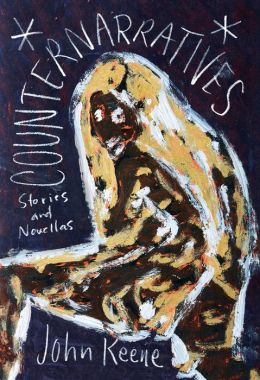
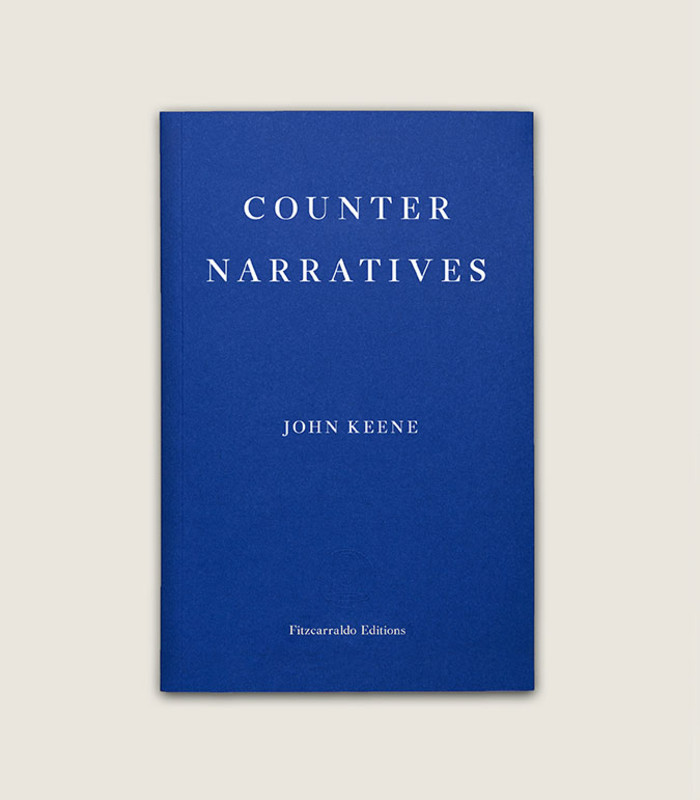
Counternarratives Featured on Howard Rambsy's Culture Front

Photo from Cultural Front (© Howard Rambsy II)
UPDATED: Cultural Front has added two new posts, "John Keene's 'Acrobatique' and the poet as short story writer" and, bestowing me what I consider to be one of highest possible honors, he places the remarkable Elizabeth Alexander and her foundation poem "The Venus Hottentot" in conversation with "Acrobatique." (This is particularly important to me because Elizabeth has been a huge inspiration since I first saw her read, from The Venus Hottentot no less, at the Dark Room in Cambridge, Massachusetts many moons ago. I hold her and her art--her poetry, her criticism, her nonfiction--in the highest esteem. She is for me one of essential poets of her generation.)

The reviews of Counternarratives continue to trickle in now that we're a few weeks into 2016. One by Daniel Green is forthcoming on Kenyon Review's online, and I think it will be positive, given that he selected it as the best book of 2015. Currently online but inaccessible--to me, since neither the Rutgers or New York Public Library systems subscribe to the journal--is Alex McElroy's review, at Georgia Review. (We currently are conversing by email about the book and hope to see a copy of the review one of these says soon.) Just before the new year arrived, another online site, Wuthering Heights blog, which had previously wrestled with the book, named it to its "Best of 2015" list (you can read the prior review at the link). Lastly James Crossley of Mercer Island Books selected Counternarratives as one of his 2015 "Books to Give At the Holidays."

In the meantime, it has been encouraging to have an African American scholar, Howard Rambsy II, who teaches at Southern Illinois University and writes about black poetry and poetics, book history and textual studies, to write a bit about the book on his blog Cultural Front. Rambsy is the author of The Black Arts Enterprise and the Production of African American Poetry (Ann Arbor: University of Michigan Press, 2011), and is involved with several important scholarly and critical projects involving black literature, among them the Project on History of Black Writing, based at University of Kansas. He also served as faculty member for the Black Poetry after the Black Arts Movement Institute, about which I heard extensive praise, this past summer at KU. As Rambsy's archive list will show, he has been blogging about poetry and black writing more generally since 2008, so make sure to scroll through the trove of posts.

Howard has now posted three entries about Counternarratives. The first provides a list of some of the online coverage of the collection, helpfully aggregating many of the book's reviews. The second does something that I think is a first for this collection and which has not popped up in most of the reviews, which is to explore how the Counternarratives fits, extends and exceeds--I guess that's the right word--the African American short story tradition. As Rambsy notes, there are aesthetic links to prior black writers, some of them like Charles Chestnut and Zora Neale Hurston (though I love their work) whom I was not thinking of, and some of whom, like Richard Wright and Charles Johnson, that I was. (I would add that other black short story writers who have strongly influenced my work include James Baldwin, Toni Cade Bambara, Ernest J. Gaines, Gayl Jones, Paule Marshall, Reginald McKnight, James Alan McPherson, Alice Walker, and John Edgar Wideman, to name just a few from preceding generations.)

His third post concerns the character "Zion" from my story "An Outtake from the Ideological Origins of the American Revolution," and focuses as this protagonist as an example of the "bad man," akin to similar figures in African American folklore and popular culture, and in books by writers I deeply admire, including Tyehimba Jess, Adrian Matejka, Tony Medina, Cornelius Eady, and Rita Dove. Rambsy points out that Zion is in some ways linked to the mythical figure (High) John the Conqueror, and like him he continually eludes attempts to keep him in bondage. Yet Zion also operates on the plane of realism in that he moves through his world attempting always to experience and embody freedom, but as an enslaved black person, is denied the option, in part because he is not recognized with in the larger discursive space, as Bernard Bailyn so artfully describes in his landmark 1967 book The Ideological Origins of the American Revolution, that would permit him to realize freedom as the unfolding social and political systems and practices of the society around him. His revolution is internal and considered lawless, even as it mirrors that of the larger society and of black people across the northern states. 

I imagined Zion as a fictional counterpoint to figures like Phillis Wheatley, Prince Hall, Wentworth Cheswell, and Lucy Terry, to give just a few examples of real 18th century African American pioneers. Zion, as the story makes clear, refuses to play by any rules, unlike his fellow enslaved person Jubal, because he senses that the entire system disregards and oppresses him. Moreover, there is the fact that much of his behavior parallels that of his white master and others whose actions are rationalized and permitted by the society's racialized legal, political, cultural, and social structures.  One need only look at the contemporary prison-industrial complex, the ties between capital and criminalization, and the unequal application of justice and incarceration to see that we are still living with these same systems and institutional mechanisms. I'll stop there, but I offer my deep thanks to Howard for highlighting the book, and welcome any comments from readers of his blog or this one about the book (or anything else).

Friday, May 15, 2015

"Rivers" in VICE + "The Lions" (& Interview) in The Offing

Brazos (de) Santiago, Texas, where
the final battle of the US Civil War occurred
One of the stories in Counternarratives, "Rivers," is also one of the riskiest. Not because of its form or style, but because it takes up the thread of--and takes on, it's fair to say--one of the greatest writers and books in American literature, Mark Twain's 1885 novel The Adventures of Huckleberry Finn. Or, more precisely, it revisits one of that novel's central characters, the enslaved man Jim, without whose presence the novel could not exist, but whose perspective throughout it remains mostly on the periphery, except in rare glimpses that are played for comedy.

My goal with the story was not so much to revise Twain's novel, whose main story stays mostly offstage in "Rivers," but rather to imagine Jim's life, particularly after freedom, his freedom, both the convenient legal version given by Twain and whatever subsequent freedom(s) Jim earned himself. Before the novel appears next week, thanks to VICE magazine and its editors, and New Directions, you can read "Rivers" in The VICE Reader and see where the character of Jim, as well as Huckleberry, led me, discover the significance of the story's title, and find out what it was like to participate in the final battle of the U.S. Civil War. Accompanying the story are photographer Alec Magnum's stunning, stirring photos from his series "Sleeping by the Mississippi."

***

In another fascinating coincidence, another story in Counternarratives, "The Lions," appeared this week in The Offing, the new literary publication of the Los Angeles Review of Books. About "The Lions" I'll say only that it is the last story in the collection and deeply disturbing. There are many inspirations for each of the characters, which is one reason neither is named, and you can take your pick about who seems to fit which role. (It is set in contemporary Africa, but could take place, with some adjustments, all over the globe.) Many thanks to the editors at The Offing and at New Directions.

Accompanying the story is a brief online interview, "No Whitewash," on The Offing's Tumblr that Bix Gabriel conducted with me, about the new collection and this collection, so please do check it out. (Thank you, Bix!)

A snippet:

Other stories or aspects of the book you’d like to readers to know about?
Spirituality and religion, in their multiple manifestations, flow throughout many of the stories, and some, like “A Letter on the Trials of the Counterreformation in New Lisbon,” turn in part on the clash between spiritual systems, which are also systems of knowledge. What does it mean to know, and can knowledge lead to freedom? Liberty and fugitivity are throughlines in the text. How might freedom be lived, embodied? Also, queerness in the many senses of that term is another current throughout all of these stories. Lastly, I hope it’s clear that I had a lot of fun creating and then following the stories of many of these characters.

Tuesday, September 10, 2013

Translation: Three Microstories by Alexander Kluge

Alexander Kluge
(from muni.com)
Obergrenze der Raublust
Ein Raubtier, das sich von Adlern und Löwen ernährt, braucht eine Heimat von der Grösse ganz Schottlands. So wie Macbeth und der "Zug der Schattenkönige", die er ermordete, eine Unterwelt brauchen, die von Schottland bis Gibraltar reicht. Dieser Raumbedarf setzt der Raubtiergrösse innerhalb der Evolution Grenzen.

Rapacity's Upper Limit
A predator that feeds on eagles and lions needs a home the size of all of Scotland. Just as Macbeth and the "pull of the shadow king" that he murdered need an underworld spanning Scotland to Gibraltar. This space requirement comprises predator size within evolution's limits.

***

Stufen des Lebens
Vier Stufen sind es vom Plankton zum Mörderwal. Die Stufe vom Wal zum massiven Walfangschiff in japanischer Bauweise erzeugt keinen zusätzlichen biologischen Tatbestand, behauptet der Analytiker T. Sachse, es sei denn, man betrachtet die gierigen Mäuler der Walesser und die Einfüllstutzen der Maschinen, mit denen Walöl geschmeidig und als Putzmittel geeignet gemacht wird (oder die Interaktion zwischen Greenpeace und den Walfängern), als eine Stufe des Lebens.

Stages of Life
There are four stages from plankton to killer whale. The stage from the whale to the massive whaling ship under Japanese construction generates no additional biological facts, the analyst T. Sachse says, unless one considers the greedy mouths of the whale eater and the filler pipes of the machines by which whale oil is rendered supple and as an appropriate cleaning agent (or the interaction between Greenpeace and the whalers), as a stage of life.

***

Ende des Lebens
Ein junger Russe des Jahrgangs 1929, der 1937  beide Eltern verloren hatte, übernachtete als 82jähriger in dem Berlin Hotel "Brandenburger Hof" und ging noch spätabends durch die Strasse des Scheunenviertels, die er als Soldat 1945 zum letzten Mal gesehen hatte. Steine des Trottoirs, unregelmässig geworden durch Kriegseinwirkung, lagen noch so desolat wie damals frisches Gras dazwischen. Während rings Neubauten prangten, zu denen er keine Verbindung mehr aufnahm.

End of Life
A young Russian of 1929 vintage who in 1937 had lost both parents stayed until the age of 82 at Berlin Hotel "Brandenburger Hof" and ventured out late at night through the streets of the Barn Quarter, which he had last seen as a soldier in 1945. The pavement's stones, having become irregular as a result of the war damage, still lay as desolate as the once fresh grass in between them. While all around blazed new buildings, to which he no longer held any connection.
--Copyright © Alexander Kluge, from Das fünfte Buch: Neue Lebensläufe, 402 Geschichten. Berlin: Suhrkamp Verlag, 2012, p. 526, p. 528, 519 respectively. Copyright © all translations by John Keene, 2013. All rights reserved.


Saturday, July 02, 2011

Krzhizhanovsky's Memories of the Future + Krasznahorkai's Ontological Depths

Four years ago on the Open Democracy website I came across a strange but prescient short story, "Yellow Coal," by a writer I'd never heard of, Sigizmund Krzhizhanovsky (1887-1950). The site had excerpted the story from the first collection of English translations, by Joan Turnbull, of his work, Seven Stories (Moscow: Glas, 2007). In the story, Krzhizhanovsky imagines that an alternative and inextinguishable fuel source arises to replace the almost complete depleted stores of oil, coal, and so on: human bile.  I'll say no more, because it's better to savor Krzhizhanovsky's (translated) words themselves.

Despite enjoying the story I completely about Krzhizhanovsky's work until I recently came across Adam Thirwell's sprightly June 2011 New York Review of Books essay "The Master of the Crossed Out," which made me want to find the review's new publication of Turnbull's translation, with Formozov, of Krzhizhanovsky's stories, Memories of the Future (New York: New York Review Books, 2009), and also provided an insightful overview of the ill-fated writer's life. Krzhizhanovsky, a Russian of Ukrainian-Polish ancestry, was active in the post-Revolutionary Moscow literary world, but because of thematic vision and aesthetic daring quickly ran afoul of Stalin and his censors. In addition to short stories he wrote novellas, short stories, plays, screenplays, and libretti, but as Thirlwell recounts, his publishing history is the nightmare of any author.

In 1924 a collection of Krzhizhanovsky’s stories, Fairy Tales for Wunderkinder, was accepted for publication, but the publishing house went bankrupt before the book came out. And so begins the sad history of Krzhizhanovsky’s impossible publications. In 1928 and 1929 he wrote more stories, a screenplay, and a play. None of these appeared in public. On April 23, 1932, the Central Committee of the Communist Party created the Union of Soviet Writers, with Maxim Gorky appointed the first chairman. In the same year, Gorky stated that stories like Krzhizhanovsky’s “would hardly find a publisher,” and if they did, and managed to “dislocate a few young minds,” he added, would this really be desirable?

In effect, his opinion made Krzhizhanovsky definitively unpublishable. The next year, Krzhizhanovsky’s Academia edition of Shakespeare was canceled. In 1934, another play, The Priest and the Lieutenant, went unstaged. A collection of stories that was provisionally accepted by the State Publishing House was stopped by the censors. 
It was only downhill from there; the war prevented publication of another collection of stories, while censors gutted or held back his plays. He sank into alcoholism, suffered a stroke in the spring of 1950 and died before the year was out.

As "Yellow Coal" shows, Krzhizhanovsky was able to see almost 75 years ago what people today still fail to grasp in terms in terms of our limited resources and the truth of who we truly are. In 1976 scholar Vadim Perlmuter discovered a cache of Krzhizhanovsky's papers at the State Archives in Moscow, and 13 years later, during the Perestroika period, was able to publish one of his stories, which led to the slow but steady publication of his collected works and a concomitant rise in his reputation.  I'm slowly making my way through Memories of the Future, but it's clear that Krzhizhanovsky's is a highly original voice, a parallel to Kafka with the SF chops of generations of writers who appeared decades later, and a clarity of vision that would make many a realist envious. I'm enjoying dipping into the new volume, which does not include "Yellow Coal," but you can read that online as a way of entering this deservedly-acclaimed writer's world(s).

===

Another writer with a long and poetic last name, the Hungarian László Krasznahorkai (1954-), is the subject of critic James Wood's thoroughgoing critical essay in the current (July 4, 2011) New Yorker; the article unfortunately remains behind a firewall.  The screenwriter of five films, all directed by the internationally praised director Béla Tarr, Krasznahorkai has also authored six novels, only two of which, The Melancholy of Resistance (1989, published in English in 1998) and War and War (1999, translated into English in 2006), are available in English, from New Directions Publishing Corporation; his first, Sátántángo (1985), in its cinematic form secured Tarr's reputation outside Hungary as much as earned Krasznahorkai within his local literary culture.

To summarize, Wood, whose chief critical interest is Euro-American realist prose fiction, explores the idea, taken from Krasznahorkai's novel War and War that the author's work represents "reality examined to the point of madness." Citing a host of well known and challenging avant-gardists ranging from Nobel Prize winners Claude Simon and José Saramago to the late W. G. Sebald, Roberto Bolaño and David Foster Wallace, Wood argues that Krasznahorkai is perhaps the most unusual (and that's saying something) of all of them, squaring the tendences both of the maximalists (like Thomas Bernhard) and the minimalists (like the later Samuel Beckett), as his prose pushes the boundaries of the real inwards and thus outwards, not towards the fantastical but as if scanning the depths of the real as our perceptions, however skewed, record, reflect and create it, doing so through exhaustively serpentine sentences, hallmarks of nearly all the writers listed above, that pierce like rays not only plot, character, theme, tone, and the other fundamental elements of fiction, but of perhaps the most fundamental ones, language and time.

Wood describes Krasznahorkai's narrative ontology--for dramatic arc is not exactly what he's describing, nor is thematic arc, or character trajectory, let alone plot, but the status of the narrative as the text progresses--as "unstable," almost to the point of dizzying, though rendered superbly by translator George Szirtes. It produces for Wood a feeling akin to that of two of Krasznahorkai's epigones, Bernhard and Beckett, but goes even further, charting "abysses [that] are bottomless and far from logical," in a maximalist prose different from the later work of the latter, more vertiginous, disorienting and yet self-correcting, leaving Wood feeling that he "had got as close as literature could possibly take me to the inhabiting of another person, and, in particular, the inhabiting of a mind in the grip of 'war and war'--a mind not without visions of beauty but also one that is utterly lost in its own boiling incommunicable fictions, its own grotesquely fertile pain ('Heaven is sad')." That sounds almost like he's encountering a version of the sublime, which is to say, it's quite an appraisal.

I'll only note in conclusion that Wood also analyzes the other New Directions-published novel, The Melancholy of Resistance, which became Tarr's Werckmeister Harmonies, a film that's on my Netflix queue, to suggest that it's less involuted than War and War and not at all magical-realist as the film adaptation portrayed, but still quite exceedingly strange, demonstrating the author's interest in "apocalypse," as the late Susan Sontag wrote of him, "broken revelation," and "indecipherable messages" that nevertheless appear to convey substantial truths.  In discussing Melancholy, he also touches upon the author's most recent English-language book, 2010's Animalinside, texts in conversation with images by German artist Max Neumann, with an introduction by Colm Tóibín. Animalinside was jointly published by New Directions, Sylph Editions of London and the Center for Writers and Translators at the American University of Paris, and translated by Ottilie Mulzet.  In this text disturbing images of a dog-like creature parallel Krasznahorkai's texts, which evoke the work of Beckett, but the Hungarian writer is more overtly political. Or, as Wood says, "By the end of this text, the dog has passed through the political and become metaphysical and theological." I was given a copy of The Melancholy of Resistance last summer, but did not get to it. Before the end of this summer I shall....


From New Direction's Website, a snippet of Animalinside:

(Excerpt) Krasznahorkai Animalinside