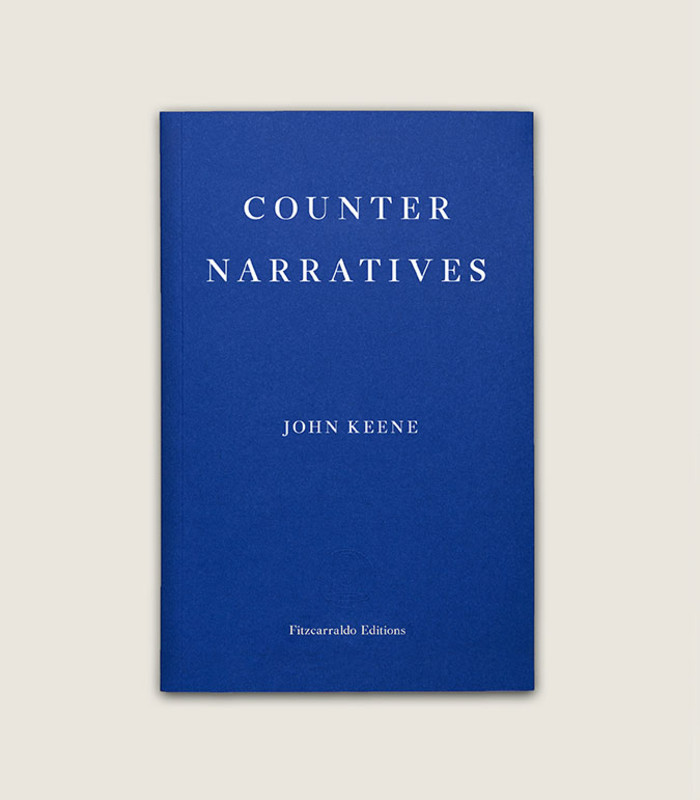
Showing posts with label flowers. Show all posts

Thursday, March 15, 2018

Cross-Posting: Song of Myself (Linda Norton)


Below is a reply that author, blogger and educator Linda Norton sent back in January 2018 via the FRSGA Yahoo account, in response to one of the vouchers I posted in December, which Karen Cantrell had previously responded to. The card read:


Here is her full response (note the references to an array of artists):

Song of Myself

Filmmaker, star, a doctor examining the culture—me on a walk. On the pavement, I notice an electric-blue Post-It from that batch I stole when I quit my job: “taylor * negritude * milk and you” – My dirty to-do list. I must have walked this way last week and dropped it.

In December sun, I hurry past the cathedral like it might get me. Then I saunter, Thoreau-like, sans-terre in California, and again I’m everything—the spinsters Thoreau disparaged, the turtles he saw copulating and tried to separate, the mother who saves him from civilization. Open to alms. My loneliness is like a poem by Fanny.

By this time my parka is off. In the co-op bakery when I get to the counter, the cashier is dazzled for a minute. “You look like Elizabeth Taylor.” But then he wonders if he’s right not to offer me the senior discount yet. “That’s right. Not yet.”

--Linda Norton; a response to a prompt on John Keene’s “Emotional Outreach” blog, 12/2017

Many thanks to Linda for her collaboration, and I will post most responses as they come in. Any readers of this blog should feel free to respond to the instructions above, and write a response along the lines of Linda's and forward it directly to fieldresearchgroup[AT]yahoo.com, or center your QR reader app and utilize the QR code below.


"Song of Myself," Copyright © Linda Norton, shared by permission with the Emotional Outreach/FRSGA blog, 2018.

Sunday, December 10, 2017

Emotional Outreach Project: Life As a Work of Art (Karen Cantrell)

This is a cross-posting, with a few revisions, from my other blog, the site for Field Research Study Group A, where I've shared information for the last few years about various versions of the durational Emotional Outreach Project I've engaged in for over a decade now (since 2003).

Please do visit that blog, and feel free to check out this post and this one, both from 2016, if you would like to participate. Also, at the end of this post, please note the correct email address to which you can send your responses if you elect to write one or several.

***

It has been a while since I last posted here at Field Research Study Group A--over a year!--but I wanted to share a new response from the most recent version of the Emotional Outreach Project.

Below is a reply that Karen Cantrell sent back in May (2017) via the FRSGA Yahoo account, in response to one of the vouchers I passed out earlier this year (I believe.) Based on her reply, I imagine her card's emotional exercise read as follows:


If I may quote her email directly, she writes: "The card with the assignment fell out of my bag, and I took its appearance as a sign. A paragraph, however, is hard. I have summarized my day as a work of art to one sentence and included the paragraphs that describe what I saw."

Here is her full response:

Sentence: 
I liked picturing myself as a better person, more attractive, stronger, a person who knows the right thing to do and has the courage to perform accordingly.

Paragraphs: 
I first conjured a series of statues – me doing perfect poses, no wobbles even during chaturanga, not though the full moon increased the gravity. Sculptures of smooth, hard stone, all extra padding shaved away, no greasy fingerprints disturbing the gloss, a yogic serenity smoothing my features. 
Second, an animation to capture the papers and toys and books and used dishes returning like autonomous agents to my mother’s living room, days after I cleared the clutter and wiped the dusty cobwebs from behind framed needlepoints. 
A photo of a lonely dog jumping on the little old ladies who deigned to drink tea on the patio, chewed remnants littering the backyard beyond them. A sentence to describe the Rottweiler my sister-in-law brought into the house, a week before she left, a puppy bigger than the little boy he was supposedly meant for. 
In the screenplay, over a shared taco salad, the red shell split in half, the sour cream pushed to the side, I tell Mom what I’ve learned about my half-brother, his reluctance to take the DNA test, his fear of abandonment, his sadness. Then I segue into the question I scribbled in my journal weeks before, the question that inspired me to give her a book: “Do we have to be freed from a secret to really love and thus to live?” 
As a work of art, I am not the self who waits until she spies The Lowland by Jhumpa Lahiri on the floorboard of her mother’s car, then assumes a pedantic tone as she steps her mother through the questions like a reluctant undergrad. Still the truth is that Mom liked the book enough to want to pass onto a friend, and the story Mom tells, a time her father took his cane to her mother’s zinnias, is the best she can do. Just as I park the car outside Departures and turn back into a sculpture, smooth and hard, no greasy fingerprints disturbing my glossy serenity as I stride through the airport.

Text written and submitted by Karen Cantrell.

Many thanks to Karen for her collaboration, and I will post most responses as they come in. Any readers of this blog should feel free to respond to the instructions above, and write a response along the lines of Karen's and forward it directly to fieldresearchgroup[AT]yahoo.com, or center your QR reader app and utilize the QR code below.


Monday, September 10, 2012

Poem & Translation: Paul Verlaine + Reading at NY Botanical Garden

The bridge over the recreated pond
The bridge over the lily pond
Though I have many pots in the kiln right now, I did not want to let more than a week elapse since an I reported on an event I participated in at the majestic New York Botanical Garden, which is located in the Bronx: the final reading in the Poetry Society of America's Monet to Mallarmé series, this one dedicated to the poems of Paul Verlaine (1844-1896), the symbolist master, queer pioneer and among the truest musicians of French lyric poetry.

This past Sunday, introduced by PSA's Charif Shanahan, poets, critics and translators Patrick Phillips, Charles Ruas and I read just yards from the Botanical Garden's exhibit and recreation of Claude Monet's garden at Giverny in its Enid Haupt Conservatory. Each of us drew from the rich archive of Verlaine's works. I elected to read both in French and in English, with the translations all by Martin Sorrell.  Patrick Phillips focused on Verlaine's romantic poems, while Charles Ruas explored Verlaine's work after he was sentenced to prison for his 1873 shooting of Arthur Rimbaud (1854-1891), the young seer among poets with whom Verlaine fell madly, crazily in love, one of several amours fous that marked Verlaine's life.

Here is one of the poems I read, certainly one of Verlaine's most famous and exquisite, "Chanson d'automne," or Autumn Song. It is nearly untranslatable, in part because in any other language, including French's Romance cousins, it loses so much of its innate homophonous, rhyming, and assonant music, beginning with the first stanza's vowel sounds ("automne," "monotone"), some very nasal ("sanglots longs"), but all of which mimic and embody the "monotonous" music of (Autumn's) violins. Nevertheless, here is the poem, and my admittedly crude translation. Autumn nevertheless is upon us, and so Verlaine's gem feels right.  If you are in New York and are thinking of an interesting trip outside Manhattan and Brooklyn, the Botanical Garden is only 20 minutes by train from Grand Central Station, about $3.75 (I think) each way, and recreating Monet until October 21, 2012!

CHANSON D'AUTOMNE
Les sanglots longs
Des violons
De l’automne
Blessent mon cœur
D’une langueur
Monotone.

Tout suffocant
Et blême, quand
Sonne l'heure,
Je me souviens
Des jours anciens
Et je pleure

Et je m'en vais
Au vent mauvais
Qui m'emporte
Deçà, delà,
Pareil à la
Feuille morte.
Poem by Paul Verlaine (1844-1896). It initially appeared in his first collection,Poèmes Saturniens, in 1866.

AUTUMN SONG
The drawn-out sobs
Of the violins
Of autumn
Wound my heart
With a languorous
Boredom.

All worked up
And pale, when
The hour nighs
I recall
Days of old
And I cry

And I'm off
On an ill wind
That carries me
Hither, thither
Just as with a
Fallen leaf.


Copyright translation © by John Keene, 2012.

Here are a few photos from the Monet's Garden exhibit. Enjoy!
UPDATE: A photo from Charif Shanahan/PSA:

A listener, Phillips, me, Ruas, at the event


Photos (by me)
Enid Haupt Conservatory at New York Botanical Garden
In the NY Botanical Garden's Monet's Garden Exhibit
The NY Botanical Garden's Monet's Garden Exhibit
Flowers at the NY Botanical Garden's Monet's Garden Exhibit
The pond
Bamboo stalks
Flowers at the NY Botanical Garden's Monet's Garden Exhibit
Une abeille!

Thursday, March 22, 2012

Photos: Blossoms

I never tire of the many signs of spring. In Chicago before I left, the weather had already shifted to summer-mode. (It might be much milder now that I'm away. Summer is my favorite season, but I love spring's heralds and harbingers.) In New Jersey and New York, however, it does still feel like (a slightly warmer) March. I've even gotten to experience one of my favorite weather events, fog, which unfurled itself over everything like a gauzy coverlet all the way down to the Hudson. As I've traipsed hither and thither, I've been snapping photographs of flowers in bloom. Here are a few. I'm no Ansel Adams, but I think these images should convey some sense of the beautiful that nature makes available to us if we look.


Blossom, New York City 
 
Saucer magnolia blossoms, New York City 
 
Blossoms, New York City 
 
Dogwood blossoms 
 

Blossoms, New York
 
Holly berries 
 
Hibiscus flowers near the Cooper Union 
 
Dogwood at night

Saturday, June 11, 2011

Annals of Flânerie: The High Line, Section 2

On Thursday, after leaving the library, I headed west to the High Line Park to walk the new section and take some pictures, which I'm posting below.  The new section awed me as much as the initial one did, though it's different--or feels so--in several ways. It's narrower; it cuts through more buildings and offers more views of shaftways; it's lined with more trees, particularly cherry trees and junipers; it has a catwalk, with several overlooks, the Falcone Flyover, that rises 8 feet above the already elevated walkway, giving you an almost vertiginous feeling of aerial suspension; and it presses into the heart of Chelsea, especially from 18th Street on, curving west onto 10th Avenue, so that you are floating above the heart of New York's art world.  The High Line park highlights what all New Yorkers instinctively feel and what's intrinsic about the city: the radical juxtapositions of everything, the social, historical, cultural, physical, geographical.  In just 500 feet I noted buildings (from tenements to the newest condos) indexing 150+ years of New York's various histories and subhistories. It is the perfect place for a kind of heightened flânerie. Along the line I could see all kinds of people as well, every race and ethnicity, age, social class, and so on. The High Line remains one of the finest attractions in contemporary New York, a marvelous repurposing of what had been a relic of an earlier era, but also a public site, funded by a combination of federal, state, local and private monies, for all New Yorkers and visitors, not just multimillionaires, the well-connected and socialites, to enjoy.  It's the kind of site far more cities and suburbs ought to consider.

Entering the High Line's new section, @ 23rd St.
Entering the High Line's new section, at 23rd Street and 10th Avenue
At the High Line's second section, @ 23rd St.
At the 23rd St. section
Jason*, making cut outs/stencils
An artist (he said his name was Jason), cutting stencils of the flowers
Buildings everywhere you look
A ribbon of wood and flora between the buildings
Chelsea!
Chelsea's busy streets below (looking west, towards the Hudson and New Jersey)
Flowers and buildings
Flowers and the buildings of Chelsea just beyond (looking east)
Fascinating fence
A fascinating fence on a condo abutting the High Line park
Duo
Duo taking in the scenery
The lower walkway
The lower walkway, beneath the Flyover
Window to _____
Open window on unfinished building, or a doorway to _______
Chatting
People chatting on one of the rest areas
The Falcone Flyover
Falcone Flyover
One of the overlook frames
The frame of the observatory deck
The old train tracks
People chatting and chilling
Chatting and chilling
Roofscapes
Roofscapes, with the omniprescent Empire State Building in the background
Ribbon of wood
Ribbon of wood
Wildflower
Wildflowers
A digsite
A building site, looking west from the High Line to New Jersey
Looking north towards Midtown
Looking north, towards Midtown and the Upper West Side (the Time Warner Center towers are visible in the background)
A children's carnival below
A children's carnival being erected below
1 of the overlooks along High Line's new section
At the overlook
Bird feeder/sculpture
One of the bird feeder/nester/sculptures
Bleachers
The exquisite wooden bleachers
The lawn and West St. and the Hudson in the distance
The elevated lawn
High Line's new section
Near the end of the new section
Only in New York
Only in New York
High Line's new section
Above the line
Cross street to the west, High Line's new section
Near one of Chelsea's cross streets
The car forest next to the High Line
A car forest east of the High Line
Oranges on the bird feeding station
Oranges on one of the bird feeders
The Episcopal Seminary from the High Line
The Episcopal Seminary (I think that's it) from the High Line
A stretch of the High Line's new section, with buildings abutting it
Buildings closely abutting the elevated park

The marvelous curving bench
The marvelous curving bench!
Passerby
A passerby
Unfinished section, looking north
An unfinished spur, looking north

At the end of the (section 2) line
The end of the (section 2) line