|
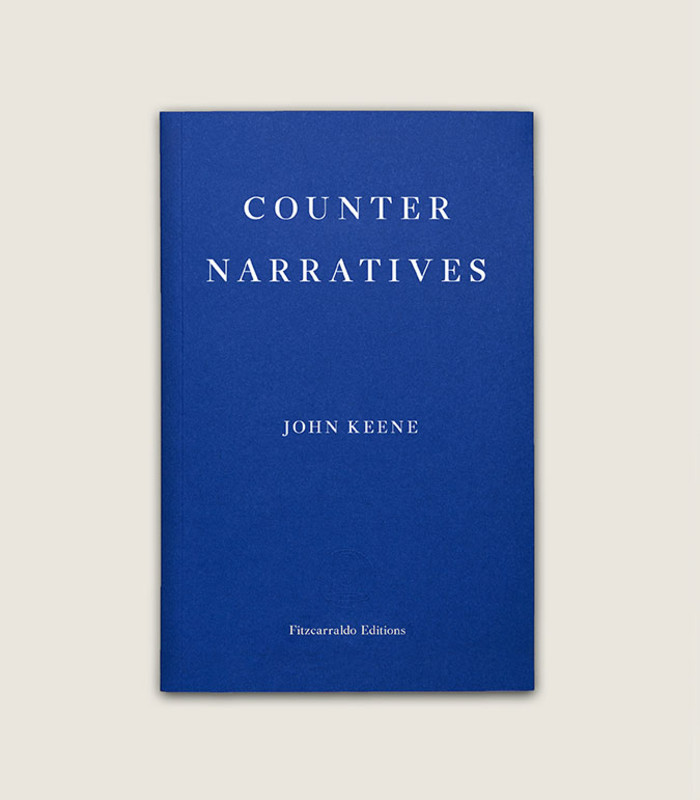
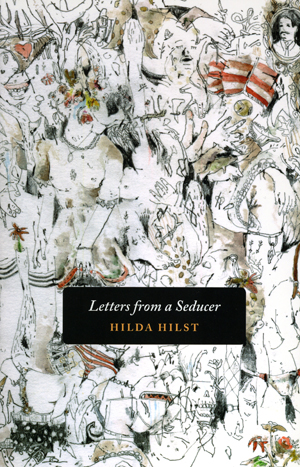
| Some novels from Flavorwire's 50 Most Anticipated Books of 2016 |
Have MFA programs--or the training student writers receive in them--changed the American novel, and more broadly, US fiction? Some scholars, like Mark McGurl, in his authoritative study The Program Era: Postwar Fiction and the Rise of Creative Writing, have persuasively suggested that MFA programs have, and in decisive and evaluatively positive ways. McGurl even establishes a typology of "program fiction" that includes "technomodernism," "high cultural pluralism," and "lower-middle-class modernism," all of which he believes not only define contemporary American fiction but represent qualitative achievements in the genre. (McGurl was no interloper in fiction criticism either; he had previously explored early 20th century American novelists' ambivalent relationships to the fiction as an art and as a form of popular entertainment in his 2001 study The Novel Art.)
Other critics like D. G. Myers, who historicizes creative writing programs in The Elephants Teach: Creative Writing Since 1880, take a more mixed view, criticizing contemporary American fiction's lack of historical awareness and arguing that's needed is more reconciliation between the artists (writers) and critics (literary scholars). Still other critics, like Eric Bennett, author of Workshops of Empire: Stegner, Engle, and American Creative Writing During the Cold War, point out the role of the US government, and in particular, the CIA, in shaping MFA fiction from an ideological standpoint as well as a formal one. Bennett's study notes how CIA funding influenced the University of Iowa's Writing Workshop director Paul Engle to "flatten out" the political ferment that had characterized so much American fiction from the late 19th and early 20th centuries into what we now associate with a standard American style, emphasizing precision of language, careful characterization, and a focus on "the personal, the concrete and the individual." How often, in fact, is this stylistic point of origin discussed in any MFA workshops anywhere?
And that's not all. Chad Harbach's edited volume MFA vs. NYC: The Two Cultures of American Fiction, points to the tensions between academe, scattered throughout the country and across the globe, and the publishing industry, which is commercially focused and headquartered in New York. In Harbach's volume, several different essays note the tensions between approaches to writing that have elevated very different sets of writers along the New York-MFA axis. (When I shared the book with my graduate students a few years ago, though, they were not particularly interested in this conflict, and most appeared to have placed their cards on the side of the MFA world.) I hesitate to call her view representative, but I would venture that among American critics Elif Batuman's perspective, that MFA programs have had a demonstrable effect on US fiction, probably widespread.
But have they? Or rather, saying they have, what are those effects and can they be detected analytically, through variables discernible using big data research? Given the rise of theoretical trends like distant reading and computational-driven analysis of texts, this would seem to be an intriguing approach. In a recent online edition of the Atlantic, in "How Has the MFA Changed the Contemporary Novel?" Richard Jean So, a scholar of Asian American literature at the University of Chicago, and Andrew Piper, a scholar at McMaster University, did decide to crunch some of the numbers, and what they found is...that novels produced by writers who've graduated from MFA programs and those who haven't are more similar than different. Whether the variables are diction, theme, syntax, or racial or gender difference among protagonists, despite some distinctions MFA-trained and non-MFA trained American novelists are essentially writing the same sorts of books.
To quote So and Piper, their methodology involved selecting the following sets of novels for study:
We collected a sample of 200 novels written by graduates of MFA programs from over 20 leading programs (including Columbia, University of Texas at Austin, Iowa, and others) that have been published in the last 15 years. (This sample includes authors like Rick Moody, Alix Ohlin, and Ben Lerner.) For the sake of comparison, we also collected a similarly sized group of novels published over the same time period by authors who haven’t earned an MFA degree (including writers like Donna Tartt, Miranda July, and Akhil Sharma). To make these two groups as comparable as possible, we only gathered novels by non-MFA writers that were reviewed in The New York Times, which we took as a mark of literary excellence. Using a variety of tools from the field of computational text analysis, we studied how similar authors were across a range of literary aspects, including diction, style, theme, setting, and even how writers use characters.To restate the premise here, So and Piper looked at several different variables to see if there were distinct differences between the novels produced by MFA-trained writers and those by writers who weren't. They assessed the texts' diction, and it turns out that the computer was successful only 67% of the time (or roughly 2/3rds) in identifying which was which. There were certain words ("lakes, counters," etc.) and names ("Ruth, Pete, Bobby, Charlotte," etc.) that appeared more frequently in the MFA-trained writers' works, but otherwise there was little difference. The same proved true for style (which for So and Piper seemed more to define syntax than overall prose style); for characterization; or for thematics. Additionally, their study showed no distinction with regard to these factors when writers wrote about race or gender, and in the cases of both sets of authors, a majority (61% for MFA-trained writers, 65% for non-MFA-trained) wrote novels with male protagonists. So where, So and Piper wonder, is that MFA influence and, ultimately they ask, is MFA training economically worth it? (Here I should note that Rutgers-Newark's MFA in creative writing program is now fully funded.)
I find So's and Piper's research illuminating, but it also raises a number of questions, beginning with their selected control groups. Do they ever ask themselves whether the choice of The New York Times as the critical benchmark might not account for the similarities in books they would encounter? Do they consider and identify other publications whose critical perspective might perhaps not be linked to or influenced by a particular normative ideological and aesthetic consensus about American literature in the ways the Times is? Though they appear to be advancing an argument about distinctions between works produced out of differing educational experiences, they also suggest a qualitative standard--"as a mark of literary excellence"--that might prove less useful than examining a broader array of texts falling into each category.
Beyond diction and syntax, are there other overall prose stylistic similarities among the MFA-trained writers' books vs. the non-MFA-trained writers' books? Vladimir Propp reminded us that there are fixed number of plots, but in terms of stories, are there commonalities among the works within the two groups that distinguish them from the other group in identifiable distinctive ways? What about structure? What about tone, and how might one create a computation tool to measure that, or can it be evaluated only through more conventional reading approaches? In addition, though So and Piper focus on literary fiction, one pressing question I have, based on my experience teaching in MFA programs, is how frequently MFA fiction writers diverge from conventional realism for other genres and modes such as speculative fiction, fantasy, mystery, and so on? What might account for the reasons why and frequency they do so? So and Piper also do not address any impact publishers might have on the books surveyed. To put it in question form, what effects might the publishing industry (agents, editors, publishers, etc.) have on the sorts of books appearing in the market, whether by MFA graduates or not?
One conclusion of So's and Piper's that I do agree with is that the literary landscape as a whole--and here Roland Barthes and Michel Foucault might take ghostly bows--might be shaping works of fiction more so than individual programs or the MFA program experience as a whole. The larger literary ecology and economy set writers'--and readers'--expectations of what's possible, and must be taken into account. I'd also suggest the authors consider specific aspects of MFA program training. Are there more short story collections since the rise of MFA programs, especially because so many students in these programs are writing shorter fiction instead of novels, which are harder to workshop. Do certain literary influence appear more frequently, perhaps based on the writers appearing on MFA fiction workshop syllabi? How frequently do non-US models appear in MFA-shaped vs. non-MFA-shaped novels? And are there any other identifiable formal qualities marking MFA-shaped work vs. non-MFA-shaped texts?
On the whole I take McGurl's, Myers', Bennett's, and Harbach's arguments as convincing, as they are not merely anecdotal to me but I've witnessed them up close, but I do think So and Piper are onto something, particularly in terms of pointing out how at the margins MFA (and now PhD in fiction and creative writing) might mainly be a financial risk rather than an aesthetic and economic aid. I do think, though, that more research of this nature would strengthen their argument. This reads like a one-off, but given how important computational methods are these days, it very well could be part of a larger project. It also makes me wonder, is anyone attempting something along these lines for poetry? MFA poetics vs. non-MFA poetics: I think the differences are probably more evident than with fiction. (But what about MFA vs. PhD poetics...hmm. There's a study to be pursued!)