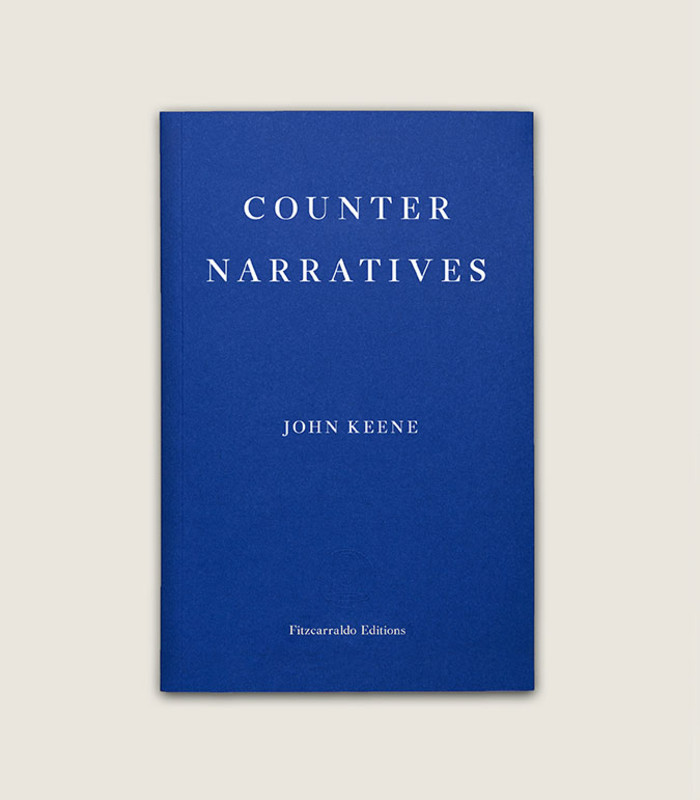
Showing posts with label MTV. Show all posts

Friday, July 28, 2017

Happy 90th, John Ashbery + Roffman's New Ashbery Bio

John Ashbery receiving the National Medal for
the Arts from President Barack Obama, in 2012
Today is the 90th birthday of John Ashbery, one of the most influential American and English-language poets of late 20th and now 21st century literature. Ashbery's career has had its ups--in addition to having won nearly every major award in the United States, he is the only poet, I believe, to have received the National Book Award, National Book Critics Circle Award and Pulitzer Prize for a single collection, his 1975 masterpiece Self-Portrait in a Convex Mirror--and downs, which included critic John Simon famously using Ashbery's own words to trash the poet's second book, The Tennis Court Oath, as "garbage," an assessment that other peer poets like James Dickey agreed with, using different terms.

One might also surmise that from the vantage point of the late 1950s and early 1960s when he began publishing his collection, Ashbery would not have appeared to be the most likely candidate for major status. Among his near-exact contemporaries (born in the 1920s, and including several who were former classmates at Harvard) were quite a few white, mostly straight male poets who began publishing at the same time as him, and in some cases more swiftly achieved critical attention and received most of the major poetry and literary awards. Think Ammons, Blackburn, Bogardus, Creeley, Davison, Dickey, Dorn, Dugan, Gilbert, Ginsberg, Hall, Halpern, Hecht, Hoffman, Hollander, Kinnell, Koch, McClure, Meredith, Merrill, Merwin, Snyder, Whalen, Wilbur, and James Wright. In addition, two poets and close friends who were part of Ashbery's New York School poetic coterie were also poised to become significant figures in the American poetic firmament. (And I have not even mentioned the many white women poets, like Maxine Kumin, Denise Levertov, Ann Sexton, Mona Van Duyn, and Sylvia Plath, as well as poets of color, like African American poets Bob Kaufman, Ted Joans, Etheridge Knight and James Emanuel, of roughly the exact same generation, or who came of age shortly afterwards, like Amiri Baraka, who also made their mark.)

Yet Ashbery's persistence and distinctive aesthetics have paid off. The Tennis Court Oath, which provoked bafflement at its appearance, is from today's perspective is a visionary text that foresaw the emergence of Language poetry and other contemporary trends. Ashbery's prose poetic foray, Three Poems, while not the first text of its kind, also represented a pointer for texts that followed it. Moreover, as Susan M. Schultz's edited collection The Tribe of John: Ashbery and Contemporary Poetry noted, one can find his influence across a wide array of English-language poets and poetics, ranging from John Yau, who was his student, to Jorie Graham, to countless contemporary younger poets. The influence also extends beyond the US: as someone quipped to me years ago, how unfortunate to be the English poet John Ash, whose poetry not only shows Ashbery's strong imprint but also whose name itself sounds like a truncated derivation. Contemporary French poetry, as well as Hispanophone poetry, among others, also have taken lessons from Ashbery's approaches to lyric poetry, even as he has kept moving, shifting, and inventing.

To add a personal note, I first heard of John Ashbery when I was in college. In fact, I kept hearing his name--he was winning acclaim for A Wave (1984) by then, and had been on the Harvard Advocate, as I was--but for whatever reason, I did not read any of his poems. Perhaps the hype turned me off. Nor did I take a single class where we read his poetry. Allen Ginsberg's, yes. James Merrill's, yes. (I read these poets, and others like Gwendolyn Brooks and Robert Justice, in high school, and had read still others, like Robert Frost, Amiri Baraka, and Ishmael Reed, in childhood or on my own.) When I think of the various journals and magazines I was reading, I still happened to miss Ashbery's poetry. A few years later, however, I was working at MIT as an office drone, and regularly visited their humanities library, where every book seemed to stay on the shelves. It was then that I checked out Some Trees (1956), The Double Dream of Spring (1970), and my initial favorite, Rivers and Mountains (1966). It was like little bombs went off in my head; this was a poet I had been waiting to read all my life. As many who know me will attest, I have been a fan of Ashbery's ever since.

Ashbery has now lived long enough to sound utterly contemporary and a few years ago was even named the Poet Laureate of MTV (a fact I once heard another senior poet dismiss by suggesting that Ashbery was already part of the "establishment," and yet I thought as he said that I could count more than a few poets I knew who thought Ashbery was unintelligible, a sham, and really not worthy of all the acclaim or, to their mind, interest by younger poets). He also is recognized as a significant gay poet, and studies like my former undergraduate TA John Shoptaw's On the Outside Looking Out: On John Ashbery's Poetry (1995) have opened up readers' understanding of Ashbery's work, particularly how sexuality marks its poetics, in relation to the larger socioeconomic and political contexts in which Ashbery wrote it. At 90 he continues to write and publish, with his most recent book  and to draw new generations of readers.

***

Earlier this summer, I finished Karin Roffman's rewarding new biography of Ashbery's early life and budding career, The Songs We Know Best (Farrar Straus & Giroux, 2017). Roffman's account opens with the story of Ashbery's parents, Chester and Helen Lawrence Ashbery, who lived on a farm in Sodus, in western New York State, and his grandparents, Addie and Henry Lawrence, a physics professor at the University of Rochester, who profoundly encouraged him in his literary pursuits, and moves adroitly through his childhood, when he lost his younger brother, Richard, and later appeared on the national TV show Quiz Kids, showing that he was famous long before truly achieved lasting fame. From childhood on, Ashbery's intellect, his interest in literature, music and visual art, and his queerness, marked him out as different and proved an ongoing source of tension with his father, who favored the more outgoing, athletic Richard. Again and again, we see the portrait of the artist as a young child, his gifts and vision shaped by circumstances and the contexts in which he grew up, and how he adopted strategies of self-concealment that would later develop into what we think of as his adult style. One of Roffman's revelations, based on copious childhood diaries Ashbery kept and later shared with her, was his pre-adolescent fragmentation and abstraction of his queer desire, into poetic entries that read like later Ashbery, to prevent his mother from figuring out what he was describing.

Pursuing this thread, Roffman delves into Ashbery's difficult experiences at the elite, then all-boy's Deerfield School, where a wealthy, troubled classmate who was somewhat obsessed with him stole his poems and sent them to Poetry, where they were published under the classmate's name. When Ashbery later sent the same poems into Poetry, the editors mistook him as the plagiarist. At Deerfield, his distinctive poetic gifts began to flower, but it was at Harvard College, where he fell in with an artistic milieu and began several gay relationships, that he wrote a number of the poems that would fill his first collection, the Yale Younger Poets Series Prize-winning Some Trees (1956), which was selected, with some disaffection and after a convoluted process, by W. H. Auden. Roffman traces out Ashbery's literary influences and the various personal and immediate and broader cultural strands that led to these distinctive, still provocative poems, while also giving an account of how Ashbery negotiated being gay at a time when it was not just still extremely fraught but illegal. Through the Harvard Advocate--which Roffman reveals had a kibosh on gay, Black and Jewish students--he met Kenneth Koch, who remained a friend till the end of Koch's life and, at the very end of Ashbery's senior year, Frank O'Hara, who became his fast, and best friend until O'Hara's early death in 1966. Koch, Ashbery and O'Hara all nurtured each other's avant-garde interests, and O'Hara in particular offered another model for out queerness during the Cold War and the McCarthy era. Roffman ends her account with Ashbery's immersion in New York City's mid-century art world, which he navigated as a young writer bouncing from job to job and then as a graduate student at NYU and Columbia, before his departure for France on a Fulbright.

If I have any quarrels with Roffman's book it would lie in what I felt were his misreadings of the poems, hewing closely to his biography while overlooking what the words themselves say, though this is common in many a literary biography. Roffman's sense of pacing, her skill and judiciousness in weaving facts together, and her eye for telling details make this a valuable text for glimpsing a white, cis-queer, middle-class, male writer's formation in the pre-Stonewall Era. What also comes into focus is the politics of Ashbery's style; the New York School poets were criticized, in part because of flippant comments by O'Hara during the Vietnam War, for their lack of overt politics, but what this book suggests, alongside ones like Shoptaw's Ashbery study On the Outside Looking Out, was that Ashbery's and James Schuyler's--and more overtly, Frank O'Hara's poetry, could be viewed through other lenses as insistently political, especially in how it subverted the conventions of then contemporary American lyric poetry and in its recurrent pursuit of queer--in broad terms--themes and subject matter, as well as its incorporation of wit, camp, and irony. A poem like "The Instruction Manual," Roffman and Shoptaw lead us to see, is not just about reverie, fantasy, and the drudgery of office labor, but also a critique of idealized heteronormativity and an expression, in negative, of what could not be expressed so openly at that moment, same-sexual desire, love, and coupling. If you are a fan of the New York School poets or Ashbery, I recommend Roffman's biography.

Monday, August 27, 2007

AG Says Bye-Bye + Eberstadt on Saramago + Ashbery, mtvU Laureate + Adios a Cos Causse

Months after many Congressional Democrats and some of their Republican colleagues, along with many critics in the blogosphere, repeatedly called for his resignation, and a week after rumors began circulating that Michael Chertoff, the semi-competent Secretary of Homeland Security had the inside track on his job, the farcical, perjurious current Attorney General, Alberto Gonzales, announced this morning that he is stepping down, effective September 17. Like other rats jumping what remains of Bush's ship of fools, Gonzales has decided--or had someone decide for him--that hanging around another year was not worth it.

Gonzales still faces investigation on multiple issues, including the political firings of 9+ US Attorneys and his role in the illegal warrantless wiretapping schemes that were imposed after the September 11, 2001 attacks. That he lasted so long is remarkable, and a testament to the tenacious hold, which I have never understood, that his boss has over his own and the opposition party.


Gonzales's welcome resignation gives the Democrats one less person to consider impeaching, so they might as well get going on Cheney while there's still time. And Democrats, how about enforcing some of those damned contempt citations? Huh?

More on Gonzales's resignation from The Raw Story, the Washington Post, and the New York Times.

‡‡‡

SaramagoIn yesterday's New York Times Magazine, Fernanda Eberstadt profiled Nobel Laureate José Saramago under the headline "The Unexpected Fantasist," though if you were to base it on the general thrust of her piece, it would probably be better described as "the Incorrigible Idealist/Fatalist." Eberstadt covers the general contours of Saramago's life: his impoverished childhood in rural Portugal and Lisbon, his youth and young adulthood under the durable dictatorship of Antonio Salazar; his dearth of publications between his 20s and his 50s, when he began to pen the books which secured his fame, such as In the Year of the Death of Ricardo Reis and Balthasar and Blimunda; his second marriage to a dutiful, protective spouse; his exile from Portugal, over a religious proscription of one of his books; his incredulity and nonchalance, as it were, about his international fame and laureateship.

Amidst this we're told about his political immaturity, as assessed, incredibly enough, by Harold Bloom, his ongoing Stalinism and tendency to lecture as if the world had stopped in pre-perestroika days, his general unpopularity among his fellow Portuguese intellectuals. (This put me in mind of my Portuguese tutor and conversational partner of many years ago, an Azorean, who disdained many of Portugal's modern writers as having to rely either on politics and war (Lobo Antunes) or fantasy (Saramago), and constantly urged me towards the authors who dealt with realistic, often folk-inspired themes, like the fiction writer Fernando Namora or the poet and novelist Jorge de Sena, whose propensity towards translation I've never forgotten.) It's not clear how much Eberstadt buys this criticical discourse, so I would have appreciated her having pressed the matter a bit more, particularly on the political front, to find out the real tenor of his ongoing commitment to politics far to the left of Portugal's social democratic system, whose birth, at the end of the dictatorship and the collapse of a worker-led government he allegedly marks as a negative turning point. Does he seriously think the Soviet Union's economic system approximated capitalism, or was the author of The Gospel According to Christ playing a bit of the eiron? And while I grasp his physical isolation from Portugal, he is, nevertheless, living in Spain, a country whose political system not only paralleled Portugal's, dictator and all, but which not only practices a similar form of social democracy but remains a monarchy. And Spain is one of the global engines of capitalism, and which is still reckoning with its own history over the last 100 years. Thankfully artists--including many of the greatest--thrive on internal contradictions, as do their works, so Saramago is hardly an outlier.

I was also curious about his comments about death, which he seemed to take less stoically--in the broad and not philosophical sense--than his other attitudes might imply. More contradictions. Then there was the offhanded appraisal of his post-exile novels, which have tended increasingly towards the fabular. Blindness, perhaps his best-known novel, is a masterpiece of speculative fiction, but I am fascinated by the dense, metaphysical and yet existential investigations of works like The Double, which I read a few years ago, and The Cave. What they lose in specificity of mimetic, materialist detail they make up, at least in my opinion, in a rich freedom of querying discursivity, as if the mind itself were puzzling out implications liberated from the rules and demands of realist narrative. Eberstadt tells that Blindness will soon be a film to be directed by Fernando Mireilles (City of God), which got me wondering, why doesn't Saramago or someone with influence and funds to realize such dreams suggest that Manoel Oliveira, who is still going in his 90s, or someone working in a similar vein, consider transforming Ricardo Reis or The Double into cinema? I'd buy a ticket script unseen.

‡‡‡

The Tennis Court OathLeave it to MTV to be a pioneer: in a move that I doubt will inspire other stations to follow (BET, Logo, Oxygen, Spike, Sundance, take note!), a university-based version, mtvU, of forward-looking youth-oriented channel has selected its first Poet Laureate, and it isn't someone from Generation X, Generation Y, or Generation Z. It is a poet from the "greatest generation," the 80-year-old John Ashbery (b. 1927). According to Melena Ryzik's Times article, snippets of Ashbery's poetry from across his 50+-year career will appear in 18 spots over the 12 months, and another highly regarded--though considerably younger--poet, Yusef Komunyakaa, will judge a collegiate poetry contest that will publish a student author's book under Harper Collins's imprint. Stephen Friedman, the general manager of mtvU, is a poetry fan and states that Ashbery in particular resonated with college students. (He remains one of the poets who generates the most interest when I've taught his work in the past, perhaps as much or more so than when I was in college, and his major series of works--from the pitch-perfect volume Self-Portrait in a Convex Mirror (1976) and Houseboat Days (1977) to A Wave (1984) and Flow Chart (1991) were still fresh.) mtvU will run excerpts from Ashbery's poetry, chosen by his business manager and former scholar David Kermani and three 20-somethings. The youngsters supposedly have selected things with a raunchy edge, of which there more than a few such examples in Ashbery's vast corpus. Daniel Halpern, the noted author and Ecco Press-Harper Collins (I still have to pause when I state these two presses in the same breath) publisher, isn't sure what will come of this, but I like the idea. As I said, now we need to get the other channels to feature poets, fiction writers, playwrights, and sponsor televised readings, staged performances, and so on. Ashbery's getting no cash for the gig, though he may sell a few more books, which would bring satisfaction to any poet, I imagine.

Just think of what might happen if they got the cast of High School Musical or some of the enfants terribles featured on My Sweet 16 to read the snippets aloud? For the idea, I'd be willing to settle for a 15% cut.

An Ashbery poem, one of my all-time favorites, from the National Poetry Foundation website:

These Lacustrine Cities

These lacustrine cities grew out of loathing
Into something forgetful, although angry with history.
They are the product of an idea: that man is horrible, for instance,
Though this is only one example.

They emerged until a tower
Controlled the sky, and with artifice dipped back
Into the past for swans and tapering branches,
Burning, until all that hate was transformed into useless love.

Then you are left with an idea of yourself
And the feeling of ascending emptiness of the afternoon
Which must be charged to the embarrassment of others
Who fly by you like beacons.

The night is a sentinel.
Much of your time has been occupied by creative games
Until now, but we have all-inclusive plans for you.
We had thought, for instance, of sending you to the middle of the desert,

To a violent sea, or of having the closeness of the others be air
To you, pressing you back into a startled dream
As sea-breezes greet a child’s face.
But the past is already here, and you are nursing some private project.

The worst is not over, yet I know
You will be happy here. Because of the logic
Of your situation, which is something no climate can outsmart.
Tender and insouciant by turns, you see

You have built a mountain of something,
Thoughtfully pouring all your energy into this single monument,
Whose wind is desire starching a petal,
Whose disappointment broke into a rainbow of tears.


John Ashbery, “These Lacustrine Cities” from Rivers and Mountains. Copyright © 1962,
1966 by John Ashbery. Reprinted with the permission of Georges Borchardt, Inc.
on behalf of the author.

Source: The Mooring of Starting Out: The First Five Books of Poetry (1997).
‡‡‡

Audiologo wrote to tell me that Cuban poet Jesús Cos Causse (1945-2007, at right, Carnevale di Venezia) had just died. A native of the eastern cultural capital Santiago de Cuba, Cos Causse was known as the "Quijote de Cuba." The short obituary she sent stated that his renown came from his literary artistry, which included plays, journalism, anthologies, and his poetry, which was deeply influenced by Afro-Cuban and African Diasporic literary traditions, but also from his political activism on behalf of the people and arts of Cuba and of the Caribbean. He was vice president of the Union of Cuban Writers (UNEAC), and at the time of his passing, was president of the Taller Internácional de Poesia El Caribe y El Mundo, and of the World Poetry Congress, whose annual meeting took place in Santiago in conjunction with the Festival del Caribe or the Fiesta del Fuego.

Here's one of the poems, in its wistful simplicity so moving, that was in the email:
MIRANDO FOTOS

Dagmaris alejándose en la playa.
Asunción su abanico su peinado breve.
Gloria dos días antes de morir.
Roberto señalando nada.
Idermis detrás Oscar después Jorge.

Yo tan lejos que casi no me distingo.
Mi hermano gastando una sonrisa.
Mi tía fea hasta el fondo de la palabra.
Abuela en sus mejores tiempos.
Abuelo con una corbata contenta.
Mi padre embriagado otra vez.
Mi madre como un perfume derramado distante.

Copyright © 2007, Jesús Cos Causse.

If you speak Spanish and/or Italian, here is a link to a video interview with Cos Causse at the 2006 Carnevale di Venezia. My friend Herbert Rogers mentions Cos Causse in an interview on his cultural exchange and humanitarian travels to Cuba at the ChickenBones site.