Sunday, June 01, 2014

Random Photos

One of the 9/11 Memorial pools
on the footprint of the destroyed
WTC towers (the Museum is visible
directly in the center rear of this photo)

I am still gearing up for the James Baldwin conference in Montpellier, France, and wrapping up edits on my next book, so until soon, posting here remains a challenge. 

Meanwhile, so much is happening in the wider world, and I have many events to blog.... 

Here are a few random photos from my daily circuits. Enjoy!

A ship on the Hudson River 
Only in New York: a shop selling only
high-end cosmetics and the Paris Review! 
Window displays 
Musician, in a violet mood,
on the High Line
(it's actually uncrowded!) 
Looking east, from the High Line
Rainy 14th Street
Two different loaves baked
in the same pot (cinnamon raisin
bread & walnut wheat) 
Laying a seeding carpet
in the St. Paul's Church cemetery 
On the street 
Black carpet opening
TV journalist, across the street
from the newly opened
 9/11 Memorial Museum site 
One WTC (the Freedom Tower)
Flowers in the names
of those lost in the 9/11 attacks

One of the 9/11 Memorial pools 


The 9/11 Museum
The WTC site, from the east 
Behind Asser Levy Pool,
on the east side of Manhattan
In Stuyvesant Cove Park, looking east to
Queens and Brooklyn
Long Island City, from Manhattan
Peter Cooper Village 
East Side Community Junior/Senior
High School, the first school I taught at,
back in the 1990s
One of those giant "scab"
rats, at a union boycott,
Manhattan 
Fresh lobster, 23rd Street
A dancer-performer, strolling
the streets, Manhattan

Thursday, May 22, 2014

Graduation Photos

Here are a few photos from yesterday's Rutgers-Newark's 2014 Commencement, the first I've attended (I was out of town last spring), and the first ever held in the Prudential Center, where the New Jersey Devils ice hockey and other sports teams play. It also was the first Commencement that our new chancellor, Nancy Cantor, presided over.

It is always so inspiring and invigorating to see students graduating, and given the challenging journeys that many of my current students have made to get to and through school, I am so deeply proud of and happy for them. I saw a number of them as I marched in with the faculty, and got to congratulate them in person on receiving their degrees; I beamed and cheered as several received graduation honors.

As is widely known, there was considerable controversy surrounding the selection of former US National Security Advisor and Secretary of State Condoleezza Rice, one of the architects of the disastrous Iraq War and a chief actor in the disgraced George W. Bush regime, as Rutgers' New Brunswick commencement speaker. She was to receive not just an honorary degree, but $30,000 as well. Student, faculty (including yours truly) and alumni petitions and protests over her selection and way she was selected, as well as the fee she was to receive, however, led her to withdraw.

At Rutgers-Newark, there thankfully was no brouhaha at all surrounding our commencement speaker, Don Katz, an noted author, former journalist and the CEO of Newark-based Audible, Inc., the largest global producer of downloadable audiobooks. (If you listen to any, you probably have an Audible, Inc. product flowing through your ears. And yes, it is an Amazon company....) He received an honorary Doctor of Laws degree. Ironically because of the arena's audio situation, which created a doubling effect for certain speakers, including Katz, I could not make out much of what he said.

The ceremony itself went very long (degrees were conferred by school, with the names of students from every division, save the Law School, read aloud), but we received an assurance that this approach is thankfully under review.

Afterwards the MFA Program in Creative Writing held a party for this year's graduates, and all three of my wonderful thesis advisees, Adam Bowser, Craig Chanin and Serena Lin, and their families and friends, along with all the other MFA graduates I've had the opportunity to work with, were present, so although I had risen very early to get to the Prudential Center by 7 AM and had been flagging, I felt momentarily revived.

To the 2014 graduates and their families, congratulations again!

Lining up before the march in,
faculty at left, students at right
Students lined up (including
some I've taught!) 
The Prudential Center, before the students
and faculty enter
Procession of the schools
(led by my colleague Professor Rob Schneider,
head of the American Studies Program
Graduates on screen
A full arena! 
Don Katz, Audible, Inc. CEO
giving his commencement speech
At the MFA party, from left, Adam
Bowser, a friend of Serena Lin's,
 Serena's brother, and Serena 
Another photo of the MFA party,
with my colleague Alice Elliot Dark
in the foreground, and graduates
Jake Slovis (l) and Dana Jaye Cadman (r)
Serena, my colleague Tayari
Jones, and yours truly, in regalia
(and barely standing!)
Photo © Serena Lin

Wednesday, May 14, 2014

Semester's End

Congratulations and best wishes, Class of 2014!

It is mid-May, which means the end of the semester at Rutgers. Courses concluded last week, and exams today, with graduation to follow in Newark next Wednesday. Spring semesters (or quarters, as was the case at Northwestern) have always been my busiest terms, and this year's stretch, from January to now, has been no less so. Between my two courses, my supervision of my great MFA thesis students, all three of whom will be graduating and should very proud of their manuscripts, my work on other university-related projects which appear to be bearing fruition under our new Chancellor, the publication of the Hilda Hilst translation and promotional activities for it (which are ongoing--do pick it up), a number of conferences and similar events and gatherings, and my completion of a new fiction manuscript which has been accepted and will be published next year, I believe, things have not slowed down yet. I am set to present a paper on James Baldwin at the very beginning of next month, in Montpellier, France, so as I am marking up final papers and projects and entering grades, I also am rereading (at the fastest pace I can recall) Baldwin's mammoth final novel Just Above My Head (1979), the copy in my hands the very Dell paperback copy my mother bought right after it came out, as well as some recent queer theory. (It pays to teach undergraduate and graduate classes that push you intellectually; my LGBTQ literature since Stonewall class, one of my last two at Northwestern, provided an excellent opportunity to resurvey the basic theoretical literature from the late 1960s through today). I will be looking forward to the trip, of course but even more so to the garden of time from mid-June through September when I can mentally relax, catch up on reading, and continue work on another fictional project which is much closer than ever before to completion. Then, I hope, even more....

In terms of the two courses, both entailed a lot of new reading, which was both edifying and exhausting, but I am glad I taught both, not least because of the excellent students. In the undergraduate class, "History and Myth in Contemporary African Diasporic Fiction," which fell under the rubric of Topics in African and Caribbean literature, I tried both to frame the course in terms of the parallel themes of history and myth, within the larger conceptual firmament of the African diaspora, and to decenter the United States as a way of thinking about the topic, though it nevertheless kept creeping into the picture. In part because of the disruptions caused by the snow storms, the class felt a bit stitched together, and I learned that it probably is a good idea in the future to mix short and longer fictional works, and to limit the number of long novels, since they proved hard for all the students to finish in a timely manner. The novel several of them cited as their favorite and the most intellectually engaging was, unsurprisingly, Chimamanda Ngozi Adichie's Half of a Yellow Sun (2004), which explores the early post-independence era through the Biafran War in Nigeria. It struck me as quite salient and topical given the recent attention Nigeria has received because of Boko Haram's abduction of over 270 schoolgirls and other attacks on the government and society, and the students and I were able to see in Adichie's novel how colonialism, tribalisms, ethnocentrism, religious chauvinism, nationalism, poor federal leadership, unequal distribution of resources, and corruption from Nigeria's earliest days have set the stage for the terrorist group'srecent horrific actions that have shocked the globe. 

I unfortunately had to snip one book, Zakes Mda's powerful novel Cion, from the syllabus, because of the lack of time, and I will think in the future about balancing texts even better to provide the best experience possible. The inner architectural thread of linked African spiritual practices managed to surprise me; that could easily have been the course's focus, so I may think about that for a future iteration. When we shifted from Ishmael Reed's invocation of the Loop Garoo Kid as a heroic figure to Edwidge Danticat's account, in "Nineteen Thirty-Seven," of a woman being denounced as a "Loup garou" for her heroism as a form of witchcraft, I wondered if I had assembled the readings not simply based on my knowledge of them and how they would work together but on some hidden, unrecognized frequency. Whatever it was, I think it worked. Another thing I have learned is that if you help to prepare students as best you can to do their best work, most will strive to do it. I usually now ask my undergraduate students to write their final papers but given the time constraints, they instead cleared their final topics and theses, and in some cases initial paragraphs, with me. This, coupled with their attentiveness to my marked up versions of their earlier papers--and their midterm exam--has meant much stronger final papers that are enjoyable to read. (And while it is difficult to do for many classes, making them combine unusual, less-commonly explored texts also cuts down on possible plagiarism.)

The graduate course, also a new preparation for me, was Writers at Newark II, the reading and discussion course that accompanies the semester-long reading series. Although I had not say in selecting the texts, one thing I did feel by the midpoint of the course was how well they worked together, and in some cases, as when we read Natasha Trethewey's Thrall and Edward P. Jones's The Known World together, or Matthea Harvey's Modern Life and George Saunders' The Tenth of December side by side, the conversations arising from pairings felt organic, as if the writers themselves had been in conversation with their peers. The students wrote reviews and short writeups of the books, posting the latter online, and in light of their status as creative writing students, I also invited them to produce new short works inspired by the visiting authors. Reading these at the midterm and now at the course's end has been a lot of fun, and I hope all of the students left with an even deeper appreciation not only for the texts we read and their authors, but also for their own deep capacity for insight, inventiveness, and collegiality. Like the undergraduates, these MFA students, some of whom I'd taught before and others I hadn't, were a joy to have in class, and I will miss the imminent graduates tremendously.

I'll end by thanking all of this year's students for another great experience, rounding out my second full year at Rutgers-Newark, and wishing all of them who are graduating, including the ones I taught earlier this year and last, the BA, BS, MA, and MFA recipients, the heartiest congratulations and every best wish for success and happiness in all they do in the future. Please also do stay in touch!


Tuesday, May 06, 2014

Random Photos

It is been a long while since I posted any photos, as my posts in general so far this year have appeared rather sporadically. But it has been that kind of six months, very busy, with so much going on that even posting photographs has proved a challenge. Here are a few. Enjoy.

Dr. Khalil G. Muhammad, Director of the
Schomburg Center, speaking at Rutgers-Newark
during Black History Month 
Julian Simmons & Sarah Lucas
project, Tittipussidad, Karma, NYC 
Filming, Washington Square Park
NOTICE, Manhattan

In Bryant Park, late winter 
George Saunders, Matthea Harvey,
and Jayne Anne Phillips, Writers at Newark
series, Rutgers-Newark 
The ongoing renovation of
Fulton Street Station, lower Manhattan
On the street, Jersey City 
My former colleague Brian Edwards,
after his talk at New York University
At a bus stop, Manhattan 
A temporary arcade in front
of the Metropolitan Museum of Art
Bettye Saar, at the opening of her show in March 
Malcolm Gladwell, West Village
The cast of Alban Berg's Wozzeck,
expertly performed at the Met Opera,
and conducted by James Levine

Railroad track bed in Jersey
City (when the light rail train abruptly
stopped without explanation between stations)


Friday, April 25, 2014

First Review of Hilst Translations


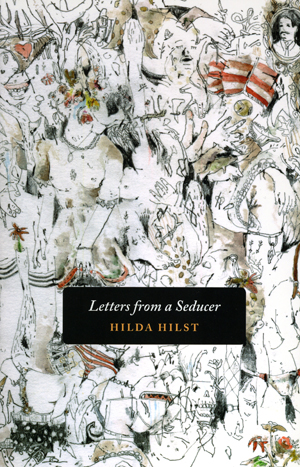
A few posts back I mentioned that the somewhat altered and edited version of an online roundtable discussion about Hilda Hilst was now live on the website Music & Literature, but I had not realized that in early April, in preparation for the roundtable, writer and critic Adam Z. Levy posted an insightful, well-considered and very praiseworthy review both of my translation of Hilda Hilst's Letters from a Seducer (Nightboat Books/A Bolha Editor, 2014) and of scholar Adam Morris's recent superb translation of Hilst's earlier novella, With My Dog-Eyes (Melville House, 2014) about a mathematician whose eyesight and consciousness are disintegrating.

Some quotes from Levy's review (which heartened me tremendously when it singled out my rendering both of Hilst's seemingly inexhaustible lexicon of terms for sexual organs, as well as of the multiple registers of idiom and discourse in the character Karl's letters, effectively capturing their often absurd--and I do mean absurd--humor):

If the abnegation of traditional values and hierarchies runs through Hilst’s life, her attempt to find a literary analogue becomes clear with the arrival in English of two more of her novels: With My Dog-Eyes (published in Brazil in 1986, and this month in Adam Morris’s translation) and Letters from a Seducer (translated by John Keene). Letters from a Seducer is the third book in her “pornographic tetralogy,” which solidified her notoriety upon its Brazilian release in 1991. Included in the quartet are a book of poems and three novels (O Caderno Rosa de Lory Lamby, Contos D’Escárni / Textos Grotescos, and Cartas de um sedutor). Though Hilst’s later writing is considered radically different than her earlier work, the break represented by the tetralogy is merely an intensification and deepening of themes Hilst had long explored. Her “pornographic” books are united by the violence with which she works to undo the grammar of systems of confinement—language, gender, sexuality, and form—and the tenderness and comedy with which she scours the bleakness of circumstance for something that an optimist might call hope.

and

There is an Ouroboric quality to Kéres’s descent from genius to madness, concurrent with the novel’s own formal descent from coherence to chaos. Many of the pleasures and challenges of reading Hilst’s fiction can be found in this loop. By the end of the book’s sixty-two pages, Kéres has fractured and dissociated almost entirely from himself. Hilst renders this with a mix of first- and third-person narration, with Kéres hovering over himself—and over the text—as an intermediary between the reader and the professor’s thoughts:
Amós Kéres. From here I can hear him comparing the lucidity of an instant to the opacity of infinite days, I can hear him thinking of the various manners of madness and suicide. The madness of the Search, which is made of concentric circles and never arrives at the center, the obscuring, incarnate illusion of finding and understanding . . . From here can I hear him thinking how should I kill myself? or how should I kill in me the various forms of madness and be at the same time tender and lucid, creative and patient, and survive?
As Kéres fractures and becomes increasingly diffuse, Adam Morris does an impressive job handling the sudden shifts in perspective and the disorienting rhythms of the text. Toward the end, it is almost impossible to know whom to attribute various lines of exposition and thought, as though Kéres himself were a poem emptied of signification, and Hilst seems to ask whether this is liberation or the essence of madness itself.

and

In the back of my book, in a column that carries over to a second page, I noted the following euphemisms that Hilst uses for penis: catfish, pole, blunt, harmonica, banana, pod, thrush (as in “to pluck one’s thrush”), piece, club, table leg, rosy mallet, bat, tombstone, creeper, strap, box, nib, basket, and gourd. There is also starfruit-loquat-hole, rosy pulp, poompoom, dove, hairy cavern, butterfly, chocha, and petunia, where female genitalia are concerned. 
But the pornographic nature of the novel reaches further than the physical. The three short sections that constitute Letters from a Seducer are narrated by two men: Karl, the seducer of the title, and Stamatius (Tiu, for short) an impoverished writer who is resentful of Karl’s money and manner. Karl’s letters are the most accessible and the most enjoyable, although enjoyment and accessibility are categories of which I imagine Hilst herself would be suspicious. The letters are lustfully written to Karl’s forty-year-old sister, Cordélia (named with reference to King Lear), who lives alone in the country. “Cordélia, my sister, come out of your cloister / The countryside ages women and cows,” one of Karl’s teasing lyrics goes. Karl’s own cloister is his family’s estate in an unnamed Brazilian city, where he lives with two German servants who putter about the house, muttering passages of Jean Genet by heart. Karl’s voice is arch and affected, often to the point of hilarious parody, but Hilst endows him with a clever self-consciousness and serial seducer’s charm. That John Keene’s translation captures the humor of Karl’s constant suggestiveness and change in register is a remarkable achievement of its own.

If you haven't picked up either book--they're short!--please do, and also do not forget the brief, enthralling The Obscene Madame D, the first of Hilst's works to appear in book form in English, translated collaboratively and with great panache by Nathanaël and Rachel Gontijo Araújo (Nightboat Books / A Bolha Editor, 2012)!

Wednesday, April 23, 2014

Poem: James Baldwin

One of the treats of this year's Inter/National Poetry Month is the publication of a new collection of poems by James Baldwin (1924-1987), one of the greatest figures in 20th century African American and American literature and culture. Baldwin was an exemplary essayist, social critic and public intellectual whose vision and insights, nearly three decades after his death, still provides a vital lens for understanding our society, and a talented, pioneering fiction writer and playwright, whose courage in tackling subject matter, especially racism and white supremacy, and the complexities of black and queer lives, and whose lyrical voice, sometimes achieving a condition not unlike poetry and song, enshrine him as an important author always worth returning to.

Like many writers of prose, Baldwin loved and wrote poetry all his life. From my perusal of his 1983 volume Jimmy's Blues, I would say that he saw poetry as a way to memorialize not just moments but people, and thus among his oeuvre are some famous occasional poems, including "Sweet Lorraine," a tribute to his friend, another great, pioneering writer, Lorraine Hansberry (1930-1965). For him poetry often served as as a way for Baldwin to register the rich currents of personal and societal feeling, flashes of intellection, in and as language, without the systematic approach a writer choosing poetry as her primary mode of expression might follow. Nevertheless his poetry, as Nikky Finney argues persuasively in her introduction to Jimmy's Blues and Other Poems (Boston: Beacon Press, 2014), Baldwin's poetry merits our reading. Its rewards are multiple. To quote Finney, excerpted on the Poetry Foundation's website Harriet:

James Baldwin, as poet, was incessantly paying attention and always leaning into the din and hum around him, making his poems from his notes of what was found there, making his outlines, his annotations, doing his jotting down, writing from the mettle and marginalia of his life, giving commentary, scribbling, then dispatching out to the world what he knew and felt about that world. James Baldwin, as poet, was forever licking the tip of his pencil, preparing for more calculations, more inventory, moving, counting each letter being made inside the abacus of the poem. James Baldwin, as poet, never forgot what he had taught me in that seventeen-hundred-and-seventy-six-word essay — to remember where one came from. So many of the poems are dedicated back to someone who perhaps had gone the distance, perhaps had taught him about the rain: for David, for Jefe, for Lena Horne, for Rico, for Berdis, for Y.S.

and

When the writer Cecil Brown went to see James Baldwin in Paris in the summer of 1982, he found him “busy writing poems,” quite possibly these poems. Brown reports that Baldwin would work on a poem for a while and then stop from time to time to read one aloud to him. “Staggerlee wonders” was one of those poems, and “Staggerlee wonders” opens Jimmy’s Blues, the collection he published in 1983. The poem begins with indefatigable might, setting the tone and temperature for everything else in this volume, as well as the sound and sense found throughout Baldwin’s oeuvre. “Baldwin read to me from the poem with great humor and laughter,” Brown wrote in his book Stagolee Shot Billy.

Here is one of the poems from the collection, which I am reprinting from Buzzfeed.com, which originally ran three. Enjoy!

“MUNICH, WINTER 1973 (for Y.S.)”

In a strange house,
a strange bed
in a strange town,
a very strange me
is waiting for you.

Now
it is very early in the morning.
The silence is loud.
The baby is walking about
with his foaming bottle,
making strange sounds
and deciding, after all,
to be my friend.

You
arrive tonight.

How dull time is!
How empty—and yet,
since I am sitting here,
lying here,
walking up and down here,
waiting,
I see
that time’s cruel ability
to make one wait
is time’s reality.

I see your hair
which I call red.
I lie here in this bed.

Someone teased me once,
a friend of ours—
saying that I saw your hair red
because I was not thinking
of the hair on your head.

Someone also told me,
a long time ago:
my father said to me,
It is a terrible thing,
son,
to fall into the hands of the living God.
Now,
I know what he was saying.
I could not have seen red
before finding myself
in this strange, this waiting bed.
Nor had my naked eye suggested

Tuesday, April 15, 2014

Thinking Its Presence: Race and Creative Writing

Sometimes conversations about changing the world, or at least about interventions that might spark real change, can lead to tangible outcomes with potential powerful, long-range effects. One example of this occurred this past weekend, at the University of Montana, in Missoula, at the inaugural Thinking Its Presence: Race and Creative Writing Conference. Organized by acclaimed poets and critics Prageeta Sharma and Joanna Klink, the conference arose out of conversations about institutional racism, aesthetic and critical blind spots, and the necessity for writers and scholars teaching creative writing to convene to hash things out. It also served as a public launch for scholar Dorothy Wang's superb new monograph, Thinking Its Presence: Form, Race and Subjectivity in Asian American Poetry (Stanford University Press, 2013), which explores these and other crucial issues specifically in relation to 20th and 21st century Asian American poetics and poets, but also within the larger American literary, aesthetic and cultural fields.
The opening panel
The conference, which ran for three days, comprised panel discussions, readings, talks, pedagogical presentations and papers, and a keynote address by Dorothy. Scholars, writers, students, alumni, and staff from the University of Montana, among Montana's president, Royce Engstrom, and from points all over the US and overseas attended, as did people from throughout the local Missoula creative community. A number of nearby businesses, including Submittable, the online submission software company that is based in Missoula, served as sponsors, and one restaurant, Plonk, provided a special discounted menu for the duration of the gathering.

There were many highlights, beginning with the opening panel, which featured University of Montana scholars, among them David Moore, George Price, Quan-Manh Ha, Benedicte Boisseron, and Dylan Suagee, each of whom not only gave provocative papers that provided conceptual and thematic frames for the rest of the event. Price, a local historian and lecturer at Montana of Wampanoag, African-American and Euro-American ancestry, opened his talk with a Wampanoag greeting, before posing the question at the center of his paper: "Equally What?" He suggested that historically oppressed people's quest for equality had often been presented and resulted in a push for material, and more specifically, consumerist equality, but pressing questions of social, political and economic equity, as well as attentiveness to the landscapes around us, still awaited a response from the larger society.
The Naropa-based writers Sarah Richards Graba,
Ellie Swensson, and Amanda Ngoho Reavey
Equity vs. equality proved a recurrent theme throughout, as did Suagee's point about writing by people of color being a political act always, and his emphasis on the necessity of crossing boundaries to gain knowledge, power and capital to take it back to share with our home communities. This flowed into his discussion of mobile identities and identifications--intersectionalities--and of "communitism," or the merger of community and activism, which he saw his and others' work striving to achieve. One final point that Suagee also broached was that we recognize that "assimilation" was not the goal; as he noted, for many Indians who had gained resources through oil revenues, they were becoming more Indian, not less. That idea of not sacrificing difference in the face of liberal--and now neoliberal--assimiliationist discourse and policies also reappeared throughout the conference.
Monica Mody's Skyped participation
Another key moment was Dorothy's talk, which reprised part of her study's chapter on poet Mei-mei Berssenbrugge, while ranging more broadly to encompass contemporary criticism about poetries by poets of color. A thread throughout her talk was to disarticulate the concepts of the autobiographical, the universal, the abstract, and the experimental. The questions she fielded were sometimes pointed. One questioner, in an effort to bash "identity politics," a misreading of Dorothy's point about how minority poets, especially ones working in a formally experimental vein and producing work that is not racially marked, wielded what I call the "Hegel" card, which is to say, using European philosophy and critical theory as a trump to make his point, but she was as sharp and spirited in her response, and basically put him and Hegel in their place(s).
Don Mee Choi
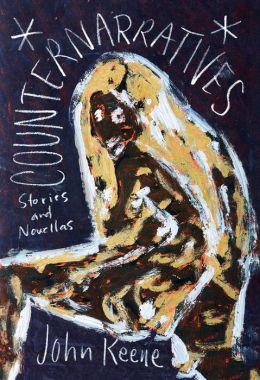
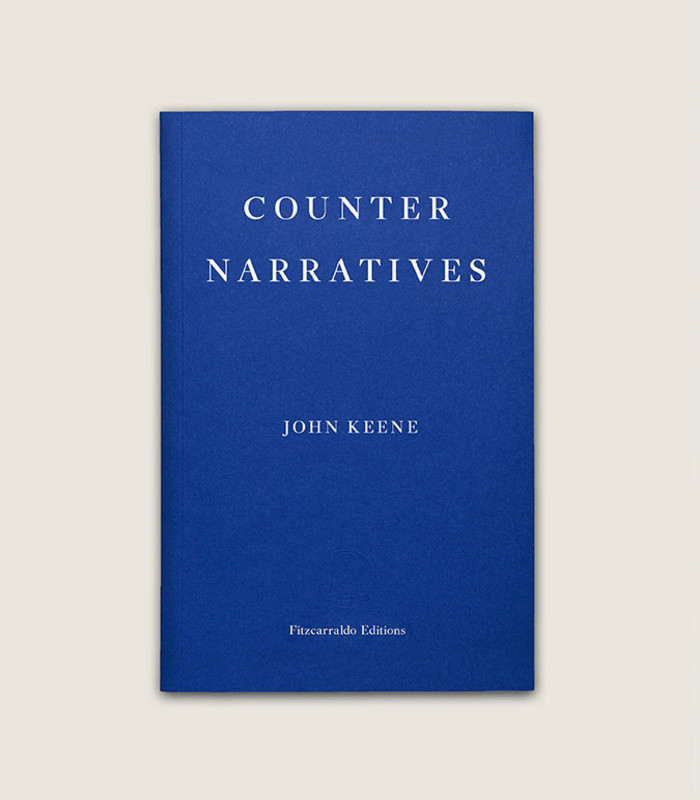
After Dorothy finished the Q&A, we took a short break, and Sherwin, an acclaimed Diné poet from the Navajo Reservation in White Cone, Arizona, and I read in succession. He presented both new work and poems from his most recent collection, Flood Song (2009), the former performed almost as though being projected onto an imaginary screen in front of the audience. For my part, I read a new story inspired by a link to minstrelsy sheet music Dorothy had discovered and sent last fall, which led me to look into the life of Bob Cole (1886-1911), who, I learned, was a major figure in the development of African American vaudeville cultural production. Cole committed suicide while on summer vacation, and my story explored his final hours, weaving in not only snippets of his songs--among which number the still well known "Under the Bamboo Tree," performed by Judy Garland in her 1949 film Meet Me In St. Louis, a personal favorite--but also a structural chiasmus in which one song he wrote based on a famous Negro spiritual cross, with a reprise of yet another series of lyrics unfolding in rapid fashion at the end of the story. At any rate, I think it went over very well, and it will be part of a collection, Counternarratives, which is on its way next year.

Elizabeth Eslami, Michelle Naka Pierce,
Tisa Bryant, Heather Cahoon
There were so many excellent panels and readings I'll just mention a few. One was by young writers studying at Naropa University (Jack Kerouac School of Disembodied Poetics). Chaired by Naropa professor Michelle Naka Pierce, a superb poet in her own right, the panel featured Ellie Swensson, Sarah Richards Graba, and Ngoho Reavey, each of whom explored distinctive aspects of the panel's theme, "Engaging Urgency: Articulation of the Polysemous Self." I have to mention Ellie's neologism "omniantichronology," which she articulated, if I recall correctly, as a way of showing the plasticity of temporality. Themes and practices involving the body, language and multiplicity in terms of form, genre and platform ran through all three of their presentations, with Sarah noting that "to return to the place [where violence occurs] even in your mind creates violence," but she, like Ellie and Ngoho, was interested in the "wound of the return." As Ngoho pointed out, which underlined a number of presentations all weekend long, "English is always a site of translation," and she mentioned the untranslatability of a Tagalog term which a body in relation to all other bodies, which she was looking at in some of her recent work. During this panel, an exchange involving one of the white audience members and Ellie unfolded around white privilege, in which the panel mistook Ellie's mention of privilege as saying that she'd "overcome" it (which the audience member also linked to her own "pain" and burden as a result of that privilege), leading Tisa and I to offer our thoughts, and while the issue was not fully resolved, I felt like there was an open exchange.
Lillian Yvonne Bertram reading
Another memorable event was Jess Row's talk, "White Flights," a version of an essay he'd previous published, in which he spoke about the quest among many white American writers of the last 30 or so years for "deracination," which is to say, both "derace" themselves, submerging their racial identity into a normativized universal American (middle-class) subjectivity, but also uprooting themselves from the increasingly racially, ethnically, religiously, and class-diverse urban and suburban spaces of late 20th and early 21st century America. This "white flight" thus has involved not only a flight from racialized others, but from racial identification itself. Among the writers and works he cited as part of his nuanced, enlightening critique were Marilynne Robinson in her famous novel Housekeeping, Anne Beattie's stories, and Pulitzer Prize-winner Richard Ford and his Frank Bascombe trilogy. Jess noted that since the 1960s, a "decoupling" now linked to an absorption with the landscape depopulated of its original and current peoples, with this liberal abstraction turning into a generalized feeling sublimating racial and social guilt.

Jess Row
Among the many ironies Jess pointed out, this sublimation, abstraction and submerging has been frequently--regularly--characterized as "realism," though it is evidently quite different and distinct from the realism of 19th century European and American literature. In reading Ford and others, he also spoke about the "invisible capital," especially in terms of real estate, to use George Lipsitz's terms, that gets passed on generation after generation by white people, citing the massive loss, in the double digits billions of dollars African Americans have faced by being cut of out the Homestead Act and subsequent legislation, and noted that in over the last four decades we have witnessed a massive "reinvestment in whiteness" in our literature, either by a literary focus on suburbia or exurbia, or on rural settings. There has been an impulse, he stated, "towards erasure and avoidance," with the controversial HBO show Girls representing a metastatization of this spatial deracination. I.e., Brooklyn with the black and brown people!

Tisa presenting at one of the
pedagogy panels
Throughout a host of readers presented their work, including featured authors Kimiko Hahn, Mena Alexander, and Kathryn Shanley, as well as Lillian Yvonne Bertram, Tisa, Heather Cahoon, Teresa Carmody, Don Mee Choi, Biswamit Dwibedy (in electronic form), David Micah Greenberg, Farid Matuk, Monica Mody (by Skype), Tracie Morris, Michelle Naka Pierce, Metta Sama, Aja Sherrard (who was also taking photos throughout), Leihua Taitano, David Witzling, and many more, and the conference concluded with a stellar reading by Montana's very talented and poised MFA students. 1913 Press and Les Figues were especially visible presences throughout.

One bizarre moment occurred when someone attending a Montana state Republican gathering--was it a state party convention? a caucus?--at the Holiday Inn where the conference was occurring decided to act out, in response to the slogan "Minorities with Grievances" (from Dorothy's book) that graced the conference's beautifully designed (by Lisa Jarrett) book bags, towards the people at the Thinking Its Presence table. They received a(n unexpected?) firm and polite response and left, though it was clear that the conference participants present were a bit startled by the unprovoked attack. I heard later that officials from the state party convention did apologize for the imbroglio, and as far as I know for the rest of the conference, attendees to both events came and went without incident.

Montana GOP posters all
over the Holiday Inn atrium
The manageable size of this conference compared to the usual literary ones I attend (like the Associated Writing Programs Conference, for example, which by its very nature has to keep expanding) and the racial, ethnic, gender, class, and sexual diversity were refreshing, as was another key difference from nearly every literary conference: the vibrant participation of Native American writers, artists and scholars. Both led to broader and richer conversations, especially ones going beyond the black-white dynamic and involving a broader spectrum of issues (often similar, but distinct given the US's history) that people of color face, than I usually hear. In general, too, the openness of participants to dialoguing across differences and disagreements was invigorating, and should happen far more than it does. (I do hope there are more participants working in playwrighting/drama and performance next year.) Prageeta and Joanna achieved something quite significant with this conference, and I am eagerly looking forward to next year's event, again at Montana, which will no doubt build upon this year's excellent pilot gathering.

Farid Matuk
Meena Alexander and one of the Montana students
David Micah Greenberg
Anna Maria Hong
Julie Rouse, one of the talented
Montana MFA students reading


Monday, April 14, 2014

Poem/Translation: Hagiwara Sakutaro

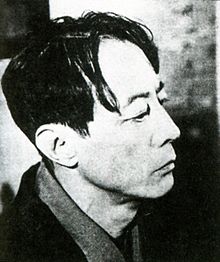
So busy these recent have been that unlike in prior years, including 2009, when I was in Cuba, I have been able to post a daily poem from National/International Poetry Month. I will strive to post a few more before April flows into may, but for now, here is one by Hagiwara Sakutaro 萩原 朔太郎(1886-1942), the late, acclaimed experimental Japanese poet, whose volume The Iceland, translated by Hiraoki Sato, will be published this summer by New Directions.

The poem below, which appears with two others on Asymptote journal's website, displays the quintessence of Hagiwara's work: its use of free verse, rather than traditional Japanese forms (which he also employed during his career); its mixture of linguistic registers, including lofty poetic speech, everyday language, and philosophical discourse; and oscillation between pedestrian and psychologically dark imagery. Several previous volumes of his work, including Howling at the Moon and Blue (Green Integer, 2001), translated by Hiraoki Sato, and Rat's Nest: The Poetry of Hagiwara Sakutaro (UNESCO, 1999), translated by Robert Epp, have previously appeared, as has Hagiwara's Principles of Poetry: Shi No Genri, from Cornell University Press in 1998.

The Tiger

It's a tiger
wide and vague as a giant statue
you sleep in a cage in the uppermost floor of a department store
you are born no machine
you may tear apart and eat meat with your fang-teeth
but how can you know human reasoning?
Behold, under the orb sooty smoke flows
from the roofs of a factory-zone town
sad whistles rise and spread.
It's a tiger
It's a tiger

It's an afternoon
the ad-balloon rises high
in twilight-close city sky 
on this high-rise building sitting in the distance
you are as hungry as a flag.
When you scan vaguely
you make the worms crawling along the streets
your live food dark and depressing.

It's a tiger
on the roof of prosperity in the midst of Tokyo City
where elevators go up and down
wearing an amber striped fur
you suffer solitude like a wasteland.
It's a tiger!
Ah it's all your afterimage
a useless total view of a void.

Copyright © Hagiwara Sukitaro, translated by Hiraoki Sato,from The Iceland,
New Directions Publishing Corporation, June 2014.

This poem appears on the website of Asymptote Journal. All rights reserved.