Monday, May 23, 2016

Katarina Bivald in Oakland

Katarina Bivald
One other highlight of the trip to Oakland was catching a presentation by Swedish author Katarina Bivald at Laurel Bookstore. I was unfamiliar with her work, but my dear friend and former colleague Jennifer DeVere Brody, who lives and teaches now in the Bay Area, had read Bivald's brand new novel Readers of Broken Wheel Recommend (Sourcebooks Landmark, 2016), and suggested we check it out. I imagined the standard reading followed by Q&A scenario, but Bivald instead spoke to the audience, taking many questions, for an hour or so, and did so with aplomb. She unfortunately did not read from Readers, though many present at the event already had done so and were quite familiar with the characters and plot.
A few doors down from Laurel Bookstore
Though she writes in Swedish, Bivald is fluent enough in English to be able to walk all of us through many aspects of her writing life, including her experience with repeated rejections followed by eventual purchase of her manuscript; the differences between Swedish and US publishing (think scale, no agents until you are already famous and seek to sell foreign rights, and the comparative lack of diversity of voices there); her interest in 20th and 21st century American literature; her fascination with US small towns, including the eponymous Iowa hamlet "Broken Wheel," where her novel is set; and the absence of anything like US MFA programs and the institutionalization of creative writing in Sweden.
Oakland
Readers of Broken Wheel Recommend is set in a small Iowa town, but it turns out Bivald was writing more from her imagination than any real time spent in the state, and one of the errors she got wrong, she laughingly shared, was having the characters wear cowboy hats (!), instead of the more likely baseball caps. When her book was translated into English and published in the UK, the British editor and readers had no problems with this factual solecism, since they were as unfamiliar with this sartorial peculiarity of the American Midwest as Bivald, but when the book was to be published in the US, Bivald shared, the headwear had to change. She has subsequently had the opportunity to tour in Iowa, and, it turns out, readers there are quite taken with the book.
No caption needed
Some of Bivald's most illuminating comments came when she was discussing her pre-publication view of how writers should create versus her changed perspective. As a beginning writer she had the idea that you should issue a book on a yearly basis, and not dither around, yet having made it onto bookshelves as a published author she now believed that authors should take their time and aim to produce the best book possible, however long it required. What she also emphasized was that authors should writer for themselves as opposed to the market, and challenge themselves in terms of their work. For obvious reasons, I appreciated all these comments.
Laurel Bookshop, on the right,
City Hall on the left
I asked her about how she saw herself bridging Swedish and US, recalling as I did so Tim Parks' eloquent discussion of non-US writers aiming for an American readership and the global (Anglophone) literary market. We discussed the differences in translation between Sweden (which, as a small country with a vibrant literary culture undertakes a sizable number of translations, particularly from the US) and the United States (whose publishers, as I've argued elsewhere and as Bowker's surveys point out, issue only a tiny fraction of non-English titles every year). Bivald pointed out that in Swedish, even the nomenclature was different; it was rare to hear "translated" work or "translation" there, whereas in the US, despite the frequent elision of translators in reviews and discussions of writing, publishers must highlight, sometimes to the detriment of a book's marketing and sales, its "translated" status.
A cathedral near the restaurant
Afterwards Jennifer, Katarina, and several others friends (Tanya, Maceo, and Emily) went out for drinks and a meal at Plum Bar, just down the street from Laurel, and I had some of the best cocktails I've drunk in a while. Their Boulevardier, which included barrel aged liquor, was so smooth you could have skated a figure eight across it! Thank you, Jennifer and Tanya, for a delicious meal, and thanks to Sean Hoskin and his friend Alex for the dinner fun at Duende the following night)!

Although it isn't the sort of novel I tend to read, I enjoyed Katarina's presentation so much I am looking forward to her book, and wishes her the best as she continues work on a new one, set in...Oregon!


Oakland Book Festival


This weekend I traveled to Oakland, California to participate in its second annual Oakland Book Festival, on Sunday, May 22. Though I have traveled a number of times to the Bay Area over the last few years, I hadn't ventured to Oakland in over a decade and a half or more, so it was a treat to have a reason to return to the East Bay metropolis. The Oakland Book Festival, which convened a wide array of authors, publishers, booksellers, and Bay Area residents, is, I learned, a one-day non-corporate sponsored ideas fest, held in around Oakland's majestic City Hall, and the diversity and political salience of the panels and screenings, which ranged from the FBI's pursuit of African American writers to utopian thought today and the future of the family to the experiences of porn stars and sex workers, bore this out.
L-R: Manuel "Manolo" Callahan, Stefano Harney,
Fred Moten, Linda Norton, and two unknown attendees
at the Convivial Research panel
Author and radio host Justin Desmangles, who heads the Before Columbus Foundation, organized and moderated the panel on which I participated, on the theme of multiraciality in 21st CenturyAmerican literature. The other panelists were two highly acclaimed writers I know and admire so much, the married couple fiction and nonfiction Emily Raboteau and fiction and comics writer Victor LaValle. Our public conversation, of the afternoon's first, ranged widely, with explorations of capitalism's and slavery's influence on American literature today, the challenges writers of color, including President Barack Obama faced, of public racial representation, and the current political climate, including one of its most horrifying emanations, Donald J. Trump. I personally thought the exchanges, including the audience's comments and questions, were informative, and I loved the differing approaches Victor and Emily took. It was an honor to be in conversation with them, and Justin. Many thanks to everyone who came to hear us, including Tan Khanh Cao and D. Scott Miller, as well as Elmaz Abinader, whom I had the chance finally to meet, among many others. 
Rochelle and her colleague at Prison Lit Project
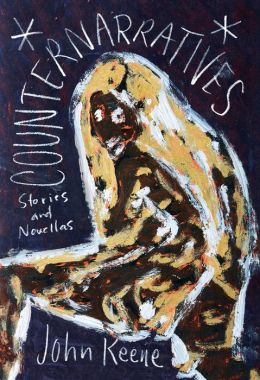
After our panel and a short stint signing copies of the newly issued paperback version of Counternarratives, I moseyed to some of the other panels, only to learn that festival organizers were very strict about adhering to occupancy code requirements, so I could not get into a number of panels I wanted to attend. In the interim I did run into a number of writers and publishers I admire, including Aaron Bady, Adam Levy and his partner Ashley Nelson Levy at Transit BooksMauro Javier Cárdenas, and Caille Milner. (Because of the booksigning I missed Mauro's and Caille's panel). I did manage, however, to slip into the "Working With Others: On Convivial Research" panel, featuring Manuel (Manolo) Callahan, Stefano Harney, and my friend and hero Fred MotenLinda Norton, whom I had the pleasure of chatting with a little earlier, and whose shared a copy of her exquisite book Public Gardens: Poems and History with me, served as moderator. I had never heard of convivial research, but by the time Callahan, Harney and Fred had finished defining and walking us through examples of it, I certainly did.
At McSweeney's table
I relished also having the opportunity to check out the booksellers' tables. One serendipitous encounter came when I happened upon writer, editor and critic Rochelle Spencer, who is doing great work with the Prisoners Literature Project. So great to see you! I keep vowing when attending book festivals that I will not buy any books, but the serendipity of new enchanting titles or the availability of ones I intended to buy once again overcame my willpower, and I bought enough books to fill a tote bag, which I mailed back to my university office rather than paying an extra bag fee to the airline bringing me home. I also got to chat with Brad Johnson, bookseller extraordinaire. Thanks so much to Diesel Books, which had copies of Counternarratives for sale (and whose pile of many was a pile of just a few by the time I returned later in the day--thank you, Diesel and readers!), and to Small Press Distributors, which had a trove of goodies I could not resist. Now I will have even more reading to catch up on this summer!

A few more photos from the festival:

Hip Hop for Change
Some of the booths
Booksellers and other vendors
At Diesel Books
Author signing
A familiar book at the center of
this photo
More books
Loviosa, advertising the
Harry Potter conference in
Las Vegas
LitQuake's booth
Nomadic Press's Open Mic

Saturday, May 21, 2016

New Directions' 80th Birthday Party at Greenlight Books

The sandwich board announcing
the event (Photo by Sachyn Mital)
In 1936, while still an undergraduate student at Harvard CollegeJames Laughlin, the heir to a steel company fortune and a poet himself, founded a publishing company devoted to experimental and innovative literature in his dormitory room. 80 years later, that small house, New Directions Publishing Corporation, now headquartered in Manhattan, is still around and still marking out new territory in the literary world, with a position as one of the major American publishers of non-US and non-Anglophone literature. It is hardly hyperbole to say that New Directions has influenced peers, spawned successors, and played a vital role in transforming the landscape of US and global literature.

From perennial favorites like Arthur Rimbaud, Charles Baudelaire and Herman Hesse to Modernists like H.D. and William Carlos Williams, to Nobel Laureates Boris Pasternak, Octavio Paz and Tomas Tranströmer, to Pulitzer Prize winners Tennessee Williams and Gary Snyder, to less well known international figures like Rene Philoctète, Raja Rao and Inger Christiansen, to singular figures like Robert Walser, W. G. Sebald and Fleur Jaeggy, to contemporary literary pathblazers like Kamau Brathwaite, Susan Howe, Roberto Bolaño, César Aira, Nathaniel Mackey, and Jenny Erpenbeck, New Directions has kept up the cause of writing that challenges and resets expectations and conventions. I personally feel quite fortunate to have become one of the writers on their rich and expansive (1500+) roster!

Yesterday at Greenlight Bookstore in Brooklyn, New Directions held a celebration for its 80th anniversary that featured six writers offering toasts in various forms, with readings included, for no more than three minutes each. The lineup consisted of yours truly, who went first; Rivka Galchen, whose The Little Labors appeared just weeks ago; Eliot Weinberger, whose new nonfiction collections The Ghosts of Birds and Nineteen Ways of Looking at Wang Wei are forthcoming this fall; Bernadette Mayer, whose newest collection of poetry, Works and Days, will be issued this summer; Anne Carson, whose The Albertine Workout was a standout among its 2014 pamphlet series; and László Krasznahorkai, the great Hungarian novelist, whose previous New Directions book, which won him and his translator Ottilie Mulzet the 2014 Best Translated Book Prize, is one I consider to be one of the greatest works of 21st century literature so far, Seiobo There Below. (Krasznahorkai also received the 2015 Man Booker International Prize, and has two books, in one volume, forthcoming from New Directions this fall: The Last Wolf, and Herman I: The Game Warden & Herman II: The Death of a Craft.)
Group portrait: L-R: László Krasznahorkai, Bernadette Mayer,
me, Rivka Galchen, Lauri Callahan, Mieke Chew (crouching),
Barbara Epler, Eliot Weinberger, Georgia Phillips-Amos,
Anne Carson, Tynan Kogane, Chris Wait, ND friend, ND Friend,
Declan Spring, ND friend (Photo by Sachyn Mital)
After a warm introduction by Mieke Chew, New Directions' Co-Director of Publicity, in which she introduced all the staff members present, we each read. I actually included a toast and read from the final page of "Rivers"; Rivka Galchen read from two different New Directions authors, including Stevie Smith; Eliot read a distilled version of an erotic poem to goddesses, dedicating it to ND's "goddesses"; Bernadette read two short poems, including one with hip hop rhymes; Anne Carson read two footnotes from The Albertine Workout, and her "Epithalamium," or marriage poem, to her husband, who was present; and finally, closing the event out, László Krasznahorkai--whom I gushed to in the back as he was signing books and with whom, after the event ended, I briefly chatted about Gerald Murnane's study of Hungarian--delivered a concise, lyrical and enigmatic poem of abnegation, in which he suggested that he would give up everything. Except New Directions! It was the most fitting end to the reading one could imagine.

Afterwards the large crowd filled the bookstore and spilled out onto Fulton Street, enjoying the champagne, the writers, and books, the marvelous Brooklyn evening. It was a special delight for me to see some of our Rutgers-Newark MFA students and recent graduates, including Laura Spence-Ash and Evan Gill Smith, there! Among the people I had the pleasure of chatting with were critic Christopher Byrd, and John Madera, a writer and the force behind the Franklin Park Reading Series. Many thanks to my dear friend, author and filmmaker David Barclay Moore, who came to the reading and afterwards showed me a perfect little wine bar not far away that I'll have to head back to in the future.
Barbara Epler, at center, and Bernadette
Mayer, at right (with cane),
(Photo by Sachyn Mital)

Wednesday, May 18, 2016

Poetry Month Blogging at Harriet (On Translation)

Rosetta Stone (from AfricaWrites.org)
During the most recent (Inter)National Poetry Month, poet and critic Daniel Borzutzky was invited to serve as one of the Poetry Foundation's four guest editors on its online site Harriet, and as part of his editorial charge he invited a host of poets and critics to contribute short blog essays on various themes. The poets he invited included Don Mee Choi, Lucas de Lima, Jen Hofer, and Cecilia Vicuña, as well as yours truly. When Daniel and Michael Slosek first invited me, I said yes (after assurance that only one post would be needed), and then, as April approached and innumerable deadlines closed in, I worried about what I might contribute. 

After reading sparkling thoughts by Cecilia, and then Don Mee's brilliant essay, though, I developed cold feet, which froze when I viewed Lucas's stellar entry. Daniel, however, was a calm, patient and encouraging helmsman, and eventually I was able to send an essay his way, to join the others, as well as Jennifer's dazzling entry, which concluded the series, for all of which he wrote illuminating introductions. I should add that because of a little rights quibble with the Poetry Foundation the essay temporarily vanished from Harriet, but it has been reposted and is available for everyone to see.

I have posted links to the blog posts, which are all smart and concise essays, and quite creative. Mine, "Translating Poetry, Translating Blackness," arose out of longstanding concerns I have had about the body of translated work available to US and Anglophone readers, and culminated initially in a talk I gave last year at the Thinking Its Presence: Racial Representation conference at the University of Montana, organized by Prageeta Sharma, Joanna Klink and Dorothy Wang, and named after Dorothy's eponymous, foundational study.

I should note that all of the translations in my essay are my originals, so any faults therefore are mine. Also, I asked and received permission from the Poetry Foundation to publish a snippet of Daniel's introduction, and from my essay. To read the full piece, which isn't long, please do go straight to Harriet, and if you enjoy it and the other essays and find them useful in any way, please do let the Poetry Foundation know. I believe they'd appreciate hearing from readers. (Please also check out the great entries curated by Dawn Lundy Martin,  Brandon Shimoda, and Stephanie Young.)

Lastly, it is tremendous honor to note that the esteemed translator Susan Bernofsky, who has brought Robert Walser, Jenny Erpenbeck, and Yoko Tawada among other major writers to US readers, wrote a beautiful piece about my essay and the topic in general, which she posted on her blog, Translationista. Please do check it out, and if you are are so motivated, please consider undertaking translation!

***

Don Mee Choi: "Darkness, Translation, Migration"

Lucas de Lima: "Poetry Betrays Whiteness"

Jen Hofer: "Proximate Shadowing: Translation as Radical Transparency and Excess"

Cecilia Vicuña: "Language Is Migrant"

John Keene: "Translating Poetry, Translating Blackness"

From Daniel's introduction to my blog post:
How does the absence of texts in translations deny individual readers reflections of their race and identity as it is presented in other countries and cultures? What does it mean that U.S. readers might not even be aware of the presence of black people, let alone black writers, in countries like Pakistan and Iraq? How does this absence limit our understanding of both the black diaspora in general and, more specifically, as John alludes to in a footnote, of the very different and often times very complex conceptions of race found in countries such as Cuba, Brazil, and the Dominican Republic? Part of the question I’m hearing here is that at this moment in the U.S., when opinions about race continue to be presented as essential truths, that it would do a world of good for unitedstatesians to understand that some of our ideas about race are arbitrary, and that others have been constructed to fit the needs of historical, establishment powers.
And from my essay:
Why is this absence of translated black voices significant? One of the ongoing problems, if I can state it bluntly, is that if we already are experiencing serious and ongoing crises in American society in part through the omission, elision, and erasure of, and indifference to narratives, stories, and other forms of imaginative expression, in all their complexity, of black American people’s lives and existences—an issue that affects not only black Americans but everyone in the society; as the Native American writer Bill Yellow Robe, among many others, underlined in a talk he delivered at the 2016 Thinking Its Presence conference, the same is true with narratives, stories, plays, and so on by indigenous peoples, to give another glaring example—we further limit our understanding of the world, in multiple ways, in the absence of black stories and voices from outside the Anglosphere, which is not a coherent whole, but nevertheless is limited in its capacity to convey the breadth of experience of black peoples across the globe. Just as black Americans are hardly a “fringe,” neither are black people and voices from the rest of the world.

Friday, May 13, 2016

Semester's End & Congrats to the Graduates

The Rutgers-Newark full commencement
ceremonies, at the Prudential Center
UPDATED: Rutgers-Newark held its Commencement ceremonies on Wednesday, May 18, 2016. The Commencement speaker was journalist and author Soledad O'Brien, and the honorary degree recipient was human rights activist and diplomat Radhika Coomaraswamy. I've included a few photos from the event. Congratulations to all the graduates and their families!

My absence from this blog is testimony to many things, one of which is the very busy semester I just concluded. Chairing, even a small department, is no joke, but many good things have happened, so I'm glad to have played a part in facilitating them. But back to more immediate things: Let me begin by congratulating all of Rutgers-Newark's 2016 graduates! Yesterday I had the tremendous honor of serving as the hooder for all 12 of our MFA fiction students who walked in the Graduate School's ceremonies. Our campus-wide ceremony will take place next Wednesday!

Our MFA graduates lining up before
our procession into the Essex Room
at Robeson Campus Center, Rutgers-Newark
Congratulations to all of these fine fiction writers, including the three phenomenal authors whose theses I advised, Mustafa Gatollari, Mel King and Anisa Rahim, and to all our graduating poets! I am glad I had an opportunity to teach many of them in workshops either last year or this one, and certainly will miss them!

Our MFA graduates and faculty (acting director
Rigoberto González is in the back row, at center,
and Brenda Shaughnessy is standing to his left/
viewer's right)
Congratulations also to my English department honors student Angelíc Forde, who completed a marvelous collection of poems entitled Limestone on My Feet, drawing upon her experiences as an immigrant from Barbados. It was always a pleasure to turn to Angelíc's poems, which included poems written in traditional fixed forms and ones drawn from the Bajan and African American traditions. (At Commencement exercises on Wednesday, I learned that Angelíc graduated summa cum laude, so even more kudos to her for a stellar undergraduate career!)

Soledad O'Brien giving her
Commencement address
Congratulations also to Tasha Hawthorne, now Dr. Hawthorne, on whose committee I sat, and who successfully completed and submitted her dissertation on African American pulp fiction at the very end of last year. Tasha will receive her Ph.D. in English from Northwestern University this June! Congratulations, Tasha!
Soledad O'Brien on
the big screen

Sunday, May 08, 2016

RIP Michael S. Harper

Yesterday I learned that Michael S. Harper (March 18, 1938 - May 7, 2016), one of the major poets of his generation, a profoundly influential teacher and mentor, and the Kapstein University Professor Emeritus at Brown University, had passed away, surrounded by his family and the music of one of his favorite musicians, John Coltrane.

Michael was, first and foremost, a poet of tremendous skill, whose poetry often fused a precise contemporary lyric style, profoundly informed by the African American tradition, with subject matter drawn from his personal life, as well as the vaster tapestry of black history and culture. Though he emerged in the wake of the Black Arts Movement and developed a poetics informed by it, he was not a polemicist, and his later poems suggested ways to bridge the racial divide. He was in particular a master of the occasional poem.

Michael published fifteen collections of poems, was twice nominated for the National Book Award, edited several important anthologies, including (with Robert Stepto) Chant of Saints: A Gathering of Afro-American Literature, Art, and Scholarship, and Every Shut Eye Ain't Asleep: An Anthology of Poetry by African Americans since 1945 (with Anthony Walton); served as the first poet laureate of Rhode Island; and received many honors, including the Melville Cane Award of the Poetry Society of America and the Frost Medal for lifetime achievement from the Academy of American Poets.

As any of his students might attest, Michael was a proselytizer for the cause of poetry in general, and of black poetry in particular. He urged those who studied with him as well as fellow poets to delve more deeply in the black American poetic past. Accounts of how he would send a budding poet, who came to his office to chat about poems with him, into the archive to do background work in preparation, are legion. His own personal stories about figures like Sterling Brown were legendary, and he trained a number of major writers during his long tenure at Brown.


My own interactions were Michael were few, but memorable. The first came during a National Black Arts Festival and involved assuring him that I had a distinct identity from my boss, a literary editor, at that time. It took a while, and the intercession of another academic figure, to convince him of this. The next came several years later during my first year at Cave Canem, I found myself no longer needing an alarm clock, as Michael's early morning efforts on his typewriter in the room next door more than sufficed in waking me up early. Very early. Then there was the experience of walking alongside him and as we chatted he listed in my direction and eventually had me flat against the wall, all the while recounting a series of insights I can no longer remember. (I remember that experience of being against the wall!). He was a towering figure, literally as well as figuratively, so I believe I squeaked out a "Professor Harper" to free myself, and return us both to our journey down the hallway.

In my second year at Cave Canem I lucked out in having Michael as one of my workshop leaders. I'd been waiting for this experience for years, since I'd never attended Brown and had missed him in the round-robin rotation of faculty members the year before. As part of his workshop, he had us memorize poems, and I chose Robert Hayden's "Those Winter Sundays," one of the masterpieces of 20th century African American and American poetry, a poem I had read more than once but had not fully internalized. One of the pleasures of memorizing that Hayden poem, in addition to integrating it into the very fiber of my being, was witnessing all the other poets in Michael's workshops that summer learning their chosen poems by heart. And recite them we did. To this day, I can still recite that poem, and, despite the fact that he wasn't so fond of the poem I wrote in his workshop, can recall many of the lessons Michael taught about rigor and concision and listening to one's ear.

During the year I taught at Brown I never saw Michael, but we communicated a few times via notes. I have retained one of the notes he left for me, typed out on a standard index card, and the little message unfolds like poetry. I knew he had gone through a great deal and recognized the toll that academe had taken on him; that was another lesson I tried to learn, that our colleague Aishah Rahman tried to make sure I understood. He was a poet to the core, and one of my hopes is that readers return to his work and find the many treasures in it. I also hope that his students carry on the best aspects of his teaching, including sending students to the archives to read and read and read some more, and to be as exacting with their own work as is possible. Read the greatest writers, learn how they do what they do, listen to their stories and share them with others, and push yourself. Push yourself. You can't fake the funk.


Here is one of my favorite poems by Michael S. Harper. When he read during my first year at Cave Canem, as all the faculty do, I tried to send him brain waves to read it. He went through poem and poem and then announced, "A Mother Speaks..." and I turned to Toni Asante Lightfoot and said, I willed that poem! Perhaps it was telepathy, or just him deciding on one of his masterpieces, as relevant, sadly, today as it was when he wrote it in the 1960s. For this and all his work in the world, I think him. RIP, Michael S. Harper.

A MOTHER SPEAKS: THE ALGIERS MOTEL INCIDENT, DETROIT

It's too dark to see black
in the windows of
Woodward or Virginia Park.
The undertaker pushed his body
back into place with plastic and gum
but it wouldn't hold water.
When I looked for marks or lineament or fine stitching
I was led away without seeing
this plastic face they'd built
that was not my son's.
They tied the eye torn out
by shotgun into place
and his shattered arm cut away
with his buttocks that remained.
My son's gone by white hands
though he said to his last word--
"Oh I'm so sorry, officer,
I broke your gun."

Copyright © Michael S. Harper, from Dear John, Dear Coltrane,
University of Pittsburgh Press, 1970.

Friday, May 06, 2016

Counternarratives' British Life + Saroyan Prize Short List


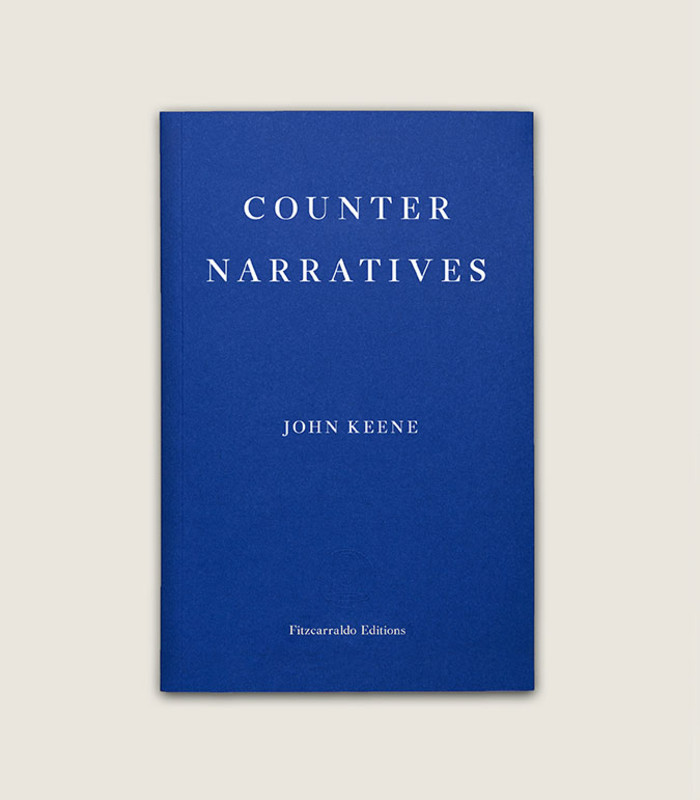
This April, Fitzcarraldo Editions, a new, small and vibrant publisher, issued Counternarratives in the UK and British Commonwealth countries--in its enchanting Yves Klein International Blue dust jackets--and since then, the collection has found not only a new set of readers, but spurred a new set of reviews. Two micro reviews appeared in the British publications The Lady and Buzz Magazine, the latter of which named Counternarratives its Book-of-the-Month for April 2016. Thanks so much to both reviewers for their reviews!

The collection received a different kind of mention in The Telegraph when critic Anthony Cummins included it in a May 1, 2016 article entitled "Clear-eyed and cutting edge: has the short story come of age?" In this short essay he discusses contemporary short fiction on both sides of the Atlantic, arguing that short stories may be more commercially viable and aesthetically daring on US shores, but that some British writers are, like their American peers, showing what short stories might do.

Among the writers he essays are some well known for their play with short fictional form and content: Helen Oyeyemi, Greg Jackson, Philip Hensher, and Mark Haddon. Into this mostly British mix he adds a side of Counternarratives, calling it "postmodernism with blood in its veins," and goes on to say that "This is no average work of historical fiction...rather, it’s a set of complex and unpredictable tales about slavery and racism." It's quite gratifying to note the book's distinctive approach to the short story form, its evident post-modernism, and its against-the-grain approach to historical fiction conventions. Many thanks to Mr. Cummins, and to The Telegraph.

***

One very pleasant surprise came earlier this week when I learned that Counternarratives had made the short list for the biennial 2016 William Saroyan International Prize for Writing, administered by the Stanford University Libraries. The Saroyan Prize takes its name from the late, award-winning playwright and fiction writer, and the 14 other books on the short list include works by Amina Gautier and T. Geronimo Johnson, among other very talented writers, and prior recipients have included Kiese Laymon, Daniel Orozco, Rivka Galchen, George Hagen, Nicole Krauss, and Jonathan Safran Foer, so I'm not getting my hopes up, but it is nice to receive this level of recognition. The awards will not be announced until later in the year. 

Monday, March 28, 2016

Random Photos

At the Evergreen Review launch party 
Chainlink art, Jersey City
Chris Stackhouse, at our
Segue Series reading
An image from Tyehimba Jess's
presentation of his book Olio
(on its way within the week or so) 
Eunsong Lee, reading at Pete's Candy Shop, Brooklyn
Rudy Shepherd painting of
Amiri Baraka, Mixed Greens Gallery
(& now belonging to us) 
Store closing because of "High Rent,"
Upper East Side, Manhattan
US paperback of Counternarratives,
now heading to stores!
The new British editions
of Counternarratives, from
Fitzcarraldo Editions

Photo shoot, Jersey City

Curb art, Manhattan
Winter's remains 
PATH dancer (pt. 1)
PATH dancer (pt. 2)
PATH dancer (pt. 3) 
Poets Natalie Diaz and Saeed Jones
at Rutgers-Newark, with Rigoberto González
Brilliant poet, Buzzfeed editor
 & Rutgers-Newark
alumnus Saeed Jones 
Rachel Blau DuPlessis and Ron Silliman
at my talk at Temple University
With my high school classmate Tim Suba
at Temple 
Classics scholar and memoirist
Dan-el Padilla Peralta, speaking
at Rutgers-Newark

Thursday, March 24, 2016

Have MFA Programs Changed Contemporary American Novels (& Can Computers Provide Answers)?

Some novels from Flavorwire's 50 Most Anticipated Books of 2016

Have MFA programs--or the training student writers receive in them--changed the American novel, and more broadly, US fiction? Some scholars, like Mark McGurl, in his authoritative study The Program Era: Postwar Fiction and the Rise of Creative Writing, have persuasively suggested that MFA programs have, and in decisive and evaluatively positive ways. McGurl even establishes a typology of "program fiction" that includes "technomodernism," "high cultural pluralism," and "lower-middle-class modernism," all of which he believes not only define contemporary American fiction but represent qualitative achievements in the genre. (McGurl was no interloper in fiction criticism either; he had previously explored early 20th century American novelists' ambivalent relationships to the fiction as an art and as a form of popular entertainment in his 2001 study The Novel Art.)

Other critics like D. G. Myers, who historicizes creative writing programs in The Elephants Teach: Creative Writing Since 1880, take a more mixed view, criticizing contemporary American fiction's lack of historical awareness and arguing that's needed is more reconciliation between the artists (writers) and critics (literary scholars). Still other critics, like Eric Bennett, author of Workshops of Empire: Stegner, Engle, and American Creative Writing During the Cold War, point out the role of the US government, and in particular, the CIA, in shaping MFA fiction from an ideological standpoint as well as a formal one. Bennett's study notes how CIA funding influenced the University of Iowa's Writing Workshop director Paul Engle to "flatten out" the political ferment that had characterized so much American fiction from the late 19th and early 20th centuries into what we now associate with a standard American style, emphasizing precision of language, careful characterization, and a focus on "the personal, the concrete and the individual." How often, in fact, is this stylistic point of origin discussed in any MFA workshops anywhere?

And that's not all. Chad Harbach's edited volume MFA vs. NYC: The Two Cultures of American Fiction, points to the tensions between academe, scattered throughout the country and across the globe, and the publishing industry, which is commercially focused and headquartered in New York. In Harbach's volume, several different essays note the tensions between approaches to writing that have elevated very different sets of writers along the New York-MFA axis. (When I shared the book with my graduate students a few years ago, though, they were not particularly interested in this conflict, and most appeared to have placed their cards on the side of the MFA world.) I hesitate to call her view representative, but I would venture that among American critics Elif Batuman's perspective, that MFA programs have had a demonstrable effect on US fiction, probably widespread.

But have they? Or rather, saying they have, what are those effects and can they be detected analytically, through variables discernible using big data research? Given the rise of theoretical trends like distant reading and computational-driven analysis of texts, this would seem to be an intriguing approach. In a recent online edition of the Atlantic, in "How Has the MFA Changed the Contemporary Novel?" Richard Jean So, a scholar of Asian American literature at the University of Chicago, and Andrew Piper, a scholar at McMaster University, did decide to crunch some of the numbers, and what they found is...that novels produced by writers who've graduated from MFA programs and those who haven't are more similar than different. Whether the variables are diction, theme, syntax, or racial or gender difference among protagonists, despite some distinctions MFA-trained and non-MFA trained American novelists are essentially writing the same sorts of books.

To quote So and Piper, their methodology involved selecting the following sets of novels for study:
We collected a sample of 200 novels written by graduates of MFA programs from over 20 leading programs (including Columbia, University of Texas at Austin, Iowa, and others) that have been published in the last 15 years. (This sample includes authors like Rick Moody, Alix Ohlin, and Ben Lerner.) For the sake of comparison, we also collected a similarly sized group of novels published over the same time period by authors who haven’t earned an MFA degree (including writers like Donna Tartt, Miranda July, and Akhil Sharma). To make these two groups as comparable as possible, we only gathered novels by non-MFA writers that were reviewed in The New York Times, which we took as a mark of literary excellence. Using a variety of tools from the field of computational text analysis, we studied how similar authors were across a range of literary aspects, including diction, style, theme, setting, and even how writers use characters.
To restate the premise here, So and Piper looked at several different variables to see if there were distinct differences between the novels produced by MFA-trained writers and those by writers who weren't. They assessed the texts' diction, and it turns out that the computer was successful only 67% of the time (or roughly 2/3rds) in identifying which was which. There were certain words ("lakes, counters," etc.) and names ("Ruth, Pete, Bobby, Charlotte," etc.) that appeared more frequently in the MFA-trained writers' works, but otherwise there was little difference. The same proved true for style (which for So and Piper seemed more to define syntax than overall prose style); for characterization; or for thematics. Additionally, their study showed no distinction with regard to these factors when writers wrote about race or gender, and in the cases of both sets of authors, a majority (61% for MFA-trained writers, 65% for non-MFA-trained) wrote novels with male protagonists. So where, So and Piper wonder, is that MFA influence and, ultimately they ask, is MFA training economically worth it? (Here I should note that Rutgers-Newark's MFA in creative writing program is now fully funded.)

I find So's and Piper's research illuminating, but it also raises a number of questions, beginning with their selected control groups. Do they ever ask themselves whether the choice of The New York Times as the critical benchmark might not account for the similarities in books they would encounter? Do they consider and identify other publications whose critical perspective might perhaps not be linked to or influenced by a particular normative ideological and aesthetic consensus about American literature in the ways the Times is? Though they appear to be advancing an argument about distinctions between works produced out of differing educational experiences, they also suggest a qualitative standard--"as a mark of literary excellence"--that might prove less useful than examining a broader array of texts falling into each category.

Beyond diction and syntax, are there other overall prose stylistic similarities among the MFA-trained writers' books vs. the non-MFA-trained writers' books? Vladimir Propp reminded us that there are fixed number of plots, but in terms of stories, are there commonalities among the works within the two groups that distinguish them from the other group in identifiable distinctive ways? What about structure? What about tone, and how might one create a computation tool to measure that, or can it be evaluated only through more conventional reading approaches? In addition, though So and Piper focus on literary fiction, one pressing question I have, based on my experience teaching in MFA programs, is how frequently MFA fiction writers diverge from conventional realism for other genres and modes such as speculative fiction, fantasy, mystery, and so on? What might account for the reasons why and frequency they do so? So and Piper also do not address any impact publishers might have on the books surveyed. To put it in question form, what effects might the publishing industry (agents, editors, publishers, etc.) have on the sorts of books appearing in the market, whether by MFA graduates or not?

One conclusion of So's and Piper's that I do agree with is that the literary landscape as a whole--and here Roland Barthes and Michel Foucault might take ghostly bows--might be shaping works of fiction more so than individual programs or the MFA program experience as a whole. The larger literary ecology and economy set writers'--and readers'--expectations of what's possible, and must be taken into account. I'd also suggest the authors consider specific aspects of MFA program training. Are there more short story collections since the rise of MFA programs, especially because so many students in these programs are writing shorter fiction instead of novels, which are harder to workshop. Do certain literary influence appear more frequently, perhaps based on the writers appearing on MFA fiction workshop syllabi? How frequently do non-US models appear in MFA-shaped vs. non-MFA-shaped novels? And are there any other identifiable formal qualities marking MFA-shaped work vs. non-MFA-shaped texts?

On the whole I take McGurl's, Myers', Bennett's, and Harbach's arguments as convincing, as they are not merely anecdotal to me but I've witnessed them up close, but I do think So and Piper are onto something, particularly in terms of pointing out how at the margins MFA (and now PhD in fiction and creative writing) might mainly be a financial risk rather than an aesthetic and economic aid. I do think, though, that more research of this nature would strengthen their argument. This reads like a one-off, but given how important computational methods are these days, it very well could be part of a larger project. It also makes me wonder, is anyone attempting something along these lines for poetry? MFA poetics vs. non-MFA poetics: I think the differences are probably more evident than with fiction. (But what about MFA vs. PhD poetics...hmm. There's a study to be pursued!)