Showing posts with label fiction writing. Show all posts

Friday, May 06, 2016

Counternarratives' British Life + Saroyan Prize Short List


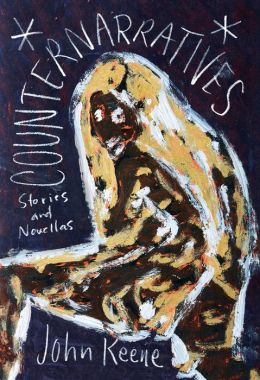
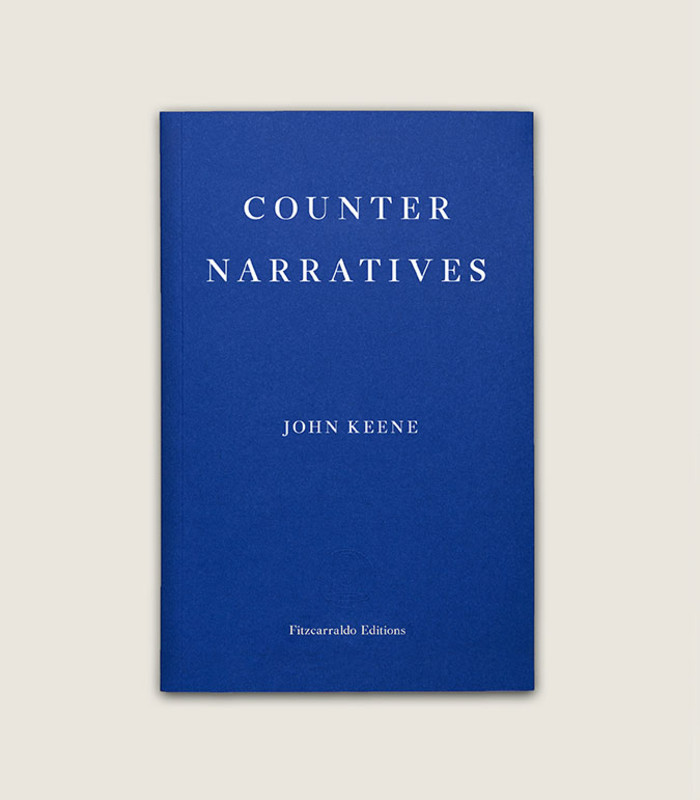
This April, Fitzcarraldo Editions, a new, small and vibrant publisher, issued Counternarratives in the UK and British Commonwealth countries--in its enchanting Yves Klein International Blue dust jackets--and since then, the collection has found not only a new set of readers, but spurred a new set of reviews. Two micro reviews appeared in the British publications The Lady and Buzz Magazine, the latter of which named Counternarratives its Book-of-the-Month for April 2016. Thanks so much to both reviewers for their reviews!

The collection received a different kind of mention in The Telegraph when critic Anthony Cummins included it in a May 1, 2016 article entitled "Clear-eyed and cutting edge: has the short story come of age?" In this short essay he discusses contemporary short fiction on both sides of the Atlantic, arguing that short stories may be more commercially viable and aesthetically daring on US shores, but that some British writers are, like their American peers, showing what short stories might do.

Among the writers he essays are some well known for their play with short fictional form and content: Helen Oyeyemi, Greg Jackson, Philip Hensher, and Mark Haddon. Into this mostly British mix he adds a side of Counternarratives, calling it "postmodernism with blood in its veins," and goes on to say that "This is no average work of historical fiction...rather, it’s a set of complex and unpredictable tales about slavery and racism." It's quite gratifying to note the book's distinctive approach to the short story form, its evident post-modernism, and its against-the-grain approach to historical fiction conventions. Many thanks to Mr. Cummins, and to The Telegraph.

***

One very pleasant surprise came earlier this week when I learned that Counternarratives had made the short list for the biennial 2016 William Saroyan International Prize for Writing, administered by the Stanford University Libraries. The Saroyan Prize takes its name from the late, award-winning playwright and fiction writer, and the 14 other books on the short list include works by Amina Gautier and T. Geronimo Johnson, among other very talented writers, and prior recipients have included Kiese Laymon, Daniel Orozco, Rivka Galchen, George Hagen, Nicole Krauss, and Jonathan Safran Foer, so I'm not getting my hopes up, but it is nice to receive this level of recognition. The awards will not be announced until later in the year. 

Thursday, July 23, 2015

Remembering E. L. Doctorow & John A. Williams

There was a period a few years ago when I was posting memorials so often that I started to feel as if my blog was turning into an obituary site. It wasn't, of course, but I did worry about the morbid cast that posts were beginning to assume, though I realized it was a period of losses that in various ways touched me personally. I wrote but did not complete memorials to my late and dear colleagues Prof. Clement Alexander Price and Prof. Said Samatar, because of a confluence of issues, among them my health challenges earlier this year, but I do hope to finish the joint post in tribute to both of them one of these days soon.

***

E. L. Doctorow (elperiodico.com)
I thought that I should probably post something quickly rather than waiting and mulling when I learned Tuesday about the death from lung cancer of my former professor and thesis advisor, E. L. Doctorow (1931-2015). I had the great fortune both as an undergraduate and a graduate student to study with many remarkable scholars and artists, and E. L. Doctorow--whom I could not bring myself to call "Ed" after graduation, since he would also be "Professor Doctorow" in my mind--was chief among them. He was in fact one of the reasons that I chose to attend New York University's then M.A. program in creative writing; the presence of the marvelous Paule Marshall was another. But before I continue in this vein, let me say a little about E. L. Doctorow's life and work.

Doctorow was a Bronx native and a child of the Depression, and both of these facts profoundly shaped his work. One could read his fiction as an extended, multilayered, highly inventive portrait of New York--and by extension, the United States of America--across multiple books, and the failure of Western capitalism, which included his father's business, colored his perspective. His adolescence unfolded during the New Deal and post-World War II period, but the City that preceded this era profoundly intrigued him, as did decades of Modernist writing and political dissent. He was an experimentalist whose work was accessible to all readers, and though an often outspoken writer of the Left, he did not espouse rigid dogmas. In Ragtime (1975), one of the most important and controversial American novels to appear in the late 20th century, these personal threads, filtered through a capacious imagination, combine to weave a strange and dazzling tapestry of a New York in which white immigrants, politicians and socialites, African American protesters, and the burgeoning city itself all become vibrant characters.

His melding of the real and fictional in this novel sparked considerable criticism. It would, however, prove influential for countless writers who followed, and suggested a more complex engagement with both history and fiction than one found in the work of many writers of his generation. Ragtime in particular demonstrated this, along with the effects of overlapping but distinctive social and economic spaces, which was true to life in the New York of the novel's era as much as it is, despite growing inequality, today. The leaps were probable for fiction, improbable for reality, but not impossible for either. The Eastern European Socialist immigrant and single parent Tateh, then or now, would face incredible challenges going from the working-class tenement streets to becoming a successful movie mogul and the new husband of the Westchester matriarch, but it would not be impossible; nor should we be astonished that Doctorow, in a 40-year-old work of fiction, indelibly captured the struggles, still ongoing today, by a black man--black people--to be treated with dignity, equality and respect in this society. Mirroring contemporary events, Coalhouse Walker does not meet a pretty end.

E. L. Doctorow published 12 novels over his career, roughly one every five years, in the process winning a number of the country's highest literary awards; in addition to Ragtime, which received the very first National Book Critics Circle Award for fiction, his other novels include The Book of Daniel (1971), which explored the Julius and Ethel Rosenberg case; the 1985 novel World's Fair, which received the National Book Award; the acclaimed Billy Bathgate, which also received the National Book Critics Circle Award, as well as the PEN/Faulkner Prize and the William Dean Howells Medal; and his late career masterpiece, The March (2005), which won him his third National Book Critics Circle Award and second PEN/Faulkner Award. His final novel, Andrew's Brain, appeared last year. He also authored a play, Drinks Before Dinner (1978); an assured book of short stories, The Lives of the Poets: Six Stories and a Novella (1984), one of my favorites among his books; and several collections of essays.

Before I ever read his work--and Ragtime was on my mother's bookshelves--I saw the movie version of the film. I didn't learn until I studied with him that he hated the movie version, directed by Milos Forman, which was Jimmy Cagney's final screen role, while providing early breakout roles for Howard Rollins, Elizabeth McGovern, Debbie Allen, Mary Steenburgen, and Mandy Patinkin. Other works of his, including Welcome to Hard Times (1967) and Billy Bathgate, also were adapted into films, and he detested those films too; the cinematic adaptations of his work tended not to work, in his eyes. The Broadway musical version of Ragtime, however, was much more to his liking, as he shared with our second year workshop, and debuted shortly before our sessions began.

He otherwise never talked about himself or his own work; instead, drawing from his earlier career as an editor at NAL and the Dial Press, he was gentle and generous in his critiques, with a laser-sharp ability to identify what was and was not working about a given text. I think he may have written a few words on our manuscripts, but unlike other writing professors, there was no extensive written or spoken commentary. Yet what he said counted, and I like I learned a tremendous deal from him, about my own work, and about teaching, and I have tried to bring some of those lessons to every class, especially writing workshops, that I've taught. At his death, he was the Loretta and Lewis Glucksman Professor in American Letters at NYU, a position he had held for many years. He also played a key roll, as I recall, in securing the New York Times Foundation fellowship that student writers, I included, held, allowing us not only the opportunity to study at NYU, but to teach writing in the New York public schools. That experience also was one of the best--and at times toughest, but always rewarding--of my life.

One final point, which is professional. Toward the end of the time that my fiction cohort and I were finishing up what was then the M.A. program at NYU, and I had been admitted into the Ph.D. program and was going to go with the standard Masters degree, Doctorow announced to us that NYU had received New York state approval to award the M.F.A. I remember him recommending all of us to go for the M.F.A., since we would then all have a final, professional degree, and if we wanted to teach, it would be(come) essential. I ended up publishing my first book, wishing the Ph.D. a fond goodbye, and haven't looked back, though I think all the time about how sage his advice was and how thankful I am that he was looking out for us. As with his mentorship, so with his writing, which continues to point a way forward. RIP, E. L. Doctorow

***

John A. Williams
(Photo by Stathis Orphanos)
A writer that I always wanted to meet but never had the opportunity to was John A. Williams (1925-2015). He passed away on July 14 from complications from Alzheimer's disease. I knew that the prolific Jackson, Mississippi native had been a longtime resident of New Jersey--Teaneck, to be specific--but I had not realized until a few years ago that he also a pioneer in teaching creative writing and journalism at Rutgers-Newark, serving as a professor in the English department from 1979 through 1994, when he retired as the Paul Robeson Distinguished Professor of English. This was long before my arrival, but some of my colleagues who had the good fortune to work with him described him in glowing terms, and deeply mourn his passing.

As I wrote in a response to a university PR query about him: "John A. Williams was one of the major novelists, and one of the most important African-American writers, to emerge from the generation that came of age in the late 1950s and 1960s. Primarily working in a realist mode, Williams captured and reflected many of the major issues of his day, in a vivid, fluid, accessible style, laced with humor and social critique, that was always more complex—and demonstrated a complex grasp of his subject matter—than it appeared. His influence can be seen throughout contemporary African-American prose fiction. His directness in addressing major social and political issues, and his deep interest in African-American history and culture, especially in his marvelous novel Captain Blackman, have been incredibly important to me."

Captain Blackman, a 1972 speculative fiction work in which a soldier travels through time from the Revolutionary War era to Vietnam, was one of his triumphs; his final novel, Clifford's Blues (1999), in which he recounts with nuance, empathy and convincing detail the trials of a black gay saxophonist trapped in Nazi Germany, was another high point. Yet his best-known novel and true masterpiece was The Man Who Cried I Am (1967), a fictionalized account of the lives of exiled black writer Richard Wright, that succeeded in also depicting the US's Cold War shenanigans, including the horrifying "King Alfred Plan," a genocidal CIA-directed project which aimed to erase black people from the face of the earth. So convincing was Williams' account that the King Alfred Plan entered black popular consciousness, leading musician Gil Scott-Heron to write a song, "King Alfred Plan," that appeared on his 1972 LP Free Will.

Williams grew up in Syracuse, New York, served in the US Navy during World War II, and graduated with a degree in journalism and English from Syracuse University in 1950. Encountering difficulty in pursuing a journalistic career, Williams worked at a series of jobs before moving to New York City, where he found employment as a vanity press publicity director and as information director for an organization promoting African liberation movements, though his desire to write for periodicals hardly abated, and by 1958, he was the European correspondent for Johnson Publications' flagship magazines Ebony and Jet, with later stints at Newsweek and the former Holiday magazines.

John A. Williams' first novel, The Angry Ones, appeared in 1960, and he would go to publish 12 in all, including Sissie in 1963 and Click Song! in 1982, which received the American Book Award. The latter novel, like many of Williams' took the measure of racial relations in the US, this time through an acid narrative about the publishing industry. Some 33 years later, Williams' reading of the state of things still holds validity. He also published books in other genres, including the decolonization-era overview Africa: Her History, Lands and People in 1963; the biography The Most Native of Sons: A Biography of Richard Wright, and the more idiosyncraticThe King God Didn't Save: Reflections on the Life of Martin Luther King, Jr., which was sharply criticized; and, in 1991, with his son Dennis, If I Die I'll Stop: The Comedy and Tragedy of Richard Pryor.

Quoting again from my statement to the university, I said that "[Williams] was unfortunately underappreciated as a literary figure, but his literary oeuvre serves as an excellent testament to his many talents and gifts. I continue to read and teach his work, and I hope that his passing sparks a renewed interest in one of the most stylistically versatile and critically engaged writers of the 20th century....I mourn John A. Williams’ passing, and I hope more readers and writers will return to the excellent literary trove he has left us."

There is much to learn and gain upon delving (back) into Williams' large and often daring oeuvre, and I look forward to doing so as soon as I can. RIP to John A. Williams.


Wednesday, June 03, 2015

Counternarratives Launch at Community Bookstore (UPDATED)

UPDATED: I've posted the YouTube video of the event below!

***

Last night's reading at Community Bookstore in Park Slope, Brooklyn marked the first official event in my launch of Counternarratives, and an exciting, enjoyable event it was. Before a full audience, the great Jeffery Renard Allen, author of a number of award-winning works, including the novels Rails Under My Back and The Song of the Shank, a friend and writer I admire tremendously, joined me, reading an excerpt from the latter novel before I read the ending of the story "The Aeronauts," in which free black Philadelphia-native and teenager Theodore ("Red") accidentally sails off in a sabotaged balloon into Confederate airspace early in the US Civil War. (That snippet always chokes me up a bit.)

Jeff then posed some questions, about form, politics, race, history, and my (still unfinished) novels, before we opened up the discussion to the floor. It was a delight to bring the book into the world in live conversation with Jeff, with whose work I think of my own always in conceptual, intellectual and literary conversation, and exhilarating to be able to read from the now published book before a live audience, filled with many old friends, colleagues, former students, and my wonderful publisher New Directions' key members, among them my editor, Barbara Epler.

Below are a few photos from the event. There's video which I hope to upload soon. I have two more readings on the near horizon, on June 23 at Word Bookstore in Jersey City, and on July 1, in conversation with Christine Smallwood, at McNally-Jackson in Manhattan, so please come out if you can. And if you'd like me to come to your local bookstore or university to read, or chat, drop me a note! Thanks so much again to Community Bookstore and their amazing staff, to New Directions, and everyone who came to help launch the book!

Jeff and I
(Photo by Barbara Epler)
Reading from "The Aeronauts" 
(Photo by Barbara Epler)
Reading from "The Aeronauts" 
(Photo by Barbara Epler)
Chatting with friends and former students
Miriam Rocek, her lovely girlfriend,
and Brooke Sossin
(Photo by Barbara Epler)
The video from Community Bookstore, courtesy of New Directions!

Wednesday, May 16, 2012

Remembering Carlos Fuentes & Christine Brooke-Rose

Carlos Fuentes, at home in Mexico, 2001 (Henry Romero/Reuters)
In the mid-1980s, Carlos Fuentes (1928-2011) was at the height of his fame. He had published a dozen novels, many formally experimental, including a handful that made and cemented his reputation, among them his début, Where the Air Is Clear (La Región Más Transparente, 1958); Aura (1961), which continues to be censored in certain countries; The Hydra Head (La Cabeza de La Hidra, 1978); and his masterpieces The Death of Artemio Cruz (La Muerte de Artemio Cruz, 1962); Terra Nostra (1975), a work not unlike Gabriel García Márquez's One Hundred Years of Solitude (Cien Años de la Soledad, 1970) in its scope and ambition; and The Old Gringo (Gringo viejo, 1985), a shorter novel reiminaging the life of writer Ambrose Bierce that garnered tremendous attention and readership in the United States, a country in which Fuentes, one of Mexico's leading authors, had spent many years, including part of his childhood.  He had also by that point published four collections of short stories and five collections of essays, and written four plays and seven or so screenplays. The honors he received for his work steadily increased, from the Xavier Villaurrutia Award in 1976 to the Mexican National Prize for Arts and Sciences in 1984, and a few years later he would win what is arguably the most important prize for a Spanish-language author, the Miguel de Cervantes Prize, in 1987. But this period was significant for another reason: Fuentes had begun to teach at a number of American universities, and it was during one of these stints that I was able to take an undergraduate class with him, an experience that made a profound impression on me and led me, perhaps, to a life of writing and teaching myself.

Fuentes held, I believe, an august chair for visiting writers, and taught a lecture course that permitted him to expound, in magisterial fashion, on all sorts of subjects. The specifics, I must admit, I do not remember. But I vividly recall how he would hold forth, in each class, on stage before a vast crowd, how he wove together a narrative that seemed to capture everything in its net, how he looked and acted the part of an international man of letters, of the engaged writer, which he had been and still was. Tall, handsome, witty, able to range across languages, to cite authors and ideas without recourse to notes, no name dropper but someone who actually knew and had worked with the people he was invoking, he truly loomed larger than life. I had no idea at that time that he'd been a Communist in his youth and a supporter of Fidel Castro and the Cuban Revolution, though I did know his general ideological orientation was on the left, and that his work, as in Where the Air Is Clear and The Death of Artemio Cruz, openly critique the Mexican elite and governing classes, as well as Mexican history itself. But Fuentes had gone much further; a diplomat from 1965 on, he resigned as Ambassador to the UK to protest the 1968 massacre of students in Mexico City, and left the foreign service in 1977 to protest the appointment of Gustavo Díaz Ordaz, the president of Mexico during the 1968 assault, as Ambassador to Spain. Morever, Fuentes refused the 1972 Mazatlán Literature Prize to protest the Mexican state of Sinoloa's actions against students at the State University of Sinaloa. (Such actions sparked criticism within Mexico's commentariat; in 1988, writer Enrique Krauze deemed Fuentes the "guerilla dandy.") I don't think he ever mentioned any of this in his lectures, but it was clear that he stood against dictators and democratically-enabled tyrants both (and this included not only Mexico's long dominant Institutional Revolutionary Party and its leaders, but Hugo Chávez of Venezuela and George W. Bush as well), and that literature, even if seemingly not overtly political, might stand as a bulwark against both. As I said, the specifics of the course I have mostly forgotten, but the model he set is one I have taken to heart, even if I have not thus far been able to come anywhere close to it.

One of my favorite Carlos Fuentes stories entails something I did not personally witness, but which I heard and have recounted many times to fellow writers and to students to let them know that, when they feel they are so deep in a poem or story or novel chapter they almost feel they're in another world, that it's perfectly okay.  It may be utterly apocryphal, but bear with me nevertheless.  Supposedly Fuentes was visiting Rome, perhaps on vacation, and was in his room in the middle of the day.  The chambermaid came to clean the room, and as she approached the door, she could hear raised voices, and then what sounded like a violent argument. A man was yelling, passionately, and then his voice fell to a normal tone, and then another voice, likely a woman's, responded, with fury. This went on for a while, the voices going back and forth, the tempest between them such that the worker thought twice about knocking, let alone opening the door. She also wondered whether she ought contact the concierge, or security, so passionate were the exchanges at certain points.  Other guests staying on the hall paused momentarily at the brouhaha, and went on their way. But finally the voices died down, and she proceeded to rap on the door to find out if she could enter. The gentleman who opened the door beckoned her in. The chambermaid, expecting to see a woman seated somewhere in the room, in a chair, on the bed, peering at the man from an interior doorway, saw instead only him, and a sheaf of papers, on the bedspread, some of them fanned out as just tossed down. The man was clutching a few. The chambermaid asked the gentleman if everything was okay, for she had accidentally overheard a fiercesome quarrel. The gentleman smiled and reassured her that all was fine. There was only he in the room; the quarrel was his reading through his novel, still underway, his voice animating those of the characters. This gentleman, this writer, was Carlos Fuentes.

Carlos Fuentes, Union Sq., 1995 (AP Photo/Rick Maiman, File)

Fuentes, one of the pilots of the Boom movement in Latin American literature, which placed numerous fictional works from across the Hispanophone global south on the literary landscape, was tipped to win the Nobel Prize in Literature several times; his compatriot, the poet Octavio Paz, did win it, in 1990, as did Fuentes's friend, García Márquez, in 1982, but the great Mexican fiction writer did not. (Instead, the most recent Hispanophone writer to receive the award was the right-leaning Mario Vargas Llosa, of Peru, in 2010.) Not that this oversight stopped Fuentes. He kept pouring forth fiction, essays, occasional pieces, everything, publishing the English translation of his 2003 novel, The Eagle's Throne (La Silla del Águila) last year, and an essay on the French election in Mexico's Reforma newspaper the day he died.  His finest works, and the example he set, both in his fiction and criticism, and as a public literary and cultural figure, an ambassador of the word in the fullest sense, will endure. So too will his importance to the literature of his country, a multifaceted portrait of Mexico taking shape in and through his works, and to all writing across Latin America, and the Americas. Carlos Fuentes passed away in a hospital in Mexico City on Tuesday. He was 83 years old.

***

Brooke-Rose, 1970
Perhaps as publicly and widely acclaimed as Fuentes was, so obscure and little known in contrast was, and remains, Christine Brooke-Rose (1923-2011), a writer almost his exact peer, and nearly as prolific too, with 17 novels to her name, and many other works of short fiction, nonfiction, literary translation, and academic literary criticism.  Brooke-Rose passed two months ago, on March 21, at the age of 89. Fuentes was, from the very beginning, experimental in terms of form; perhaps not as experimental, say, as Mexican writers such as Fernando del Paso or Daniel Sada, whom I mentioned in a previous post, but no straightforward realist either. The Death of Artemio Cruz, for example, is narrated by a dead man, shifts in time and voice, and uses the second person to great effect; Christopher Unborn begins, in Sternian fashion, before the character leaves the womb; Destiny and Desire, I believe, is narrated by a severed head. But Brooke-Rose went much, much further. She is, by an easy mark, one of the most innovative writers in English-language prose in the late 20th century, and sui generis in Anglophone letters in many ways, for she went beyond diegetic experimentation to the level of grammar itself, pushing the limits of how one might tell stories as a way of embodying the deeper themes and critical possibilities of those stories, and the enacting the concepts underpinning them.

What do I mean? One of the techniques Brooke-Rose played with was the lipogram. In the hands of a number of writers affiliated with the Ouvroir de littérature potentielle (Oulipo), this lipogrammatic technique, of leaving out a letter, say, across an entire work, presented a constraint that they could nevertheless resolve.  Thus there's the famous example of Georges Perec's La disparution (A Void), which eschews the most frequently used letter in the French language, "e"--which is also, interestingly enough, the most frequently used letter in English as well. (In the prior sentence alone, "e" appears 32 or so times.) Quite a challenge. But Brooke-Rose extended the lipogram to the grammatical level, and thus in her novel Between, which explores the experiences of a translator, she leaves out the most common verb in the English language, which happens to be the verb..."to be." That is, the copulative verb ("I am a writer," "She's hungry," "Are you there?" etc.), also used for the past voice ("I was led to believe you had emailed me"), progressive tenses ("We're heading there now"), and so forth, one of those English language tools, learned at the earliest stages of language acquisition, to which a speaker and writer learns she can attach a subject and predicate and turn anything into a sentence--is missing, in this entire novel. Note of course the multilayered irony of a novel about a translator, a woman trapped between languages (and names, places, everything) without recourse to the very verb--the grammatical form signifying action-- that elementally connects and binds in most European languages, titled "Between."

Such was Brooke-Rose's genius. And she did this again and again. She wrote novels exploring the language and the concept of discourse itself (Out, 1964; Such, 1966; Thru, 1975; Amalgamemnon, 1984), novels that treated questions of cybernetics and the dawning digital age (Xorandor, 1986; Verbivore, 1990; Textermination, 1991), novels that reimagined the human (Next, 1998; Subscript, 1999), and a very personal, autobiographical works that hovered between genres (Remake, 1996; Life, End Of, 2006). Before she wrote any of these, she had already published conventional works in poetry, prose and criticism (Gold: A Poem, 1955; The Languages of Love, 1957; A Grammar of Metaphor, 1958), and then several satirical novels (The Sycamore Tree, 1958; The Dear Deceit, 1960; The Middlemen: A Satire, 1968), but it was with Out that she went truly out beyond almost anything most of her British peers, save a few (J. H. Prynne; B.S. Johnson; Ann Quin; David Jones; Basil Bunting; etc.) were up to, creating an post-apocalyptic world that turned racial identification on its head. Subsequent novels involved leaving out the verb to have (Next); requiring readers to construct, as with a puzzle, the narrative (Thru); writing a work narrated by rocks speaking in what approximates computer language (Xorandor); and picturing a convention, in the United States, in which characters from famous novels convened, absent their authors, with pandemonium breaking loose (Textermination). It is therefore fair to say that Brooke-Rose not only pushed formal boundaries but those of content as well, making many of her works a challenge for readers, and this, coupled with the fact that she spent a great deal of her career teaching in France, and with the fact that while she explicated the likes of writers like Ezra Pound and speculative fiction writers and Harlan Ellison yet spent little time, at least until the end, explicating her own work (which of course should have been left to the works themselves, and to others), and because she was a woman writing the sort of work that men usually get all the acclaim for, she has been critically underexplored and popularly underread.

Her own account of her life is worth savoring, so I'll offer a few points that suggest another reason both for her linguistic curiosity and for her lack of attention. Brooke-Rose was born in Geneva, Switzerland, to an English father and an American-Swiss mother, and grew up mostly in Brussels, Belgium--think of all the languages she was coming into contact with--where she received her education, later heading to Somerville College, Oxford University and University College, London. Already gifted with linguistic ability, she worked as a Women's Auxiliary Air Force (WAAF) in intelligence at Bletchley Park, the UK's main decryption center during World War II, and after the war's end, completed her degree, married, and worked as a journalist and author. Divorced in 1968, she took a position teaching at the University of Paris-Vincennes, the radical, experimental campus outside Paris, and taught there till 1988. Throughout this period, she published steadily and with no loss of imaginative daring, though her only major award came in 1966, when she received the James Tait Black Memorial Prize for Such.

More than once when I have students who turn out to be voracious readers and are seeking out anything that will challenge them, and I hope to get them past the writers they are more likely than not to encounter, contemporary and past, I will recommend Brooke-Rose. I have thus far never had a student tell me that she or he took to Brooke-Rose's work as they have to novels by George Saunders, or Cormac McCarthy, or Renee Gladman, or Nalo Hopkinson, or Kenzaburo Oe, or Maryse Condé, or Ricardo Piglia, or any of the other people I have sent them off to explore. For numerous reasons, the gantlets she throws down are too difficult to tender. (I find the same to be the case with another British experimentalist, J.G. Ballard, whose unparalledly strange vision also never ceases to astonish me.) Or maybe other reasons are at play. I do know that I have found her work enthralling at times, and often quite funny. Life, End Of, even as its textures steep with sorrow because it's clear the author has reached the end of her life, is nevertheless so compelling I found it hard to put down, and I felt the same way about Remake, which tells a personal tale so dramatic and delicious that many a lurid nonfiction writer would be hard-pressed to match it. Then there are her experiments in the speculative realm, which some writers might devote an entire career too. The novels of the late 1960s, on the other hand, should have dissertationists reaching for their (the books') spines. This very well may be occurring somewhere. I don't know.

I do know that in her equally heartbreaking collection of essays, Invisible Author: Last Essays, which, after I finished it, I believe I had to run and call Tisa B. I was so struck by the frustration infusing it, Brooke-Rose points out how almost none of her academic critics ever seemed to be able to figure out what she was doing, instead noodling off on one or other points. She even laid this at the doorstep of a champion, Hélène Cixous, about whom I'll say no more. Instead, I urge people to read Brooke-Rose, perhaps beginning with Remake and Life, End Of (which leave out the pronoun "I"), and then, Out and Textermination. If you dare take up her dare, keep jumping around her fiction after that. Your brain will get a workout, a very good one. And you'll keep the memory of her dazzling originality, sadly too little heralded, alive.

Tuesday, March 27, 2012

Neuroaesthetics, Part 2: Fiction's Effects

Last week I posted a summary of Alexander Kafka's discussion, in the Chronicle of Higher Education, of Eric Kandel's newest book, The Age of Insight: The Quest to Understand the Unconscious in Art, Mind, and Brain, From Vienna 1900 to the Present (Random House).  In this new study Kandel synthesizes his interests in visual art and neuroscience, producing what Kafka judges to be an important text in the burgeoning field of neuroaesthetics. Not more than a week after I read Kafka's essay, I came across Annie Murphy Paul's short essay, "Your Brain on Fiction," in the New York Times' SundayReview section, and could see that she was in direct conversation with Kandel (and Kafka), and any number of other people talking about the relationship between art, the mind, consciousness and the illusion of "free will," and so many other related topics. Had my classes not already concluded I probably would have emailed this essay to all my students, because it in a concise and cogent fashion it walks through a number of fascinating points about what brain scientists are discovering concerning how fiction--and other non-documentary, narrative forms, including films--affects us.  As I like to say over and over, fiction--and art--is hardly frivolous, and as I feel I must point out over and over, the fictional works of a now deceased hack writer and philosopher and economist manquée have already profoundly and disastrously affected and constantly threatening to once again negative affect the lives of 310 million Americans, and potentially many more people around the globe. (The first person who posts the correct name of said fiction writer and at least one of said fiction writer's notorious and scarily popular books will receive a copy, sent by me, all postage paid, of either Nathanaël West's Miss Lonelyhearts and The Day of the Locust* or Allen Ginsberg's Howl, since I have several extra copies of both books and will gladly send them to you free of charge!) I'll only add that a number of the people I note online breezily ranting about slashing funding for the humanities and arts appear to be deeply influenced by this person's work and unaware of the profound resulting irony.

But back to Annie Murphy Paul's essay, which talks about how brain scans are demonstrating the profound effects of what happens when we "read a detailed description, an evocative metaphor or an emotional exchange between characters." Fictional narratives--and evocative metaphors, and other forms of figurative language occur in poetry, plays, creative nonfiction, and other literary forms--that is, "stimulate" the brain and can also change how we act in life. I have previously blogged about studies showing that fictional narratives in toto can both provoke empathy and aggression. I also discussed aspects of this operating at the granular level, primarily with metaphor, in my long review last July of James Geary's superlative survey I is an Other: The Secret Life of Metaphor and How it Shapes the Way We See the World (New York: HarperCollins, 2011). Whereas the other studies utilize psychological tests to gauge the effects of fictional texts, and Geary focuses on the relation between figuration and the mind, Murphy Paul's essay explores how descriptive words in narratives, as well as narratives as a whole, activate particular parts of the brain.

She notes that sensory words, in particular, spark not only the language-processing areas of the brain, but those that deal with those senses, so that "lavender," "cinnamon," and even "soap" make both brain regions fire up, and that according to a 2006 study in the journal NeuroImage, when researchers in Spain had participants read words with strong odor associations alongside more odor-neutral words, an MRI showed their olfactory cortex lighting up for the odor-associated words, but not for the neutral terms. "Coffee" yes, "chair" no. Similarly, last month, a team of Emory University researchers wrote in the journal Brain & Language that when when participants in a study they were conducting read metaphors involving texture--"a rough day"--their sensory cortex, the area of the brain responsible for perceiving touch, became active. Writes Murphy Paul, "Metaphors like 'The singer had a velvet voice' and 'He had leathery hands' roused the sensory cortex, while phrases matched for meaning, like 'The singer had a pleasing voice' and 'He had strong hands,' did not."  And, lest you think this is only salient with the five senses, it turns out that descriptions of action also activated parts of the brain distinct from the language-processing centers; participants reading passages about characters grasping or kicking objects experienced activity in regions of the brain associated respectively with arm or movement.
So, you might be say: and? On one level, as Murphy Paul suggests, immersion in textual fictional narratives does entail a form of virtual experience that is hardly surprising to anyone who has ever written even a bad short story or read any fiction at all. On the other hand, it is significant that experimental methods are bearing this commonsense perception about the power of fiction out. The relationship between language, our minds and our bodies is not arbitrary. Let me say that again. The relationship between language, our minds and our bodies is not arbitrary.  Fiction, and literature more broadly, is powerful stuff.  Moreover, Cartesianism and all that has folowed in its wake (or the Platonism of The Symposium) really did get it wrong; the Plato of The Republic, like Aristotle in his Poetics, got it right. Indeed, to quote Murphy Paul, "The brain, it seems, does not make much of a distinction between reading about an experience and encountering it in real life; in each case, the same neurological regions are stimulated."  She also cites University of Toronto emeritus psychology professor Keith Oatley, whom I also cited in an earlier blog post, who argues that fiction offers a particularly powerful mode of simulation running in readers minds simular to ones running on computers.

Murphy Paul concludes her case by citing some of the material I previously pointed to regarding the effects of fiction on creating empathy--though she doesn't cite the aggression studies--and locates this in "novels" (though the studies show that movies have a similar effect, though many fictional TV shows appear not to), but I would argue that any kind of fictional, textual narratives, from short stories and tales up through full-length works, including ones purporting to be "nonfiction" but which are actually mostly made up, probably have the same effect. (Think James Frey.) She also makes a quick slide from "novels" and "fiction" in general to "great literature," which she avers "enlarges and improves us" (and that was part of Samuel Richardson's aim, as it has been many another fiction writer), but I think she's leaving out the fact that all kinds of fiction, including much that isn't "great" or barely "literature" at all, can have powerful effects on readers, for good, yes, and sometimes for ill, or sometimes with no evaluative appraisal possible. You have read the book, been affected in ways even you don't grasp, and how you act in the world, who's to say. The effects of the wretched novelist I describe above we know are hardly "enlarging or improving," unless selfishness, greed and antisociality are considered moral and social "goods". There too is a great deal of fiction, particularly from the 19th century on, that aims not towards moral uplift but towards simply getting the reader to think about the world, and words themselves. It is deeply ethical, even as it does not push us in one direction or another. I think of Moby Dick, say, or The Red and the Black, or the stories of Anton Chekhov and the countless writers, including this blogger, who toil in his wake.  And, what are the aims of those beloved and not-so-well-written Twilight novels, or the newest sensation, the Hunger Games trilogy?  Do we know or even need to know? Do the writers? Do readers? Do scholars? Because readers are not setting these works without things occurring between their ears....

One final point I'll make that links back to the first half of Murphy Paul's essay is this: I always stress to my students that attentiveness to language itself, including precision in description, but especially sensory description, use of figuration, varied syntax, and vivid verbs, alongside the other fundamentals--character, plot, voice, tone, dialogue, pacing, structure, beginnings and endings, etc.--are key to improving their work. I can see from their revisions that they grasp this, but in the future, I will use this article as another persuasive device. Stronger verbs than compound formations using the necessary but weak verbs "to be," "to have," "to get," etc., are often hallmarks of beginning writers, and it's thrilling to have confirmed what I try to convey, but also experience myself when reading fiction, mine or others: that our brains start firing when we read words that evoke the senses, or activate our mirror neurons, and immerse us in a world that at least initially exists only on the page but comes a real world to and in and for us--that is, if we or someone else can properly create it.

*A bonus point to the first person who posts the name of the popular cartoon character named after one of the key characters in this second, marvelous West novel.


Tuesday, March 20, 2012

Quarter's Over + Neuroaesthetics, Part 1: Eric Kandel

At 3 pm today, all grades had to be in, and mine were, so I officially have concluded the winter quarter! And what did winter quarter comprise, in addition to committee work: three fully enrolled (or two-and-one-half) courses, two with undergraduate (introductory and advanced theory and practice) fiction writers, the other with undergraduate (and graduate) literature and theory students; three honors theses (one I was advising, which was recommended for departmental honors!--congratulations, Steve!); one MFA thesis (that I advised, and which is now approved!--congratulations, Libby!); supervising, with colleagues in the Poetry and Poetics Colloquium, a group of of excellent undergraduate poetry students who were working with high school poetry students; and guiding three brilliant undergraduate researchers whose summer projects I hope get funded. In ten weeks. I almost cannot believe that the quarter is now over, but this is spring break week, so I'll be trying to read a little for pleasure, watch not too much TV, get out and about, and prepare for the quarter that rolls in next Monday and other great things to come, about which I'll say more soon. I also am going to try to blog a bit more, so I hope I can manage a few more posts than 1-2 per week. We'll see.

***

Several times over the past few years I've blogged about neuroscience and literature, and so two recent articles I came across snared my attention. In this post, I'll talk about the first, Alexander Kafka's Chronicle of Higher Education article, "Eric Kandel's Visions," used a review of a new book, The Age of Insight: The Quest to Understand the Unconscious in Art, Mind, and Brain, From Vienna 1900 to the Present (Random House), by Kandel, the Nobel Laureate brain scientist and Columbia University professor, to discuss his contributions the burgeoning field of "neuroaesthetics," or the disciplinary nexus where brain and cognitive sciences and aesthetics, or theories of art, intersect. Kafka's piece opens with a snippet of Kandel's study--and let me state for the record that I do not agree with Kandel's essentializing view of women's affect, as expressed in this initial excerpt--to introduce the neuroscientist's attempt to read an image by the fin de siècle, Vienna Secessionist plastic artist Gustav Klimt, Judith with the Head of Holofernes (1901, oil on canvas, Austrian Gallery Belvedere, above right), via certain formal and expressive features that connect to the "neurochemical cognitive circuitry" of you, the viewer. What do I mean? Quoth Kandel:

"At a base level, the aesthetics of the image's luminous gold surface, the soft rendering of the body, and the overall harmonious combination of colors could activate the pleasure circuits, triggering the release of dopamine. If Judith's smooth skin and exposed breast trigger the release of endorphins, oxytocin, and vasopressin, one might feel sexual excitement. The latent violence of Holofernes's decapitated head, as well as Judith's own sadistic gaze and upturned lip, could cause the release of norepinephrine, resulting in increased heart rate and blood pressure and triggering the fight-or-flight response. In contrast, the soft brushwork and repetitive, almost meditative, patterning may stimulate the release of serotonin. As the beholder takes in the image and its multifaceted emotional content, the release of acetylcholine to the hippocampus contributes to the storing of the image in the viewer's memory. What ultimately makes an image like Klimt's 'Judith' so irresistible and dynamic is its complexity, the way it activates a number of distinct and often conflicting emotional signals in the brain and combines them to produce a staggeringly complex and fascinating swirl of emotions."
Kandel's reading is full of speculation, but Kafka goes on to point out that cognitive scientists like Kandel, who began his career as a clinical psychologist before shifting into research on the vertebrate brain of the snail Aplysia, work for which he received his Nobel Prize in Physiology or Medicine, have increasingly been looking at the connections between aesthetics and the brain, through experimental testing methods like brain imaging and cognitive tests, in some key ways underpinning what artists have always known and argued--art matters, works in certain ways, and should not be taken or dismissed lightly, as it still too often is.

Gustav Klimt, Adele Bloch-Bauer I (1907, oil on canvas, Neue Galerie)
Kandel is not the first brain scientist to write on what is becoming known as neuroaesthetics, but, Kafka says, he did set forth a research agenda of sorts in his 2006 memoir, In Search of Memory (W. W. Norton & Co.), asking, "How are internal representations of a face, a scene, a melody, or an experience encoded in the brain?" His pursuit of answers to these questions over the last decade has resulted in his new study, which addresses these questions in relation to the work of three major Viennese Expressionist visual artists, Klimt, Oskar Kokoschka, and Egon Schiele. (How covenient it must have been for his research to have the Neue Galerie so close!) Klimt's ornately patterned, carefully composed and exquisitely colored canvases, which I admit I find transfixing, serve as the means for Kandel to talk about a constellation of issues, from the historical to the discursive to the formal. Among Kandel's foci are the influence the anatomist Emil Zuckerkandl and similar figures from the Vienese and Central European world of this epoch had on all these artists, the circulation of ideas put into play by figures in the circle around Sigmund Freud, and the rich background of contemporary research on perception.  Importantly, Kandel also, Kafka says, makes a case for a negative-capability approach to scientific "reductionism," arguing that it does not diminish the power or beauty of the artworks to identify the neural foundations of how artworks work in and on our brains, but enriches our understanding of them.  Yet he is not attempting to collapse art and science into each other; according to the article, he cites the late biologist and author Stephen Jay Gould's desire for "the sciences and humanities to become the greatest of pals ... but to keep their ineluctably different aims and logics separate as they ply their joint projects and learn from each other."

Gustav Klimt, Birch Forest/Beech Forest
(1903, oil on canvas, Private Collection.)
Thus a newly developing field: neuroaesthetics, which is about a decade and half old, though its origins lie in the work of figures like Freud who, Kandel notes, did recognize a deep relationship between perception and affect but who not have the benefit of advanced experimental techniques we now do. Yet with those new techniques and findings, one of the points that Kandel, and peers like Semir Zeki of University College London appear to be making, is that scholarship in the arts should incorporate more of this material, a suggestion that may raise hackles among some humanities and arts scholars, as well as brain scientists, who find the search for neural correlates to aesthetic--affective, social and other kinds of experiences--to be problematic. In The Age of Insight, Kandel neurology and brain science in relation to visual art alone, but Zeki says that there is a "faculty of beauty" in the brain not dependent upon the "modality" through which its trasmitted, but which can be activated by a music, visuality, or both, as well as by other sources (including language, as I've written about before, and will continue in part 2 of this post) too. Ultimately, though, the implications go beyond aesthetics, towards a deeper understanding about human experience. We may not yet have an answer for the question What is art for? but we increasingly know, at levels artists have intuited but which scientists can now answer with ever greater clarity, at least with regard to our perceptions and emotions, How does art work?

Update: an unsurprising skeptic, the conservative British philosopher Roger Scruton, on "The Brain Drain" (i.e., as the tagline says, "Neurosciences wants to be the answer to everything. It isn't"), in The Spectator.

Thursday, September 22, 2011

Classes Underway + End-of-Summer Poems: Basho & John Ashbery

September is nearly over, the quarter charges forward, my classes have begun.  This fall I am teaching two fiction classes, one undergraduate, the other a graduate workshop. The undergraduate course, "The Theory and Practice of Fiction," is a required course for all the fiction majors and minors, and runs into the winter quarter's midpoint, or early February, making it one of the rare semester-long classes in the university's undergraduate curriculum.  (All three major/minor required tracks, poetry, fiction and nonfiction, have this course.) As part of the class students read short stories by established writers (this year ranging from Anton Chekhov and Flannery O'Connor to Jhumpa Lahiri and ZZ Packer) and (practical) theoretical texts (including Francine Prose's Reading Like a Writer) on fiction writing, and produce three draft short stories (as well as in-class reports, critical papers and commentary), which they'll revise and submit by the end of the long-course, at which point I guide them to my colleague who will lead through the writing of a novella, which they'll complete by next June.  They are a very sharp, talented group, and I'm greatly looking forward to working with them. I also have a wonderful MFA student who is conducting a practicum this quarter, and will be joining me as a teaching assistant.

The graduate course is the standard fiction workshop for all MA/MFA students, and it too brims with smart, skilled writers.  Earlier this year, at Reggie H.'s urging, I read Jennifer Egan's Pulitzer and National Book Critics Circle Award-winning novel, A Visiting from the Goon Squad (Knopf, 2010), and among the many things about this outstanding work that struck me, I realized it might offer another way of thinking about negotiating the relationship between writing short stories and novels, which the graduate students often are thinking about. Egan's consists of chapters that could work as free-standing short stories, and she has in fact said that she wrote two of them first, then thought about how to relate them to each other, which produced the inventive novel that resulted. In addition to Egan's book, with which we'll be concluding the class, I've assigned chapters from works that comprise interrelated short stories, novellas, or near-autonomous story-like texts that also have been termed, by the authors themselves, critics or readers novels. These include texts by Rebecca Barry, Ray Bradbury, Sandra Cisneros, J. M. Coetzee, David Mitchell, Nami Mun, Gloria Naylor, Tim O'Brien, and W. G. Sebald. I'm excited about the potential discussions to arise out of these works, as well as about the work the students will be submitting.

This year I have several graduate literature students I'm working with, several graduate fiction students, and one honors creative writer, who is writing a novel to submit as his thesis.  A lot of reading, and this is only one aspect of my job, but one I'm definitely glad about so far!

+++

Today is the last day of summer. Could I have written that more prosaicly? What about: today summer's over. There's a touch of poetry there. Here, however, are two great poems elegizing summer's end. One by one of the greatest poets of concision, the Edo-era master of haiku no renga and other forms, Basho Matsuo (松尾 芭蕉, 1644-1694), the other by one of the most important living poets writing in English, American poet John Ashbery (1927-). Its opening sentence enacts what it describes, and is one of my favorites among all his poems. Enjoy!

A statue of Matsuo in Hiraizumi, Iwate (from Wikipedia)
[Farewell, my old fan]

by Basho

Farewell, my old fan.
Having scribbled on it,
What could I do but tear it
At the end of summer?

***

Summer

by John Ashbery

There is that sound like the wind
Forgetting in the branches that means something
Nobody can translate. And there is the sobering “later on,”
When you consider what a thing meant, and put it down.

For the time being the shadow is ample
And hardly seen, divided among the twigs of a tree,
The trees of a forest, just as life is divided up
Between you and me, and among all the others out there.

And the thinning-out phase follows
The period of reflection. And suddenly, to be dying
Is not a little or mean or cheap thing,
Only wearying, the heat unbearable,

And also the little mindless constructions put upon
Our fantasies of what we did: summer, the ball of pine needles,
The loose fates serving our acts, with token smiles,
Carrying out their instructions too accurately—

Too late to cancel them now—and winter, the twitter
Of cold stars at the pane, that describes with broad gestures
That state of being that is not so big after all.
Summer involves going down as a steep flight of steps

To a narrow ledge over the water. Is this it, then,
This iron comfort, these reasonable taboos,
Or did you mean it when you stopped? And the face
Resembles yours, the one reflected in the water.


Copyright © John Ashbery, from The Double Dream of Spring, New York: Dutton, 1970, 2011. All rights reserved.

Friday, September 09, 2011

Can Fiction Improve Empathy and Provoke Aggression?

One of the newer areas of literary scholarly and critical inquiry, at least over the last 10 years, has involved exploring philosophical theories of mind, cognitive linguistics and neuroscience, each distinct, related but not always commensurate fieds, in relation to literature and the arts more broadly. What also has occurred over this same period is that psychologists and brain scientists have increasingly been thinking and conducting research on how the various artistic genres function and what effects they have, in a cognitive and biological sense. (Humanists and scientists in other older fields, such as philosophers going back to Plato, have extensively examined and theorized about the functions and operations of literature and the arts; aesthetics is one of the oldest rooms in the house of Western philosophy, and factors into philosophies across the globe.) I won't dare speak to the literary scholarship involving theories of mind and cognitive neuroscience, but I found two recent articles on psychologists' studies of fiction's effects quite fascinating, not only for what they have to say about the genre's power, but also for what one researcher argues the effects this new understanding about the art form might play, especially on public policy.

Before describing the studies, let me posit that many artists and many who appreciate the arts intuitively grasp how specific artistic genres and forms work.  This is no less true for architects or dancers as it is for poets or fiction writers.  For fiction writers in particular, I would also posit that many recognize in their own experience as writers and readers what's discussed in the studies mentioned below.  As I pointed out in my July review of James Geary's fine survey I is an Other: The Secret Life of Metaphor and How it Shapes the Way We See the World (New York: HarperCollins, 2011), sometimes what we grasp intuitively is correct, that our understanding of how things, especially language, function is, if not always empirically verified or verifiable, sometimes still right at a deeper level, and yet there remains so much still hidden to us and only slowly being revealed concerning how language works; there is so much that exceeds or eludes many of the popular or dominant theories, including some long held by major scholars and critics.  As Geary's book points out, othering--making oneself an other--is constitutively wired into language; it is built into our understanding of the world through language.  As he argues quite effective, the subject of his book, metaphor, turns out to be more than a mere trope or rhetorical device, but intimately connected to our mental and bodily experience in the world.

But what does this have to do with the articles I'm talking about? According to two studies recently cited in the Guardian, passages in fiction or fictional works in toto appear to "improve" and affect empathetic feeling in their readers. Concerning those fictional passages, Alison Flood relates how a University of Buffalo team, led by Shira Gabriel and Ariana Young, "gave 140 undergraduates passages from either [Stephanie] Meyer's Twilight or JK Rowling's Harry Potter and the Philosopher's Stone to read." In the former text (which I have not read), a character describes what it is like to be a vampire; in the latter, the young wizards are sorted into their respective Hogwarts Academy houses. The researchers then conducted successive computer tests, using personal pronouns and keywords, to measure identification with and as vampires, and then and as wizards. As it turns out, the study, published in Psychological Science, found that the students reading the text involving a description of vampirism were more likely to identify as vampires, while the students reading the text involving the youthful wizards self-identified as wizards. What the researchers also found was something that writers and readers have long known, which is that
"Belonging" to these fictional communities actually provided the same mood and life satisfaction people get from affiliations with real-life groups. "The current research suggests that books give readers more than an opportunity to tune out and submerge themselves in fantasy worlds. Books provide the opportunity for social connection and the blissful calm that comes from becoming a part of something larger than oneself for a precious, fleeting moment," Gabriel and Young write.
Eat your heart out, Facebook and Twitter!

In a second study Flood cites, University of Toronto psychologist and novelist Keith Oatley gave 166 readers either a translation of Anton Chekhov's actual story "The Lady with the Little Dog" (which my undergraduates and I will be reading and discussing in just a few weeks!) or a more linguistically neutral, documentary account of the plot and characters featured in the story. What Oatley found upon measuring readers' personality traits and emotions before and after the story was that those who read Chekhov's "unadulterated" story, a profound and deeply complex essay in imagination and feeling, were found "to have gone through greater changes in personality--empathising with the characters and thus becoming a little more like them," while those reading the documentary account were less likely to have done so. (I also thought of Rainer Maria Rilke's extraordinary poem "The Archaic Torso of Apollo," which lyricizes and dramatizes what this study demonstrates; the experience with the statue marks the speaker not just empathetically, but transforms him, leading to that final, arresting line: "du mußt dein Leben ändern": you must change your life, but also: you must make yourself an other/another ("other" in German is ander).)

To quote Oatley:

"I think the reason fiction but not non-fiction has the effect of improving empathy is because fiction is primarily about selves interacting with other selves in the social world," said Oatley. "The subject matter of fiction is constantly about why she did this, or if that's the case what should he do now, and so on. With fiction we enter into a world in which this way of thinking predominates. We can think about it in terms of the psychological concept of expertise. If I read fiction, this kind of social thinking is what I get better at. If I read genetics or astronomy, I get more expert at genetics or astronomy. In fiction, also, we are able to understand characters' actions from their interior point of view, by entering into their situations and minds, rather than the more exterior view of them that we usually have. And it turns out that psychologically there is a big difference between these two points of view. We usually take the exterior view of others, but that's too limited.
Or to put it another way: reading fiction allows us to enter those other lifeworlds quite deeply, imaginatively, psychologically and affectively; we become those other people, or identify with them, even if negatively.  We become part of the fictional world, even if temporarily; we change our lives, if only in the moments while in and shortly after leaving a fictional text. (I would argue this occurs in an engagement with other works of art too, as many others have written far more eloquently and persuasively than I ever could.)  A connection occurs--our inner and outer worlds fuse in the experience of reading the text, we draw upon and redraw the fictional world in our heads. And we leave it changed, even if temporarily. (Think of J. W. G. von Goethe's The Sorrows of Young Werther, and its powerful, often deleterious effects on the youth of Romantic-era Germany; think of the Victorian era concerns about the effects of fiction on young women, both good and bad; think of the Beat era's poetry and fictional narratives, which not only captured the experiences of youthful social and cultural rebellion, but provided pointers for readers. And so on.) To those who've read a bit of philosophy or literary theory of an older sort, doesn't this sound familiar?

But it's not just empathy. In the September 7, 2011 issue of Miller-McCune, Tom Jacobs describes a  Brigham Young University research team study, led by psychologist Sarah Coyne, on the relationship between fictional accounts of two types of aggression and behavioral responses.  Coyne previously conducted studies on violence and popular culture, but had not previously studied fiction, so she focused on it in this one. According to Jacobs's article, the study shows that exposure to an account of violence in literature can effect an aggressive response to provocation.  Jacobs is clear to state that Coyne's study does not claim that "reading a fictional account of an aggressive action increases belligerent behavior," but that reading fiction containing one of two types of aggression, physical, or outright physically assaultive action, and "relational," or actions that upset a person's relationship in a group, resulted in responses marked by the particular type of aggression featured in the work.  In the first study, readers of material featuring physical aggression were more likely to respond with physical aggression when provoked during a video game test; in the second study, readers of texts featuring relational aggression responded with that form of aggression when provoked in a similar virtual game. As Jacobs says:

In both cases, provoked people who were given the opportunity to engage in a specific form of retaliatory violence were more likely to do so if they had just read a fictional account of similar activity.
He again notes that reading fiction does not increase aggressiveness, but that having a scene or mental experience, even fictional, of aggression--not a mere picture or mental image, as Wittgenstein might caution us to be wary of describing it, but something more complicated and nuanced, involving neural mirroring and affect, and embedded and embodied in language--can impact our subsequent behavior.  This also parallels what Geary suggested in terms of how certain words, terms, and figuration of many kinds, can affect and effect responses in us that we do not consciously register.

I mentioned that one aspect of these accounts that interested me was the implication one of the researchers, Keith Oatley, drew from the knowledge his study provided. He argues that his is the first "empirical finding" he knows of--though, as we see, there are apparently others--demonstrating a psychological effect produced by reading fiction.  What philosophers and literary scholars have long argued, he has demonstrated through a scientifically validated experiment, i.e., an empirical method.  Professor Oatley thus thinks we could--and ought--make the case that fiction writing might have instrumental value for readers--students, everyone--and thus "economic" value, in our society.  Oatley's specific argument is that "reading fiction improves understanding of others" in that it can improve interpersonal understanding, and thus might be useful in a range of fields, including business studies, law, and so on. While I agree that reading fiction can have instrumental value, I'm not sure I would go so far as to say it "improves understanding of others," let alone for everyone, because as I see the studies, what's going on is that it might not entail more understanding, but rather something antecedent to that, which is to say, pre-rational emotional connection and empathy, or, as the latter study suggests, negative behavioral responses to provocation.

Either way, what all these studies suggest is what writers and readers know--and what Plato warned about concerning poetry, which is to say, imaginative uses, in particular forms, of language--which that literature, and fiction specifically, are more important to and powerful for and on us than they're often taken to be, even by people interested in studying them.  In that sense, then, Oatley is writing--reading fiction is certainly worthwhile, and studying what it does is worthwhile too. Learning to read it, write it, and understand its effects are also truly worthwhile. (He does not discuss it at all, but we should also be aware of another instrumental possible use of this mode of language, which Geary suggests is possible: propaganda.)  I'll only add that none of these studies look at language at the micro level; none studied syntax, meter, pacing. None studied word choice, connotation, denotation, rhetoric. None studied figuration or tropes in any way. None of the three explore the narratives morphologically.  Instead, they look only at fictional narrative in the holistic or macro level, but suggest that fictional narrative, by itself--and the range in terms of talent, skill and art between the work of Stephanie Meyer and Anton Chekhov, I will dare to say, is great indeed--has powerful effects that should be explored more, and estimated in a different way.  I cannot think of a serious fiction writer or poet I know who doesn't already.

Friday, August 26, 2011

Irene On the Way + What Obama's Read(ing) + Gawker's 50 Worst States

photo
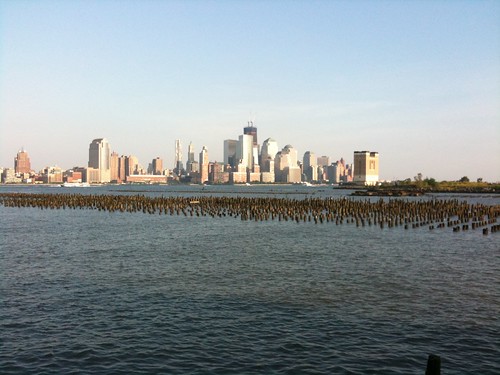
Lower Manhattan, from Hoboken, or The Calm before the Storm
Irene, if I recall correctly from my long-ago high school Greek classes, means "peace." This imminent, ironically named Hurricane Irene, which has already slammed Puerto Rico, DR, Haiti, and the Bahamas, is now hurtling northwards towards the Outer Banks of North Carolina, and weather forecasters expect it to tear into coastal New Jersey and the densely populated New York metro area beginning Saturday evening through Sunday morning. I try not to take storms of this sort too lightly, but I've observed more than once that over the years, the New York-area meteorologists and news reporters in general have tended to overplay them, predicting typhoons and cyclones when what's shown up are, well, bad but not world-ending calamities. If the tenor of the brouhaha is at all credible, all living along the Eastern seaboard should be on trains, planes, buses or in cars to Montana.

New York City's emperor, Mike Bloomberg, began talking about mandatory evacuations from the city's low-lying coastal areas and all its islands yesterday, with similar calls coming from Long Island's two county executives, and New York's governor, Andrew Cuomo, has ordered the MTA trains to stop running tomorrow at noon, the first time there's been such a pre-storm related shutdown in the system's history. (We kept saying that the subway trains ran no matter what the weather problems, but of late that has not been the case. What happened? No one has answers.) The Port Authority is shutting down all the local airports and the PATH trains by midday tomorrow, and New Jersey Transit trains and the light-rail will also be on ice.  Hospitals, eldercare centers, and many other facilities are being evacuated, but not, it seems, Rikers Island, which seems particularly cruel under the circumstances. Here in New Jersey, our Youtube performer masquerading as a governor, Chris Christie, has told people to flee the shore, which apparently is in the direct path of the storm and be nothing more than exposed rock, coral, hulls, siding, syringes, and empty water bottles by the time this storm has passed through, and Jersey City's colorful mayor, Jerramiah Healey, after mulling whether to say something today or tomorrow, has decided to issue a voluntary evacuation order from neighborhoods too close to the Hudson River, New York Harbor, the Hackensack River, or Newark Bay, i.e., anywhere downtown or on the Newark side of Jersey City. We thankfully are not in a flood plain or zone, though if we were, I have yet to see where we're supposed to go (the nearest shelter is at the Izod Center in East Rutherford, in the low-lying, marshy Meadowlands, but maybe they know something I don't). I haven't heard any mention at all of nearby Bayonne, which is in the direct path of the storm (the various evacuation maps leave blank all other municipalities, so New York City's left LI and NJ blank, while Jersey City's stops at the borders with Secaucus, etc.). Do the Bayonnaise not count? Nearly all of Hoboken's waterfront sits fairly low, so it could be a ghosttown come midday tomorrow. And a very pretty, expensive little ghosttown it will be.

photo
NY JET Nick Mangold, signing autographs in Bryant Park today
The local Gay Pride celebration has been moved to...October. The Jets-Giants preseason game will take place on Monday instead of Sunday. Several music festivals are being postponed or canceled outright. No Dave Matthews, no The Roots. (I've seen the latter, live, years ago, in a moshpit in Charlottesville.) I didn't go to the store to but rather to my daily redoubt, the library, but C did go to one on the Jersey side of the river and said that it was a madhouse. No surprise there; people have been whipped up into a frenzy of shopping for provisions, essentials, and things they didn't realize they needed, like Fritos. I guess if Irene does pan out, we can say we were prepared. If it doesn't, the economy gets a needed, though temporary, boost. And all who could afford to will have extra canned goods--and lots of plastic water bottles. Now, what about all the people who cannot afford to evacuate and what about all those prisoners at Rikers?

--

It's no surprise our president is a reader, because he's a damned good writer. Given how much Barack Obama has had to deal with since before taking office, though, I'm amazed he reads anything that isn't a Congressional bill or a précis of one; a PDB; a Blackberry SMS text; snippets of whatever his staff culls from social media sites, newspapers, and so forth; and mash notes from some billionaire or corporation. But he does read books. Not a University of Chicago Law School prof-level any more, but nevertheless an impressive amount, at least compared to most people out there, I'd imagine, who do not have to read books as part of their job, and who have very busy full-time jobs that include dealing with lots of crazy people and quite a few very demanding billionaires and corporations. Recently I came across this list of books that President Obama has read since 2008.

Several things immediately struck me: there is only one book by a woman, and only two by writers of color. Not good. Not good not just because his reading really ought be diverse, but because there are lots of excellent books by women, by people of color, by women of color, by all kinds of people, that he could be reading, and which might even give him a bit of a wake-up call and a reminder of who voted for him. (Lots of women and people of color!)  There's a book by Tom Friedman, as ridiculous a member of the punditocracy as exists (he's the very, very, very wealthy person who suggested the US invade Iraq to show them, or someone, something, in response to 9/11. Real brainiac.) That is not good, unless it's to assist him in his cultivation of negative capability. But I think Barack Obama has demonstrated that he has more than enough negative capability, and deeply grasps the concept.

Also, there's only one book of poetry. This president could stand to read some more poetry. Like, by Langston Hughes and June Jordan and his inaugural poet and a whole lot of other poets, living and only living in print. Hell, given what he's dealing with, John Milton's Paradise Lost wouldn't be a bad place to start. And it's an enjoyable, if long, read too. A so-so novel by formalist poet Brad Leithauser ain't gonna cut it. There're no books about science or technology, especially the net. There are far too few books about economics, and zero about the causes of the economic meltdown. Many are the very good books about that damned economic collapse which most of us are still living through. Someone near the president should gently and firmly pass one to him.

And he doesn't seem to be taking many pointers from the books on or bios of Abraham Lincoln, Teddy Roosevelt, or Franklin Delano Roosevelt. Yes, John Adams was a remarkable person, but not such a good president. (His son was remarkable too, but even worse in that office. He was quite good as a Congressperson, though.) But then it seems the ghost of Herbert Clark Hoover, also a remarkable person and a terrible economic steward, hovers over this administration for various reasons, so perhaps those biographies have gone down like the fiction (Franzen, Mitchell, etc.).

Today I came across this list of books he's taken on his current vacation: "The Bayou Trilogy by Daniel Woodrell, a series of crime stories; Rodin's Debutante by Ward Just, a novel set in Obama's hometown of Chicago; Cutting for Stone, a novel by Abraham Verghese; To the End of the Land, a novel by David Grossman; and The Warmth of Other Suns...by Isabel Wilkerson." Somewhat better, though still mostly men. He is planning to read Wilkerson's superb book on the Great Migration, which is a very good thing. At least one person each has recommended the Grossman and Verghese books to me. Now, more poetry (someone on his staff could go through my April Poetry Foundation twitter feed for names of poets--I quoted over 150 contemporary and past ones, of all backgrounds), more books on science and technology, something on the people that caused the meltdown (hint, hint, Mr. President, they're giving you lots of money now), and some more books on US presidents who figured out how to turn things around for the better; i.e., nothing on James Buchanan, please!

---

I meant to post a link to Gawker's descending ranking of our "Worst 50 States" a few weeks back, but better late than never.  I take some issues with some of their rankings, having lived in about 6 of these states and visited many others, but the writeups are often hilarious, and the comments sections on at least one brims with the kind of craziness that proves the Web can be both an amazing and dismaying reflection of who we are as a society. Just a few points: New York state should not be ranked as the least worst, by far. Also, New Jersey should not be in the top 5 worst. That is just pure New York chauvinism (Ernest has a better word about such things, but I'm not going to use it). As is often the case in some of these lists, people just don't know what to say about certain states at all--South Dakota, Missouri, etc.  I admit that I wouldn't know what to say about South Dakota, though I would know what to say about Missouri. But the puckish paragraphs on Mississippi, South Carolina, Ohio, Delaware, Alabama, Texas, FLORIDA!, and a few others are worth the rest of the entire effort.