Thursday, January 16, 2014

Publication Updates + Reading @ Word, Jersey City (w/ Vincent Czyz)

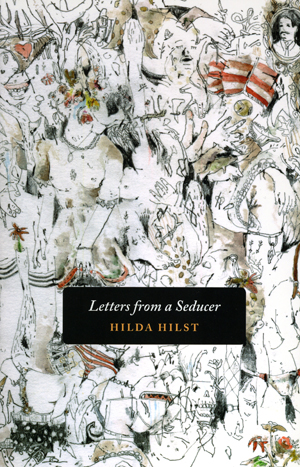
In a previous post, I mentioned several forthcoming publications, and I now have the links. First, a snippet of my translation of Hilda Hilst's novel Letters from a Seducer is now live at The White Review: excerpt from "Letters from a Seducer." I recommend browsing all the new posted links, which include Humphrey Davies' translation of an excerpt from Lebanese-Ottoman writer Ahmad Faris al-Shidaq's Leg Over Leg, self-translations of new poems by South African writer Antjie Krog, a snippet of Chinese writer Can Xue's Vertical Motion by Karen Gernant and Chen Zipeng, and an essay, entitled "Afterword: The Death of the Translator," by George Szirtes, poet and translator of Lászlo Krasnahórkai, which should part of the ongoing conversations in translation studies and comparative literature. (If you can find one in a nearby bookstore, I also highly recommend The White Review's Issue No. 9, which includes an interview with Russia's pathbreaking writer Vladimir Sorokin, and visual work by the late experimental filmmaker, poet and artist--and no relation!--Jeff Keen--no relation).

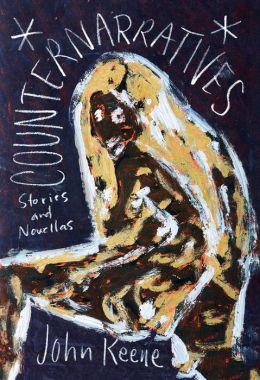
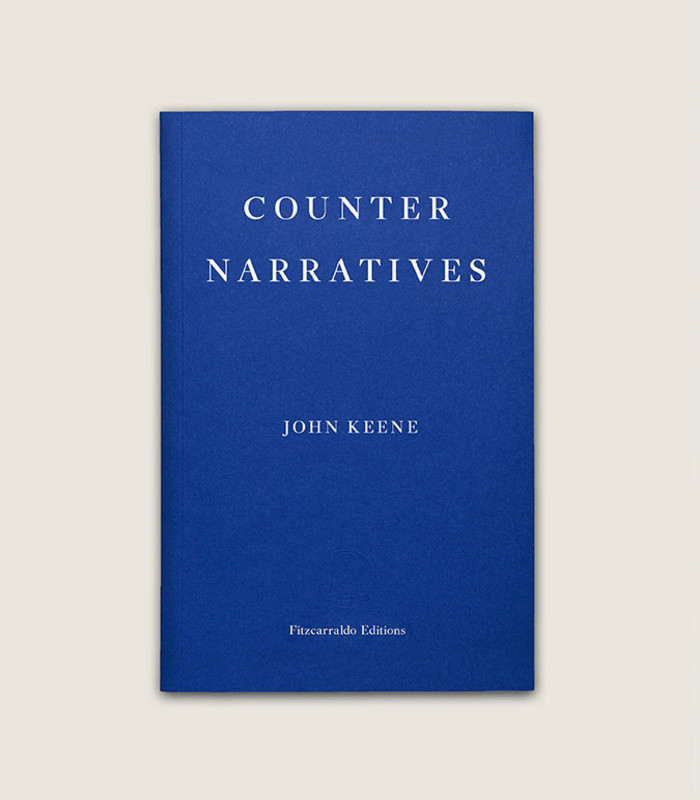
Also, one of the shorter (very brief) stories from my collection Counternarratives is now live at the venerable TriQuarterly, which is now a publication of the Northwestern University MFA Program in Creative Writing. "Mannahatta" imagines the moment in which João Rodrigues (Juan Rodriguez), thought to be the first non-native settler of Manhattan island (and thus New York), makes his decision not to return to the Dutch ship on which he works. I was particularly happy that this story, which I wrote last fall in the midst of teaching and administrating, has been published, and that TriQuarterly, which I have read and admired for many years, is the periodical doing so. Many thanks to them, and the piece includes a brief paragraph about Rodrigues in case you do not know who he is (and we all should).

***

Last night, at the invitation of poet and Culture Society publisher Zach Barocas, author and Rutgers-Newark alumnus Vincent Czyz and I read at Word Bookstore's new Jersey City branch, which Zach manages. Although the series aims to feature local poets reading poetry, both Vincent and I write prose as well, so we mixed things up a bit, making sure, however, to keep the "lyric" in play. Vincent read first and began with a beautiful prose poem, then read an excerpt of the first story in his collection Adrift in a Vanishing City, which I urge you to check out (and which Samuel R. Delany has praised in an essay on Vincent's work). 

I followed with a brief invocation of Amiri Baraka, then read two short excerpts from the Hilst, including the opening section published in The White Review. I concluded with a brand new poem, "Power," which I partially wrote during the wild, aleatory Red Rover Series reading, "The Vulnerable Rumble," organized and curated by Jennifer Karmin, Laura Goldstein and Laura Mullen at Outer Space Studio in Chicago as a special event for the Modern Language Association's annual conference. 

We fielded several questions from the good-sized midweek crowd--it's always heartening when people turn out for a reading on a Wednesday evening--and then chatted with attendees afterwards. One young man was seeking to find out ways of using technology to transcribe interviews and espousing ideas about the death of originality, so that when I suggested to him that he check out the work of Kenneth Goldsmith and Craig Dworkin, two names that came immediately to mind, it turned out that he had Goldsmith's Uncreative Writing: Managing Language in a Digital Age (Columbia University Press, 2011) in his pocket! 

Below are a few pictures of Zach and Vincent, and of Word, a store Jersey City and the surrounding area badly needs. Stop in, since it's accessible from all over New Jersey and New York City (it's just steps away from the PATH train stop at Grove Street), catch some of their events, but by all means, please buy some books there and support them if you can.

Zach Barocas, introducing the reading
Vincent Czyz, reading his work
And here are a few pictures from a couple weeks back, I think, shortly after the store's opening in December.
The café section of Word
Books! 
A browser 
Another booklover 
The well-stocked shelves

Wednesday, January 15, 2014

Two Poems: Juan Gelman (RIP)

Juan Gelman, the politically committed and supremely inventive and talented Argentinian poet and winner of the Cervantes Prize, one of the highest for Spanish-language literature, passed away yesterday in Mexico City at the age of 83. Here are two poems by him, the first in translation, the second in Spanish and, according to the Spanish newspaper El país, the last poem he wrote. RIP.

Juan Gelman (from Coffee and
Saturday: Cultura y arte)
SAINT THERESA

and with many birds and their songs in the /
highest part of the mind or head / and rumblings
in it like the sea / or laments /
or winds or movements / suns

that clash / go out / then burn again / or powers
like thousands of animals that track        
up the suburbs of the soul / suffering
terrible ordeals i mean / even so

the soul goes on whole in its quiet state /
or desire / or clear light untouched
by sorrow / scorn / misery /
suffering or ruin / so

what is this peace without vengeance / or memory
of a future heaven / or tenderness
coming down from your hands / spring water
where birds in the highest part of the mind

rally to drink / sing sweetly / or are silent
like light issuing from you / wing
flying softly above war and fatigue
like the flight of passion itself?

Copyright © "Saint Theresa" by Juan Gelman (2014), translated by Hardie St. Martin, from Exquisite Corpse, 2014. All rights reserved.

and

according to Coffee and Saturday: Cultura y arte, the last poem Gelman wrote, by hand:

VERDAD ES

Cada día
me acerco más a mi esqueleto.
Se está asomando con razón.
Lo metí en buenas y en feas sin preguntarle nada,
él siempre preguntándome, sin ver
cómo era la dicha o la desdicha,
sin quejarse, sin
distancias efímeras de mí.

Copyright © Juan Gelman, 2014. All rights reserved.

Monday, January 13, 2014

Yayoi Kusama's I Who Have Arrived In Heaven (or the "Impossibility Room") @ David Zwirner

I tried. Four times. Four times. To see Yayoi Kusama's "Infinity Mirrored Room" at David Zwirner Gallery. It was one part of her show "I Who Have Arrived in Heaven." I apparently never came early enough or waited long enough (3 hours was my maximum) online to get into that little slice of heaven. Instead, I experienced a tiny sliver of hell, standing on what felt like non-moving, infinite queues. It was like being in Vladimir Sorokin's novel, but without the charmingly bizarre conversations. 

Except that I nearly got in one time, on the day captured in the photographs below, making my way first directly to the paintings, for which there was no line whatsoever, and slipping ungracefully into the area where a line had curved around itself like an ourobouros, taking my place at the end of it, until a docent and one of the gallery's staff spotted me like a brown bear in a snowy field, and told me that I had to leave. Two young men in front of me had also sneaked in and were told to skedaddle. They split, verbalizing their upset. 

I went back to looking at the paintings, which, though very interesting, were nowhere near as enthralling as the brief glimpse I got of the "Infinity Mirrored Room"--an "Impossibility Room" given the lines, the peeved Zwirner staff, the near maelstrom that filled W. 17th Street one of the days I showed up, as there were not enough cordons or staff to order the lines, and a young woman strode out into the street and began screaming at all of us to go home, to leave, that we would not see the "Infinity Room" today, no possibility, an impossibility, which simply made the people around me ask each other--or me, or the air--if she had lost her mind, because she was offering no other information, she would not even answer questions, as an evidently perturbed young man later did (everyone under 40 is "young" to me now), telling us about the screw-up with the cordons, sawhorses, whatever was meant to keep order. No, she approached, screamed, never letting go of her coffee cup, screamed some more, "You might as well go home because you will not get in," and then disappeared back into the gallery. Maybe she vanished into the "Infinity Mirrored Room." It was like an unannounced performance, but it was not the "Infinity Mirrored Room," so neither I nor many others standing around me budged. At least for another half-hour.

So, the paintings. I'll say only that they were consolation of a sort. But I hope--want, demand--that David Zwirner or someone bring that damned "Infinity Mirrored Room" back. Charge for it. Charge a premium--well, not more than $25, or else it'll be a plaything of the elites, as so much in New York has become. And run it for as long as you can make money. Because you will make money, a lot of it. Or invite someone affiliated with Kusama do so. There are warehouses in Jersey City she could rent. You could make a lot of money. Even Christian Marclay's The Clock, with its limited entrance protocols, appeared in different, staggered editions. Let's do so with that "Infinity Mirrored Room." Maybe I should write a letter to the mayor. Of Jersey City, and New York. That glimpse was bliss. We need more.

The line, wrapping down 10th Ave.,
to see the Yayoi Kusama
"Infinity Room"
The monstrous line (which
punched out into the street)
And now some of Kusama's paintings. I admit, it's really trifling not to have written down the names of paintings, their dates, anything. This feels more like a Tumblr post than a Blogger one. But I was in a state of petulance and having yet again not gotten into that "Infinity Room," so please cut me some slack. The paintings, all in acrylic, all in vibrant colors (a few were more muted and emphasized negative space and color), all with vivid brushwork, all with titles suggesting playful profundity, were BEAUTIFUL, though, and to my untrained eye reminded me a bit of Australian Aboriginal art.

Update: Okay, in my annoyance and laziness when beginning this blog post I did not initially glance at Zwirner's site, which shows images and names for all of the pictures I photographed.

Searching for Love, 2013, Acrylic on canvas
My Heart Soaring in the Sunset, 2013, Acrylic on canvas
All the Love Overflowing, 2013, Acrylic on canvas
Dance Party Night, 2013, Acrylic on canvas
A detail from Dance Party Night
Pensive Night, 2013, Acrylic on canvas
Morning Has Come, 2013, Acrylic on canvas
Green Solitude, 2013, Acrylic on canvas
A Woman with Pink Hair, 2013, Acrylic on canvas
Praying for Peace in the World, 2013, Acrylic on canvas
Brilliance of Life, 2013, and
Standing at the Flower Bed, 2013,
both acrylic on canvas

Saturday, January 11, 2014

RIP Amiri Baraka (1934-2014)

Amiri Baraka (at right), at NYU,
May 3, 2014


"What will be / the sacred words?" - Amiri Baraka

A great light, a fire, a forge has gone out of our literatures, our cultures, our society: Amiri Baraka has passed away. There are many important and a few major living poets, writers, social critics today; fewer still have assumed the mantle of change-agents, have put and continue to place themselves at center of social, political and economic, as well as aesthetic transformation, and done so continuously for most of their lives. The risks are tremendous, the payoff perhaps invisible and too small in personal, let alone broader terms. But Amiri Baraka did. He lived what he thought and believed, even when it was problematic or outright wrong, and in the process he played crucial roles in reframing how we think and see. If we think of him primarily as a poet, we should also consider that his poetry, and a poetics of the self, of the mind, of action, flowed through everything he did, whether it was producing literature across a range of genres (poetry, drama, fiction, essays, speeches, collaborative works, etc.), creating institutions and fighting to keep them alive, serving as a teacher, a professor, an editor, a mentor, a paterfamilias and parent, a polemicist, a friend, a cultural connector, a mage, working with activists of his generation and younger ones, being and living as a revolutionary and liberationist. He took very seriously, embodied, the charge of the ancestors and the principles espoused by W. E. B. DuBois in his famous essay, "Criteria of Negro Art." For Baraka, art and culture were not value-free or worthless, but, as the great Cape Verdean-Guiné-Bissauan poet and freedom fighter Amílcar Cabral pointed out, often weapons, and Amiri Baraka wielded them, when necessary, towards goals and aims far beyond himself or his career.

I first read Amiri Baraka's work in childhood, in an anthology (was it Black Fire!) that my godparents had in their library. In junior high, I am amazed to say, we read his poem "In Memory of Radio (for Lamont Cranston)," which I did not really understand--the radio's centrality to American culture having given way by then to TV--though I did grasp that at some elemental level I was picking up a frequency I had to pay attention to. By the time I graduated from high school I had decided to include a quote by Baraka on my high school senior yearbook page (along with quotes by Gwendolyn Brooks, T. S. Eliot (!) and Archibald MacLeish). Yet again I did not fully grasp what I was quoting--and did not realize until this past spring, when I was teaching my course on the "Black Arts Movement" at Rutgers-Newark that the words came from his introduction, as "Imamu Ameer Baraka," the first name he chose after ceasing to be Everett LeRoi Jones, as he was born in Newark in 1934, to Black Fire!, the landmark anthology of Black Arts Poetry--but something in his words spoke directly to me, almost like a life-force, and if I cannot remember much poetry by heart these days, those words, or a version of them, took root deep inside me.

An excerpt from Amiri Baraka's
"Foreword," from Black Fire!
Later, in college and after, I read quite a bit of Baraka's work, and found some of it deeply upsetting, confounding, enraging, especially his sexism, misogyny and patriarchy, his homophobia, his anti-Semitism; sometimes all of these can be found in just a single of his works, like "Black Art" or the play Mad Heart. Yet I also learned to read Baraka as a person of his time--my own father shared many of the same feelings and ideas, even if he never, expressed them as furiously or eloquently as Baraka, or became a Black Nationalist, Marxist, a Maoist--and to appreciate his deep love of black people, of working and poor people, of people engaged in the struggle whatever their race or ethnicity or gender or sexuality; I came to appreciate his ongoing self-criticism and self-correction, however stuttered it sometimes was, his capacity for reading himself and rethinking his views, and for his courage--and this is one of the greatest gifts Baraka has given us, in addition to the work--his remarkable courage, at speaking out, and then even greater courage in revising and recalibrating his views.
The Black Renaissance Noire panel
at NYU (Barrett, Ismaili, Baraka, Johnson,
Dill, Jess), May 3, 2014
As a writer and artist, I admire his tremendous prodigiousness and fluency, the richness and variability of his works, their capacity to engage the mind and the heart in multiple ways. I admire his critical acuity and facility, his ability to merge creativity and critique in ways that still hold value long after the moment of a given work's conception has passed. I admire the range of his learning and his ability to infuse his art with it. I admire his use of his own life, in multiple ways, as the ground for his art, and his fusion of times of life and art, his performance of his life as a work of political art. Had he merely continued writing only poetry, he still would have been a significant literary figure in the poetic firmament, his first five books alone worth dozens by other poets of his generation. Had he shifted to plays and stopped there, he would have ranked with Adrienne Kennedy as one of the most innovative American and African American playwrights of the 1960s, and with his revolutionary plays that appeared in the late 1960s, he would have cemented his fame alongside Ed Bullins and others. Had he written more fiction, he could have gained significant currency as an innovator in that genre. As a music critic he wrote one of the still salient--foundational--texts on Black music, Blues People: Negro Music in White America, and could have rested on those laurels for the rest of his life. As an essayist he was original from the start, and could have packaged all his essays together and used their afterlife as a calling card, if not to a cushy position somewhere--his battles in and with academe are legendary, though it is in part through his struggles and those of other black literary pioneers that I and many others have our jobs today--then to the lecture circuit. 

Outside of the literary realm, as one of the co-founders of the Black Arts Movement, as one of the political artists engaged in real-world politics in pushing for a national black political convention, as a force in New York and in Newark (New Ark, he labeled) it who helped to elect the latter city's first African American mayor, Kenneth Gibson, he could have operated primarily in the political and social arenas, with identifiable success in his track record. Yet Baraka did all these things and more. It is both the particularities and the holistic quality of his life and work that commend him to us and to the ages. He was that rare thing, the real thing, and even in the works that were less successful--some of the poetry of the 1970s, for example--the force of his drive to work through his vision and understanding, even if a misunderstanding, of the world still burns through.


"Ka 'Ba," from The Amiri Baraka Reader

I feel very fortunate to have met and spoken with Amiri Baraka several times. One story involving him that I have told many times (forgive me for repeating it again) involves a job I had at NYU in the late 1990s, which entailed sometimes going to pick up important visitors for a weeklong summer faculty development program. I was thus sent, via car service, to Newark, to go pick up Amiri Baraka at his home. Off we drove, we arrived at his house, I went in, and met his assistant, and then, we waited. He was getting ready, I believe--I don't think he was feeling his best then--and various people, all friendly, came and went from the living room. I cannot remember if Mrs. Baraka was there, or if I spoke with any of his children--I had met Ras Baraka some years earlier, when I was in my early 20s and with the Dark Room Writers Collective--but I vividly recall him finally appearing from upstairs, and then, we were off. Only we weren't. We had to stop to get his books and pamphlets, from another residence. I began to worry because given the awfulness of New Jersey and New York traffic at the best of times, but especially near rush hour, I could see us being late, possibly very late, and I knew my boss, and my boss's boss, the then-Senior Vice President at NYU, were not going to be happy. But I also had to accommodate our speaker. So as things proceeded at a glacial pace, our car eventually on the road and crawling from Newark through Jersey City to the Holland Tunnel, I sat there beside Baraka, and tried, despite my mounting anxiety, to make small talk with him and his assistant. (I wish I could remember his name.)

What did we talk about? His work, my admiration for him, Ras, black writing, NYU, all sorts of things. It was light and nothing went beyond the surface of my nerves or his politeness. He was not warm, but he also was not rude. I even summoned the brazenness to give him a copy of my first book. At some point, one of my bosses called my cellphone and said, "Where are you? You're late, and the big boss is thinking of firing you on the spot." I pleaded with him and tried to explain what was going on, but knew it was out of his hands. On we crept, inching forward, and Baraka could feel my anxiety, so he asked me what was wrong. I told him, and he urged me not to worry. Finally we arrived at NYU's Cantor Film Center, where he was to give his talk. All my colleagues were lined up at the curb, including the Senior Vice President. (Even she knew how important Baraka was.) The first thing he uttered after getting out of the car and greeting everyone was to defend me and explain why we were so late. He assumed all the blame, and even said something to the effect of "Do not fire him," quite forcefully, as if to preempt what at least one of the higher ups was considering. I apologized profusely and quickly, and then my direct boss said, "Just find out what he needs and bring him into the lecture hall." I accompanied him inside, he said he had to go to the bathroom, I made sure he was okay and he asked me if I was okay, and with that, he went into the packed hall where faculty members from all over the country were waiting, and brought the house down. It was one of the best lectures the program had witnessed, I was told, in its history. I kept my job.
Amiri Baraka, at NYU, May 3, 2014
Last spring I saw Baraka for the last time this past spring when I attended a May 3, 2014 launch reading for the Spring/Summer 2013, Vol 13.1 issue of the journal Black Renaissance Noire, edited by Quincy Troupe. Among the readers were Tyehimba Jess, A. Igoni Barrett, Rashida Ismaili, Lesley Dill, and Jacqueline Johnson. And Amiri Baraka. I thought I had blogged about this, but when I searched my posts it turned out that I hadn't, nor had I at the very least included the photos in my "Random Photos" post. He was fiery, feisty, full of life, referring to the provocative essay he had written on the anthology Angles of Ascent, but more than anything, he was vintage Baraka, a figure who in a few words could bring a room to life. All of the readers were superb, and I was glad that I caught the reading, but I especially wanted to speak with Baraka afterwards, because, since I was teaching his work, so wanted to say hello to him in person after the reading, express on behalf of my students their enthusiasm for him and the ideas of his and the other Black Arts figures that they were encountering, and ask if he would be willing to come speak to my class in the future. Without hesitation, he told me, "Yes." I asked a gentleman who was standing nearby to take our picture, and he only captured our hands, in a shake, though I didn't realize this until afterwards.  I think of that handshake now, and of all that I have gotten from Amiri Baraka, all that we all have received from him over the years, and without hesitation, I can say, Thank you. Thank you. Thank you.

Rest in piece, Amiri Baraka (1934-2014).

Amiri Baraka's hand, and mine 

Tuesday, January 07, 2014

Emotional Outreach Project 5.0: Emotional Exercises

CROSS-POSTED AT FIELD RESEARCH STUDY GROUP A BLOG

Starting tomorrow and throughout January and February, the Emotional Outreach Project 5.0: Emotional Exercises, will be underway at This Red Door @ Kunsthalle Galapagos, in DUMBO, Brooklyn, NY. 

Emotional Exercise Card

EMOTIONAL OUTREACH PROJECT
EMOTIONAL EXERCISES

January-February 2014

Dear Collaborator:

Thank you so much for agreeing to participate in the "Emotional Outreach Project, 5.0: Emotional Exercises." Previous versions of the "Emotional Outreach Project" have comprised a series of business card-sized vouchers, which we originally distributed in 2002-2003 (in New York, Jersey City and Chicago), 2007 (in New York, Jersey City and Chicago), 2009 (in Cuba, in Spanish), and 2013 (in New York, and for the 4.0 version, in Germany, in English, German and Yiddish). The cards have been distributed free of charge and with disinterest to individuals, under various performative and temporal controls and using specified variables.

This 5.0 version of the "Emotional Outreach Project" marks a change in approach. While maintaining a focus on the emotions and affect, this new version proceeds along the axis of a different but linked conceptual approach, that of the "instruction," a perennial of conceptual and performance art, here mobilized toward the practice and goal of an "emotional exercise," similar in concept but different and distinct in its underlying ideological and belief system from the "spiritual exercises" of ancient Greek philosophers (cf. Pierre Hadot, etc.), those of the Church, particularly those of St. Ignatius of Loyola, or more contemporary versions (cf. Michel Foucault, etc.). As with the previous versions of the "Emotional Outreach Project," this version is electively participatory; the unspoken assumption is that taking a card enters one into the process of participation, collaboration and engagement.

On one side of the cards, in bold black ink, we list a series of discrete, simple, perhaps banal instructions, one per card (the total exceeding 100), which range from "Spend most of one day asking questions. Remain silent, and avoid positive or negative assertions of any sort, unless absolutely necessary (with family members, for your job, etc.). Briefly write up the experience," to "Create an imaginary word that means love, and teach it to someone else. Urge them to teach it and continue the process." Each of the instructions is simple and self-explanatory. Rather than identifying an emotion or emotions in an a priori fashion as the prior vouchers did, these allow the necessary emotions to arise from the performance of the instructions, and any subsequent actions the participant engages in linked to them.

On the flip side the cards now read:

Dear friend, thank you for participating in this emotional exercise. When you have satisfied the instructions on this card, please enclose the card or attach it to a postcard & mail it to: John Keene, Rutgers-Newark, Conklin 321, 175 University Avenue, Newark, NJ 07102
You may also email a copy of the card to: fieldresearchstudygroup@yahoo.com

Thus, participants, having fulfilled the instructions, should return the used cards, either by US Postal service to the name and address--or photographed/scanned to the email address--listed above.

We greatly appreciate your collaboration and participation in this project. Thanks so much, and best wishes for the holidays and New Year,

FIELD RESEARCH STUDY GROUP A
*Email: fieldresearchstudygroup[AT]yahoo.com


Thursday, January 02, 2014

The New Year + Great Early News About Hilst Translation

It feels both strange and exciting to note here that we are now in 2014; this past year seemed to unfold glacially, with ample amounts of time cocooning everything (MLA, AWP, the spring semester, writing this summer, etc.). Perhaps time felt this way because I was still in the midst of transitioning to new--or returning to prior--life rhythms and, like everyone around me, also  recovering from the psychic effects of the fall 2012 hurricane. Time at various points seemed to stand still. This past fall, however, accelerated much more quickly than last year (again, perhaps because we avoided nature's violent, watery intermission), and December in particular raced by so fast it was over before I knew it.

The year brought good news, some of which I'll talk about soon, but very sad news closer to home as well. Three friends, all under 50, passed away: Donald Agarrat, whom I memorialized several months ago, and more recently, my former colleague José Estéban Múñoz, with whom I served on the board of the Center for Lesbian and Gay Studies (CLAGS) in the late 1990s, and Gerard Fergerson, for many years one of my dearest friends, and among the smartest and most dynamic people I have ever known in life, who incidentally, among the many wonderful things he did for me, introduced me to CLAGS. I will post tributes to both of them very soon. Another person that I knew from the time I was in my early 20s, the activist, writer, editor, journalist, and bookstore founder, John Mitzel, also passed away after a long illness in Boston.

As of the second week of December, classes concluded, and as of January 1, I relinquish my post as Acting Chair of AAAS to my predecessor. The fall undergraduate English course, "Introduction to Literary Studies," provoked my usual pangs of apprehension when I learned I'd be teaching it, but it turned out quite well in the end, if my students' coursework, responses and comments are any indication. As far as the Acting Chair stint went, it turned out to be a lot more work than I'd envisioned (though isn't that always the case?), but it was also an excellent introduction to the university system's innards, and I had the opportunity to tackle a few important projects, which I resolved successfully, as well as initiate some exciting events for this upcoming semester.

Somehow or other I completed not just the translation but multiple revisions of the Hilda Hilst novel, Letters from a Seducer (Cartas de um sedutor), jointly published by Nightboat Books and A Bolha Editora, and it has not only been repeatedly proofed, blurbed (by Dodie Bellamy, Samuel R. Delany, and Ronaldo V. Wilson!), but has gone to the printer and should be out very soon (the schedule date is now February 4, 2014). (You can even order it from distributor University Presses of New England/UPNE, Barnes & Noble or that other behemoth site that I will pass on naming. You know which one I mean.) I have said publicly that it probably was a bit insane to have agreed to translate that book, which even in the Portuguese is no two-step, during a period when I had two sizable classes and lots of other pending duties, but looking back I'm glad I did, and am even happier about the resulting text.


I do wonder how readers who have been enthusiastic about the first Hilst novel that appeared in English, The Obscene Madame D (A obscena senhora D), beautifully and collaboratively translated by Nathanaël and Rachel Gontijo Araújo, will respond to this one, especially given that it is far more sexually transgressive and explicit, the language thornier--there are moments in the text that look wrong even in Portuguese, à la Clarice Lispector, though they are exactly what Hilst intended--and the structure of the novel far more experimental.

In fact, in Letters from a Seducer Hilst produces an anti-novel . I was trying to think of a musical comparison, and instantly and interestingly enough, at least to me, the post-modern work of the late Russian composer Alfred Schnittke came immediately to mind; he is best known for combining an conventional styles (for example, preexisting or pastiche versions of baroque compositions) with one or more very different, disparate styles, holding them all together via a compelling associative vision, profound craft and wit, and, to a huge degree, the willingness of the listener to accept, if not fully grasp, what he's up to and go along. That's what Hilst does in and with this novel, though in it she attempts and achieves many other things as well. In fact the book feels like it could serve as a source text for a course I taught years at at Northwestern on contemporary aesthetics and what I called "danger zones"; in it she treats in various ways aspects of conventional aesthetic theory, as well as those touchier areas I specifically focused on, including pornography, sentimentality, horror, conceptualism, and, to a lesser degree, the posthuman.

Although the translation is not yet on bookshelves it has received some early praise in draft form. Translator, editor, program director, and scholar Daniel Medin wrote the following in the December 17, 2013 edition of Three Percent: a resource for international literature at the University of Rochester:

Occasionally, a work of brilliance will make it possible for a virtuosic translator to outdo, line for line, a great deal of what’s recently appeared in her target language. In 2012, the English of George Szirtes for Satantango’s Hungarian struck me as superior to the sentences of most novels written that year in English. The same’s true of John Keene’s version of Letters from a Seducer by Hilda Hilst. Scheduled to appear this month, it was perhaps my most unforgettable reading experience of 2013. I’m terribly eager to read more Hilst now—and impatient to get my hands on Keene’sAnnotations too.

Medin and Scott Esposito also discuss the translation in their podcast at Two Lines Press. A snippet of the translation will appear in an upcoming edition (No. 10, I believe) of the The White Review.

I am looking forward to discussing and possibly reading from it at an upcoming panel on translation that will take place in Chicago, on January 10th, during the Modern Language Association's annual convention. The event, New Writing in Translation, a roundtable, will take place at 7:30 PM in the Sharp Building of the School of the Art Institute of Chicago, 37 S. Wabash Avenue. As the organizer describes it, "this roundtable event will consist in a self-guided survey of recent translation projects by leading contemporaries in the field. Rather than being led by generalizable themes in the theory and practice of translation, each participant will read a brief excerpt from a recent translation project and then discuss the vicissitudes of working on it." The Writing (MFAW) Program of SAIC will host the event, and other participants include Daniel Borzutzky, Jen Scappettone, Anna Deeny, and Joshua Clover.

Lastly, I will be reading with Vincent Czyz at Word-Jersey City on January 15, 2014. I believe we both will read a little poetry and I'll be reading from the Hilst as well, so if you are in Jersey City, please join us.

Wednesday, January 01, 2014

Happy New Year!


Happy New Year!
Feliz año nuevo
Feliz Ano Novo
Bonne année
Buon Anno e tanti auguri
Kull 'aam wa-antum bikhayr
Aliheli'sdi Itse Udetiyvasadisv
Na MwakaMweru wi Gikeno
Feliĉan novan jaron
聖誕快樂 新年快樂 [圣诞快乐 新年快乐]
Bliain úr faoi shéan is faoi mise duit
Nava Varsh Ki Haardik Shubh Kaamnaayen
Ein gesundes neues Jahr
Mwaka Mwena
Pudhu Varusha Vaazhthukkal
Afe nhyia pa
Ufaaveri aa ahareh
Er sala we pîroz be
سال نو
С наступающим Новым Годом
šťastný nový rok
Manigong Bagong Taon sa inyong lahat
Feliç Any Nou
Yeni yılınızı kutlar, sağlık ve başarılar dileriz
نايا سال مبارک هو
Emnandi Nonyaka Omtsha Ozele Iintsikelelo
Subha Aluth Awrudhak Vewa
Chronia polla
Szczesliwego Nowego Roku
Kia pai te Tau Hou e heke mai nei
Shinnen omedeto goziamasu (クリスマスと新年おめでとうございます)
IHozhi Naghai
a manuia le Tausaga Fou
Paglaun Ukiutchiaq
Naya Saal Mubarak Ho

(International greetings courtesy of Omniglot and Jennifer's Polyglot Links; please note a few of the phrases may also contain Christmas greetings)

Monday, December 23, 2013

iPhone Drawings

The fall semester is over, grades are in, and I am taking a little mental break. It has been a while since I posted any iPhone drawings, but then I hadn't done many in a while. Here are a few recent ones; I guess these constitute my purple or violet period, with some more filled out versions of very fast line drawings. (I do the filling out mostly in real time, though.) All are my usual life sketches/portraits, on the various forms of public transportation I take (light rail, PATH, NY subway, etc.). I have yet to sketch anyone on the Newark light rail/subway, though, perhaps because my trip is so brief. I'll have to take it all the way to the end of the line(s) and draw some of the people I see. Newark doesn't lack for interesting subjects for portraits. I also have to return to drawing on the iPad, which has a larger screen. The software for it changed, though, so it's less agile, at least to my fingertips, than the iPhone version.

Sunday, December 15, 2013

Random Photos

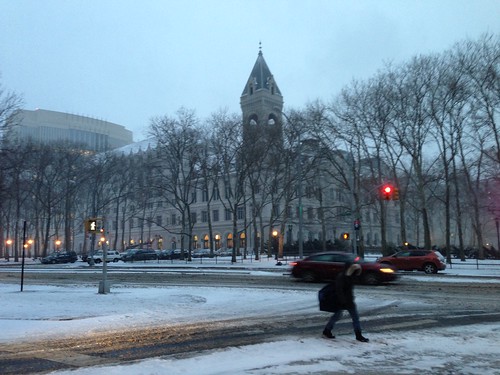
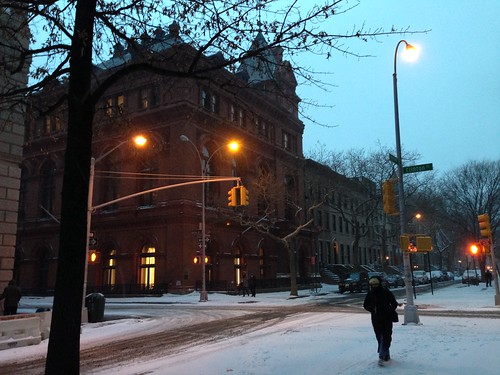
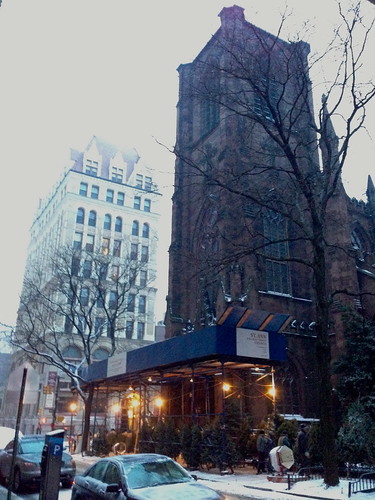
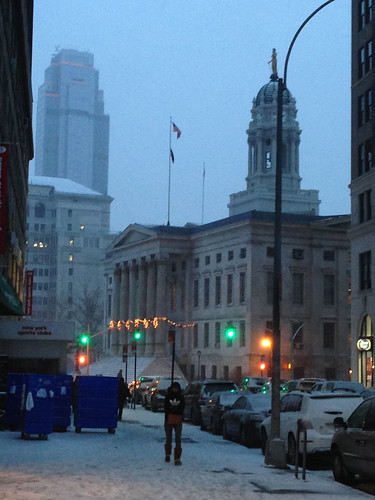
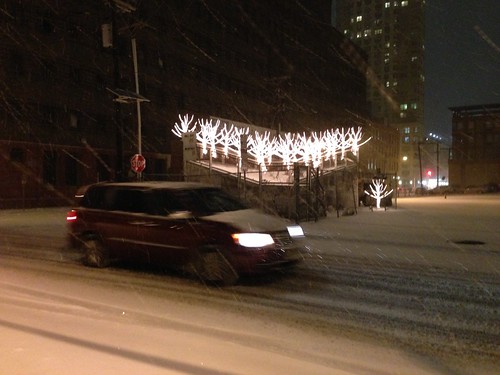
A few photos from the last few weeks, including some of our recent snowstorm.
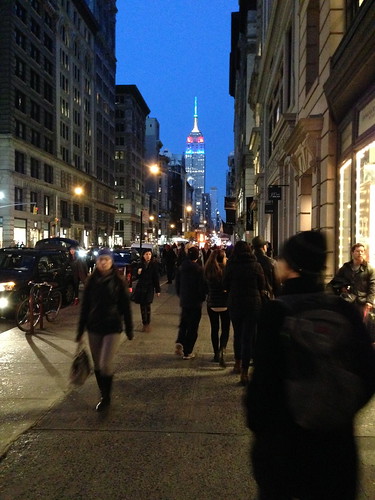
On Broadway
On 5th Avenue, looking north
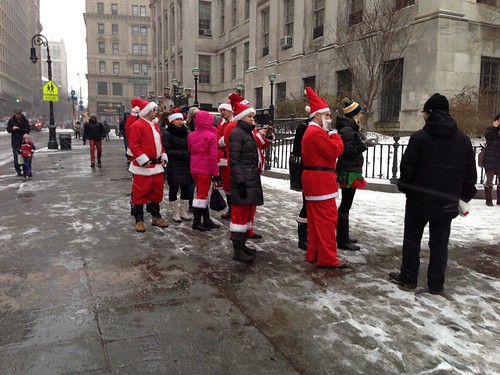
Santa Con participants, Brooklyn
Some of the Santa Con revelers, in Brooklyn
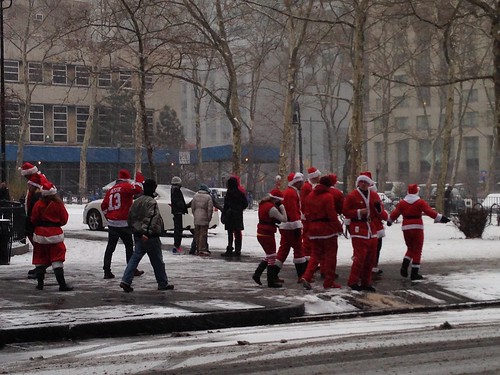
Santa Con, Brooklyn
The march of the Santa Conners
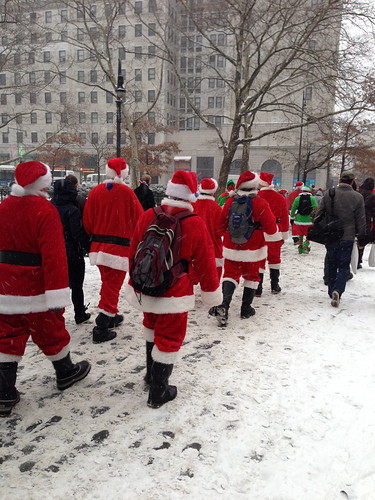
A phalanx of Santa Conners
Santas trudging through the snow, in Brooklyn
Cadman Plaza, Brooklyn
Cadman Square, Brooklyn
Brooklyn Historical Society
St. Ann's Church, Brooklyn
Courthouse, Brooklyn
Brooklyn Borough Hall, Brooklyn
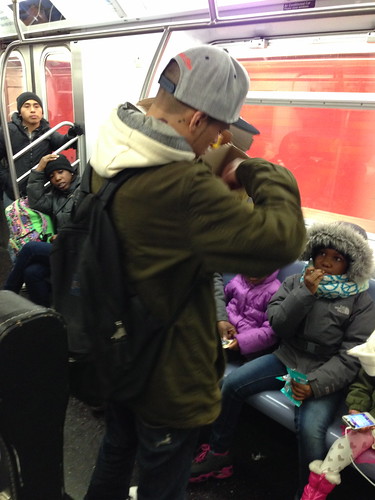
Subway vendor
Subway vendor
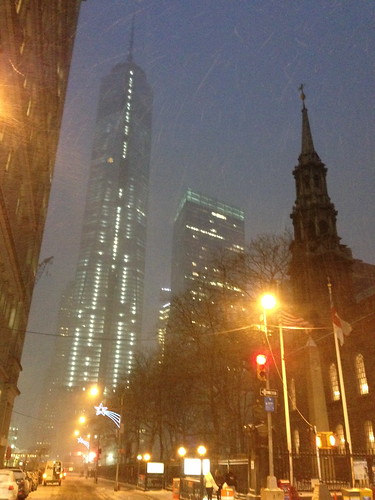
Snowy Freedom Tower & St. Paul's Church, lower Manhattan
Freedom Tower and St. Paul's Church in the snow
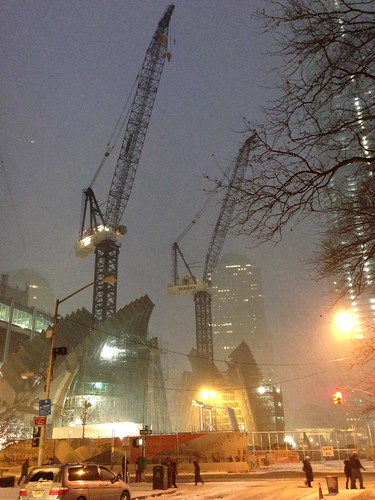
The new PATH entrance, WTC, NYC
The new PATH station entrance, designed
by Santiago Calatrava, at World Trade Center,
slowing coming together
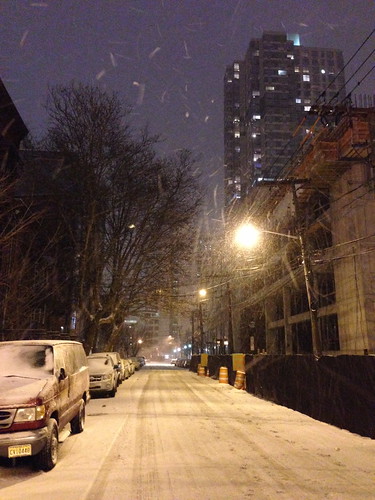
Snowy Jersey City
Snowstorm, Jersey City
Holiday lights, Jersey City
A holiday light display
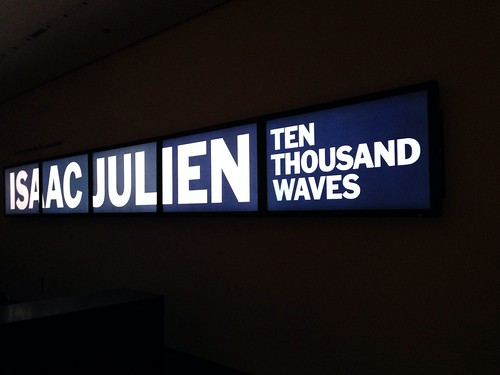
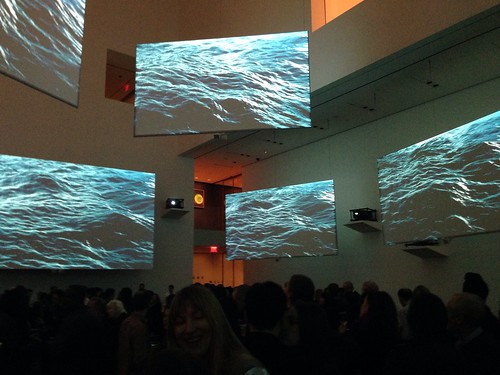
Isaac Julien's "Ten Thousand Waves" preview at MoMA
Isaac Julien's "Ten Thousand Waves" at MoMa
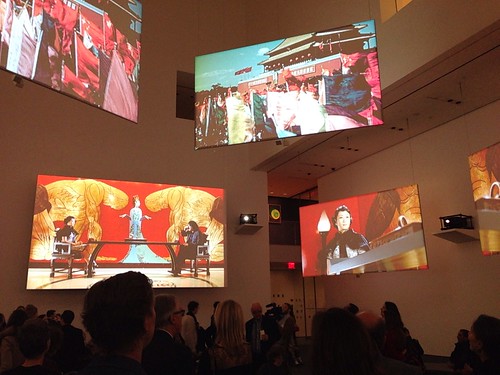
Isaac Julien's "Ten Thousand Waves" preview at MoMA
Isaac Julien's "Ten Thousand Waves" at MoMa
Isaac Julien's "Ten Thousand Waves" preview at MoMA
Isaac Julien's "Ten Thousand Waves" at MoMa
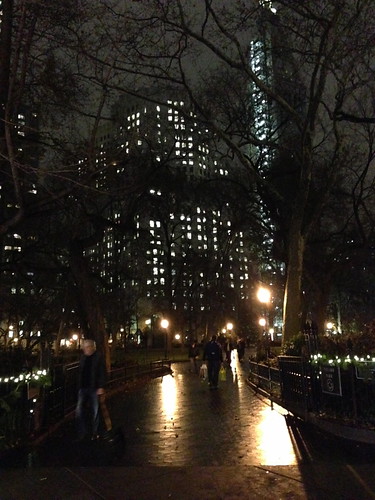
Madison Square Park at night
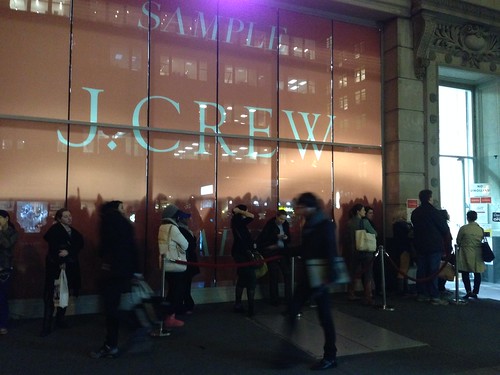
The line outside J. Crew's sample sale
J. Crew sample sale
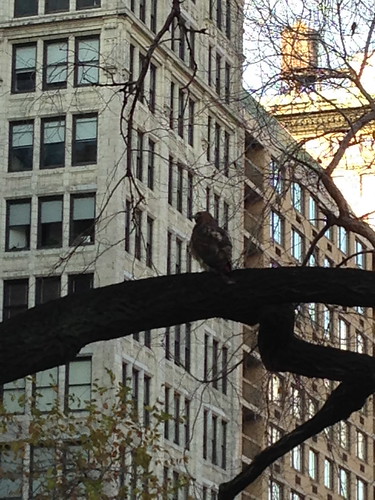
A hawk, Union Square Park
Hawk, in Union Square
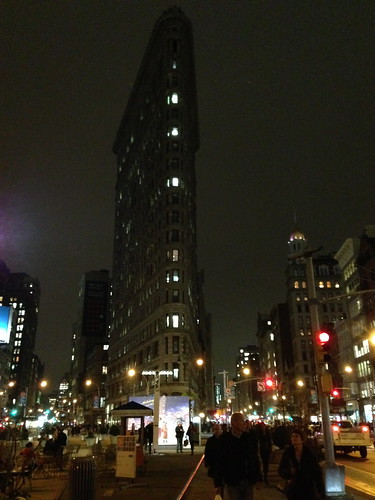
The prowlike Flatiron Building
The Flatiron, like a prow in the night
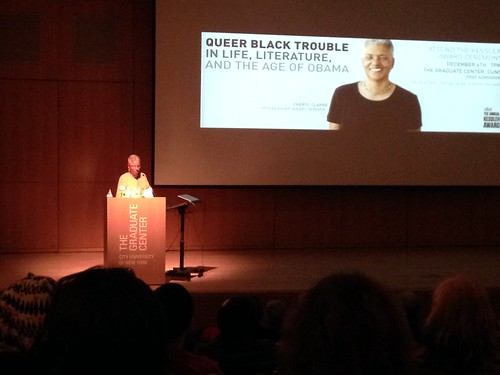
Cheryl Clarke, delivering this year's CLAGS Kessler lecture
Cheryl Clarke, this year's CLAGS
Kessler Lecturer and honoree
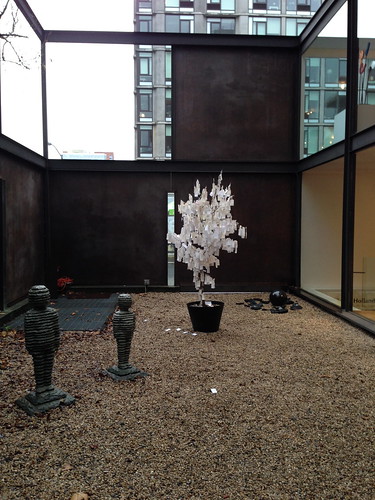
Yoko Ono's Wish Tree, Chelsea
Yoko Ono's Wish Tree, in Chelsea
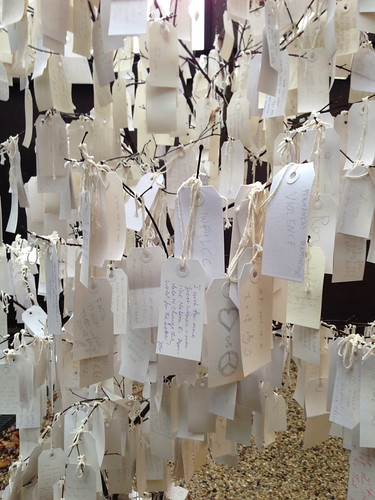
Yoko Ono's Wish Tree, Chelsea
Ono's Wish Tree, up close