Showing posts with label snow. Show all posts

Sunday, December 15, 2013

Random Photos

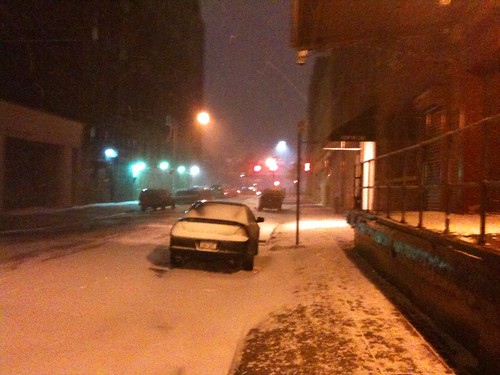
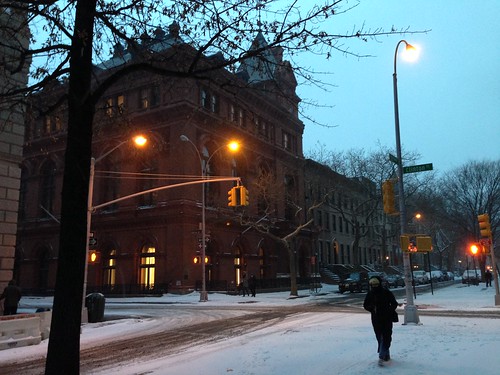
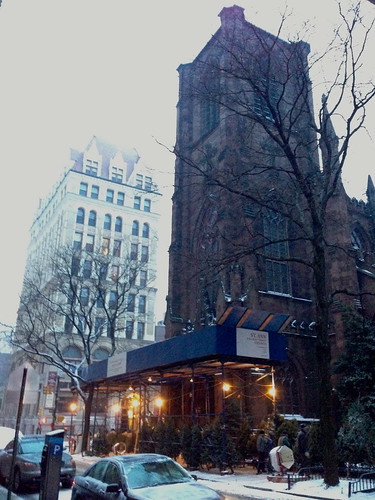
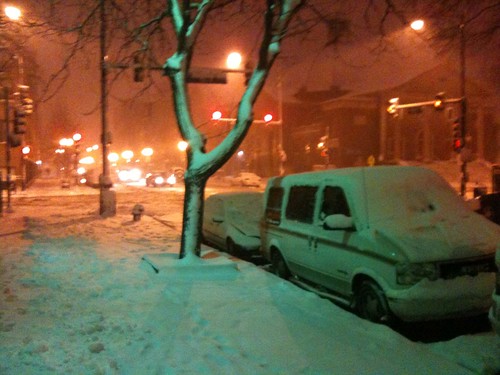
A few photos from the last few weeks, including some of our recent snowstorm.
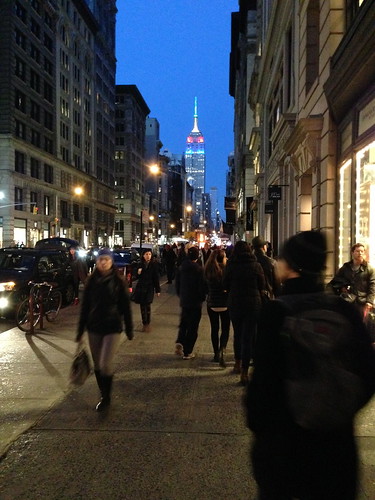
On Broadway
On 5th Avenue, looking north
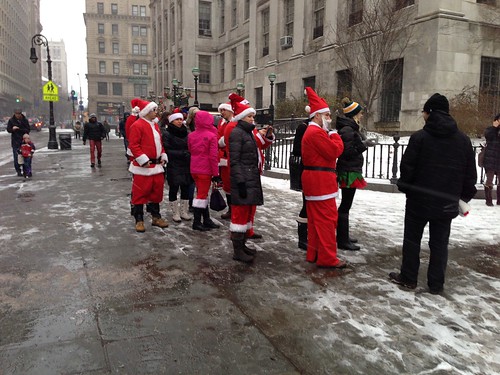
Santa Con participants, Brooklyn
Some of the Santa Con revelers, in Brooklyn
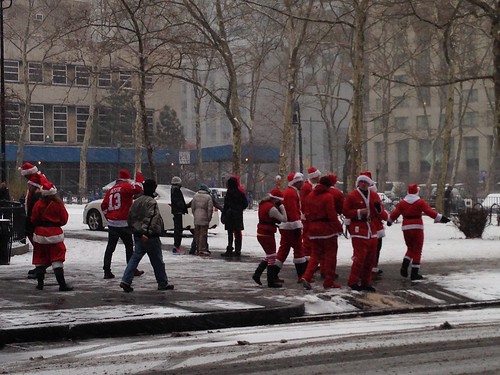
Santa Con, Brooklyn
The march of the Santa Conners
A phalanx of Santa Conners
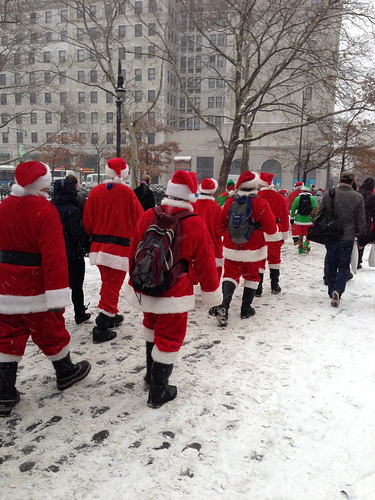
Santas trudging through the snow, in Brooklyn
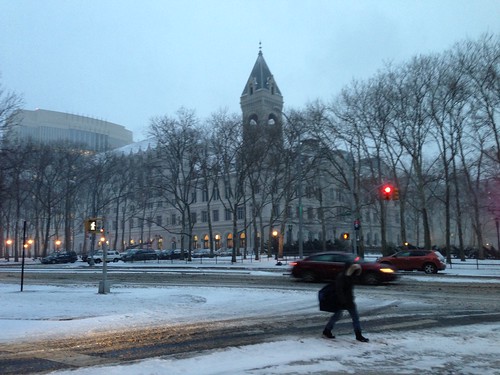
Cadman Plaza, Brooklyn
Cadman Square, Brooklyn
Brooklyn Historical Society
St. Ann's Church, Brooklyn
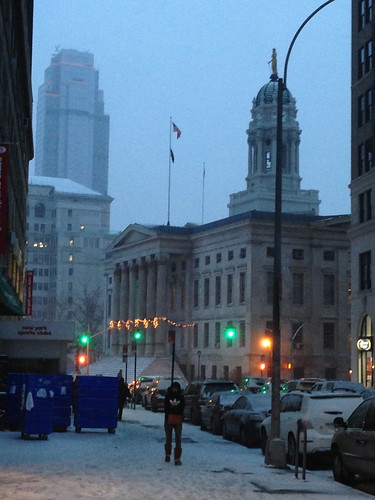
Courthouse, Brooklyn
Brooklyn Borough Hall, Brooklyn
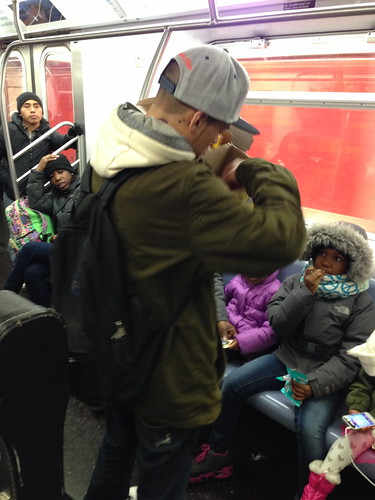
Subway vendor
Subway vendor
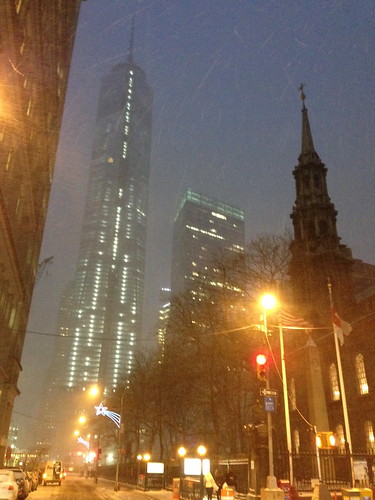
Snowy Freedom Tower & St. Paul's Church, lower Manhattan
Freedom Tower and St. Paul's Church in the snow
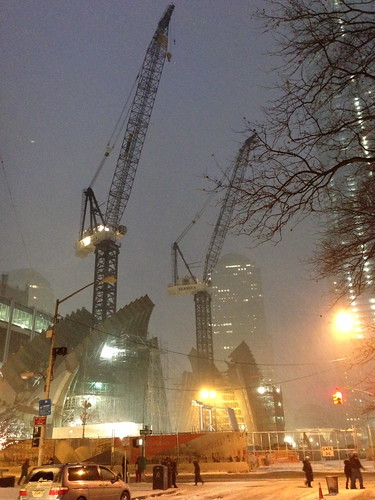
The new PATH entrance, WTC, NYC
The new PATH station entrance, designed
by Santiago Calatrava, at World Trade Center,
slowing coming together
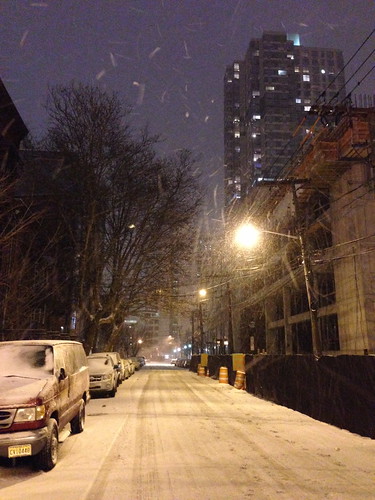
Snowy Jersey City
Snowstorm, Jersey City
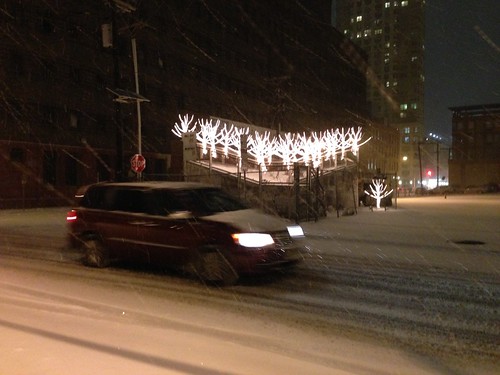
Holiday lights, Jersey City
A holiday light display
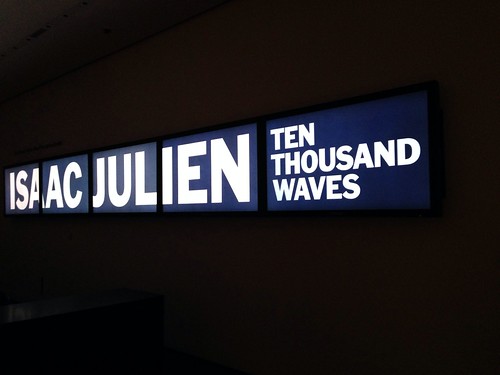
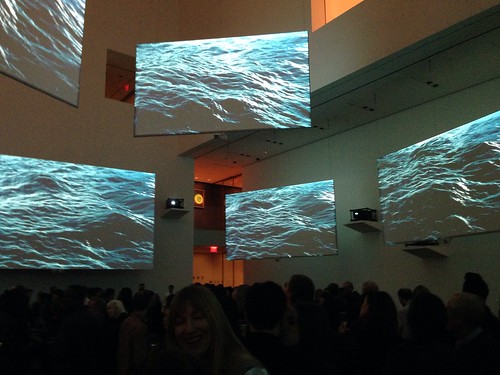
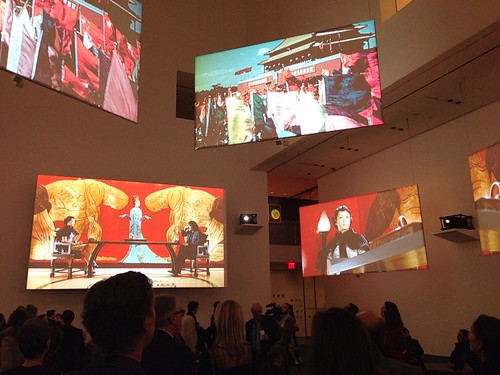
Isaac Julien's "Ten Thousand Waves" preview at MoMA
Isaac Julien's "Ten Thousand Waves" at MoMa
Isaac Julien's "Ten Thousand Waves" preview at MoMA
Isaac Julien's "Ten Thousand Waves" at MoMa
Isaac Julien's "Ten Thousand Waves" preview at MoMA
Isaac Julien's "Ten Thousand Waves" at MoMa
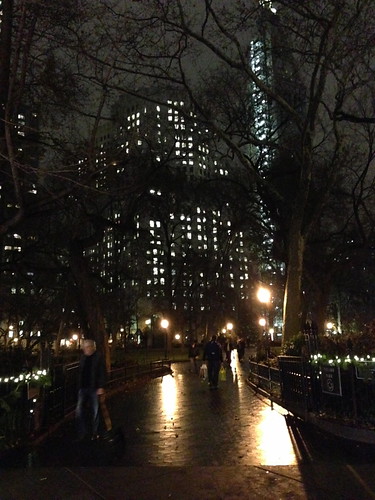
Madison Square Park at night
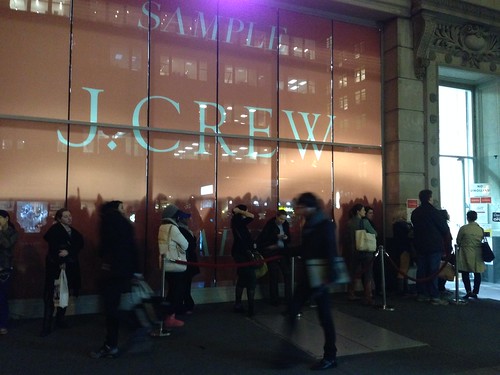
The line outside J. Crew's sample sale
J. Crew sample sale
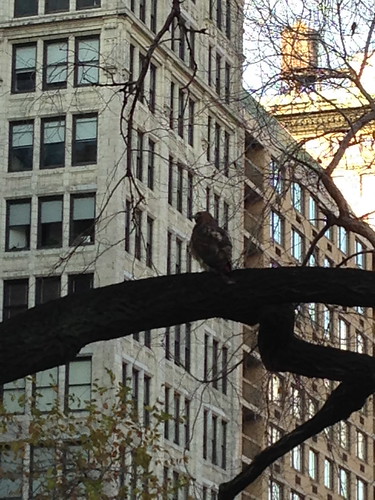
A hawk, Union Square Park
Hawk, in Union Square
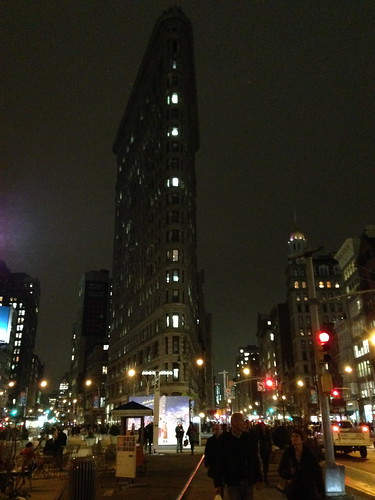
The prowlike Flatiron Building
The Flatiron, like a prow in the night
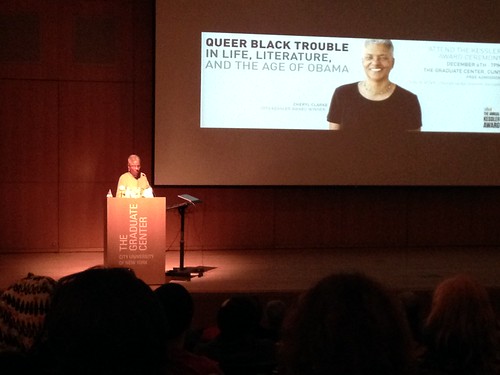
Cheryl Clarke, delivering this year's CLAGS Kessler lecture
Cheryl Clarke, this year's CLAGS
Kessler Lecturer and honoree
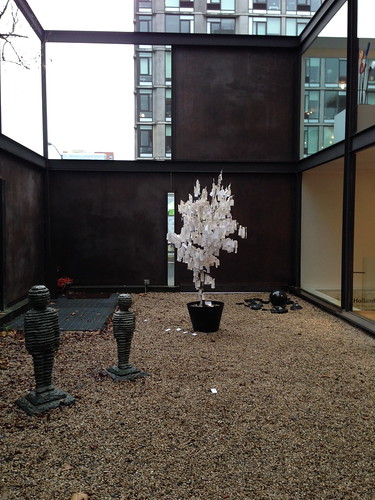
Yoko Ono's Wish Tree, Chelsea
Yoko Ono's Wish Tree, in Chelsea
Yoko Ono's Wish Tree, Chelsea
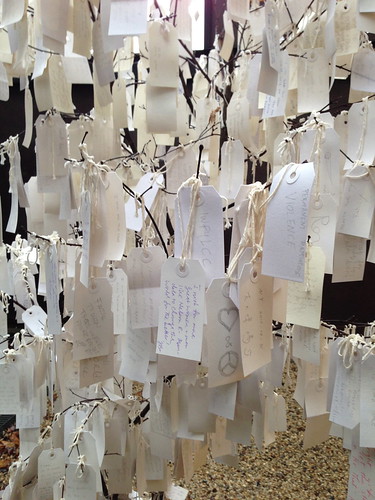
Ono's Wish Tree, up close

Saturday, January 14, 2012

Oh No, the Snow

Classes are entering their third week, but it feels like three months have passed already, and the spring temperatures that popped up for a few days didn't help; I really began to think I should be expecting final revisions on short stories and final critical papers because of the balmier temperatures and people scooting through the streets in shorts and flipflops (!), but a reality check came swiftly enough with the snowfall two days ago.  It began while I was holding office hours, and by the time I left campus, the streets were so treacherous--and my old little car so unroadworthy--that I found myself slowly spinning out on the icy slush just yards after crossing from Evanston into Chicago.  It was as if I were 6 years old and skidding around Steinberg Skating Rink in Forest Park, except that instead of an overcoat, mittens and a wool hat I was wearing a ton of metal and plastic, and instead of other novice and skilled skaters around me I was surrounded by fast-moving missiles, and instead of wooden walls I needed to avoid smashing into trees and lampposts. I was driving very slowly, there wasn't a lot of traffic, I knew to turn into the skid, and I'm fine, but I drove the whole rest of the way home praying that I stayed on the road as opposed to skating off it, or cursing the mayor, Rahm Emanuel, whose salt trucks had apparently not yet reached the far northeast corner of the city.

It wasn't much better on Friday morning as I headed back north to teach. From my front window I could see the main road had been plowed (or at least salted and driven enough to appear passable), and thought, well, why stumble over to the El, which takes forever and would mean standing in the cold, waiting to transfer to the Evanston trains in the cold, and then standing in the packed cocoon for 4-5 stops only to have to trundle back out into the cold and snow to reach class. (I say all of this despite being, as regular J's Theater readers know, a devoted fan of public transportation.) So I thought, why not drive? My car slumbered in its usual post-storm sarcophagus, so I dug it out, and all was going well until I crossed into Evanston and discovered that the salting had stopped at the Chicago border; the northbound lanes were paved with icy slush, and it again was like skating as carefully as possible to get to my destination. Let it suffice to say that 1) I got to class on time; 2) I was able to get home in one piece; and 3) though I cannot afford a new used car, I seriously considered getting one that has four-wheel drive, or something to make the driving experience in this kind of weather more...safe. Last night the temperatures fell to about 0F (according to NPR, it was already -5F without the windchill in the suburbs), and I did not dare venture out.

Today it's very cold (20F) but sunny. More snow is allegedly on its way tonight and tomorrow, though we're also supposed to get warmer temperatures, as in the high 30s too, and perhaps even rain. Cold but clear days and nights, or cold but non-icy rain I'll take any day over snow and slush, especially if there's any possibility I'll have to drive in it. Here are some pictures of the snow, which always looks pretty if you don't have to be in it!

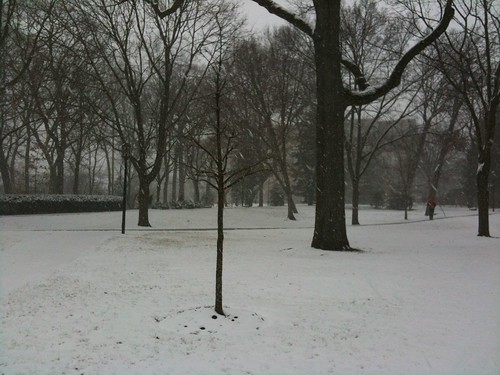
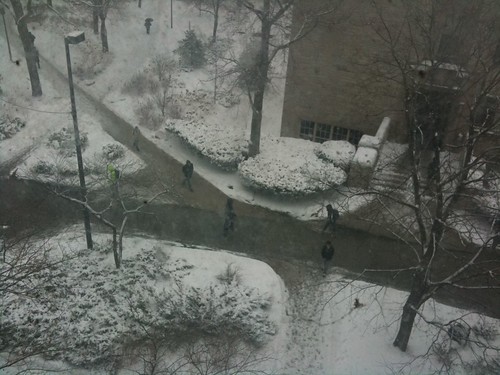
On campus, as the snow began falling
The campus, as the snow began falling

During the snowstorm
The street, in the midst of the snowstorm

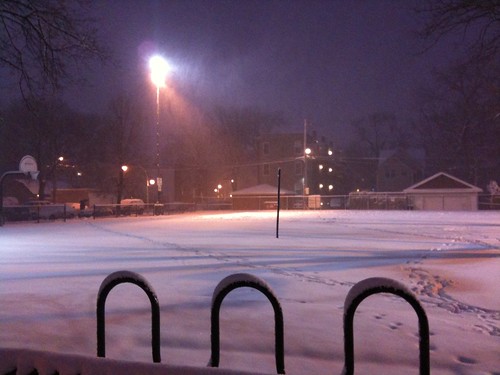
The local playground, in the snow
The local playground, in the snowfall


Walking to the store, Chicago
The street, heading east towards the lake

Snow falling
A pretty night scene in Rogers Park


Monday, January 10, 2011

Snow (Again) + The Attempted Assassination of Rep. Gabrielle Giffords

photoSnow, snow, everywhere snow. Or at least it feels like I'm trailing or it's trailing me here in Chicago. It wasn't snowing in Los Angeles, which I just returned from a few days ago, but it was chilly, though I can't complain because a little chill in the air is better than sliding across icy roadways as snow pour down from an infinite white sky. That was my experience this morning on the way to my first class. But I got there, and am now hoping that the snow here decides to trail off, soon.

***

I am not going to try to diagnose Jared Lee Loughner or offer some overarching rationale for why this past Saturday this 22-year-old evidently disturbed man attempted to assassinate US Representative (D-AZ) Gabrielle Giffords, who is now in critical care and still fighting for her life, though it increasingly appears as though she will make a strong recovery.  In his attempt to kill her he went on a rampage, murdering her aide, Gabe Zimmerman, 30; Federal judge John Roll, 63; Christina Taylor Green, a 9-year-old girl born on September 11, 200l, who was deeply interested in governmental affairs; Dorothy Murray, 76; Dorwin Stoddard, 76; and Phyllis Scheck, 79. He also wounded a number of other bystanders, making January 8th one of the most tragic days in 2011 America.

One thing that made this crime possible is the easily availability of semiautomatic weapons, such as the Glock that Loughner apparently was able to acquire without any problems.  Another, that many across the Net have pointed, is the extremist rhetoric that is now so common, though I would suggest that pointing to this backdrop does not mean that I am drawing a direct link and, as I've seen some do, I'd add that not forget such rhetoric isn't new in American history and that as recently as the 1990s not only was such rhetoric in wide circulation, but there was surge in private militias, attacks targeting racial, ethnic, sexual and religious minorities, and spectacularly horrific acts like the Oklahoma City Bombing, which killed over 100 people, occurred in 1995.

Let me make two micro points about rhetoric and discourse. First, rhetoric, one of the oldest aspects of verbal exchange (it precedes written language), is meant to have psychophysical effects. The way that one speaks can shape the way others act. This is why orators going back thousands of years were trained in the art of rhetoric. To speak of "rhetoric," even in its degraded contemporary form, then, is to speak of language with the potential make people think and act. We remember the best rhetoric: "Four score and seven years...," "Ask not what your country can do for you, but what you can do for your country," "I have a dream..." Second, anyone who has passed through or even near a lit crit class in the last 35 years has learned a little bit about "discourse," primarily via Foucault and his adepts. One lesson anyone who has paid attention learns (and I'm simplifying radically here) is that society, and people in society, change and are changed not simply by individual acts, history, material culture, etc., but also by the discourse that circulates--the language, the ideas, the memes, etc.--throughout an era in any given time. It shapes what people say, think, do, create, and so on. Foucault took the idea in very important and sometimes controversial directions, but it is now pretty much a given, at least in contemporary humanities scholarship, that discursive production, is something always to consider.

I thus do believe this extremist rhetoric and its discursive effects, aided and abetted by fanatics employing the media new and old, have increased, as has the failure of many in the corporate media, or in the upper reaches of the political left even to make any effort to counter it.  I also believe that the "eliminationist rhetoric" in particular, which New York Times columnist Paul Krugman wrote about on Monday, from politicians no less, is perhaps more prominent.  Yet let me make clear that I am not saying there is a direct causational link between the crazy ranting and the crazy acts. One of the tricks I've noticed online over the past few days is people on the right citing President Obama's "if they bring a knife, we bring a  gun" remark as a counterweight, missing the point that this is an old saw, composed of two metonyms and defensive in its meaning, as opposed to a direct offensive call for violence against opponents, or for revolutionary violence (Sharron Angle's "Second Amendment" solutions), etc.

Thursday, December 09, 2010

GOP Trifecta Today + Super R-Type Event @ Green Lantern Gallery

The 2008 candidates' tax cut plans
Because of the high risk of incivility ("be civil" a friend sometimes reminds), I have refrained for some time from posting political commentary on here, saving that for short bursts on Twitter or other channels, but I must say, the GOP hit the foulest trifecta today: they killed a Senate vote to repeal Don't Ask Don't Tell, they defeated a Senate bill to provide funding for 9/11 first responders, and they forced the Senate Majority Leader to table the DREAM Act.

On top of this, I listened to "reasonable" Republican Senator Lamar Alexander of Tennessee tell his NPR interlocutor that not only did the country need not worry about the huge deficit-increasing effects of the Bush-GOP tax cut gimmicry overall ($4 trillion to the Treasury over the next decade), which was going to magically create jobs after having not done so for ten years, nor worry about the effects just of the cuts for billionaires ($700 million), but in fact, any future attempt to reset the tax rates to Clinton levels (which were quite low) or any other higher level would amount to "the largest tax increase in history."

You heard that--"the largest tax increase in history"--it's going to be trotted out like a sick show pony over and over and over as soon as the time is right.

On top of this, the payroll tax cut will reset in a year, meaning it either will be kept low, starving Social Security's trust fund or raised and labeled a "tax increase." Mind you, they are going to use these both to bash the Democrats' heads in throughout 2012. I need not say who is going to suffer the worst as a result of this, but he currently occupies 1600 Pennsylvania Avenue. But what can you do, he's beyond listening or reasoning, it appears. I asked the question a while ago: when did this president become a self-identified "Blue Dog," and did anyone else realize we were putting a Republican in the White House?

***

Tonight I ventured out briefly into the cold and snow (it's on again) to catch the second (and last?) in the Super R-Type word-based art series, curated by a d jameson at the Green Lantern Gallery's The Corpse Performance Space, in Ukrainian Village. (Some Chicago neighborhoods have such vivid names.) The lineup included painter and graphic artist Keiler Roberts, School of the Art Institute student Hyojin An, and poets Amira Hanafi and (publisher) Rachel Araujo. Roberts narrated a tour through her witty and engaging autobiographically based graphic work, which she said she turned to after years as a more conventional painter, though she did say that she still painted and drew. Her husband (and daughter, then still on the way) made an appearance in the works, which I plan to check out. One aspect of her work that I particularly liked was her use of blogs as creative devices to enable kinds of word-text pairings that are not that possible otherwise, and it intrigued me to think about these projects (she has started 2-3 blogs, from what I can tell) in relation to her graphic work/comics.

Hyojin An, a native of Korea, devised pictograms as a means of dealing with her struggles with the English language and American signage. These were humorous but also underlined how even knowledge of a second language, in written form, can prove baffling given the complexities of idiomaticity, conventional and everyday usage, and so on. In the second project she displayed, she had created large quasi-ID statements saying on the top half, "I, ________, am [ ] a foreigner here in _____", and on the bottom half allowing the self-identifier to write whatever she or he wanted, especially in her or his native language. She mentioned that she took photos not only in Chicago, but overseas (I think she said Singapore, but perhaps also South Korea). Though I did think immediately of similar projects based on self-identification, both formal and more contingent and popular (the sorts of quickly drawn up IDs people have used, for example, on Chatroulette or other sites), I enjoyed hearing her talk through how she had come up with this project. She invited us to come create one, but I wasn't feeling so ready to do so. You can download them from her site, though. One other fun and funny project An created was a Facebook profile for "Foreign Er": do visit it to review it for yourself.

Concluding the evening and event were Hanafi and Gontijo Araujo, who read together and in complementary fashion. Hanafi's project derived from culling Oxford English Dictionary entries related to "fucking," while Gontijo Araujo's selections were drawn from her interest in human anatomy and her conceptualization of what might happen if one's right brain somehow ended up in one's crotch.  They did create a dialogue that did raise the heat, especially Gontijo Araujo's pieces, though both were less graphic--in the sexual sense--than I thought they might be.  But then, had they were not allowed to project the old porno film clips, taken from the waiting rooms in Parisian brothels of an earlier era, that they had wanted onto the screen, but the gallery's picture glass front posed too much of a vice-squad risk. (Daley's Chicago is pretty liberal, but not that liberal, especially outside of certain neighborhoods.) Not even the falling snow provided enough cover. It did, however, make driving back north treacherous, and yet I'm here posting this, so I got my dose of mind food and it all worked out in the end.

Sunday, February 07, 2010

s(NO)w + Art (Free) + Rogers Park ≠ Hipsterville + Klein/Agbodji Rule NYC + Super Bowl Prediction

Chicago, I'm glad to say, did not suffer the Snowpocalypse. Or "Snowmageddon," I should say. It's cold, but it's always cold in the winter. The sidewalks are paved with ice, but people here frequently don't shovel or salt the walkways in front of their homes (as people in New Jersey do), perhaps in the belief that they will not be sued if someone took a violent spill on the glassy lake stretching the length of their easements (perhaps New Jerseyans are more litigious?). There's residual snow from earlier in the week, but there always appears to be residual snow, even when the sun finally appears and the temperatures rise above freezing. It's just the way things are. It also didn't snow in New York, which was supposed to be buried alive. Instead, I imagine, people went about their business, and laughed once again at the frenzied excitement of the local media. Washington, DC, and Philadelphia, and parts in between and south do appear to have received the snow gift, though. The photos of Washington in particular look really beautiful.

˘ ˘ ˘

Since it a snowless Saturday, and it's free admission all month to the Art Institute of Chicago, I hopped on the El (which is now $2.25) and traveled down there. I was very glad to see that many Chicagoans, including many brown and black ones, were also taking advantage of the free admission; it was packed. I hadn't seen the new Renzo Piano extension, which sits behind the famous Michigan Avenue Beaux Arts façade, but it really is impressive, airy, bursting with light, easy to navigate, and almost cinematographic in the dramatic views it offers of Daley Millennium Park. It also serves the art well, at least to my eye, an impression which the smaller crowds in the contemporary galleries only heightened.
Yves Tanguy's "Untitled"(screen), 1928

On this trip, I decided to drift forward through the museum to see what I might come across. My first stops were at the architectural artifacts from historic Chicago, which included various pediments, spandrels, caryatids, gratings, and so forth, from buildings by important Chicago architects like Dankmar Adler, Louis Sullivan, and Frank Lloyd Wright. I found myself repeatedly impressed by the workmanship and intricacy, the delicacy and beauty, of many of these pieces, especially those by Wright, who was, as I need not tell anyone, a visionary. From there, I kept walking forward, into what turned out to the 1800-1900 European art galleries, which included furniture and other material artifacts, as well as many of the Museum's best and widely known treasures. I must say, it's one thing to see reproductions of Gustave Caillebotte's iconic 1877 painting "Paris Street, Rainy Day," or Georges Seurat's giant masterwork, "A Sunday on la Grand Jatte - 1884" (1884-86), for example, or Monet's various later paintings, such as the ones in London, or the haystacks, or the water lilies at Giverny, but it's another thing altogether to be able to look closely and deeply at them, to engage them and truly take them in, at length. Time really does fall away, and some opens up in the encounter, the exchange.

Sunday, December 20, 2009

Snowpocalypse + Geoffrey Jacques New Book + Odds & Ends

The snowpocalypse came and...there's a lot of snow. Yet the world, including that part of the world here in the northeastern US, still exists. I admit to being inured to both the cold and snow after so many winters spent in Chicago, where you really do get cold weather (it was 7-11°F just a few days ago when I was there, which is cold) and lots of snow, including weeks on end of snow (was it last winter or the one before where the snowfalls seemed to stretch on indefinitely?). So it's been a bit humoring to watch the frenzy around this northeaster. Every TV and radio pronouncement seems to require an exclamation point. C, like many people on Twitter, reported to me on the hurlyburly at the supermarket and the home improvement stores. The local airports have shut down all flights, and some people have been stranded for 24 hours or more. Even bus service has been suspended, leaving only that 19th century technology, the train, for non-auto intercity travel. Because of the snow! And yet last night, when I went over to New York City for an event, quite a few people were out and about, walking through the swirling and shifting drifts, thronging the lower level of the Apple Store on 14th St., bustling up 7th Avenue and down Christopher. They obviously hadn't gotten the panic-stay inside-fret for the end of life as we know it memo. Today we shoveled and salted the front and the walk, and by midday, despite the sliver of sunlight, the sidewalk and roadways were visible. In the backyard a splendor of birds, one as red as a poppy, another with a flaming orange beak and breast-feathers, settled temporarily in the leafless lilac, before scattering about the yard. And the pride of cats that calls our backyard home remained unseen, though their tracks dotted the white quilt that stretched from the back porch to the wall at yard's end. The snowpocalypse arrived, and life goes on. As I tweeted earlier today, for today's #snowpoem:

Under its white quilt
the frozen street lies silent
indoors we watch films

===

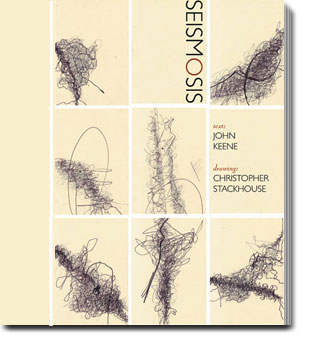
Last night, as I mentioned, I ventured over to Manhattan, despite the snowstorm, to attend a book launch party for poet and critic Geoffrey Jacques at the Skoto Gallery in Chelsea. Geoffrey, who provided the afterword for Chris Stackhouse's and my book, Seismosis (1913 Press), has just published his first critical study, A Change in the Weather: Modernist Imagination, African-American Imaginary (U. Mass Press, 2009), an exciting and penetrating, carefully historicized and argued exploration of some of the previously underexamined sources of translatlantic Modernism. One of the book's many insights is its discussion of the effects of black urban geographic distribution on Modernist poetics; as Geoffrey and I discussed last night when talking about the figure via whom I first learned about Geoffrey (because of his incisive critique in the Threepenny Review), Wallace Stevens, in addition to all the bright colors, the exotic place names, the unusual terminology, there are also lots of Negroes in his poems. Lots. Geoffrey unpacks this presence, these presences--he said that that letter in the literary journal, which Tom Ellis pointed out to me years ago, was the starting point--across a range of authors and works, while also tracing the influence of other popular and expressive cultural genres and forms such as
blackface minstrelsy, ragtime, advertising, vaudeville, and Tin Pan Alley. Geoffrey even got an opportunity to school me a bit more on Stevens as "aesthete," and his relation to Victorian predecessor A. E. Housman. Without question A Change in the Weather is a book worth diving into, as soon as you can, and also check out Geoffrey's collections of poetry, including Just for a Thrill (Wayne State University Press).
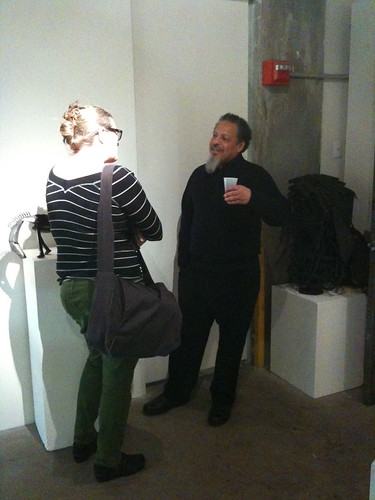
Poet & critic Geoffrey Jacques
Geoffrey Jacques (at right) and a friend
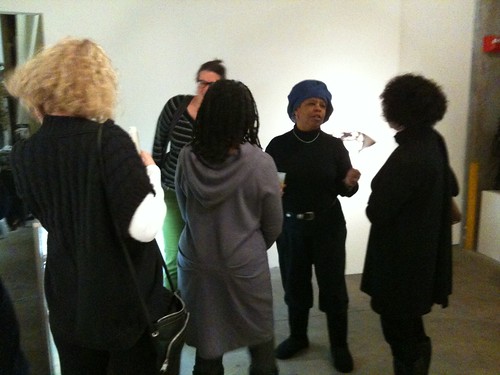
At Geoffrey Jacques' book party
Book party attendees

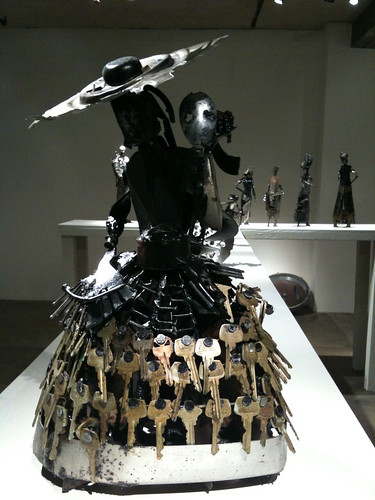
On display at the gallery were sculptures and 3-D drawings in metal by Nigerian artist Olu Amoda. I was only able to chat with him briefly, but he explained a few things about his work, which he creates from found objects in Lagos, where he has been working since the early 1980s. He also talked about his process to me, noting his desire to go beyond "drawing" as it's traditionally understood, moving from the medium of paper and canvas into metal, various welders taking the place of pen and pencil. Adoma also described one set of 2-3 ft. figures as being inspired by Nobel laureate Wole Soyinka's famous play Death and the Horsemen; he suggested that instead of the usual relationship between humans and props, or sculptures as props, he wanted to animate the usually inanimate. The expressivity of his metal forms definitely gave them a sense of movement, and liveliness.
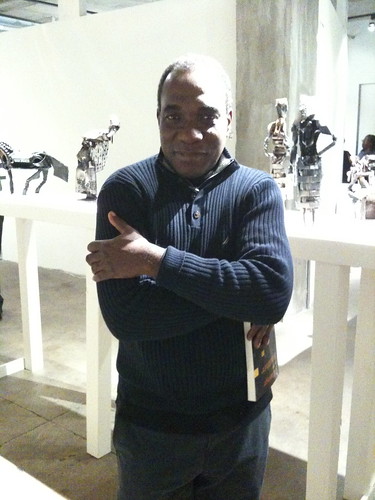
Nigerian artist Olu Amoda
Olu Amoda
Olu Amoda sculpture
One of Amoda's sculptures, from the Death and the Horseman series
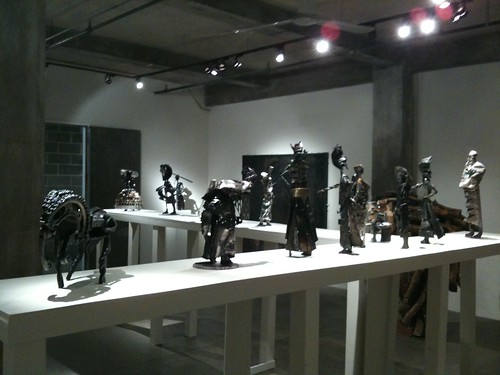
Olu Amoda sculptures at Skoto Gallery
The Death and the Horseman series
Olu Amoda drawing, in and on metal
One of Amoda's drawings, on/in metal
In Chelsea, during the snowstorm
Chelsea street (W. 20th St.), during the snowstorm

===

On another note, I've got so much catching up to do. First, congratulations to Washington, DC's City Council, led by Republican David Catania, for passing a same-sex marriage bill and for having a mayor, Adrian Fenty, willing and eager to sign it. As conservative as Southern-influenced Washington can sometimes be compared to other parts of the East Coast, let alone the rest of the country, but not always. This was a particularly hopeful sign in light of the collapse of the marriage equality push in New York State earlier this month, the horrible reversal in Maine, and the ongoing intransigence of the Obama administration and Democratic-controlled Congress to repeal hateful laws and policies like Don't Ask, Don't Tell (DADT) and the Defense of Marriage Act (DOMA), and to pass the Employment Non-Description Act (ENDA). Now, on this issue at least, DC must become a beacon casting its light north, south, east, and west.

I also have been meaning to note the passing in November of Jeanne-Claude, legendary partner of and co-artist, for over half a century, with the equally legendary Christo. It was their spectacle in orange, in New York's Central Park, the sublime (to me) and crowd-pleasing "The Gates," with which I inaugurated this blog back in February 2005. (Actually Jay Wright and Rainer Rilke came first, but should that be a surprise?) That blogging moment feels like a lifetime ago, but the drama surrounding the installation, and then the anticipation and subsequent experience of heading uptown and walking through the series of sunset-brilliant standards, is quite vivid. That was only one of Jeanne-Claude and Christo's public triumphs; they also famously, or notoriously depending upon your perspective, wrapped an atoll and Berlin's Reichstag building, among many other structures, natural and manmade, in plastic; erected umbrellas in California; and raised an "Iron Curtain" on a Paris street. Christo plans to continue their ongoing projects, and it wasn't until well into their careers that Jeanne-Claude was credited with her central role in their projects, but thankfully she was, and together she and he pushed the boundaries of public and conceptual art and sculpture while also devising new and interesting means of political expression. Jeanne-Claude's vision and savvy, so key to Christo's, will be missed.

Nielsen has announced the immediate closing of media watchdog Editor & Publisher, and, personally more devastatingly to me, Kirkus Reviews. Librarians and bookstores will probably lament the latter shuttering, while quite a few authors, slammed in the pages of Kirkus, may not. I personally had a very positive experience with the publication; it gave Annotations one of its first reviews, a very laudatory one at that, that appeared to set the tone for all the ones that followed in the first months after the book hit the shelves. My publisher was both amazed and pleased beyond belief--or relief, perhaps. But beyond my personal experience, it's important to note that the loss of yet another major book reviewing organ can only be viewed as a loss for contemporary American letters and publishing. As fine as so many of the online review publications are, none has the history or scope of publications like Kirkus. What are we to do, though? Perhaps a not-for-profit is the way to go. Will a consortium of wealthy authors (Tom Clancy? John Grisham? Terry McMillan?) bankroll its establishment? How then to keep it in print? What would a sustainable model look like? These are pressing questions every author should be thinking about.

==

The Senate Democrats are finally set to pass a severely weakened version of health care reform legislation. It's shorn of a public option, of a Medicare buy-in, of a drug reimportation measure, and of several other features that President Barack Obama promised during his 2007-8 campaign; it does, however, have restrictive anti-abortion and anti-immigrant language, weakened subsidies, and a funding mechanism tied not to increased taxes on the rich but on so-called "Cadillac" plans, and, worst of all, the very mandate that Obama decried in Hillary Clinton's and John Edwards' plans. It will thus deliver 30 million new customers, at penalty of fine and under financial duress, to the health insurance, pharmaceutical, hospital, and medical device companies. This is not what Obama and the Democrats promised last year, nor what they were elected to deliver, and yet progressives are being urged--when not being insultingly called "insane" or "batsh*t crazy"--to swallow our desire for a fight and a superior bill, and support this dreck. In the Senate, they'll probably do it, and it'll probably also happen in the House with minimal adjustment, despite Speaker Nancy Pelosi's own promises, meaning this train-wreck a bill will become law. The president, who has cut deals with health care lobbyists (cf. Tom Daschle, among others) and Big PhrMa, are determined to sign whatever crosses his desk, no matter how awful.

One of the few contemporary journalists I trust, Nobel laureate economist and opinion columnist and blogger Paul Krugman, says that this bill will be better than nothing, and can serve as a beginning step in reforming health care, but even he agrees that it could be a lot better. Much better. Journalist Matt Taibbi, however, says, in concert with former DNC chairman and physician Howard Dean, that the Democrats ought to scrap this crap and produce a better bill via reconciliation. But Senate Majority Leader Harry Reid refuses to go this route, and the Washington Village consensus* is that it can't be done. (Why?) So this mess, opposed by all 40 Senate Republicans despite Obama's endless conciliation and machinations--for them to serve as cover?--is probably going to pass. And the Democrats could pay a serious electoral price in 2010.

Ultimately, I think Krugman is right that the longterm effects will be positive even if they don't address some of the key structural problems with our health insurance system (such as the for-profit motive that's a major source of the steadily rising costs), but if Obama keeps screwing up and following Bill Clinton's playbook of moving further to the right and slamming the Left base, we could end up with a GOP Congress and, worse, a real Republican in the White House in 2012. Perhaps Obama and the Democrats will wake up before then instead of reverting, as always, to their neoliberal, corporatist, Third Way default policies. If neither does, Lord help us, because though we know we can live under GOP misrule, the next iteration will only be that much worse.

*Nate Silver also says it'd be difficult, calling reconciliation an "insidious myth." Well okie dokey!

Saturday, December 19, 2009

Poems: Claude McKay, Emily Dickinson, Issa + Snow Poems

In expectation of the snowmageddon to come, I got to thinking about poems about snow or in which snow, snowfalls, snowflakes, snowstorms, and the like, play a key role, as a central image, as a metaphor or simile, to serve as frame, and so on, and so here's a poem that's probably not read or discussed that often, in double sonnet form, by Claude McKay (1890-1948), "The Snow Fairy," from his 1922 collection, Harlem Shadows. The snow here both serves as a metaphor for loss, despite its beauty, and also sets the stage for melancholy; the lyric voice is reminiscing about a lover who, as temporarily as those "snow fairies," magically brought a bit of "summer" along, joining the lyric speaker in his bed, before departing at dawn, evanescent as snow (or any season, winter or summer) itself. McKay writes many poems like these, though I don't think he's known for them, but they are treasures nevertheless. And so:

The Snow Fairy

I

Throughout the afternoon I watched them there,
Snow-fairies falling, falling from the sky,
Whirling fantastic in the misty air,
Contending fierce for space supremacy.
And they flew down a mightier force at night,
As though in heaven there was revolt and riot,
And they, frail things had taken panic flight
Down to the calm earth seeking peace and quiet.
I went to bed and rose at early dawn
To see them huddled together in a heap,
Each merged into the other upon the lawn,
Worn out by the sharp struggle, fast asleep.
The sun shone brightly on them half the day,
By night they stealthily had stol'n away.


II

And suddenly my thoughts then turned to you
Who came to me upon a winter's night,
When snow-sprites round my attic window flew,
Your hair disheveled, eyes aglow with light.
My heart was like the weather when you came,
The wanton winds were blowing loud and long;
But you, with joy and passion all aflame,
You danced and sang a lilting summer song.
I made room for you in my little bed,
Took covers from the closet fresh and warm,
A downful pillow for your scented head,
And lay down with you resting in my arm.
You went with Dawn. You left me ere the day,
The lonely actor of a dreamy play.


Copyright © Claude McKay, 2009. All rights reserved.

That got me thinking about other poems in which snow, winter, and so forth figure centrally. Of course I have already posted Wallace Stevens's sublime "The Snow Man" on this blog (back in April 2007). What are some others? I got to thinking, and tweeted the following, creating (I gather) a new hashtag, #snowpoems, in the process. I even posted a haiku to get things going.

White christmas dreams, fears
of the snowflakes that will come
wanting to remain

When in doubt, haiku. So far, though, solo. (Though Nic P. did retweet the haiku--thanks Nic!) If you're on Twitter, add to the list, please!
McKay's poem made me recall one of Emily Dickinson's (1830-1886) gems, Poem 1669, "In snow thou comest," with its drumtight use of metaphor, allusion, prosody, music. The figure addressed here is winter itself, as a means for talking about life:

In snow thou comest --
Thou shalt go with the resuming ground,
The sweet derision of the crow,
And Glee's advancing sound.

In fear thou comest --
Thou shalt go at such a gait of joy
That man anew embark to live
Upon the depth of thee.

Here's another, by the great (Kobayashi) Issa [小林一茶](1763-1828), which uses a sign of winter's (possibly temporary) departure, metonymically, as a springboard to depict life and its possibilities:

The snow is melting
and the village is flooded
with children.
So what are some other "snow" poems? Among the most famous in American literature, of course, is:

Robert Frost, "Stopping by Woods on a Snowy Evening"

And:

Guillaume Apollinaire, "La blanche neige"
Francisco X. Alarcón, "Iguanas in the Snow"
A.R. Ammons, "I Come In From the Snowy World"
John Ashbery, "What Is Poetry?"
Emily Dickinson, "Snow flakes"
Rita Dove, "The Snow King"
Ralph Waldo Emerson, "The Snow-Storm"
Anne Hébert, "La neige"
Nizam Hikmet, "It snows in the night"
Denise Levertov, "Praise Wet Snow Falling Early"
Edna St. Vincent Millay, "The Snow Storm"
Gabriela Mistral, "Mientras baja la nieve"
Eugenio Montale, "Here is the sign"
Quincy Troupe, "Snow and Ice"
Walt Whitman, "To a Locomotive in Winter"

What are some that come to your mind? Let me know and I'll add them to the list.