Showing posts with label soccer. Show all posts

Saturday, July 07, 2018

FIFA World Cup Photos & Faces

UPDATE: France wins the 2018 FIFA World Cup in Russia, defeating Croatia 4-2 on an own goal by Croatia's Mario Mandzukic (18') , a penalty kick by Antonine Griezmann (38')and two beautiful goals by Paul Pogba (59') and Kylian Mbappé (65'). Croatia's goals were by Ivan Perisic (28') and Mandzukic (69'), who leapt on a major snafu by France's goalkeeper Hugo Lloris. Croatia dominated the game from start to finish, but France pounced on several chances it got, ensuring itself a championship and giving fans a glimpse of the immense talent the team possessed this year, and will have for a few more World Cups to come.

***

In past years I've provided some imagery to illustrate the World Cup and other major sports competitions (rugby!), so here are a few more photos from the matches. Enjoy!

Dylan Bronn (TUN) trapping the
ball while facing Dele Alli (ENG),
Group G match, Volgograd, June 18, 2018
(Ryan Pierse/Getty Images Europe)
England's players (Lingard, Maguire, Sterling,
Alli, Trippier, Kane) walk out for second half
vs. Sweden, July 7, 2018, in Samara
(Alex Morton/Getty Images Europe)
Midfield Kylian Mbappé before France's
game with Uruguay, July 6, 2018
(Getty Images)
Samuel Umtiti (FRA) battling Paolo Guerrero (PER)
for the ball, June 21, 2018
(Laurence Griffiths/Getty Images Europe)
Nacer Chadli (BEL) tries to control the ball
while facing off against Gabriel Jesus (BRA),
July 6, 2018, in Kazan (Kevin C. Cox/Getty Images Europe)
Brazilian players showing dejection after Belgium
goes up 1-0 off Fernandinho's own goal
(l-r Gabriel Jesus, Alisson, Thiago Silva, Fernandinho,
Marcelo, Miranda, Paulinho, Willian), July 6, 2018,
Kazan (Kevin C. Cox/Getty Images Europe)
Nigeria's Bryan Idowu, John Obi Mikel and
Oghenekaro Etebo rush to protect the goal
against Argentinian supestar Lionel Messi
in Nigeria's Group D match against Argentina
in Saint Petersburg, June 26, 2018
(Francois Nel/Getty World Images)
Philippe Coutinho (BRA), on the right, races
to keep Romelu Lukaku (BEL) from controlling
the ball, July 6, 2018, in Kazan
(Catherine Ivill/Getty Images Europe) 
Belgian star Romelu Lukaku embraces French former
World Cup champion player and superstar Thierry
Henry, Belgium's assistant coach, after defeating
Brazil in Kazan, July 6, 2018
(Catherine Ivill/Getty Images Europe)
Bryan Idowu (left) and Alex Iwobi (middle) of Nigeria
try to keep Croatia's Luka Modric from reaching the ball
in the Group D match between Nigeria and Croatia,
Kaliningrad, June 16, 2018 (Francois Nel/Getty Images Europe)
Hector Herrara, Jonathan Dos Santos and Hirving Lozano
after their loss to Brazil, July 2, 2018, Samara
(Matthias Hangston/Getty Images Europe)


Cristiano Ronaldo reacting during Portugal's match
against Uruguay, June 30, 2018, in Sochi
(Julian Finney/Getty Images Europe)

Friday, July 06, 2018

2018 FIFA World Cup in Russia

UPDATE 2: France wins the 2018 FIFA World Cup in Russia, defeating Croatia 4-2 on an own goal by Croatia's Mario Mandzukic (18') , a penalty kick by Antonine Griezmann (38')and two beautiful goals by Paul Pogba (59') and Kylian Mbappé (65'). Croatia's goals were by Ivan Perisic (28') and Mandzukic (69'), who leapt on a major snafu by France's goalkeeper Hugo Lloris. Croatia dominated the game from start to finish, but France pounced on several chances it got, ensuring itself a championship and giving fans a glimpse of the immense talent the team possessed this year, and will have for a few more World Cups to come.

***

UPDATE: England won their match against Sweden 2-0, so the quarterfinals are nearly set: France against Belgium, and England vs. Croatia, which went down to the wire, i.e., penalty kicks, against the wily Russian team!

France's Kylian Mbappé (right) controls the ball
against pressure from Uruguay's Lucas Torreira
(AFP)
As we near the end of the first week of July, the major tournament, the 2018 version of the FIFA World Cup, for the world's reputedly most popular sport, soccer--or (association) football outside the US--also approaches its end. Taking place across the vast nation of Russia, it has been a smoothly run and mostly scandal-free set of matches thus far, beginning with the opening group games that pitted 4 teams each against each other to decide who would advance to the knockout round. Although there were questions about Russia's efforts to secure the World Cup, much akin to previous financial controversies that have plagued FIFA, this World Cup has run perhaps more smoothly than the 2014 Winter Olympics in Sochi, which seemed to be in danger of featuring unfinished venues and the target of potential attacks right up to the moment when they went off without a hitch, or the 2014 edition in Brazil, which unfolded as the country was entering a several economic crisis.

Antoine Griezmann & Kylian Mbappé of France
(TASS via Getty Images)
For the first time in several World Cup meetings, the United States did not qualify, but neither did a few of the world's perennial soccer powers, including 4-time (1934, 1938, 1982, 2006) prior winner Italy, nor Chile or the Netherlands. FIFA's ranking tables included most of the entrants numerically, in descending order (skipping the teams that did not make it): Germany (1), Brazil (2), Belgium (3), Portugal (4), Argentina (5), Switzerland (6), France (7), Poland (8), Spain (10), Peru (11), Denmark (12), England (12), Uruguay (14), Mexico (15), Colombia (16), Croatia (20), Tunisia (21), Iceland (22), Costa Rica (23), Sweden (24), Senegal (27), Venezuela (33), Serbia (34), Australia (36), Iran (37), Morocco (41), Egypt (45), Nigeria (48), Panama (55), South Korea (57), Japan (61), Saudi Arabia (67), and host Russia (70). Fortunately for fans--well, soccer fans in general--the rankings often correlate to teams' presence in the World Cup, which they achieve by winning regional association matches, but they do not guarantee success at the World Cup.

A distraught Neymar Jr.,
after Brazil's loss to Belgium
(AFP/Getty Images)
In the first round matches, this World Cup provided a few shockers. First, in Group F, South Korea's and Mexico's victories over Germany knocked the top ranked team and the 2014 World Cup victor out of the tournament; other top ranked teams that failed to advance included Costa Rica, Peru, and Poland. First time participant Panama also was sent off the pitch, as were the scrappy footballers from Iceland, who became fan favorites in part because of the tiny size of their country compared to many of the other competitors, and the Super Eagles of Nigeria, who carried the hopes of their country and much of sub-Saharan Africa on their shoulders, but only finished with three points, or one win and two losses. (What was not known was that Nigeria's captain, Jon Mikel Obi, was playing the Argentina match while keeping silent about the fact that his father had been kidnapped in Nigeria and ransomed for $28,000; his father, thankfully, was released several days later.) On the other hand, standout teams were Uruguay, Croatia, and Belgium, Brazil, Denmark, and France all advanced to the knockout round, as did host Russia, which was in the weakest group, A, yet played quite well, amassing 8 goals, the second-most of the round, tying it with England, and playing with forceful enthusiasm. Both Spain and Portugal showed signs of vulnerability, yet both also went onwards to the round of 16. Argentina, with its superstar Lionel Messi, barely did so after tying Iceland, losing 3-0 to Croatia, and slipping past Nigeria 2-1.

Belgium's Kompany (in air at right),
heads the ball which ricochets off
Brazil's Fernandinho (17), for an own goal
(Frank Augstein/Associated Press)
The second round proved to offer more shockers; France dispatched Argentina 4-3 on two decisive goals by its 19-year-old shining light Kylian Mbappé, thus sending the Albiceste back to Buenos Aires,  perhaps concluding Messi's World Cup career. Uruguay beat Portugal, perhaps closing out the career of the Portuguese Selecção's world famous Cristiano Ronaldo. Belgium played a lethargic match against Japan, which shone for nearly the entire time, yet the Diables Rouges came back to send the better team packing with a stoppage time winner and 3-2 score. Mexico, another fan favorite, lost to Brazil 2-0, and up through this game, the Brazilians displayed their trademark jogo bonito, showing brilliance at times in their passing and footwork, though they did not seem to be as eager to score as some of their opponents. Another huge surprise with the large number--three--games decided by penalty kicks, which aided the lower-ranked Russia to knock off Spain 4-3 in PKs, which sent shockwaves through the stadium. England triumphed over Colombia 4-3 in PKs after its goalie's heroics, and Croatia, the tournament's sleeper team, defeated Denmark 3-2 in PKs after 1-1 score.
Colombia's Yerry Mina (13) celebrating with
teammate Dávinson Sánchez (23) after scoring
against Poland (Thanassis Stavrakis/AP)

We are now in the quarterfinals, and so far, France and Belgium are giving every sign of providing the side of the draw that will produce in the eventual victor. In France's case, in addition to Mbappé, its veteran goalkeeper Hugo Lloris has been stellar, and shut down an evenly matched Uruguayan team to preserve the 2-0 victory achieved by defender Raphaël Varane heading the ball in (on a beautiful pass by forward Antoine Griezmann) and by Griezmann on a pass by forward Corelin Tolisso. So evenly matched were the teams that both France and Uruguay took 11 shots, with 2 of les Blues on target vs. 4 from the Uruguayan side; each team had nearly the same number of fouls (17 for Uruguay, 15 for France); and each received 2 yellow cards. The difference was France's control of the ball, at 62% of the match, and the skill of its defense (Lucas Hernández, Samuel Umtiti, Varane, and Benjamin Pavard) in shutting down Uruguay's threats, while maximizing its few opportunities. Mbappé, Griezmann, Varane, Tolisso, and the rest of the French team constitute one of the best squads the country has fielded since its World Cup victory in 1998, and if they get past Belgium, they could and should win it all.

South Korean players (in red) in shock after defeating
Germany (in green) (Dylan Martinez/Reuters)
While Belgium played without brio against Japan, it came out in full force against Brazil, whose star, Neymar Jr., had begun to spur memes because of all of his histrionic diving and flopping around, though he was legitimately being pushed around during Brazil's opening match against Switzerland. The referees seemed to be averse to calling any penalties against Belgium whenever Neymar and his teammates ended up crumpled on the field, so Brazil would have to recalibrate and deploy its dazzling skill work to manufacture goals. Unfortunately, despite putting on a clinic in the first half, the Brazilian team could not seem to convert chances, and found itself down 2-0 on an own goal by defense Fernandinho, one of the goats of the 2014 tournament, offer a header by Belgian star Vincent Kompany, and a stunner by Kevin De Bruyne that Romelu Lukaku had set up. Brazil led in shots, 27-9, shots on target 9-3, in possession 59%-41%, and in corners 8-4, yet repeatedly failed to follow up on loose balls or potential scoring opportunities. Renato Augusto finally did score in the 76th minute on a pass from Philippe Coutinho, but it was too little, too late, and now the objectively best remaining team heads home. For its part, Belgium stretched Brazil's defense wide open enough on quick runs up field to create the opportunities that gave it the 2-0 lead, and looks to be a danger in the France game and if it heads to the finals. Brazil's exit was not as shameful as 2014, but once again, despite its impressive talent, the Seleção seemed less interested in winning than in putting on a show. The two, I hope someone reminds Brazil, are more than compatible and what many a soccer most wants to see.
Nigeria celebrate after scoring a penalty
kick against Argentina (Reuters)
The remaining match-ups, on the weaker side of the draw, are intriguing: both England and Sweden have played above their rankings,  but the Three Lions' squad has the edge in talent and defense, with the x-factor striker Harry Kane, who has been the team's standout player and converted a number of opportunities so far. It also has some of the better younger players in the tournament, chief among them midfielder Dele Alli, defender Harry Maguire and goalie Jordan Pickford. If England can stay on the attack and open up Sweden's defense, the game is theirs. Russia's host nation fairy-tale effect has taken it quite far (cf. the US, South Korea, France, etc. in past tournaments), but Croatia has shown itself to be of the best teams in the tournament and will put the home field Sbornaya to the test. The Blazers have played unflappably so far. Russia's play has been a bit heavy-handed, so one question will be whether the referees decide to call fouls and dole out yellow cards--or in some cases, red cards that should have come but remain in pocket--which they've seemed reluctant to, which could work in Russia's favor in knocking Croatia's scorers off their game. I should add that given the tensions now besetting the Russian-US relationship, and all of the mounting evidence in the alleged Trump-Russia criminal conspiracy, Croatia has my support in this match-up.

Brazil's players stretch Danilo during a training
session on July 3, 2018 (Andre Penner/AP)
A few final points I want to make are that at a time of increasing ethnonationalism across Europe and the US, as well as across the globe, it has been encouraging to witness once against the more racially and ethnically diverse "national" squads perform with aplomb, belying the discourse, promulgated by far-right and anti-immigration parties like the British National Party, Alliance for Germany, National Front, League of the North, etc., that cross-racial and ethnic diversity are a bad thing, that unity and cooperation, even temporary, is not possible and that their their teams are somehow weakened by "impurity." Former colonial and imperial powers France, Belgium and England (UK) would not be where there are in this tournament without their Black, Arab, and mixed-race players. There have been articles about the anger anti-immigration and white nationalist soccer fans have felt about the mixed-race cast of their teams, so it has been especially satisfying to see those teams--save Germany, which crashed out early--kick and shoot their way to the trophy. These teams' successes may be mostly symbolic, and does little to dismantle the underlying structures and systems that enable racism and white supremacy, nor do they provide any answers to the economic and political crises fueling the international migration flows, yet they do represent a publicly visible and global counterweight to the illiberal discourse that is increasingly sweeping across the West and other parts of the globe.

A victorious Belgium celebrate their
defeat of Brazil (AFP)
A second point is that the US, when it reappears in the World Cup, will have to overcome a considerable gulf in terms of coaching, development and skill levels to be competitive. This year's top teams, most European other than Brazil, have played with a sharpness I don't see the US yet able to achieve, but given the depth of US soccer talent, with the right coaching staff and the best players, the US could conceivably go as far as it dreams. The same is true for the African squads, and, as Japan displayed, Asia's best teams too, but between national developmental programs and the European leagues, European teams still have the advantage for the time being.

Tuesday, June 07, 2016

Copa América Centenário Soccer Tournament

US defender Deandre Yedlin
UPDATE: The US team, perhaps embarrassed by its sluggish opening game, showed up tonight with a completely different game plan. Playing with passion for 90 minutes, minimizing mistakes, and taking advantage of multiple opportunities, the US squad won by the astonishing score of 4-0 over Costa Rica, putting it in second place in Group A. 

The team secured goals by Clint Dempsey, who scored on a penalty kick; Jermaine Jones, who scored on a pass from Dempsey; Bobby Wood, on a set up by Michael Bradley; and substitute Graham Zusi, scored the fourth and final US goal. In defense, Brooks was particularly superb. The US's main weak point this game was Gyasi Zardes, who missed several key shots and passed a bit sloppily. But he did no real harm, and the US showed it could play superlative soccer. Now if only they can play even 3/4ths as well in their next three games, they could go deep into the tournament!

***

As Brazil staggers towards hosting its first Olympic Games, the first ever in South America, the USA is currently playing international athletics host itself, to national teams from across the Americas, for the Copa América Centenario. Established in 1916, the Copa América brings together the 10 teams from the South American Football Confederation (CONMEBOL), along with roughly 6 teams from other confederations, includingThe Confederation of North, Central America and Caribbean Association Football (CONCACAF), to which the US and Mexico both belong.

The tournament has been played on an irregular basis since its founding, with a four-year gap between the 2011 and 2015 meetings. Although the US has hosted the Summer and Winter Olympics many times and the World Cup just once, in 1994, this is its first time hosting the Copa América. Games have been scheduled for stadiums in Chicago, East Rutherford (NJ), Foxborough (MA), Glendale (AZ), Houston, Orlando, Pasadena (CA), Philadelphia, Santa Clara (CA), and Seattle. The Rose Bowl in Pasadena has the largest capacity, at 92, 542, while the smallest stadium is Orlando's Camping World Stadium at 60,219.

The sixteen competing squads are: Group A: Colombia, Costa Rica, Paraguay, and USA; Group B: Brazil, EcuadorHaiti, and Peru; Group C: Jamaica, Mexico, Uruguay, and Venezuela; and Group D: Argentina, Panama, Chile, and Bolivia.  Going into the tournament, the US automatically qualified as the host and Mexico did so as CONCACAF champion. Additionally, Costa Rica quaified by winning 2014 Copa Centroamericana; Jamaica by winning the 2014 Caribbean Cup; and Haiti and Panama by winning playoffs in the 2015 CONCACAF Gold Cup. Argentina entered as the highest ranked team, while Venezuela was the lowest.

Brazil's Hulk
The games began last Friday, June 3, at Levi's Stadium in Santa Clara with the US facing off against Colombia. The Americans mostly played scattered, strategy-less soccer, with zero set-piece success, losing 0-2, though the American midfield Clint Dempsey did manage several shots that were near-misses, and goalie Brad Guzan played sharply enough to prevent a rout. In general, though, the US team, coached by the legendary Jürgen Klinsmann, was lucky not to have lost much worse. The Americans will need to stay vertical and stop hoping for penalty calls, pass much more precisely, make the most of every set play, and attack more, or barring a miracle they will go winless.

The following day saw Costa Rica and Paraguay play to a scoreless tie in Orlando. Both teams looked strong, with an emphasis on defense. Perhaps Costa Rica will find more pop going forward, but Paraguay did itself a huge favor by keeping the game 0-0. In the second game of the day, Haiti faced Peru in Seattle, and lost 0-1, on a superb header by Peru's Paolo Guerrero, who caught an open hole in the defense and struck. The Haitians, playing in their first Copa América, looked decent, and nearly equalized the game several times, but couldn't pull out a tie, let alone a victory.

In the third game Saturday, Brazil faced off against Ecuador. The Brazilians were more highly ranked and thus favored, and put on a one-touch passing clinic early on, but unlike in prior major tournaments, were unable to punch through a goal, finishing 0-0. Unlike in prior international tournaments whether they won or lost, they appear to lack a superstar scorer or playmaker of the kind (Pelé, Romário, Ronaldo, Ronaldinho, etc.) that has often defined Brazil's national teams. Ecuador played solid soccer, and helped themselves tremendously as they'll face Peru in their next match.

Ecuadorian defender Gabriel Achillier
Sunday's matches began with Jamaica facing off against Venezuela. Though starting without their star Wes Morgan, who was exhausted from European play, the Jamaicans could have won the game given how well they were moving the ball, but Venezuela managed to score early on, in the 15th minute, when Josef Martínez snuck a goal past Jamaica's defenders and goalie, and that sealed things. The Venezuelans have given themselves a huge boost, and enter their next game Uruguay with a huge advantage.

Haiti's goalie Johny Placide
As for Uruguay's game against Mexico, Sunday proved a disaster. Things got off to a bad start when someone at Glendale's University of Phoenix Stadium played Chile's national anthem instead of the Uruguayan one. Then, 4 minutes into the game, Uruguay's Álvaro Pereira accidentally knocked the ball into his own goal, giving Mexico a 1-0 lead. Things only got worse. Uruguay's Diego Godín scored in the 74th minute to tie things up, but less than 10 minutes later, Mexico put together two devastating strikes, with Rafael Márquez scoring in the 85th minute to effectively win the game, and Héctor Herrera shutting things down with a goal in the 90th minute plus 2 of stoppage time.

The last set of first-round games occurred yesterday. Panama defeated Bolivia 2-1 on goals by Blas Pérez, who scored in the 11th minute to give Panama the lead, and then again in the 87th minute to put Bolivia away. In the matchup between Argentina, which features the spectacular Lionel Messi, one of the greatest living players and a star for Barcelona FC, versus a very strong Chile squad, neither team could break through in the first half, but Argentina gained the lead in the 51st minute on a goal by Ángel di Maria, and then Éver Banega put things away 8 minutes later. Chile did manage a goal in the 90th minute + 3 of stoppage when José Pedro Fuenzalida scored, but that was it.

Thus far, the top teams based on play appear to be Argentina, Mexico, Peru, Ecuador, Colombia, Chile, and Costa Rica. We'll know after the next set of match-ups which of these teams are likely to advance, and whether Brazil can emerge as more than a talented but middling participant. Tonight the US faces Costa Rica and Colombia will go up against Paraguay. Tomorrow, Brazil will challenge Haiti, and Ecuador will go after Peru; Thursday, Uruguay meets Venezuela and Mexico battles Jamaica; and Friday, Chile will aim to shut down Bolivia to stay in the tourney, while Argentina will try show it's the team to beat as it faces Panama. If the US can avoid a debacle tonight at Soldier Field in Chicago, it'll be a highlight of the tournament.

Brazil's Willian


Monday, June 16, 2014

2014 FIFA World Cup in Brazil

A demonstrator holds a banner during an anti-World Cup
 demonstration in São Paulo, Brazil, on January 25, 2014.
(PressTV.com)
The 2014 staging of the FIFA World Cup of soccer--football to the rest of the world--is now underway in Brazil, having begun last Thursday. Yet despite the fact that this international tournament of the world's top national soccer teams is taking place in the country most widely considered the sport's powerhouse, having won the most World Cup championships (five), produced the the greatest soccer player of all time, Pelé and originated a unique and highly regarded style of playing, known as o jogo bonito (the beautiful game), Brazil's version of the event has experienced extensive problems and sustained controversy even before its official start date.

This year's World Cup unfolds within the context of a sputtering national economy after years of an economic surge and the glimmers of success in lifting many of Brazil's lower middle classes and poor up a few notches under previous president Luiz Inácio "Lula" da Silva. As a result, for over a year there have been public protests across Brazil against the country's federal and state governments' exorbitant expenditures--well over $11 billion and counting, making this the most expensive World Cup in history--on construction and renovation of stadiums and of public infrastructure, both in conjunction with the soccer tournament and with the Olympics, which are set to open in Rio de Janeiro in 2016. In some places, as in São Paulo, workers have died during the construction and renovation process; there and in others, the stadiums were barely finished by the time the matches were set to begin; and in many, such as Brasília's Estadio Nacional, costs have run far over budget (3 times the estimate in the capital's case), for structures that, as is in the case in the Brasília stadium or the one in the interior Amazonian city of Manaus, very well could become future white elephants very soon.

Other infrastructure projects that were supposed to have been completed, like Salvador da Bahia's subway system, have ground to a halt, with little explanation or accounting. Many middle and working class Brazilians want to know why the country has been so profligate at a time when pressing needs like new hospitals, schools, housing, transportation upgrades, and so forth, go unmet. Some affordable tickets are available, but it would take a very person to be able to afford flying all over the country to follow the matches of any given national team, and the already inflated prices of Brazilian goods and services are witnessing increased inflation as a result of the World Cup and Olympics. Alongside all of this, the ongoing crisis of corruption, which plagued the tenure of the prior popular Workers' Party government of Lula, which still hangs over that of his successor, Dilma Rousseff, colors perceptions of the government's and corporations' actions.
World Cup participants

On top of the financial issues, the Brazilian government undertook a "pacification" scheme to address the violence affecting some of its poorest communities, particularly the favelas of Rio de Janeiro and other cities, without addressing the continued, evident problems of racial discrimination, poverty and wealth inequality, joblessness and underemployment, precarious housing and health care, under-education, and so on.

As numerous reports have made clear, the government approach has tended to be brutal and counterproductive, leading to the deaths of numerous favela residents, as well as of the police themselves. In the immediate lead up to the World Cup government forces have occupied favelas and evicted people from their homes in several of these communities, such as Mare and Telerj; violently expelled the newly homeless who in response occupied the city's Prefecture; and killed innocent people, including a well-known, 25-year-old TV dancer, Douglas Rafael da Silva Pereira in Pavão-Pavãozinho favela, near Copacabana Beach.

Any thought that the start of the World Cup and the arrival of the international media would quell dissent has foundered on the shoals of reality; in São Paulo right before the start of the opening game between Brazil and Croatia, people gathered at the gates of the barely completed renovation of Corinthians Stadium to denounce the cost of and corruption linked the public spending, and protests continue there, in Rio, and in other cities. In addition just yesterday at least two policemen are alleged to have fired live bullets at protesters in Rio. Opposition to the World Cup appears likely to continue through the championship game, which the host country is not only favored, but expected to win. Should Brazil win its sixth championship, a respite might temporarily ensue. Should it lose or not even make it to the finals, things could grow even more restive as the nation's coffers continue to shell out funds for the Olympics in two years' time.

This is the background against which the first match, pitting Group A teams, took place. Brazil won with strong but not especially sharp play, posting a 3-1 tally. Racist ugliness, however, marred the victory, as Brazilian defender Marcelo (pictured at right) accidentally scored an own goal, the game's first, momentarily putting Croatia in the lead, which provoked racist and homophobic invective against him and black Brazilians ("Tinha que ser preto," which translates as "It had to be a black person," as well as comments about his "cabelo ruim," or "bad hair"--ugh!) on social media sites like Twitter. Though self-identified black and brown Brazilians are the now numerical and demographic majority at over 50% of the population, they still face a landscape of overt and veiled personal and structural racism and white supremacy, often couched in discourse suggesting that Brazil's acknowledged mixed racial makeup means there is no racism there. Some Afro-Brazilians smartly countered the slur with their own repurposing of the negative term, but it was nevertheless an ignominious way for things to commence.

Subsequent matches among the 32 national participants in eight groups have included unsurprising outcomes as well as shockers. On Friday, Group B's Chile beat Australia 3-1, and Group A's Mexico squeaked past Cameroon 1-0, but the first major upset occurred in another Group B match when a sharp Netherlands squad walloped the defending champion Spanish team 5-1. Even accounting for the Dutch team's evident talent, this was a stunning turn of events. On Saturday, which included four contests, Group C's Colombia beat Greece thoroughly 3-0, Group D's England, always heralded as a potential champion or finalist, lost to a better Italian team 2-1, Group's C's Côte d'Ivoire beat Japan 2-1, and in another surprising turn, Group D's Costa Rica, expected to have a middling tournament, shut down Uruguay, hyped as a possible contender, 3-1. Yesterday, Group E's Switzerland beat Ecuador 2-1, Group E's France, last seen in South African in 2010 in the midst of a public meltdown, apparently got its act together with a younger crew of players and put on a clinic with Honduras, winning 3-0, and Group F's Argentina, another highly regarded squad, defeated Bosnia and Herzegovina 2-1.

I have yet to mention the US team, which is in one of the most difficult groups, G, truly a group of death, and which played its first game today in the far northern Brazilian capital of Natal, in Rio Grande do Norte. The clearly dominant team among the four is three-time World Cup champion Germany, which played with control and precision today against the other team thought to be a strong entrant for the Cup, Portugal. Instead, Portugal looked scattered and sloppy, meriting a red card and losing badly to Germany 4-0. Should the Portuguese squad's play not improve, the US could advance on more than a prayer to the second round, since the Americans beat the Black Lions of Ghana 2-1, defeating a team that has sent them home in each of the previous World Cups. American forward Clint Dempsey struck early, in the first minute, catching Ghana off guard with a shot to the net that put the US ahead 1-0. Ghana, however, took charge of the ball for the majority (59% to 41%) of the match, with 21 shots vs. 8 from the US side, and evened things in the 82nd minute when midfielder Andre Ayew caught the US's usually porous defense off guard. (Weak defenses have often proved the US's Achilles heel.) US midfielder Graham Zusi's corner kick led to a successful set-piece header by substitute defender John Brooks, putting the US up 2-1, which they held onto until the final whistle blew.
John Brooks, after his goal

To advance the US will have to control the ball more and take more shots and chances; today they were lucky and caught several breaks, while also making the best of rare scoring opportunities. They are going to have to have every bit of luck in the world to get past Germany, but they need only defeat Portugal now to advance, and that does not seem as impossible as it did before the tournament began. Today's final match pitted Iran and Nigeria, who played to a 0-0 draw, which was a positive for Iran and less so for Nigeria. Tomorrow Belgium will play Algeria at noon EST, Brazil and Mexico will each try to win their second games at 3 pm, and Russia will play South Korea at 6 pm. I'm most curious about that Brazil-Mexico match up. The host country should win easily, but if they don't, it's could be a sign that this tournament is Germany's, or someone else's (the Netherlands? France?) to walk away with. Meanwhile, outside the stadiums, the public rallies and marches critiquing what these games truly signify will continue.

Tuesday, November 19, 2013

Lilian Thuram on Racism in Soccer @ NYU

Manthia Diawara translating
for Lilian Thuram
I admit to slacking off when it comes to posting about sports. Once upon a time J's Theater did not miss the end of the baseball season, or major soccer or rugby competitions, or the Olympics. Over the last few years, however, my interest in professional sports has waned somewhat, though I still do follow them, and even watched a few of the World Series Games, in which the Boston Red Sox again defeated my favorite team, the Saint Louis Cardinals. Enough of that. One of the high points of my sports-watching history came in 1998, when the French national team defeated Brazil's squad in France, 3-0, in the FIFA World Cup.

One of the stars of that team was Lilian Thuram (born the mellifluously named Ruddy-Lilian Thuram-Ulien in 1972), a native of the French overseas department Guadeloupe. Thuram was an integral part of the defensive wall that kept competitors' goals out and carried France to the championship victory, allowing only 2 goals in 7 games, and earning Thuram the Bronze Ball award as the third best player in the tournament. Thuram and his teammates, who included some of France's best players ever, including striker Zinedine Zidane, also enthralled much of the French public. Sports fans in France were overjoyed to have a multi-racial, multi-ethnic team representing them, though this same fact upset the Far Right. Over his career, Thuram, the most-selected player for France's national team, played for Monaco, Parma, Juventus, and finally, one of the most famous clubs in the world, Barcelona, retiring in 2008. He also played in the European championships (the Euro) in 1996, 2004 and 2008.

Even while still playing, Thuram spoke out about social issues, criticizing Nicolas Sarkozy, then still Minister of the Interior and head of the UMP Party, for his harsh comments after the 2005 uprisings in Paris and other French cities. (Among other things Sarkozy infamously called the protesters "scum" that he wanted to power wash--karcherize--from their neighborhoods.) He has since become increasingly involved in various forms of social activism, ranging from organizing an exhibit at Paris's controversial Musée du quai Branly that explored the colonial practice of human zoos (think the Venus Hottentot and Ota Benga) to openly supporting same-sex marriage under the banner of the current Socialist government of President François Hollande and Prime Minister Jean-Marc Ayrault. (Minister of Justice and Keeper of the Seals Christine Taubira has suffered extensive racist abuse for implementing France's marriage equality laws, which passed this summer.)


NYU Dean and German professor
Ulli Baer
Manthia Diawara

On November 8, Thuram came to NYU for a public conversation with Grant Wahl, a journalist working as a senior writer for Sports Illustrated and Fox Sports Television. NYU Africana studies former director and filmmaker Manthia Diawara offered a welcome and later served as translator, and history professor and sports scholar Jeffrey Sammons, invoking the great C. L. R. James and his critical study on cricket, Beyond the Margins, introduced Thuram, who spoke about his career, racism in soccer and France, and his Lilian Thuram Foundation, Education Against Racism, established in 2008, which promotes the anti-racist message of there being "one race; the human race." He did so despite sometimes obtuse questions from Wahl, whose first question was jaw-droppingly wacky: "When did you first realize you were black?" Huh? Not, when did you first encounter racism, not when did you first take an interest in soccer, but…and I thought to myself, would Wahl ever ask this of a white soccer player? Would he expect to hear this question posed to him? Thuram responded by talking about how it was when he came to continental France and was taunted by racist white classmates that he realized he was black. Yet it was clear that the irony of the discussion's title and Wahl's mindset and perspective were lost on him.

Italian soccer star Mario Balotelli
Thuram talked about how people who did not suffer racist acts were conditioned to remain silent (and the same can be said for sexism and misogyny, homophobia, classism, etc.), but his goal was to get everyone to develop the courage to speak out. The complicity of silence equals guilt. He stressed that high-profile white players like Lionel Messi and Cristiano Ronaldo not only should but had a responsibility to speak out rather than letting the issue fall on individual players subjected to racist abuse, like Italian star Mario Balotelli. Thuram also pressed the point that it is the responsibility of soccer fans, and the wider society, to speak out and address racism. The burden has often fallen on black and brown soccer players in Europe to respond to racist attacks from opposing teams' players and fans, and some have been penalized for walking off the field, speaking out, even answering with epithets of their own. Fellow white players, as well as soccer leagues and politicians have sometimes responded forcefully, but at times they haven't. He underlined is that if fellow and opposing players, coaches, teams, leagues and their on-field and top officials, and the larger society made racist ideas, attitudes and behavior--chants, taunts, bananas tossed on the field, etc.--unacceptable, it would far less common or likely. Commonplace, of course, but unfortunately state such ideas is still necessary. And acting upon them is just as necessary. Below, photos from the event.

Diawara, Thuram, Wahl, and Sammons
Thuram chatting with Wahl


Tuesday, June 25, 2013

Brazil's "Vinegar Uprising"

Protests across Brazil, June 20, 2013
(© Zero Hora)
At various points over the last three years, popular uprisings, often arising out of the aftermath of the 2008 Global Economic Crisis and centering on economic inequality and neoliberal and libertarian policies, but sometimes focused necessary local and national political and social transformations, have arisen all over the world. The Arab Spring revolutions, still unfolding, garnered considerable attention, as did the Fall 2011 Occupy Movements across the US and in other developed countries, and most recently, there have been the protests in Istanbul's Gezi Park and Taksim Square, in response to plans by Turkey's conservative-neoliberal government, led by Recip Tayyep Erdogan, to build a shopping mall and mosque in one of Turkey's capital's few remaining public green spaces. Brazil had not evaded such events, but with one of the globe's actual leftist-Socialist parties, the Worker's Party (PT), holding the presidency for a third term as a result of popular democracy, with its economy and industries until recently growing at a significant rate, and with its social and economic policies helping to boost the fortunes of the poor and working class, and expand its middle class, the Country of the Future appeared to have found the door to a new moment in its history and created the kind of foundations that protests of the sort seen everywhere else were hoping to realize. Brazil, one of the world's soccer powerhouses, will host the World Cup next year, and Summer Olympics in 2016.

Yet a closer look shows that things are not as rosy as the media and distant observation may portray. Brazil's economy has slowed; economic inequality is again rising; the PT's repeated corruption scandals have worn thin; its coalition politics (a hyper-bipartisanship of the kind fetishized in Washington, and by US media) also have not resulted in the goals set out by President Dilma Rousseff, a former political revolutionary and victim of the dictatorship; the high costs and overruns with the soccer stadiums in major Brazilian cities has provoked widespread condemnation and disgust; and a sizable swath of the Brazilian 99%, especially its youth, are just fed up. And so, last week, mass rallies in São Paulo and Rio, the country's two largest cities, against transportation fare increases, sparked not only violent police responses (including their use of tear gas and rubber bullets), but even more mass rallies, all over Brazil, from the far north (in Macapá, at the mouth of the Amazon River), to the federal capital of Brasília, to the country's far south, in Rio Grande do Sul, on the border with Uruguay. Hardly a state capital, or many of the country's other large cities avoided protest. A New York Times Op-Ed writer, Brazilian Vanessa Barbara, labeled it the "Vinegar Uprising." As with the Occupy rallies and protests in the US, the criticisms have ranged across an array of pressing problems, but the fare and fee hikes, the lack of public services and poor infrastructure, the slowing economy, and continuing political corruption, as the country spends billions on those stadiums, have struck a consistent nerve. A version of a popular chant has gone, "Vamos acordar; um professor vale mais que o Neymar" (Let's wake up, Brazil: a teacher is worth more than Neymar," one of the young stars of Brazil's Seleção (National Team). So far there have been irruptions of violence among a sliver of the protesters, a number have been injured, and four people have died.

Students rallying in São Paulo against
fair hikes, June 19, 2013 (© New York Times/
Miguel Schincariol/Agence France-Press/Getty Images)

Today, in an effort to stem the protests and address the concerns of the populace, Rousseff proposed changes to Brazil's political and social system. They include multibillion-dollar upgrades to the transportation system across the country; hiring foreign doctors to work at public hospitals, thus filling the gap in medical services; harsher penalties for political corruption, which until recently have often gone unpublished; better pay for teachers, a perennial chestnut there as in the US; and a constituent assembly to overhaul the factionalized Brazilian Congress, as well as reforms to the campaign finance, which has been riddled with corruption since the country's return to democracy in the late 1980s. Some of these policies are among ones the PT has proposed before, without success, as it does not control a majority in either house of Brazil's Congress, which like the US is bicameral and includes a Federal Senate (with 3 senators for each of Brazil's 26 states and the federal district) and a Chamber of Deputies (or lower house, with 513 seats, elected by a proportional representation of votes and allocated proportionally by state size). In both houses, though the PT won the most votes, 22 or 23 parties on the ballot received enough votes to merit seats in one or both houses, and members of the Brazilian Democratic Movement Party (PMDB), a big tent centrist party, virtual hold the power as well as chairs of both, and the third largest party, the Brazilian Social Democratic Party (PSDB), once center-left but now also mostly centrist, serves as the PT's main opposition.  PT has a better stake in the state legislatures and state executive posts, controlling 13 of Brazil's 27 state and federal district executive posts, but even where it does, the results have not been inspiring. The PT mayor of São Paulo City, Brazil's (and Latin America's) most populous and its economic powerhouse, Fernando Haddad, was not even in the country; he was busy trying to drum up his city's bid to host the 2020 World's Fair.

Some activists have begun calling for a global boycott of the World Cup next year, and wealthy international soccer stars like Pelé and Ronaldo, who have urged a focus on national unity under the rubric of enthusiasm for the upcoming tournament, have met with scorn and condemnation. I imagine that the country's somewhat wobbly performance hosting the Confederations Cup matches, a run-up to next year's World Cup, along with the protests, will occasion some cosmetic changes and perhaps even a few of Dilma's proposed policies at least being taken up in pro-forma fashion. But whether the rallies and protests can result in real changes is an open question; as the Occupy movements in the US showed, they can provoke at least some reflection among some politicians and scare the daylights out of the plutocracy, and they provide a template for further protests and policy formations (and a target for the state-private security complex-nexus), but they may not lead to the changes that would really benefit a large portion of the population, including those who aren't out rallying but might be chief beneficiaries. Yet by voting with their bodies, Brazilians are rattling, and perhaps unraveling, the status quo.

Rising costs of living, Brazil, 2000-2013
(New York Times, source: Brazilian Institute
of Geography and Statistics)

Thursday, June 28, 2012

Stonewall Day + Congrats to Reggie H. + OBAMACARE #WIN! + Sullivan Back at U.Va. + Euro 2012

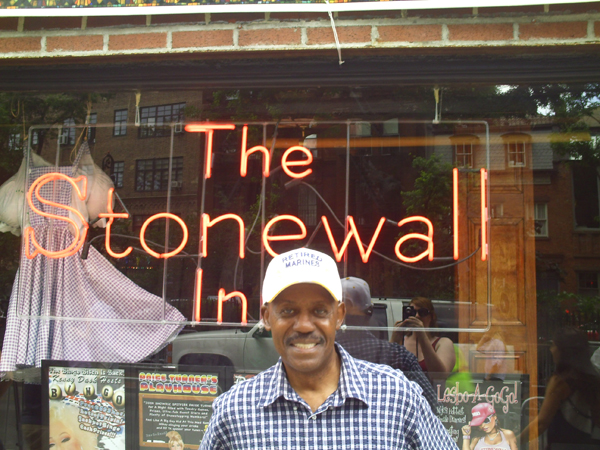
What a day! First, it's Stonewall Day; on June 28, 1969, the multi-day uprising in New York's Greenwich Village that marked a turning point in the burgeoning gay rights movement began. In today's Huffington Post, Scott G. Brown, one of the oldest surviving veteran of the event, offers some thoughts on what happened and guides readers toward his memoir, Confessions and Diaries of a New York Veteran of the Greenwich Village Stonewall Inn Raid of June 28, 1969: Souvenirs.  I have not read it but I intend to. Scott is black and gay, and approvingly quotes Edmund White's delightful memoir City Boy: My Life in New York During the 1960s and 1970s, to underline the reality of that landmark event: "And it wasn't all those crew-neck white boys in The Hamptons and The Pines who changed things, but rather the black kids and Puerto Rican transvestites who came down to the Village on the Subway, the 'A-Trainers,' who made the difference!" As the children would say, "Yes, ma'am huntee!" Happy Stonewall Uprising Day, and do seek out Mr. Brown's book if you're so motivated.

***

Reggie H. (overjoyed)
I often mention Mr. Reggie H. on here, as he is a dear friend and brother/brotha writer and the only human being I know who is on top of everything. He is. He knows all kinds of things, intellectual, political, gossipy and otherwise, can be bitingly funny, but rarely if ever says a bad thing about anyone. He reps for Baltimore and Maryland (a state in which we have ancestors in common, his more recent than mine.) He also does his thing at Poets House, blogs at Noctuary, keeps lots of poets on their toes, advocates for and works with some of our societies most vital people, librarians, and listens politely to all my BS. He even comments on this blog from time to time (thank you!). And Mr. Reginald Harris Jr. is now the winner of the 2012 Cave Canem Northwestern University Press Second Book Prize! His first, moving book 10 Tongues (Three Conditions Press, 2003) is one I urge you to familiarize yourself with; his second, titled Autogeography, is forthcoming next year, and on his blog he features one of the poems from it, about which I will say only that when I first saw it, I thought: "He's got it--down." He does. And will soon have a new, wonderful book of poems to show for it. Congratulations, Reggie!

***
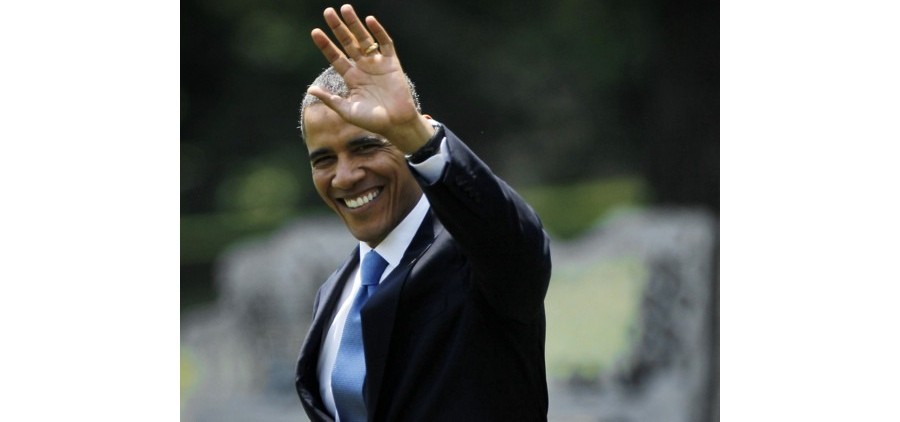
President Obama
(thinking: "Whoo,
these Repubs
are going to
be salty tonight!")

As the morning unfolded and I was preparing the final stages of clearing out my apartment and waiting for UPS to come collect more boxes--which did not happen well into the sweltering evening here in Chicago--I heard the news that the United States Supreme Court had voted 5-4 to uphold the Affordable Care Act, the Rube Goldberg-style, neoliberal, Heritage Foundation-birthed insurance reform program that became the signature piece of legislation President Barack Obama and the Congressional Democrats passed during the last 4 years. Faulty as the legislation is, it possesses many major benefits for a large swath of Americans, and will result in an increasing push towards universal care in a way not foreseeable before its passage. I am not a lawyer so I cannot ascertain all the angles on the majority opinion, which conservative Chief Justice John Roberts Jr. wrote, but it appears that he originally was going to side with the other four right-wing justices (Antonin Scalia, who gave a Scalimbaughish rant the other day in his dissent against the striking down of 3 of 4 provisions of Arizona's draconian anti-immigrant law, SB 1070; Clarence Thomas; Samuel Alito; and Anthony Kennedy, often though to be a "swing vote") who deemed the law "invalid."

Instead, having declared unworkable the argument that the Commerce Clause gives the government the power to impose the Affordable Care Act's Individual Mandate, decided to vote with the four more moderate-to-liberal justices (Ruth Bader Ginsberg; Stephen Breyer, whom I enjoy hearing lecture, his sing-songy voice like a lullaby; Sonia Sotomayor, whose visage makes me smile with pleasure that she was Obama's first SCOTUS pick; and Elena Kagan) to uphold nearly all the provisions of the law, which he affirmed as Constitutional under Congress's power to impose taxes. The only constraint was a provision, signed by 7 justices, arguing that Congress could not cancel out all federal funding to states if they refused to augment the ACA's provisions on Medicaid expansion. A blow against the Commerce clause, an affirmation of Congress's power to tax, a limit on federal power in relation to funding in the states, and a green light for insurance companies, hospital corporations, medical insurance providers, and all private businesses involved in the still-expanding health care sector.

It was also an unambiguous victory for President Obama and the Democrats, made possible by one of the least likely of agents, Roberts, and it enraged conservative idealogues, from Republican President candidate Mitt Romney, who implemented a very similar prototype in Massachusetts when he was governor there, to a number of members of the Republican Congressional Congress, who spoke in testerical flights of rhetorical about "freedom" and so forth, to Republican icons like Sarah Palin, who claimed that it proved the President had "lied." Of course they are all aware that Republicans had championed the "mandate" only a few years ago; Romney was captured on camera praising it in Massachusetts in 2006. The entire plan was hardly the "socialist" threat conservatives had made it out to be, hatched as it was by the Heritage Foundation, but in many of its provisions, it does point towards the possibility of much better, universal, affordable care of the kind that is available throughout most of the industrialized world.

Some of its provisions are excellent: no coverage denial based on pre-existing conditions; young people can stay on their parents' health care much longer; a stricter limit on profits collected as overhead from premiums; Medicare and Medicaid expansion; subsidies to buy healthcare; many incentive-based pilot programs that could be far-reachingly positive in their effects; federal deficit-lowering mechanisms; and so forth. Single-payer health care would be optimal, and Medicare-for-All or a Public Option would be the next best thing, but for now, the ACA does much good, despite its problems, and it is still far better than what existed before its enactment, which doesn't even really go into effect until 2014. (Republicans, including Romney, who was for it before he was against it, have vowed to repeal it, to deny its components funding, and, as South Carolina's junior Senator, the Tea Party epigone Jim DeMint urged today, simply to nullify it, as that state's politicians were fond of doing before the US Civil War.)

When I heard the news on NPR, confirmed by online sources, I felt a brief moment of elation such as I hadn't felt about this administration and Congress, and their actions, in a long time. I also felt--and I admit this is a bit sentimental, melodramatic, and ridiculous, but bear with me--a bit of that starry promise that was so palpable the night Barack Obama was elected in 2008, and I wandered among the throngs of people in downtown Chicago, in front of the Art Institute of Chicago and onto the periphery of Grant Park, and everything seemed possible, people of all backgrounds, ages, life trajectories, milled about, tears in their eyes, drums beating in their ears, awaiting the President-elect, his wife and his two daughters, knowing that we had, at least for a day, made a point about the disastrous slog of the previous eight years.  So much seemed possible that night; health care and insurance reform, at least in my eyes, was one of the more pedestrian, though important, eventualities that would mark Obama's tenure. Ending the wars, prosecuting the Wall Street criminals, rolling back those budget-busting Bush tax cuts, and so much more seemed far more important.

During the campaign, Barack Obama did promise he would enact health care and insurance reform. Nearly all of his Democratic and even some of his Republican predecessors, going back to Harry S. Truman (Missourian!) had attempted to do so, but run up against one abatgis or another. Lyndon Johnson did, however, succeed with Medicare and Medicaid. But in his first term, Barack Obama and the Congressional Democrats pulled it off. It is imperfect, but it is a crucial start, and as such strikes terror into the hearts of the Randroid types who want to dissassemble everything and hand it over to private agents who'll benefit even more than the private agents already feasting on the ACA's promised bounty.  More importantly, though, ACA, or Obamacare, is helping millions of people already, and will eventually cover and help many more. The UPS driver who collected my boxes told me with happiness that he was glad it was upheld; his child suffered from what most health insurance companies would consider a pre-existing condition, and because of the law she could not be denied coverage. He is one of many. He is one of us. Thank you to the President, the Congress who passed the law, and to the Supreme Court justices who bravely and rightly upheld it.

***

U.Va. PRESIDENT Teresa Sullivan (Dan Addison, U. of Virginia)
It is the case that things happen that I think could not possibly happen, which suggests that I am either still too naïve, something my father warned me about when I was young, or that I have not lost my capacity for astonishment. I'll go with the latter.  What astonished me?  For starters, the abrupt, public dismissal of the first female president of the august University of Virginia, Teresa Sullivan, by a group of wealthy corporate hacks who had, through the graces of Virginia's Republican governor, Bob McDonnell, come to dominate the Board of Visitors, the name for the powerful trustees who control what is still Mr. Jefferson's university. I spent 2 years there in the early 1990s, and I can say that it is an institution steeped in its history and traditions, distinguished academically in many disciplines, and not one in which things such as the rude, crude dismissal of presidents by secret plot happen regularly. As it turns out, the gang of however many, led by a real estate honcho named Helen Dragas (she was the "rector"), had two main concerns they felt Sullivan wasn't tackling swiftly enough. They wanted her to kill certain departments--like the Classics and German--to save money, and they wanted her to jump into the online teaching game, panicked as they were by the likes of Stanford and MIT (two institutions in my opinion most likely to undertake such experiments), and, it seems, not unsurprisingly, Harvard, in racing forward in doing so. Apparently Sullivan, being a reasonable person and grasping that a university president, especially at a major state institution, is not a dictator, did not sign off readily on either plan, and so Dragas and her conspirators secretly planned--all documented in released emails--to oust her, keeping their plans close to their vests until it was a fait accompli. They did. It was, in sum, a coup. A furore ensued. The university community protested vehemently, and Sullivan's replacement even felt shamed enough not to want the job permanently. Some members of the Board of Visitors hadn't even known about the plan until it was undertaken. But, to their credit, they reversed themselves, and on Tuesday unanimously reinstated Sullivan.  (Why she would reassume the job knowing that vultures like the ones she dealt with were hovering around I do not know.) But good for her, good for the University of Virginia, and a tocsin for all other public universities, large and small, as well as for private ones, rich or poor.

Today the business of universities, at least in the eyes of many wealthy trustees, Randroid legislators, and many members of the public, is business. I mean both corporatization, and an increasing emphasis on business education and business study-related thinking. No matter how outstanding a job a university has been in achieving its goals, no matter how narrow or broad its mandate, no matter how relevant the fields it emphasizes, the aim today is to mimic corporations, to corporatize every aspect of university life, to place money at the forefront of everything.  The liberal arts, the life of the mind, the search for and creation of knowledge, the creation of community--none of it matters to those who want every institution of higher education to be ranked #1 and a carbon copy of GE. Look at what the state systems in Texas and California have been dealing with over the last few years. But this is a problem not just in the US; just note what Great Britain is doing in terms of hiking student fees, privileging wealthy students, slashing departments, forcing faculty members to fit business-developed metrics, and pushing for funding cuts to be made up, if at all, by corporations, and there is also the ongoing crisis in Québec, Canada, whose root issue is creeping privatization.

One irony for the UVa coup agents, as someone pointed out online today, is that the classics provide more than enough examples not just of the sort of behavior Dragas behaved in, but enough history, philosophy and literature to explain and illustrate the world we live in today, and, as regards the German department, Germany holds the fate of Europe, and thus the globe, in its hands. Of course irony is a key component of literature, a field many of the pro-business types are hostile too. Lost on them is too kind a word. But best wishes to President Sullivan, and goodspead to all in her position all over the country and globe.

***

The 2012 London Olympics will be upon us soon enough. I can't wait. So to will the Major League All Star game. The All England Club Wimbledon Tennis tournament, which I used to watch avidly, is also occurring now. And the British Open Golf tournament, at a suitably scraggly course, will happen in short order.  (The NBA Finals are over, and the Miami Heat won, 4-1, which gladdened me because the Oklahoma City Thunder's owners are rabidly anti-gay. Also, it redeemed LeBron James in the eyes of some; I'm all for him, so I was glad he brought home a crown to go with his predictions in prior years.)

But--I have been peeping the Euro 2012 soccer tournament. I wasn't really paying attention, and then one night I was in one of those extremely affordable pizza joint-cum-bars that you find in European countries, and saw England playing Sweden, I think, and England came back and won the match 3-2, the restaurant patrons erupted with cheers, I found myself drawn in, and now I eager to see who wins between the finalists, Spain and Italy, two countries particularly down on their luck these days but good enough as soccer powers to push the other top teams out of the way.

In the ex-colonial powers match-up, Spain defeated Portugal in the semifinals on penalty kicks, while the ex-fascists semifinal entailed Italy sending Germany packing 2-1, on 2 goals by the fro-hawked Mario Balotelli. The Spain-Portugal game from the snippet I saw was like watching a chalkboard dry, while Balotelli gave the latter game a jolt with his second, game-winning goal, on a crossing pass from Riccardo Montolivo, which he fired into the upper right corner of the goal from a distance. He promptly stripped off his shirt to display three blue (Gli Azzuri!) blue stripes on his muscular back, which led to a penalty. Drama! I want to see the final. Either team gets my vote. Go PIGS*! (Portugal-Italy-Greece-Spain!)

An update: UEFA, the organizer of the Euro 2012 tournament, has fined Spain €20,000 over its fans' racist chants against Mario Balotelli during their Group C clash. (Russia was fined €30,000 for its fans' monkey chants against the Czech Republic player Theodor Gebre Selassie, whose family originally is from Ethiopia. Russia's tournament fine total now tallies €225,000.) Balotelli has repeatedly been the target of racist invective, including during Italy's June 14th match against Croatia, which led UEFA to impose a sanction of €80,000 on that nation. I am hoping the Spanish fans choose not to resort to form during the final game. If so, go Italy!

Spain's Pique challenges Portugal's Nani during their Euro 2012 semi-final soccer match at Donbass Arena in Donetsk. DARREN STAPLES/REUTERS
Spain's goalkeeper Casillas makes a save next to team mate Iniesta and Portugal's Nani during their Euro 2012 semi-final soccer match at the Donbass Arena in Donetsk. ALESSANDRO BIANCHI/REUTERS
Spain's Pique scores a goal against Portugal's goalkeeper Patricio during penalty shoot-out at their Euro 2012 semi-final soccer match at Donbass Arena in Donetsk. DARREN STAPLES/REUTERS
German midfielder Sami Khedira (3dR) vies with Italian opponents during the Euro 2012 football championships semifinal match at the National Stadium in Warsaw.
GIUSEPPE CACACE / AFP/GETTY IMAGES
Italy's Mario Balotelli scores the first goal.
Matthias Schrader / AP
Mario Balotelli flexing his muscles after his second goal.