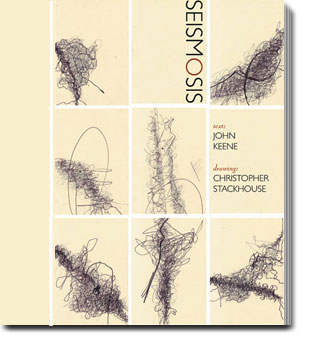
The focus of the Modern Language Association's annual conference a few years ago, and still salient in comparative literary studies circles, translation as the contributors here make clear is far more than the rendering of literary texts from one language into another, but a social, political, economic, and ethical set of actions that is increasingly important both within national contexts and globally. As Rosa notes in her introduction,
Translation is seen not as something simply cloistered in the realm of the literary, but as a civil act, a means of justice. It is often intimate, playful, transgressive, both faithful and radical. The work included here also reminds us that translation has the potential to disrupt, re-dress, and reconfigure the simplistic aesthetic divides of contemporary poetry in the U.S. It isn’t just a window outward to another culture or literary tradition, but a two-way mirror that reflects back on our own, as Jen Hofer writes in her introduction to Sin Puertas Visibles: An Anthology of Contemporary Poetry by Mexican Women.As scholars like two of my former colleagues (to name a few of many) Harris Feinsod and Andrew Leong argue persuasively in their work, translation and non-English language literature has played a profound role on American poetry, though this I would argue that this is not acknowledged enough. American literature's debt to British literature, to non-white literary cultures and systems, including African American, Latinx, Asian American, Native American, and immigrant literatures, is increasingly part of the conversation, but outside of specific writers' (like Ezra Pound's (mis-) translations, to give just one example) engagement in and with translation, I would argue that even today in undergraduate and graduate literature programs in American literary studies, there probably still is not enough discussion of the role of translation in the ongoing development of American literatures. (And to be fair, the further one goes in this direction, the more complicated the designation "American" becomes.)
Returning to this translation issue, I am ever grateful to Rosa for including me, not least because I had originally considered contributing either an essay on race and translation, a topic that has not received enough treatment, as far as I can tell from research on the topic (but for a number of reasons, I was not able to complete my essay in time), or my translations of Claudia's poems, and Rosa felt the poems worked fine. I originally undertook these translations in the fall of 2011, when Claudia came to Northwestern University as a guest of the Poetry and Poetics Colloquium, which I had the great pleasure of being a part of. The four poems in this issue, "Space Writing," "Chair in Mykonos," "In Sarajevo," and "Pirate Heart," were among a handful that I worked on, and presented in English as part of Claudia's visit, which included her reading in Portuguese. Afterwards, she participated in a seminar on her work that helped elucidate the work even more--and I thank my colleague Reg Gibbons in particular for asking about the word "obdurator"--and I returned to each of the poems to refine them further.
Before I submitted these translations to Rosa, I shared them with Claudia, who felt they worked well. I can say that some of my more recent changes did bring out even more of the subtlety, I think, of Claudia's Portuguese. In the case of "Space Writing," those final three lines have a powerful rhythm and sonorous quality in Portuguese that a literal English translation cannot convey:
espasmo o “olho armado” oIn the original the final word both echoes (obdu/rapt) and reconfigures (rapto / odura) the prior line's term "rapto" ("capture", which I'd originally translated as "rapture"), and in all three lines, there is the echo of that "o" ("oo" in Portuguese), as well as repeating "r" and "d" sounds , like the camera's eye or shutter. So I realized that if I made "spasm" in English "shudder" it would carry forward something akin to the "u," "r" and "d" sonic landscape--"shudder"/"shutter"/"capture"--while also embodying the sound of that shutter opening and closing, and bearing the sense of Claudia's poem here.
rapto
do obturador
 |
| An excerpt from Gozo Yoshimasu's "A Whistle from the other shore, translated by Forrest Gander |
Two of the poems I translated have overt political subject matter; resolving the difficulties posed by the ending of "In Sarajevo," that "hole" Claudia writes of whose multiplicity of meaning is key to the entire poem's argument, was a challenge, but I think what results in the English carries forward the poetic force of the original. All four together give a glimpse of the range of her work, though it truly would take an entire selected volume to truly mirror the richness of her poetic output.
In the translations by the other poets, as well as in the rich array of essays, any reader will get a sense of critically dynamic approaches contemporary US writers are taking toward translation, particularly poetry, and the importance they believe it holds not only for American literature, but for literatures across the globe.