Showing posts with label Kenya. Show all posts

Monday, February 03, 2014

New Books: Poetry & Translation

A number of new books now grace my desk, so here is a little information on several that I have had a hand in. I'll begin with Rodney Gomez's Mouth Filled with Night, the second winner of the Drinking Gourd Poetry Chapbook Prize, a national honor given to an emerging poet of color, resulting in a beautiful chapbook published by Northwestern University Press. During my final year and a half at Northwestern, I served on the planning committee and as a judge for the inaugural prize, when a committee of poets and literary scholars awarded to Kristiana Rae Colón, for her striking, powerful book of poems, Promised Instruments.

Before I left, I again participated on jury that selected Rodney Gomez's vivid, moving poems for this year's prize. As the images below show, these are not just impressive first literary sallies, but beautiful books in themselves, and I highly recommend both, as well as eminent poet and Northwestern professor Ed Roberson's Closest Pronunciation, which was also published, as a volume by a senior poet, in conjunction with the contest. Since I left Northwestern I am no longer involved in the Drinking Gourd Poetry Chapbook contest, but I wish the winners my heartiest congratulations, and the prize itself, which introduces the work of writers who might otherwise see publication by such a distinguished press to a wide audience, the very best.

Rodney Gomez's Mouth Filled with Night (2014)
Kristiana Rae Colón's Promised Instruments (2012)
Ed Roberson's Closest Pronunciation (2012)
***
During the period that I was moving back to New Jersey, I began to become involved in helping to launch another wonderful, invaluable book publishing project, The African Poetry Book Series, one component of the African Poetry Book Fund, which the multitalented, prodigious and visionary poet and critic Kwame Dawes helms, at the University of Nebraska. Its mission, to quote the APBF website is as follows:

The African Poetry Book Fund promotes and advances the development and publication of the poetic arts through its book series, contests, workshops, and seminars and through its collaborations with publishers, festivals, booking agents, colleges, universities, conferences and all other entities that share an interest in the poetic arts of Africa. The Fund is committed to seeking the resources to support this mission and to ensure that all its efforts are carried out with excellence.

The Fund will, through the Series and other projects, promote the writing and publication of African poetry through an international complex of additional collaborations and partnerships. The Fund and its partners will offer support for seminars, workshops and other publishing opportunities for African poets.

The other APBF editorial board members include Chris Abani, Matthew Shenoda, Gabeba Baderoon, and Bernadine Evaristo. Distinguished figures from the worlds of literature, business and publishing fill the Advisory Board.

Among the first books the APBF will publish, two are now in print: the winner of the first Sillerman First Book Prize for African Poets, which is Kenyan poet Clifton Gachagua's wry, ever-fresh and compelling Madman at Kilifi, and the great, late Ghanaian poet, novelist, teacher and mentor Kofi Awoonor's The Promise of Hope: New and Selected Poems, 1964-2013, which was in process before his tragic death last fall at the Westgate Towers in Kenya, and which serves as a fine tribute to his extensive poetic gifts and legacy. Both books, published by the University of Nebraska Press, will officially reach bookstores on March 4, 2014, but you can put your orders in now and receive them as soon as they appear. More APBF books are on the horizon, so check the APBF site to see when they will appear.

Clifton Gachagua's Madman at Kilifi and
Kofi Awoonor's The Promise of Hope: New
and Selected Poems, 1964-2013

***

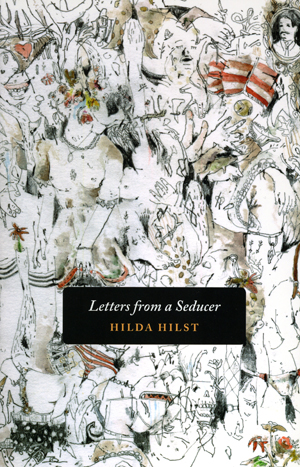
Finally, but not least, a year's work has now achieved fruition with the official release, as of today, of Brazilian writer Hilda Hilst's 1991 masterpiece Letters from a Seducer, which I translated into English last year, working closely with Brazilian publisher A Bolha Editora and its editors, Rachel Gontijo Araújo and Stephanie Sauer (now no longer with the house), and US publisher Nightboat Books and its head, Stephen Motika, who have jointly released the volume pictured below. You can purchase a copy directly from University Presses of New England, who distribute Nightboat's books, or from one of the many online bookstores. Or you can check your local bookstore and if they don't have a copy in-store, urge them to order one or some. I will say only that this text of Hilst's isn't for the faint of heart, just as it wasn't in the original Portuguese, but if you looking for a book that truly charts a distinctive path in late 20th century literature, with a heady dose of trangressive sex, literary intertextuality, meta-critique of writing, and textual depth and music, as well as humor, that could give William S. Burroughs or Kathy Acker runs for their money, Hilst's Letters from a Seducer should be in your hands, pronto.

Hilda Hilst's Letters from a Seducer

Sunday, September 29, 2013

Gukira on Kangemi & Westgate

Businessman Abdul Haji crouches near an elephant
sculpture in the mall during the attack
(© Goran Tomasevic / Reuters / REUTERS)
There are probably very few people who could approach the tragic Westgate Shopping Mall attack and, with insightful brilliance link it to other events in Kenya as well as to a broader understanding of disposability as Gukira does here, so in case you have not headed over to his site, below is a small snippet, and here's a link to the full post: "two places."

Following the Kangemi demolitions, many Kangemi residents protested the government’s actions. They blocked roads, set tires on fire, raged and mourned. They mourned that their lives were so disposable; they raged that their livelihoods had no value. With very few exceptions, Kenya remained silent. These were not lives worth valuing. A death in Kangemi is not worth mourning. 
Reports indicate that president Uhuru Kenyatta was personally affected by Westgate—a nephew and his fiancée were killed. Photographs from Westgate have traveled across the world. We know names and faces and occupations and relationships.
*
Who will grieve with the mourners?
*
For the past few months, I have been thinking about disposability, about its reach and grasp and ever-expanding power. And while I continue to learn from Judith Butler about whose lives are grievable, about who is deemed worth grieving, thinking about disposability leads me to ask about killability.
 
To be disposable is to be ungrievable. Not to merit grief or thought. We have other words for this: acceptable losses, collateral damage. Yet, disposability is not passive, not simply a category into which we place the ungrievable. Instead, it is a hungry logic and practice. It becomes ever-more voracious as it eats. 
Copyright © Gukira 2013, All rights reserved.

Tuesday, January 29, 2013

Drinking Gourd Chapbook Prize Launch + Clifton Gachagua Wins Sillerman First Book Prize

For those in Chicago, a wonderful event I've been involved with that you don't want to miss:

The Drinking Gourd Chapbook Poetry Prize Launch is this Thursday, January 31st at 7:00 p.m.. We will host an evening of poetry, song, and dance at The Poetry Foundation's auditorium (61 W. Superior St., Chicago) to celebrate our first annual Drinking Gourd Chapbook Poetry Prize for emerging poets of color. Kristiana Rae Colón (our prizewinner) and renowned poet Ed Roberson will read from their new chapbooks, entitled promised instruments and Closest Pronunciation. Their readings will be punctuated by a vocal performance of songs from the tradition of African American spirituals by Timothy McNair, bass at the Bienen School of Music, and original dance choreographed by Devin Buchanan from Giordano Dance Chicago.  The event (like all our events) is free and open to the public.

______________________
Ed Roberson, Distinguished Artist in Residence, taught from 1990-2003 at Rutgers University, and from 2004-2006 at Columbia College in Chicago. He was the recipient of the Shelley Memorial Award from the Poetry Society of America in 2008, and was one of three writers honored at the recent Literature, Culture, & Critique conference, organized by Callaloo magazine.Roberson is the author of To See the Earth Before the End of the World (2010); The New Wing of the Labyrinth (2009); City Eclogue (2006); Atmosphere Conditions, winner of the 2000 National Poetry Award series; Just In: Word of Navigational Change (1998); Voices Cast Out to Talk Us In, winner of the 1994 Iowa Poetry Prize; as well as earlier books, including Lucid Interval as Integral Music (1984); Etai-Eken (1975); and When Thy King Is a Boy (1970).

Kristiana Rae Colón is a poet, playwright, actor, and educator living in Chicago. She has been featured on the HBO television series Def Poetry Jam and on WBEZ’s Chicago Public Media. Her work has been nominated for a Pushcart Prize honoring the best writing published in small presses, and it has been anthologized in Not a Muse (2009), Best of the Web 2010, and the upcoming collection Chorus: A Literary (Re) Mixtape, an anthology of poetry by young people edited by Saul Williams and Dufflyn Lammers.

Devin Buchanan is a dancer with Giordano Dance Chicago. Trained at The Ailey School in New York City in a variety of dance techniques, including Horton, Devin also created "Winter’s Bleu" and "Do You Trust Your Friends," works that were performed by his colleagues in The Ailey School’s "Global Harmony" and "Fall Fest." In May 2010, he was accepted into "The Fraulein Maria Project," which gave him the chance to continue his work in modern dance and tour the USA. This is Devin’s second season with GDC.

Timothy McNair is a vocalist and Eckstein scholar at Northwestern's Bienen School of Music. He began his acquaintance with music through his studies of saxophone and double reed instrument, but began singing in the choir at the age of 17. He has studied with Mezzo-soprano, Victoria Livengood as a vocal major at East Carolina University and received further training at the University of North Carolina School for the Arts with Dr. Marilyn Taylor, where he was the 2008 University of North Carolina Fletcher Scholar.

***

Clifton Gachagua
Also, another wonderful project I'm delighted to have been involved with has resulted in a wonderful book of poetry that will soon be available for readers:

Kenyan poet Clifton Gachagua’s manuscript Madman at Kilifi has been selected by the African Poetry Book Fund & Series for the Sillerman First Book Prize for African Poets. As the winner of the First Book Prize, Gachagua’s Madman at Kilifi will be among one of the four books to be published by the African Poetry Book Series in 2014.

The Sillerman First Book Prize for African Poets is awarded to African poets who have not previously published a book-length collection. The prize includes a $1000 cash award and publication with the University of Nebraska Press and Amalion Publishing in Senegal.

Kwame Dawes, Series Editor of the African Poetry Book Fund & Series, notes that Madman at Kilifi was selected because, “Above all, there is a distinctive voice here. This is a difficult trait to define, but when it emerges as it does here, it is striking for its originality. There is a fresh and adventurous intelligence and delight in Gachagua’s poems. The judges are all thrilled with this manuscript and we are expecting great things from Clifton Gachagua."

Clifton Gachagua is a writer, screenwriter, and filmmaker based in his native city of Nairobi, Kenya. Gachagua’s poetry has appeared in Kwani? 06, Saraba, and on his blog “The Drums of Shostakovich.” His prose has appeared in the online journal Storymoja, the anthology AfroSF, and a collection of science fiction writing from Africa. He has recently completed a novel and is currently developing a French-Nigerian feature-length film. He holds a bachelor’s degree in biomedical sciences.

The Sillerman First Book Prize is named after philanthropists Laura and Robert F. X. Sillerman whose contributions have endowed the establishment of the African Poetry Book Fund & Series. The African Poetry Book Fund & Series promotes the writing and publication of African poetry through an international complex of collaborations and partnerships. The Fund and its partners offer support for seminars, workshops, and other publishing opportunities for African poets.

The University of Nebraska-Lincoln’s literary journal Prairie Schooner manages the annual Sillerman First Book Prize for African Poets as a partner in the African Poetry Book Fund & Series.

In addition to Dawes, the Series Editor, who is of Ghanaian birth, the editorial board for the African First Book Fund is comprised of the South African poet Gabeba Baderoon, the American novelist John Keene, the Nigerian poet and novelist Chris Abani, the Egyptian-American poet Matthew Shenoda, and Bernardine Evaristo, award-winning novelist and poet from the UK.

Tuesday, September 27, 2011

Quote: Binyavanga Wainaina

"Throughout the book, adopt a sotto voice, in conspiracy with the reader, and a sad I-expected-so-much tone. Establish early on that your liberalism is impeccable, and mention near the beginning how much you love Africa, how you fell in love with the place and can’t live without her. Africa is the only continent you can love—take advantage of this. If you are a man, thrust yourself into her warm virgin forests. If you are a woman, treat Africa as a man who wears a bush jacket and disappears off into the sunset. Africa is to be pitied, worshipped or dominated. Whichever angle you take, be sure to leave the strong impression that without your intervention and your important book, Africa is doomed.

"Your African characters may include naked warriors, loyal servants, diviners and seers, ancient wise men living in hermitic splendour. Or corrupt politicians, inept polygamous travel-guides, and prostitutes you have slept with. The Loyal Servant always behaves like a seven-year-old and needs a firm hand; he is scared of snakes, good with children, and always involving you in his complex domestic dramas. The Ancient Wise Man always comes from a noble tribe (not the money-grubbing tribes like the Gikuyu, the Igbo or the Shona). He has rheumy eyes and is close to the Earth. The Modern African is a fat man who steals and works in the visa office, refusing to give work permits to qualified Westerners who really care about Africa. He is an enemy of development, always using his government job to make it difficult for pragmatic and good-hearted expats to set up NGOs or Legal Conservation Areas. Or he is an Oxford-educated intellectual turned serial-killing politician in a Savile Row suit. He is a cannibal who likes Cristal champagne, and his mother is a rich witch-doctor who really runs the country."--from Binyavanga Wainaina, "How to Write about Africa," in Granta: The Magazine of New Writing 92: The View from Africa, Winter 2005.

Wednesday, January 02, 2008

Cosas Generales

I was going to type that I almost couldn't believe that the new year was underway, but then I realized I'd been waiting for it for a while. Still, there are times when I can't believe that 7 years have passed since 2001 and the turn of the millennium, which was, you'll remember, preceded by a year of frenzy when 2000 rolled around. Often I can recall the 90s, especially the years from 1995 through 2000, vividly, whereas much of the 2000s are a blur. Nevertheless, here's to what I hope is a lively and enjoyable year, personally and for all, even though some of the major economic signs, at least, appear exciting but not in a good way.

+++

Tomorrow promises ones of the biggest public excitements of the new year, the first (quasi-)primary in the 2008 presidential election calendar, the Iowa caucuses. (I'm glad someone on the Newshour with Jim Lehrer walked me and other viewers through these klatsches-over-kaffee-with-votes-thrown-in yesterday.) Truth be told, what a ridiculous means for selecting anything beyond wall colors for a community center. Not only is Iowa unrepresentative on so many counts in terms of the overall makeup of the US, but this system itself is both hyperdemocratic and at the same time, because so many Iowa voters might not be able to participate in it, undemocratic. It, and the whole Iowa-and-New Hampshire first mindset, should be scrapped.

I think the parties should designate 5 regions of the country, say: Northeast, Southeast, Southwest, Pacific Coast and Rocky Mountain, and Midwest, and have a monthly randomly-selected round robin set of primaries, on the same day, in at least one state from each region, with two others selected at random from different regions, for about 7-8 total. 8 would bring the primaries to June, 7 to July. The four largest states, California, Texas, the ever-shrinking New York, and Florida, would be included in the mix. Thus, January's primaries might include: Rhode Island, Georgia, Nevada, Washington, and Missouri, plus Wyoming and Maryland; or Maine, Alabama, Arizona, California, and Wisconsin, plus New Mexico and Michigan. Or something along those lines. These primaries would be one-person one-vote, open, and tallied by paper ballot (in person or via mail). Every state would eventually have an opportunity to gather the early attention, money and swag, the candidates would have to tailor a national platform more quickly, and the execrable national media might have to really do some work for a change. Will it happen? I doubt it, but one can only hope.

I'm not going to make any predictions and the whole "horse race" and money-raising focuses drive me up the wall, but I can say that I have received more emails and calls (thank the Lord they haven't turned to text messaging yet) from the Obama campaign, despite the fact that I've responded harshly both online and in yet another letter, which I sent out today. One of the most annoying email came several months from Michelle Obama, one of which carried the casual and aggressive subject line "Hey." That was it. "Hey" is supposed to make me want to support her husband, whom she recently said has "deign[ed]" to enter the race? Why, thank you. Most of the Obama missives center on campaign strategy, the evils of the other Democratic candidates, and fundraising, which are the last three things I want to hear about. In fact, I would much rather that Obama offer a concrete progressive platform for his proposed administration and address current and long-term political issues, even in a more philosophical, less specific way, while also explaining his frequent invocation of empty post-bipartisanship discourse and use of rightwing frames and rhetoric, which are going to be thrown right back at him or any of the Democrats (along with the anti-Muslim smears that are being steadily churned up). But I gather his campaign advisors don't care about this, since they are already wooing independents and some liberal Republicans, and they just may win Iowa, and New Hampshire. Or not. Oh well, either way, I'm curious to see the outcome tomorrow night. Ultimate, he, Hillary Clinton, John Edwards, Bill Richardson, and the other Democrats, save Dennis Kucinich and Mike Gravel are fairly close in terms of politics and policies, and will have to be ready for the fights of their lives against the Republicans, the mainstream media, and general public ignorance, in the general campaign.

+++

I haven't commented on the ongoing electoral crisis in Kenya, but I had a strong feeling in the days leading up to the presidential election there that incumbent Mwai Kibaki was somehow going to be declared the victor despite articles and polls I'd read suggesting that opposition candidate Raila Odinga had the edge. There have been a number of rather sketchy presidential and governmental elections across the globe over the last few years, from Mexico to Nigeria to Russia to Pakistan to, yes, the USA, all of which underline the fact that in many countries rulers and ruling elites that are intent on holding on to power will readily do so under the pretext of "democracy," or some flimsy version thereof, and dare anyone to challenge them, while also seeking international sanction to legimitize and normalize the chicanery, unless their hands are forced.

I mention the US in particular, because the present administration perhaps feels it cannot simply refrain from commenting on the situation in Kenya, and yet it's really the height of irony for anyone from this gang to be uttering a word about voting irregularities, fraud, or working with the opposition. I guess Florida 2000 and Ohio 2004, along with all the shenanigans leading up to and after both elections should be completely forgotten. (Have most people simply blanked on both?) Maybe the most powerful thing would be for Condoleezza Rice simply to state publicly that the W Gang knows a thing not only about misgoverning and pitting groups against each other, but also about engineering and stealing elections, and Kibaki didn't do such a good job at it, but, like Musharraf, they've (still) got his back. It is, really, a mess. Gukira's inimitable take(s) are here.

+++

Amidst the news and ramblings in today's New York Times was this Sarah Kershaw piece, on how HIV seroconversions are falling overall in NYC, but still rising among young gay men. The rise is comparatively highest for young African-American and Latino men. Sewall Chan links to the piece in today's Times City Room Blog, and notes that Kershaw identified several important co-factors, including "higher rates of drug use among younger men, which can fuel dangerous sex practices, optimism among them that AIDS can be readily treated, and a growing stigma about H.I.V. among gays that keeps some men from revealing that they are infected." Yet another that she glosses and which a younger (in his 30s) friend mentioned to me a few years ago was a certain fatalism and belief that he was sure to seroconvert no matter what he did, that he expected to do so. He was, in a word, fated to become HIV positive. I've posted about this before, so I ask: thoughts? Responses?

RANDOM PHOTO

Crèche scene, on Houston Street, last month