Showing posts with label Claude McKay. Show all posts

Tuesday, September 18, 2012

Hilda Hilst Book Launch This Saturday + Scholars Find, Authenticate Claude McKay Novel

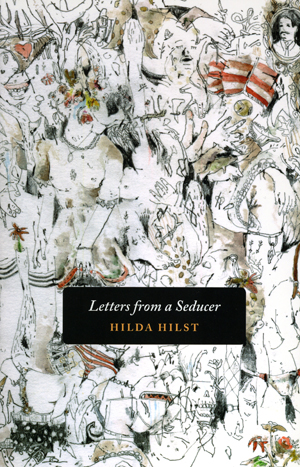
A few weeks back, I mentioned the imminent publication of The Obscene Madame D, the first published English translation of fiction by the late, extraordinary Brazilian novelist Hilda Hilst (1930-2004).

Two presses, Nightboat Books in the US, and A Bolha Editora in Brazil, are jointly issuing poet Nathanaël's superb translation, in collaboration with Brazilian poet and publisher Rachel Gontijo Araújo, of Hilst's novel,  which is now available. I'm delighted to have had a small part in the project through my introduction to the book, and thereby to Hilst's work.

For all who are in or around New York this weekend, there'll be a book launch on Saturday evening, with a reading and panel discussion, by Nathanaël, Rachel, Bruno Carvalho, and me, at Poets House, one of the most beautiful venues for poetry and literature in the city. If you're free, please come by!

BOOK LAUNCH AND READING


The Obsence Madame D by Hilda Hilst
Translated by Nathanaël in collaboration with Rachel Gontijo Araújo
Introduction by John Keene

The first English-language translation by the Brazilian writer Hilda Hilst (1930-2004).

Reading and panel discussion with
with Rachel Gontijo Araújo, Bruno Carvalho, John Keene, and Nathanaël

To be followed by reception and book sale
Saturday, September 22, 6:00pm
Poets House, 10 River Terrace, New York City

This is made possible through Poets House's Literary Partner Program.

***

Claude McKay
One of the most exciting pieces of news to cross the academic wires recently was the announcement that Columbia University doctoral student in English and Comparative Literature Jean-Christophe Cloutier, had found in the university's archives an unpublished novel by the late Harlem Renaissance writer Claude McKay (1889-1948), and then, with his advisor, professor Brent Hayes Edwards, authenticated that it was in fact an original work by McKay, a major figure in early 20th century African-American, Caribbean and African-Diasporic writing.

The 1941 satirical novel, Amiable with Big Teeth: A Novel of the Love Affair Between the Communists and the Poor Black Sheep of Harlem, is set in 1936, marking it as a work from the latter years of the Harlem Renaissance, and according to Felicia Lee's report this past weekend in The New York Times, Cloutier and Edwards have received permission to publish the novel, for which they will write an introduction. As Lee tells the story, Cloutier's discovery came about during the summer of 2009 when he was working as an intern in Columbia's Rare Book and Manuscript Library, and spotted the nearly 300-page bound manuscript in boxes of material donated by Samuel Roth, a Columbia alumnus and former literary publisher, of once-scandalous texts, in his own right.

Cloutier & Edwards (Robert Caplin
for the New York Times)
Cloutier, saw the McKay's name and the title, and found two letters between McKay and Roth, which suggested to him that this might be an important find. He took the materials to his advisor, Professor Edwards, one of the most distinguished figures in contemporary African Diasporic literary and cultural criticism, and they studied the manuscript, noting the concurrences, in theme and style, down to particular word choices, between it and McKay's other works of fiction, which include Banjo (my favorite of his books) and Home to Harlem, one of his best known works. 

They also found a wealth of other archival material that underpinned their supposition about the work's authenticity, including letters between McKay and the writer and critic Max Eastman in which Eastman quotes from the novel, and further correspondence indicating that the publisher E. P. Dutton had contracted with McKay to write Amiable with Big Teeth.  The novel, Lee says, portrays important aspects of the 1930s Harlem experience, among them the experiences of black participants in the Communist Party, as well as other portraits of the rich and vibrant lifeworld of that moment. Lee quotes Edwards saying of Amiable that it will perhaps eventually be viewed "as the key political novel of the black intellectual life in New York in the late 1930s." Thanks to him, and to the budding scholar (who has all but written his ticket to a job and a career), the still dissertating but soon to be Dr.--and Prof.--Cloutier. And eventually, we all will be able to read what sounds like a late masterpiece by McKay.

Saturday, December 19, 2009

Poems: Claude McKay, Emily Dickinson, Issa + Snow Poems

In expectation of the snowmageddon to come, I got to thinking about poems about snow or in which snow, snowfalls, snowflakes, snowstorms, and the like, play a key role, as a central image, as a metaphor or simile, to serve as frame, and so on, and so here's a poem that's probably not read or discussed that often, in double sonnet form, by Claude McKay (1890-1948), "The Snow Fairy," from his 1922 collection, Harlem Shadows. The snow here both serves as a metaphor for loss, despite its beauty, and also sets the stage for melancholy; the lyric voice is reminiscing about a lover who, as temporarily as those "snow fairies," magically brought a bit of "summer" along, joining the lyric speaker in his bed, before departing at dawn, evanescent as snow (or any season, winter or summer) itself. McKay writes many poems like these, though I don't think he's known for them, but they are treasures nevertheless. And so:

The Snow Fairy

I

Throughout the afternoon I watched them there,
Snow-fairies falling, falling from the sky,
Whirling fantastic in the misty air,
Contending fierce for space supremacy.
And they flew down a mightier force at night,
As though in heaven there was revolt and riot,
And they, frail things had taken panic flight
Down to the calm earth seeking peace and quiet.
I went to bed and rose at early dawn
To see them huddled together in a heap,
Each merged into the other upon the lawn,
Worn out by the sharp struggle, fast asleep.
The sun shone brightly on them half the day,
By night they stealthily had stol'n away.


II

And suddenly my thoughts then turned to you
Who came to me upon a winter's night,
When snow-sprites round my attic window flew,
Your hair disheveled, eyes aglow with light.
My heart was like the weather when you came,
The wanton winds were blowing loud and long;
But you, with joy and passion all aflame,
You danced and sang a lilting summer song.
I made room for you in my little bed,
Took covers from the closet fresh and warm,
A downful pillow for your scented head,
And lay down with you resting in my arm.
You went with Dawn. You left me ere the day,
The lonely actor of a dreamy play.


Copyright © Claude McKay, 2009. All rights reserved.

That got me thinking about other poems in which snow, winter, and so forth figure centrally. Of course I have already posted Wallace Stevens's sublime "The Snow Man" on this blog (back in April 2007). What are some others? I got to thinking, and tweeted the following, creating (I gather) a new hashtag, #snowpoems, in the process. I even posted a haiku to get things going.

White christmas dreams, fears
of the snowflakes that will come
wanting to remain

When in doubt, haiku. So far, though, solo. (Though Nic P. did retweet the haiku--thanks Nic!) If you're on Twitter, add to the list, please!

McKay's poem made me recall one of Emily Dickinson's (1830-1886) gems, Poem 1669, "In snow thou comest," with its drumtight use of metaphor, allusion, prosody, music. The figure addressed here is winter itself, as a means for talking about life:

In snow thou comest --
Thou shalt go with the resuming ground,
The sweet derision of the crow,
And Glee's advancing sound.

In fear thou comest --
Thou shalt go at such a gait of joy
That man anew embark to live
Upon the depth of thee.

Here's another, by the great (Kobayashi) Issa [小林一茶](1763-1828), which uses a sign of winter's (possibly temporary) departure, metonymically, as a springboard to depict life and its possibilities:

The snow is melting
and the village is flooded
with children.
So what are some other "snow" poems? Among the most famous in American literature, of course, is:

Robert Frost, "Stopping by Woods on a Snowy Evening"

And:

Guillaume Apollinaire, "La blanche neige"
Francisco X. Alarcón, "Iguanas in the Snow"
A.R. Ammons, "I Come In From the Snowy World"
John Ashbery, "What Is Poetry?"
Emily Dickinson, "Snow flakes"
Rita Dove, "The Snow King"
Ralph Waldo Emerson, "The Snow-Storm"
Anne Hébert, "La neige"
Nizam Hikmet, "It snows in the night"
Denise Levertov, "Praise Wet Snow Falling Early"
Edna St. Vincent Millay, "The Snow Storm"
Gabriela Mistral, "Mientras baja la nieve"
Eugenio Montale, "Here is the sign"
Quincy Troupe, "Snow and Ice"
Walt Whitman, "To a Locomotive in Winter"

What are some that come to your mind? Let me know and I'll add them to the list.

Sunday, April 27, 2008

Thoughts + Poem: Claude McKay

Bell and familyJust some incoherent and incomplete thoughts: two days later, and I still don't have words to talk about the horrific Sean Bell verdict; not that I didn't think it would turn out this way, because when it comes down to a judge issuing a verdict about an unwarranted and insane police attack on Black men or people of color or poor folks, my first thought is that the judge, as this one did, is going to side with the cops. They usually do. That doesn't make it any easier, though.

I've been at a loss for words about this verdict and the long history, a litany, of miscarriages of justice, the injustice and anti-justice, against Black people in this country, against people of color, against women, against sexual, ethnic and religious minorities, against working-class and poor folks, about the structural impediments to change, the ways that the people in power maintain their power through various forms of violence and oppression, and make it diffuse, naturalize it, discursively and materially, how they attempt to and often succeed in industrializing our consciousnesses to accept it, to expect it, to participate in it, in part through silence...

Friday night I listened to Jeremiah Wright on Bill Moyers's PBS show Now, having to defend himself against the smears and distortions the Right Wing and establishment media have been propagating, to destroy the presidential candidacy of Barack Obama, the electoral chances of the Democratic Party, and Black religious faith and traditions in general. I haven't been able to post since as a result, and even now, I really don't even have a free second to catch up with the missed posts, a number of which are still in half-finished form. (The school year's end is still more than a month away....)

So here's one poem by Claude McKay, about the kind of violence from an earlier period in our national history that just keeps playing out in different forms (50+ bullets vs. a noose on a tree limb or post), despite the many changes, which still are too few....

If you'd like information on the Sean Bell case from those seeking justice on his behalf, consider going to Justice for Sean.

Update: Here's Bernie's much more articulate take.


The Lynching

His Spirit in smoke ascended to high heaven.
His father, by the cruelest way of pain,
Had bidden him to his bosom once again;
The awful sin remained still unforgiven.
All night a bright and solitary star
(Perchance the one that ever guided him,
Yet gave him up at last to Fate's wild whim)
Hung pitifully o'er the swinging char.
Day dawned, and soon the mixed crowds came to view
The ghastly body swaying in the sun
The women thronged to look, but never a one
Showed sorrow in her eyes of steely blue;
And little lads, lynchers that were to be,
Danced round the dreadful thing in fiendish glee.

Copyright © Estate of Claude McKay, 2008.