I'm going to sing the praises of
The New York Times today, and note that since October 30, 2010, it has been publishing one of the best and most informative series of articles, mini-essays, and nonfiction stories (
tales, in the older sense), under the title
"Disunion," that I have read in any newspaper, journal or other periodical anywhere, ever. The pieces, along with
a timeline, interactive maps and documents, and photos and engravings, commemorate the 150th anniversary of the breakup of the
United States, in 1860, from period leading up to the election of
Abraham Lincoln, to the chain of state secessions that provoked the four-year
US Civil War (1861-1865). Each day one of several eminent and less well known historians, archivists and writers (
Adam Goodheart, Ted Widmer, Susan Schulten, Jill Lepore, Jamie Malanowski, etc.) produces a short imaginative, usually narrative entry, based on their own or others' historical research, journalistic and archival documentation, and so forth, that fills in key gaps about how the North and South split, or rather, the cultural roots of the national divorce, in which North pressed its political, economic and sociocultural case to represent the nearly 100-year-old country's best interests, prevent its dissolution and end slavery, while the South hewed to the interests of its slave-owning leaders and began the process of secession to defend this odious institution. Some are more engaging than others, many incorporate the various trends underway in contemporary historiography (material, cultural and political history, the role of various discourses, the role of race and racism, feminist historiography to some degree, historical theorization and cultural theory, and quantitative methods), yet present vivid stories of our national unbecoming and becoming.

Others have focused on the particulars of candidate and then elected-but-not-yet-inaugurated new president
Abraham Lincoln, the first Republican to hold office,
shrewdly announced one approach publicly but manipulated his fellow party members behind the scenes; how Southern leaders, like Senators
Jefferson Davis of Mississippi, James Henry Hammond of South Carolina, and
Robert Toombs of Georgia, and plantocrats like
Robert Barnwell Rhett, uttered rhetoric as harsh as any heard today espousing a desire to defend slavery at all costs, white supremacy as the social, cultural and political ideals of the Confederacy to come, and, in Toombs' case, the possible extermination of all black people if the Southerners did not get their way; how leading authors, like
Walt Whitman and
Herman Melville, discursively and creatively imagined this moment of national fracture; and how famous former US residents, like
Giuseppe Garibaldi, a revolutionary in
Brazil (Rio Grande do Sul) the founding hero of a united
Italy, were linked directly what was occurring on these shores.
In today's paper, Harvard historian
Lepore historicizes Henry Wadsworth Longfellow's "Paul Revere's Ride" to show how it was as much about preparation for the coming war as about the Revolutionary era hero, and writer and memoirist
Edward Ball shows that South Carolina, the first southern state to secede (and which will celebrate the 150th anniversary of its secession tomorrow), made clear in its articles of secession that the right to enslave fellow human beings as property was central to its traitorous fissure.
One of Goodheart's entry, one of the most moving and riveting I have read yet,
described Harriet Tubman's final pre-war journey south, to rescue her sister and niece and nephew in
Maryland. Yet when Tubman learned that her sister had died and then her family members did not turn up at the appointed meeting place, Tubman helped a couple escape, which entailed a drama fitting of the best narrative poem or short story one might imagine (an allegedly "crazed" white man was repeated walking about and mumbling to himself in a clearing near where Tubman and the fugitives had hidden, and after a while Tubman realized he was giving them secret instructions about how to get away!). Tubman, the couple and their infant, who had to be drugged to remain quiet, did make it across the Mason-Dixon line, they heading on to Canada and she back to her home in Auburn, New York, and this story, which I have read about in more than one book, came to life for me again in a way that felt as fresh and thrilling as any version I'd heard of it before.


 Punks by John Keene
Preorder your copy today! (Out in December 2021!)
Punks by John Keene
Preorder your copy today! (Out in December 2021!)
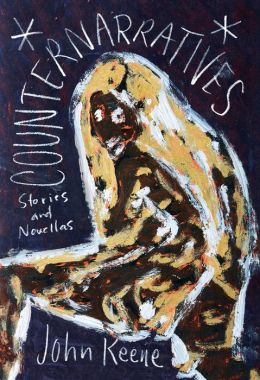 Counternarratives by John Keene
Back in stock, in paperback, so order your copy today!
Counternarratives by John Keene
Back in stock, in paperback, so order your copy today!
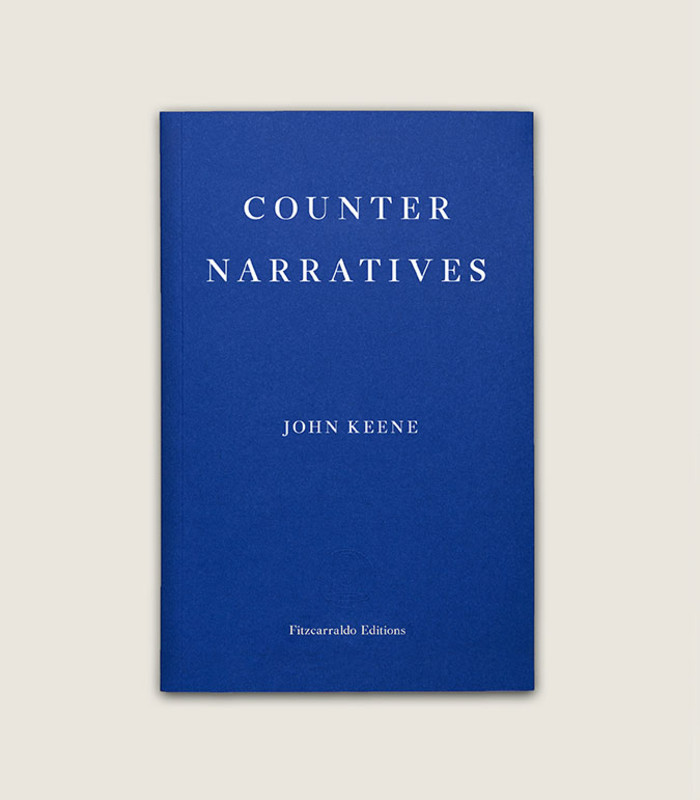 Counternarratives by John Keene (UK Edition)
Order your copy today!
Counternarratives by John Keene (UK Edition)
Order your copy today!
 Annotations by John Keene
Get your copy today.
Annotations by John Keene
Get your copy today.
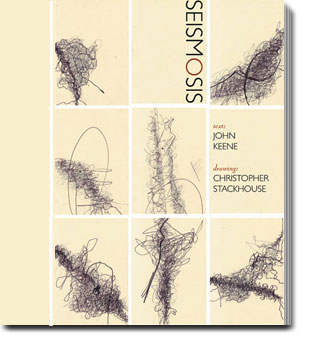 Seismosis by John Keene and Christopher Stackhouse
CURRENTLY OUT OF PRINT (STAY TUNED!)
Seismosis by John Keene and Christopher Stackhouse
CURRENTLY OUT OF PRINT (STAY TUNED!)
 Letters from a Seducer by Hilda Hilst, translated by John Keene, with an introduction by Bruno Carvalho
Get your copy today!
Letters from a Seducer by Hilda Hilst, translated by John Keene, with an introduction by Bruno Carvalho
Get your copy today!
 The Obscene Madame D by Hilda Hilst, translated collaboratively by Nathanaël and Rachel Gontijo Araújo, with an introduction by John Keene
Get your copy today!
The Obscene Madame D by Hilda Hilst, translated collaboratively by Nathanaël and Rachel Gontijo Araújo, with an introduction by John Keene
Get your copy today!


