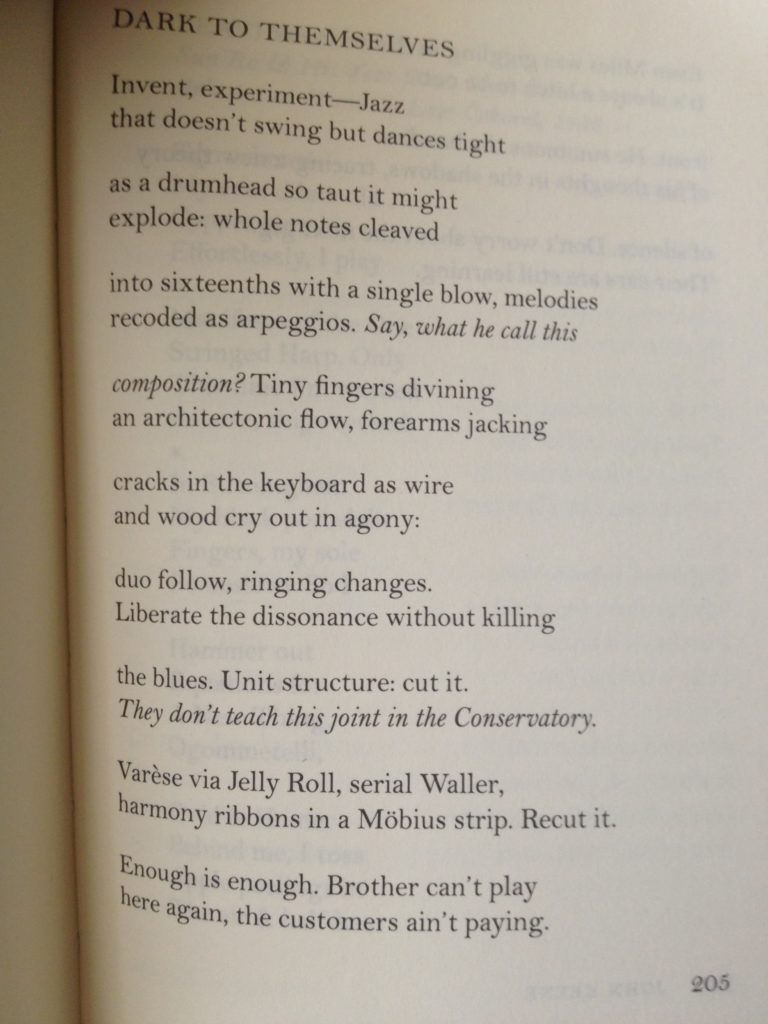
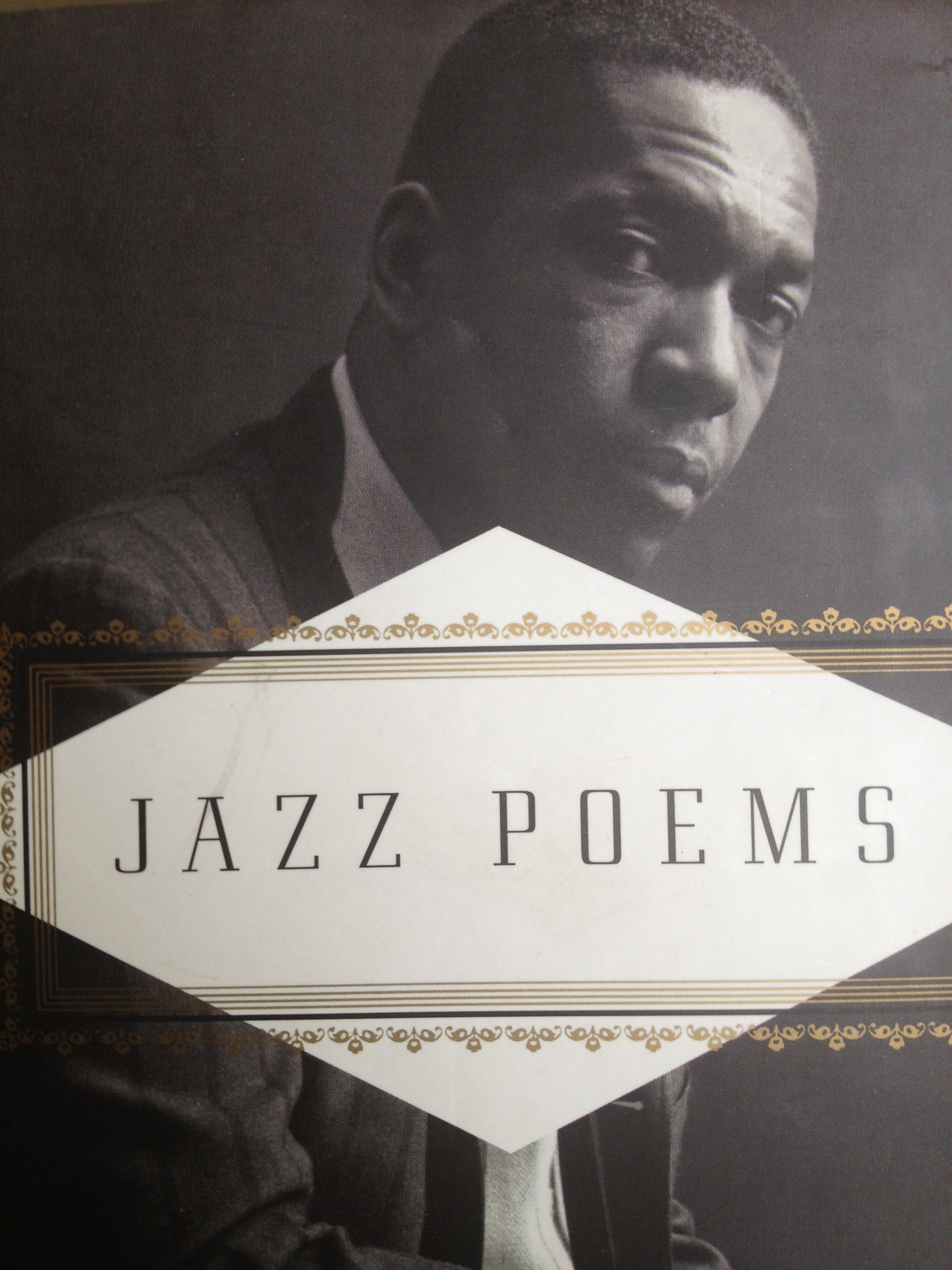
Another one of the greats, Cecil Taylor, is gone. He passed away on April 5. As longtime J's Theater readers know, I've posted about Taylor many times, including on his 86th birthday, back in 2015; when he appeared on NPR back in 2012 (along with my poem about him and his music, "Dark to Themselves," which appeared in Jazz Poems, edited by Kevin Young); my afternoon in 2007 watching the marvelous documentary Imagine the Sound with Northwestern colleagues Kevin Bell and Ed Roberson; back in 2005, on his 75th birthday; and again in 2005, when I saw him perform live at the Blue Note, in Manhattan ("Apraxia, apraxia, apraxia!"). (I wanted to meet him then but only got a glimpse of him peering out through the crack in his green room door.)
I described how he opened the performance like this (the Keith I mention is Keith Obadike, who was there with his wife and fellow artist Mendi, as were Christopher Stackhouse, his partner Kelly Kivland, and a friend of theirs named Lute):
Taylor, as Reggie H. and others have described, entered dramatically, this time in his striped socks after his bassist and drummer had opened the set as a duo, Balgochian doing some interesting moanful bow-work with the lowest portion and register of his bass strings. Then he extracted a handwritten score/graph/chart, which I assume, in my gross musical ignorance, contained the melodic kernel he was going to develop and improvise off of, as well as some harmonic guides and cues, some text and the gods know what else (scribbles? quotes?), CT proceeded to recite an opening poem that riffed off "Chinampas 1," which I listened to again today. Then he and the trio launched into this long and furious set. Afterwards I told Mendi and Keith that it reminded me of a player piano that had caught the Spirit (and spirits) and was revved up by multiple motors. Keith put it more succinctly: "A player piano speaking tongues." Krall, who appears on CT sessions from around 1996 forward, seemed to flow well with CT, sometimes pacing, other times mirroring, other times chasing CT's polymetric races along the keyboard, but Balgochian sometimes seemed out of sync as if he couldn't catch up or missed some of his cues (sometimes his expression betrayed this) or just wasn't up for it, though he gave it a valiant effort. He did know enough to stop on a dime, like Krall, when CT (maybe giving a visual cue) ended the pieces.

Among the musicians Taylor recorded with are innumerable greats: Earl Griffith, Steve Lacy, Buell Neidlinger (who passed earlier this year), Sunny Murray (who passed late last year), John Coltrane, Gil Evans, Jimmy Lyons, Andrew Cyrille, Mary Lou Williams (!), Max Roach, Dewey Redman, Elvin Jones, and Peter Brötzmann. He also performed with dancers, including Min Tanaka and Mikhail Baryshnikov. Taylor's detractors, including Miles Davis (another great innovator) and Branford Marsalis, were legion, but so were his admirers, including former President Jimmy Carter, who invited him to perform at the White House. (Just imagine the current resident even vaguely considering such a thing.) One of my favorite albums of his is Great Paris Concert of 1966, which includes the masterpieces "Student Studies (Part 1)," "Student Studies (Part 2)," and "Niggle Feuigle." I also love his late-career trio recording with Dewey Redman and Elvin Jones, Momentum Space, particularly the songs "Is," "It," and "Spooning." One commemoration I especially appreciated was Jason Moran's discussion of Taylor's artistry, and how it took him years to grasp what Taylor was up to.
Cecil Taylor was outed by the critic Stanley Crouch, and became one of the most high-profile gay figures in jazz, though he sidestepped that term while remaining unapologetically himself. His oeuvre, I would argue, queered jazz as we know it, and its influence continues to ripple out in instrumentalists who may or may not appear to have any direct ties to him. Taylor's relationship to his blackness was solid and complex, and was a topic about which he could be combative, as when, back in 1964 while participating in a "Jazz Weekend" at Bennington College, he defined what jazz was and could be, avowing its roots in African-American life, culture and experience, to the displeasure of some on a panel discussion and in the crowd. In 2013, he received the prestigious Kyoto Prize; the Inamori Foundation, the award's grantor, praised his life's work, though "free jazz" only scratches the surface:
One of the most original pianists in the history of free jazz, Mr. Cecil Taylor has developed his innovative improvisation departing from conventional idioms through distinctive musical constructions and percussive renditions, thereby opening new possibilities in jazz. His unsurpassed virtuosity and strong will inject an intense, vital force into his music, which has exerted a profound influence on a broad range of musical genres.A contractor he had befriended stole nearly the entire amount, before being caught, tried and convicted.
A few videos about Taylor, including one of my favorites, "Les grandes répétitions":
"Les grandes répétitions"
A fragment from Ron Mann's Imagine the Sound
Interview, from the Snapshots Foundation (full interviews here)
Cecil Taylor performing at Ornette Coleman's memorial, in 2015
Dark to Themselves
As I concluded in my poem tribute, "Their ears are still learning."