Showing posts with label BOMB magazine. Show all posts

Thursday, March 03, 2016

Again with Feeling: BOMB Magazine at MoMA PS1

On February 28, I had the pleasure of participating in Again With Feeling, a public conversation with poet and friend Tonya Foster that BOMB Magazine organized in conjunction with MoMA PS1's Sunday Series. We were one of 10 pairs who reprised our artist-to-artist conversation from BOMB, though instead of the long free-wheeling conversation we originally had up in Ithaca during Image Text Ithaca last summer, we received 10 minutes to chat. I think it went well; it was a joy to return to some of the themes of our discussion, and to be able to do so in a public venue.

Other conversing pairs, some of which unfolded more as interviews, included BOMB editor Betsy Sussler (subbing for Eric Bogosian) and the hilariously cantankerous former director and now filmmaker Richard Foreman; authors Christopher Sorrentino and Sam Lipsyte, who talked about newish work; visual artist duos Yuri Masnyj and Hope Gangloff, Alan Ruiz and Tom Burr, and David Humphrey and Nicole Eisenman; author Linda Yablonsky and Wooster Group director and performer Elizabeth LeCompte, who was reluctant to talk about herself and mainly talked about Foreman, who went first and then left; dancer Ralph Lemon and writer/performer James Hannaham; and musicians Justin Vivian Bond and Joy Episalla. 

Capping things off, Ishmael Houston–Jones, whom I'd always hoped to see dance, engaged in an enthrallingly strange, ghostly duet with Miguel Gutierrez, who made the performance interactive, though with permission. There was also a lively acoustic music performance by Alan Licht. Many thanks to Ryan Chapman, Mónica de la Torre, and everyone else at BOMB and MoMA for inviting us to participate and making the event possible.

David Humphrey and Nicole Eisenman
Linda Yablonsky and Elizabeth LeCompte
Ishmael Houston-Jones, entering the dome
Christopher Sorrentino and Sam Lipsyte
Yuri Masnyj (also in the Klimtian portrait above)
and Hope Gangloff (painter of Yuri, above)
Ralph Lemon and James Hannaham
Lemon and Hannaham

Sunday, January 31, 2016

Bomb Magazine 2016 Recommendation: Clarence Major

Recently BOMB Magazine offered me and other writers and creative types the opportunity to share my thoughts some of the many books we're looking forward to this upcoming year, so I selected poet, novelist and visual artist Clarence Major's forthcoming collection Chicago Heat and Other Stories (Green Writers' Press, 2016).

Major (b.1936 -) is the author of 8 novels, 14 collections of poetry (including the 1999 National Book Award finalist collection Configurations), 2 collections of short fiction (including this one), 8 works of nonfiction, and 4 anthologies, among them 1969's landmark The New Black Poetry. His essay "Necessary Distance," the title of an eponymous collection of nonfiction that Tisa B. turned me onto, is one of many compasses I periodically return to.

Despite his prodigiousness and originality--this is a man who wrote a novel based on the premise that a Connecticut law required husbands to carry their wives across thresholds at home!)--his work remains far too little known, and should be much more heralded, read and discussed, so I am particularly looking forward to this new book. For Bomb I wrote:

One book I’m eager to get my hands on is acclaimed novelist, poet, and visual artist Clarence Major’s forthcoming collection of short fiction Chicago Heat and Other Stories. Though far less known than he should be, Major, as original as anyone writing today, has been successfully experimenting with the formal possibilities of fiction for over four decades, and has developed a distinctive, accessible, and unforgettable style. I’m enthusiastic to read and learn from what he accomplishes in this new gathering of stories.
About the new book Major's publisher writes:

Chicago Heat and Other Stories by Clarence Major, employs a gorgeous purity and simplicity of language in a series of masterful analyses examining human interaction. Each narrative voice comes forward all at once, individual and complete, without obstacle or complication, enabling the reader to see the characters and feel their emotions. Major does not shy away from the bitter or the harsh; we get to hear it all. Like paint on an easel he blends lyricality with moxie and the blunt with the beautiful. The characters come together as easily as they part; people leaving, coming back, going, staying—it all sticks and fades like heat on your skin. The imagery is completely accessible and generously given. Toni Morrison comes to mind. His work is like jewels.
Based on what I know of Clarence Major's work, this description barely touches the surface. Check it out this year.

More book 2016 recommendations by Dawn Lundy Martin, Albert Mobilio, Alan Gilbert, Chelsea Hodson, Justin Taylor, Ander Monson, Ken Chen, and Lawrence Giffin at the BOMB Magazine site!

Wednesday, September 16, 2015

Reading @ Rutgers-Newark + New Reviews & Interviews

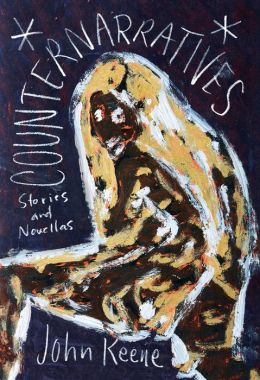
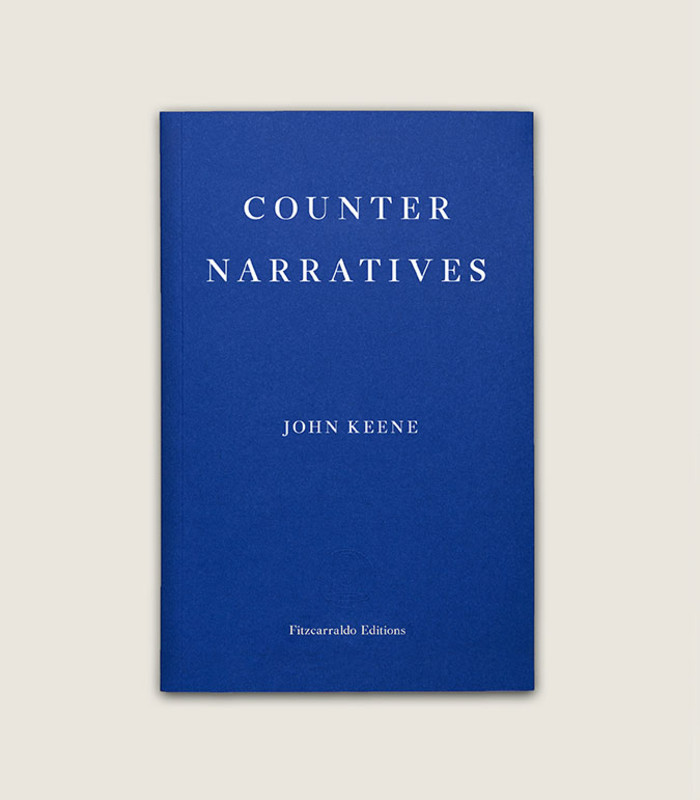
On Monday, as I mentioned in my post about my HuffPost Live appearance, I gave a reading at Rutgers-Newark as part of the African American and African Studies Fall 2015 event series. This was actually the second time I read from Counternarratives at the university, though the first since the book was published back in May. Previously I had read "Mannahatta" at the MFA program reading back in 2013, but this time, I read "Acrobatique," and, for an encore, two short sections from "The Aeronauts."

Though the reading coincided with the MFA program's workshop period, a full crowd filled the room, with many colleagues and students present, as well as members of the Newark community; the question and answer session was lively; and I sold and signed a handful of books. A free reception with lots of delicious food followed.

Below is a short film by Justine Hunter with some video clips and a voice-over of me reading. Many thanks to Justine, and to departmental administrator Christina Strasburger and administrative assistant Rabeya Rahman, as well the Dana Library, for making this wonderful event possible!


***

The good reviews keep rolling in, thank the gods. Brad Johnson, a bookseller and critic, penned and published one the most laudatory reviews of Counternarratives to appear thus far, in The Quarterly Conversation. I am especially pleased that Johnson connected the collection's themes to today's local and national events, and identified the political consciousness informing the stories. Like several other readers, he views it almost as a novel in stories: A quote:
This is the context of John Keene’s ambitious collection of stories and novellas, Counternarratives. Though many of these were published elsewhere, together they read very much like the multi-genre, patchwork novels of Alexander Kluge—or perhaps more grandly still, László Krasznahorkai’s recent Seiobo There Below, a work bound not by plotted coherence but by a conceptual aesthetic thriving on difference. This is to say, while Counternarratives makes no claim to being a “novel of short stories,” its epic sweep and conceptual unity bear the marks. Indeed, one might speculate further that this “story collection” lives up to its title and effectively challenges—like Kluge and Krasznahorkai (among others)—the commonplace sense of how a novel should look and what it should do.

In Front Porch Journal, a journal published by MFA students at Texas State University, critic Patrick Cline praised Counternarratives, with a focus on its aesthetics, which we discussed further in a conversation with Book Reviews editor Michaela Hansen. One quote:
To this reader, the chameleon-like range of the writing is impressive. The book as a whole feels like an entry from Oulipo, the French writer’s collective devoted to prompts and restrictions, but like a really good Oulipo book. One whose writer is invigorated by the challenge posed by each prompt, and uses each as an opportunity to explore his pet themes—freedom and control, legacy and hauntings, the influences of religion, and queer love throughout history. Each story is a surprise and a success, and cumulatively they come together to feel vital. This is an important book—it’s important to own, to read, to teach, and to slip in your shelf beside the classic narratives that it’s in conversation with.
In Full Stop, reviewer Patrick Disselhorst offers kudos through and amid a perceptive reading of Counternarratives that gets the relationship between the written and the oral, the constructedness of narration and of lives, and the power of fiction to reorient not just our thinking, but our vision of the world. He writes of a sentence in the first story, "Mannahatta":
Keene’s long sentence meanders and searches for something to grasp ahold of. But, the lack of specificity, the lack of demarcations, is inherent to his character’s predicament. Rodriquez [sic], Keene alerts the reader in the introductory note to the story’s initial publication in TriQuarterly, as “a mulatto . . . of San Domingo,” the son of a Portuguese father and African mother, complicates the reader’s understanding of New York. The first settler of the city, simultaneously African, Dominican, and Latin American, is underrecognized, but in this story, he emerges, “never to return to the Jonge Tobias, or any other ship, nor to the narrow alleys of Amsterdam or his native Hispaniola.” Rodriquez [sic] functions as our introductory figure to the text — a man of African descent arrives as a settler, and along with him, an alternative understanding of how the Americas were initially constituted. Keene trains the reader to be alert to openness; to view things singularly involves a lack of foresight in watching figures or situations brush up against received knowledge.
***

Three of the best interviews and conversations I've participated in have recently been published. In conjunction with the Front Porch Journal review, which I link to above, I chatted with Book Reviews Editor Michaela Hansen and reviewer Patrick Cline, who sent me a set of questions, and then sent a few more based on my first set of responses. In this interview, titled "Countering the Narrative," I love how much they delved into the stories and how curious Patrick was about the relevance and effects of a post-modernist approach:

FP: Hmm, I suppose it’s the stylistic pastiches of “Encounternarratives” that I’m asking about. The styles invoked seem to correspond to the historical moment of each story—an impressionistic style in “Acrobatique” to capture an impressionist subject, the cacophony of languages in “Cold” at a time when it seemed that art was working to capture exactly that (e.g. Dada, Eliot)—as well as the subjects. I think what I was most struck by was that the stories seem to exhibit no fear of Yvor Winters’ “imitative fallacy”—that they’re fully willing to invent new stylistic modes simply to accurately capture varieties of experience, without reflexively casting doubt their ability to do so. I’m wondering if the justification of pastiche affords them this boldness. 
JK: Your identification of the historicization embedded in the stories’ forms is a great one. I do wonder, though are these fully stylistic “pastiches”? Of Modernist prose? Or does “pastiche” function as one of many modes in them and all the volume’s narratives? I see the forms and styles as apt textual embodiments and enactments of the stories’ themes. To put it another way, the prose forms and texts here serve not merely as presentations but as partial representations of the narratives they convey, which is to say, they possess a mimetic function or component, which is, admittedly, fairly uncommon in contemporary American literature. With “Acrobatique,” the prose visually mirrors the story’s progression but also its central ideas. In popular memory, the specificity of Miss La La had become as lost to us as any single thread within the vast tapestry of Degas’s artistic output. That recovered thread, via my imagination, is the one the story hangs on. As for Winters, I suppose I read his “imitative fallacy” as too proscriptive, which is always a spur to defiance. How did Caliban put it in The Tempest? “I’ll have none on’t.” Or as Elizabeth Alexander has written, “Oh language/my trinket, my dialect bucket,/my bracelet of flesh.” If we listened too closely to Winters, we’d lose a sizable swath of our literary treasures, and not just those from modernism—or post-modernism—o

Earlier this summer, writer and reviewer Blake Butler conducted an interview with me for VICE. We spoke by phone around the time of the book launches, and some of what we discussed I've since repeated several times, but the conversation was free-wheeling and I felt particularly expansive at times. At one point we discussed current approaches to teaching Mark Twain's The Adventures of Huckleberry Finn:
I remember maybe it was like five years ago when they were trying to get the racial slurs removed from Huck Finn, or at least change them to a different word. Do you think of a practice like that versus going in and exposing the trouble from a completely different way?  
I feel like we shouldn't whitewash anything. Because Huckleberry Finn, and any number of such books, are artifacts of our history. And I think if you're teaching it to a younger person then the teacher should frame it. You don't want to say, "This is a bad book, this is a good book." You want to say: "This term will appear here, and we want to understand why it is in here. So one of the things we are going to think about while we're reading—and it's not going to be easy—[is] why do you think this term appears in here and what does it tell us about the moment, the era, the time in which it was written?" I think this is actually very, very powerful for students. But it's the role of the teacher to contextualize and assist the students in understanding why a book reads the way it does. This is not just in the matter of race and racism, but gender and misogyny, and homophobia and classism in certain kinds of books. Because if a book is a very good book on most levels, we want to understand not only why it's a good book and its successes, but also what are its failures? What is problematic about it? Not just a book, but any work of art. What is succeeding in it, and also what isn't succeeding?

Last but not least, while at Image Text Ithaca I participated in a long, remarkable conversation with poet, critic and scholar Tonya Foster, whose new, stellar collection of poems A Swarm of Bees in High Court has just been published by New York publisher Belladonna*. The conversation appears in the new Fall 2015 issue of BOMB Magazine, and so is not online yet (I think it'll appear in full once the next issue goes to press), but an excerpt, titled "Haikus of Grief, Silence in Harlem," did appear on LitHub, the new aggregator site sponsored by several major New York publishers.

Though it's a tiny sliver of our exchange, and zeroes in on questions of grief and trauma in Tonya's collection, it offers a distilled taste of what we both were thinking and had to say. I can't wait to post the full version, and please do grab a copy of BOMB to read it if you can.

From LitHub:


John Keene: In the notes at the end of your new poetry book, A Swarm of Bees in High Court, you describe it as “a biography of life in the day of a particular neighborhood,” and you use the phrase “the multiple as subject and as swarm of actors.” Based on those descriptions you could have written a nonfiction text or a more literal reflection, but you’re capturing this world in a lyric mode, undertaking compelling things with form.

What really comes through is a play of both the ear—sound, music, and noise, in the positive sense of the term, as distortion—and also the eye. Could you talk about how you decided to go with the haiku-like form, which you stick to at certain points, and you break in others? At the very end we get a little section of prose, almost like a fable.

Tonya: The first thing that comes to mind is Amiri Baraka saying, “You know, I would read poems in The New Yorker and think, I can’t write poems like that.” (laughter) The work of the book began when someone asked me to write about 9/11, and I thought, What? It just seemed bizarre.

How do you write about grief when you’re in the middle of it? How do you imagine or traverse that necessary distance? I had been writing erotic haiku to a man I liked. And someone else said, “Why don’t you write haiku about 9/11?” I thought, Okay, I could do that and not weep, right? I could write these little condensed pieces about New York at that period. It was a time when there were these condensed, very tense encounters with the images of people who were missing—but not only with them; you were also encountering the people missing them, looking for them.

Saturday, January 26, 2008

BOMB's Brazil Issue

Issue 102 Winter 2008 coverI'm slowly making my way through the new, Winter 2008 of BOMB, which is dedicated to Brazil. Tisa B. first alerted me that this was its focus, and Reggie H. directed me to the site, which makes a few of the articles available for free. Years ago I read BOMB regularly, then stopped, and even heard (and read), wrongly it turned out, that the magazine was going under. Reggie would tell me about its issues, which I sometimes still browsed when I would pop into Nico's while in the City, and finally, last fall, I decided to subscribe to it after Reggie sent the photocopies of the informative conversation that Edwidge Danticat conducted with Junot Díaz, and the piec on Isaac Julien's video installation pieces, including his recent Small Boats.

Whenever I hear that a magazine or journal is focusing on Brazil, my question becomes, is the focus essentially going to be the Rio-São Paulo axis, those being the cultural and economic megalopolises (megalopoleis?) or will it look at another region (say the Northeast, the Amazon, the South), will it be a thematic-sociocultural focus (say on Afrobrazilians), or will it mix things up? (Of course there are numerous other ways of approaching Brazil.) This issue, some of which is online, appears to mainly follow the first, most common approach, with a number of the contributors living in either Rio or São Paulo, or coming from there (and now resident in the US). The issue has much of interest, gathering together some of the most notable contemporary plastic artists (Ernesto Neto [whose work enthralls both Tisa and me], Fernanda Gomes, the Campana brothers, Lucia Koch, Marilá Dardot, Laura Lima, Jarba Lopes, OsGemeos,Thiago Rocha Pitta, etc.), filmmakers (Cao Guimarães and Karim Aïnouz [of Madame Satã fame]), writers (Arnaldo Antunes bridging the two fields of literature and music, but also the very distinguished Lydia Fagundes Telles, as well as Bernardo Carvalho and Francisco Alvim), and a very famous architect (Paulo Mendes da Rocha). The "First Proof" literary section features the work of a handful of writers, some of them very well known, like Rubem Fonseca, whose philosophical crime-drenched novels and stories initiated a new style in Portuguese literature and have led to Nobel Prize stirrings, and the subtle poet Adélia Prado, whom I've suggested might be a potential winner. (Below right, Ernesto Neto, Leviathan Thot, 2006, Lycra tulle, polyamide fabric and styrofoam balls, 174×203 x 184’. Pantheon, Paris. Photo: Marcus Wagner. Courtesy of the artist; Galeria Fortes Vilaça, São Paulo; and Tanya Bonakdar Gallery, NY.)

Neto, LeviathanAs a general introduction to some of Brazil's contemporary stars, music notwithstanding (because really, that would require a year's worth of issue, each covering the four largest cities, São Paulo, Rio, Salvador da Bahia, and Belo Horizonte), it seems pretty good, and some of the plastic artists are probably not well known in the US at all. Mendes da Rocha might be more familiar to people in the know, as he's received the 2006 Pritzker Prize, and I was glad that the editors didn't simply take the easiest route by going with the country's centenarian (yes, he'll be 101 this year!) genius, Oscar Niemeyer, who admittedly and astonishingly is still designing buildings, and has since the 1930s. The writers on the whole might also not be so well recognized in the US, but Fonseca, Telles, Prado, João Ubaldo Ribeiro (a Bahian of African descent), Manoel de Barros, and Salgado Maranhão are all internationally known figures, though none has the profile, I would imagine, of either of Brazil's best known 20th century writers, Jorge Amado, Clarice Lispector, or João Cabral de Melo Neto, or its current phenomenon, Paulo Coelho.

Madame SatãThe interviews are pretty informative, and there's a good deal of discussion about Brazilian society and the country's various continuing social problems, though there was considerably less talk about national politics, which, from what I can tell, are in an interesting place right now. I was also hoping that the magazine would feature more writers and artists under 50 (Guimarães fits this criterion, as do novelist Patricia Melo and a few others), but also show more regional diversity, venturing further north and south to find out what's happening outside the Rio-São Paulo axis, and certainly more ethnic diversity. This last problem seems to plague most special issues on Brazil, unless they're devoted to writing by Afrobrazilians or Japanese Brazilians, say, from the favelas, and so on. But who knows, perhaps I've read right past something. I'll keep reading, and perhaps another journal will take up the charge and offer new and exciting angles on what's happening in the arts scenes in the "country of the future."