UPDATE: Alice Munro (1931-) was awarded the 2013 Nobel Prize in Literature for her "mastery of the contemporary short story." Brava! As I wrote below, she is one of the best writers today, and as the Nobel Committee notes, has achieved utter mastery with the short story form.
If you haven't read any of her fiction, you can find some free online examples here on Open Culture. Among these, "Free Radicals" and "Runaway" are favorites. One of her earliest stories, "Boys and Girls," is also available at the link.
***
According to the Swedish Academy, tomorrow it will announce the 2013 Nobel Prize in Literature. Every year, usually a week or so before the award announcement, I post my annual blog entry about this award and the writers I hope will win, in the process tossing around a few guesses and suppositions, before concluding that no one I would be championing would be considered. (I have read that if one is a literature professor one can officially nominate writers, but I also think this comes with the proviso that one must be invited to do so, literature professor or not, by the Swedish Academy. I am officially a literature professor, among other things, but I would want to chance harming the possibility that a writer I admire might be cooled out because an unknown was writing letters on her or his behalf.)
Last year the literature award went to Chinese fiction writer Mo Yan, someone whom I don't think I'd ever mentioned. I don't read or speak Chinese and cannot vouch for Mo's work at all, though the English translations do not appear to elevate it, at least in my opinion, outside the ordinary. The year before that the poet Tomas Tranströmer received it. I repeatedly broached his name, in 2005, 2006, and 2009, not so much because I was a huge fan of Tranströmer's, but mainly because it kept popping up in online shortlists, he was a widely known and internationally renowned poet, and he was fairly prodigious in his output.
Not that that matters; some Nobelists (T. S. Eliot, Elias Canetti, etc.) have produced relatively little, while others (Doris Lessing, J. M. G. LeClézio, etc.) have produced quite a bit. Quality is not the same thing as bean-counting; ultimately it should come down to the sustained quality of the work, though Alfred Nobel, a multimillionaire dynamite executive, stressed idealism. This has kept a few potential Nobelists away from Stockholm, though given some of the recent winners, like Mario Vargas Llosa, a politically conservative author whose works include a great deal of controversial material, and Elfriede Jelinek, one of the most unreadable fiction writers of the late 20th century whose novel The Piano Teacher is a model of anti-idealism, it's probably fair to say that the Swedish Academy is not following the letter of Nobel's will. (Which is a good thing.)
Several authors I always advocate for--Wilson Harris, Jay Wright, Adelia Prado, Maryse Conde, Kamau Brathwaite, etc.--are not even on Ladbrokes' list. Then there are writers that I am completely aware of who very well could emerge as top choices. Herta Müller strikes me as someone along these lines, but certainly there are many others. Perhaps they will surprise us all and give a joint award, something that should have happened more often, so that Nicanor Parra and John Ashbery, or Alexander Kluge and Ama Ata Aidoo, or Prem Ananda Toer and Elena Ferrante, an author whose work engraves itself on the inside of your consciousness. Another good choice among younger authors would be Alain Mabanckou. He is really one of the best Francophone and African authors writing today, and each of his last four books has been very good to exceptional. (Broken Glass is, I think, the finest of them.) In general poets and dramatists are selected less frequently these days, it appears, though this could be either genre's year. The streak of Europeans also ceased last year, so that's something too. And then there are newer literary genres; will the committee decide to do something radical and award the prize to a graphic novelist? Someone working in hypertext, since this year's Chemistry prize went to three researchers who work heavily with computers. I doubt so, but I guess we will see.
On a final note, ccording to the Nobel Prize site, the most popular literature laureates, in order, are John Steinbeck, Rabindranath Tagore, Ernest Hemingway, William Faulkner, Seamus Heaney, Gabriel García Márquez, Winston Churchill, Pablo Neruda, William Golding, and Albert Camus. The site unfortunately does not clarify what "popular" means. Sales? Website hits? Queries? Books about them? Does anyone know?
 |
| Alice Munro (AP/Peter Morrison) |
***
According to the Swedish Academy, tomorrow it will announce the 2013 Nobel Prize in Literature. Every year, usually a week or so before the award announcement, I post my annual blog entry about this award and the writers I hope will win, in the process tossing around a few guesses and suppositions, before concluding that no one I would be championing would be considered. (I have read that if one is a literature professor one can officially nominate writers, but I also think this comes with the proviso that one must be invited to do so, literature professor or not, by the Swedish Academy. I am officially a literature professor, among other things, but I would want to chance harming the possibility that a writer I admire might be cooled out because an unknown was writing letters on her or his behalf.)
 |
| Haruki Murakami |
Last year the literature award went to Chinese fiction writer Mo Yan, someone whom I don't think I'd ever mentioned. I don't read or speak Chinese and cannot vouch for Mo's work at all, though the English translations do not appear to elevate it, at least in my opinion, outside the ordinary. The year before that the poet Tomas Tranströmer received it. I repeatedly broached his name, in 2005, 2006, and 2009, not so much because I was a huge fan of Tranströmer's, but mainly because it kept popping up in online shortlists, he was a widely known and internationally renowned poet, and he was fairly prodigious in his output.
Not that that matters; some Nobelists (T. S. Eliot, Elias Canetti, etc.) have produced relatively little, while others (Doris Lessing, J. M. G. LeClézio, etc.) have produced quite a bit. Quality is not the same thing as bean-counting; ultimately it should come down to the sustained quality of the work, though Alfred Nobel, a multimillionaire dynamite executive, stressed idealism. This has kept a few potential Nobelists away from Stockholm, though given some of the recent winners, like Mario Vargas Llosa, a politically conservative author whose works include a great deal of controversial material, and Elfriede Jelinek, one of the most unreadable fiction writers of the late 20th century whose novel The Piano Teacher is a model of anti-idealism, it's probably fair to say that the Swedish Academy is not following the letter of Nobel's will. (Which is a good thing.)
Ladbrokes' betting agency annually draws up an odds list of potential winners. I've cited these before too. Topping this year's list is Haruki Murakami, a leading Japanese writer and one of the most inventive contemporary novelists. Japan's Nobelists include two quite original figures: Yasunari Kawabata, the 1970 winner, whose prose demonstrates almost gnomic compression and who committed suicide not a few years later; and Kenzaburo Oe, the 1994 winner, who primarily writes about his developmentally disabled son, though he has managed to transform this narrative constant in several works of great originality. Murakami, whose work can be divided into more straightforward realist fiction (Norwegian Wood is an excellent example of this) and work that incorporates speculative elements, sometimes very successfully (the stories in The Elephant Vanishes and After the Quake exemplify this, as does his novel The Wind-Up Bird Chronicle), and he has written several masterpieces, as well as extremely ambitious giant works that demonstrate a writer of tremendous skill and daring, so the Nobel Committee could do far worse.
 |
| Ngũgĩ wa Thiong'o |
Also high on Ladbrokes' list are Canadian Alice Munro, one of the best short fiction writers of the late 20th and early 21st century (and a huge favorite; whenever I have the opportunity, I teach her work); Svetlana Aleksijevitj (Alexievich) a Ukrainian author and journalist whose work I once assigned in a "Situation of Writing" course some years ago at Northwestern; Joyce Carol Oates, about whom I'll say nothing, out of decency; Peter Nadás, a Hungarian novelist whose books look enticing but which, at least the ones I've seen translated, are as large as my living room; former Swedish Academy member and playwright Jon Fosse, who probably should not be rated this highly; Ko Un, the highly ranked Korean poet whose name is a perennial (and whom I featured in my poetry month posts a few years ago; Assia Djebar, the very gifted Algerian feminist author who used to teach at NYU and became the first woman of Arab descent, I believe, to gain a seat in the Académie Française; Thomas Pynchon, an author I once avidly read and enjoyed, though I have not been able to bear his more recent work, but who would at least have to emerge from hiding in plain sight, I surmise, to receive the medal and speechify if he were honored; Ngũgĩ wa Thiong'o, the great Kenyan fiction writer and thinker who would be a first for his country and Eastern Africa below the Sahara; and Adunis, the highly lyrical Syrian author who also would be a great choice for a number of reasons.
It very well could be any of these writers (please, Swedish Academy, not Joyce Carol Oates if you are going to pick an Anglophone fiction writer; you have Munro and countless other authors to choose from, so please, just don't do it, and if it must be an American writer, there are so many others who don't just churn books out, but actually have created art), or some writer who is far lower on Ladbrokes's list, like Nuruddin Farah, or Yves Bonnefoy, or Michel Tournier, or Duong Thu Huong, or Leila Aboulela, or Juan Goytisolo, or Mia Couto. Any of them would be very deserving. (They also have Junot Díaz, Jonathan Franzen, Shyam Selvadurai, Bob Dylan, Maya Angelou, and other unlikely winners--this year--in the mix too.)
Several authors I always advocate for--Wilson Harris, Jay Wright, Adelia Prado, Maryse Conde, Kamau Brathwaite, etc.--are not even on Ladbrokes' list. Then there are writers that I am completely aware of who very well could emerge as top choices. Herta Müller strikes me as someone along these lines, but certainly there are many others. Perhaps they will surprise us all and give a joint award, something that should have happened more often, so that Nicanor Parra and John Ashbery, or Alexander Kluge and Ama Ata Aidoo, or Prem Ananda Toer and Elena Ferrante, an author whose work engraves itself on the inside of your consciousness. Another good choice among younger authors would be Alain Mabanckou. He is really one of the best Francophone and African authors writing today, and each of his last four books has been very good to exceptional. (Broken Glass is, I think, the finest of them.) In general poets and dramatists are selected less frequently these days, it appears, though this could be either genre's year. The streak of Europeans also ceased last year, so that's something too. And then there are newer literary genres; will the committee decide to do something radical and award the prize to a graphic novelist? Someone working in hypertext, since this year's Chemistry prize went to three researchers who work heavily with computers. I doubt so, but I guess we will see.
 |
| Adelia Prado |
As I type this, I have on the table beside me a novel by the late Robert Bolaño, one of the great figures in contemporary literature, who wrote more and better and far more original work than many people on Ladbrokes' tally, but who died too young--too early--to merit consideration. He joins the ranks of quite a few major authors, writing since the Nobel Prizes were first awarded, who were completely overlooked, including Leo Tolstoy, Marcel Proust, Franz Kafka, James Joyce, Marianne Moore, César Vallejo, Xavier Villaurrutia, Raja Rao, Jorge Luis Borges, and many more, were totally passed over, for various reasons. I think Philip Roth is going to join this group too, though who can say? I used to think it might be the great Mozambican writer José Craveirinha, one of the finest in his language and a major figure in African poetry, as he had already received the Camões Prize, the most esteemed award for a Lusophone author, and published quite a bit, but he passed away in 2003. There is the problem of translation, of course, but perhaps someone will bring the most deserving authors' work into Swedish, or English, as I once read that most of the Academy members do read English. (In Craveirinha's case, I hope to rectify that one of these days.)
On a final note, ccording to the Nobel Prize site, the most popular literature laureates, in order, are John Steinbeck, Rabindranath Tagore, Ernest Hemingway, William Faulkner, Seamus Heaney, Gabriel García Márquez, Winston Churchill, Pablo Neruda, William Golding, and Albert Camus. The site unfortunately does not clarify what "popular" means. Sales? Website hits? Queries? Books about them? Does anyone know?


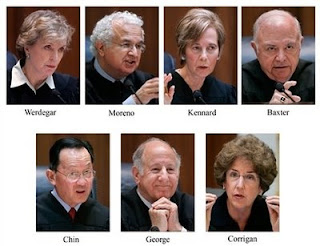 By now the dreadful news from California is widely known: by a vote of 6-1, the
 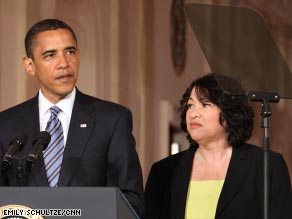 Somewhat counterbalancing this awful news was the announcement yesterday morning of
  On a better literary note, congratulations certainly must go to a writer whom it required maturity for me to appreciate,