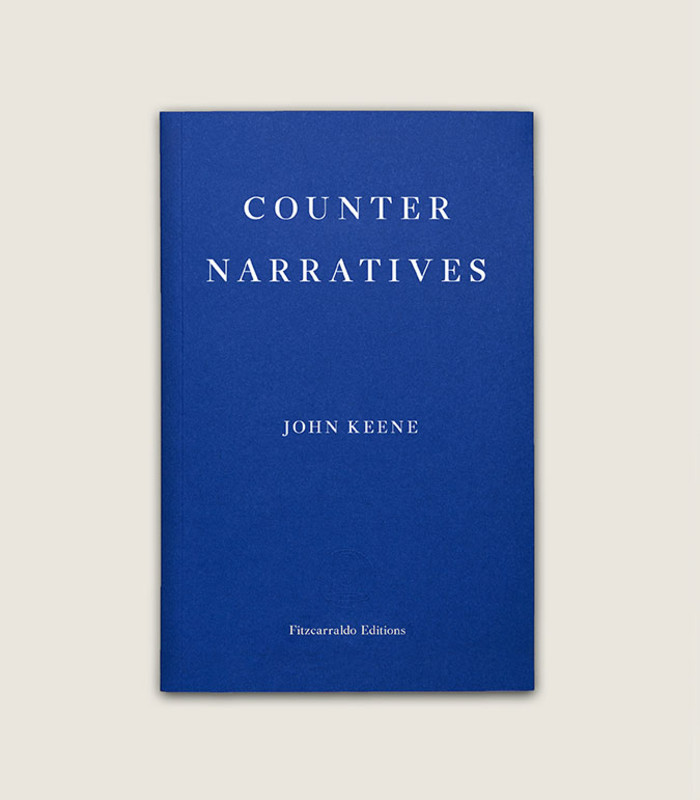
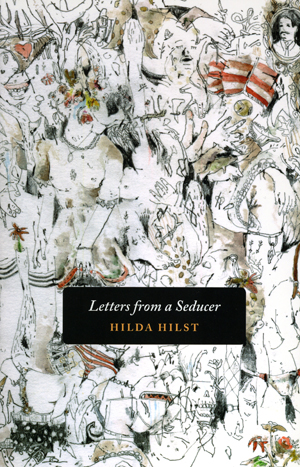
Showing posts with label Jamaica. Show all posts

Monday, June 20, 2016

Quote: Michelle Cliff + RIP


-- Copyright © Michelle Cliff, from "If I Could Write This in Fire I Would Write This in Fire," from Homegirls: A Black Feminist Anthology, edited by Barbara Smith, New Brunswick: Rutgers University Press, 1983. All rights reserved.

(In memoriam to Michelle Cliff, who passed away on June 12, 2016. Born on November 2, 1946, in Kingston, Jamaica Cliff would go on to a long and important career as one of the major queer Jamaican-American and Caribbean-American novelists, short story writers, and essayists of her generation.
Michelle Cliff (1946-2016
Cliff's articulations of feminist and queer intersectionalities in relation to history and society played important roles in the development of Black Diasporic feminist thought and writing, and her ongoing experimental approach to her fiction, like her political engagement and ethical example offered models for all who have followed her. Her partner, the great poet Adrienne Rich, predeceased her in 2012.

Among my favorite of her works of fiction are her first book, Abeng, published in 1985 and which I first came across when I was in college--though not in a college class, but on a bookstore shelf--and the very playful and inventive The Store of a Million Items, from 1998. Her last book, the novel Into the Interior, appeared in 2010.)

Thursday, November 12, 2015

Edward Baugh @ Rutgers-Newark + Poems

Last Friday, poet and scholar Dr. Edward Baugh paid a visit to Rutgers-Newark. Professor Emeritus of English at the University of the West Indies, Jamaica, Baugh over the years has held many visiting posts in the US and UK, among them at UCLA and Howard University, as well as as Flinders, Macquarie, and Wollongong Universities. Baugh is widely known as ab eminent literary critic whose academic writings focused on West Indian literature, especially the study of Anglophone Caribbean poetry, and in particular the work of Nobel Laureate, Derek Walcott.

Yet throughout his scholarly career he also has been a poet of note, and it was in that capacity that he came to campus from Jamaica as part of the Department of African American and African Studies' lecture series, with the co-sponsorship of the English Department and the MFA Program in Creative Writing. Also key to his visit was support from my colleague Rachel Hadas, who not only helped to organize and provided key financial sponsorship for his reading, but also hosted Dr. Baugh during his visit. (While in New York and New Jersey, Dr. Baugh also visited Ramapo College under the auspices of Professor Shalom Gorewitz, Rachel's husband.)

As part of his visit, I offered introductory remarks, excerpted below. The reading, Q&A and reception drew a strong crowd that included many Rutgers-Newark colleagues and students. My English and African American Studies colleague Belinda Edmondson, a noted Caribbeanist scholar is, I believe, one of his former students. Also attending was Baugh's longtime friend, multimedia artist, poet and arts activist Gerd Stern, one of the founders of the legendary arts collective USCO. Stern, I learned, had maintained a home for decades in Jamaica, which is where he befriended Baugh.

A snippet of my remarks:
Edward Baugh's poetry disarms with a quiet power. It does not indulge in rhetorical flashiness or imagistic legerdermain, but rather draws upon the poet's commitment to careful observation and an engagement with the flow of daily life. 
It is poetry very much of its time and place, of the Jamaica of Baugh's lifetime, and indeed of his life, flavored with everyday speech and the tonalities of the contemporary lyric, but also it is a cosmopolitan poetry that casts a net out to and hauls in perspectives from the wider world, the black and diasporic worlds, the worlds of literature itself. 
It is a poetry brimming with wit, sometimes machete-sharp, and an ear keenly attuned to the resonant subtleties of language's possibilities that can recut the edges on a copper. In "You Ever Notice How," from his 2000 collection It Was the Singing, Baugh writes

 And is always the same, check me again
 tomorrow night, same time, same square,
 different set of players, different
 colour costume, but the same script,
 different maximum, but the same
 two left feet missing the beat. 

And, in "Words," a heart-breaking poem about his mother's illness and how she shaped his own love of language, from that same collection, he writes:

                         She sits
 rigid with pain, too proud to ask
 if there is any word of relief.
 In the silence between us
 you can hear the metastases multiply.

These are words that do profound work, revealing for and reminding us of poetry's many powers, one of which is portraying the world around us, while another is to reveal what lies deep inside it, and us. 
Copyright © 2015, John Keene


Here are two brief poems by Edward Baugh, one rather light and one quite serious, from his most recent collection, Black Sand. They offer only a glimpse of his work, which I recommend, so do consider adding Black Sand to your collection. He is the author of three collections of poetry, including A Tale from the Rainforest and It Was the Singing. His other publications include Derek Walcott: Memory as Vision and Frank Collymore: a Biography, as well as the edited volumes Critics on Caribbean Literature; Derek Walcott's Another Life (ed. with Colbert Nepaulsingh); and Derek Walcott's Selected Poems.

ON BEING MISTAKEN FOR EDDIE BRATHWAITE, THERE BEING OF COURSE NO SUCH PERSON, AND WITH APOLOGIES TO J. ALFRED PRUFROCK

No, I am not
Eddie Brathwaite
nor was meant to be
and anyhow
he's Kamau now
while I remain
just plain
Eddie

***

NIGHTWALKER

When they asked James Meredith
what it was like to be
the first black student at Ole Miss,
he replied: "It's like you walk in the dark
and a bird flutters in the bush.
I have walked in the dark
and bird is always fluttering."

Both poems copyright © Edward Baugh, from Black Sand: New and Selected Poems (Peepal Tree Press, 2013). All rights reserved.

Wednesday, May 01, 2013

Remembering Richard Iton

Richard Iton
Last week I sadly learned of the death, after the recurrence of a previous illness, of my former Northwestern University colleague Richard Iton. Like all of the full-time members in Northwestern's African American Studies Department, Richard was a distinguished scholar in several fields, and he brought this interdisciplinarity to bear in his scholarly and critical work, and in his teaching. A political scientist by training, with a PhD from Johns Hopkins University, he explored the relationship between black popular culture and political and social movements and formations. The author of two award-winning books, including In Search of the Black Fantastic: Politics and Popular Culture in the Post-Civil Rights Era (Oxford University Press, 2008) and Solidarity Blues: Race, Culture, and the American Left (University of North Carolina Press, 2000), his interests encompassed a wide range of topics, such as the Black Diaspora and transnationality, postcolonial studies, and critical race studies. Richard could and did speak as authoritatively about Hegel, Gramsci and Fanon as about the history of African American comedy or hip hop, and he once thrilled students by giving them a short course, in the span of a few hours, on hip hop's history and aesthetic and cultural stages up to today. He also played a key role in designing and implementing Northwestern's very rigorous and highly regarded doctoral program in African American Studies, one of the leading ones in the US, and it was not only his intellectual vision, but his diligent administrative work that, alongside that of others, brought the NU PhD in African Americans to fruition. His passing represents a great loss to the department, the university, and the fields in which he worked. It also represents the loss of a warm, generous, down-to-earth, funny, brilliant person, someone who succeeded, many times over, in bringing talented new scholars into the world. Rest in peace, Richard, and we will truly miss you, your exceptional and focused mind, your generous, amazing spirit.

The official statement from Celeste Watkins-Hayes, the chair of African American Studies at Northwestern:

Mourning the passing of our Dear Colleague, Richard Iton

April 25, 2013 -- Last night, we received reports of the passing of our colleague, teacher, and friend Richard Iton. We have been working to confirm this information, and we just received word from Northwestern Memorial Hospital that these reports are unfortunately true. Our hearts are broken and our minds are jarred. But we can take comfort in the fact that Richard touched many lives and made remarkable contributions to our department, our university, and our discipline. We will share details about services when we receive them from Richard's family. In the meantime, let's lean on each other for support.

Yours in sympathy,
Celeste Watkins-Hayes, PhD
Chair, Dept. of African American Studies


Here is a video of Richard speaking last year at Cornell University:

Thursday, October 20, 2011

Claudia Rankine @ Chicago Humanities Festival

Claudia Rankine speaking to a fan
Rankine (l) & attendee
It's been a tough few weeks--such are our quarters!--but I have a little breather today, so I thought I'd post on the Chicago Humanities Festival presentation, this past Sunday, of Claudia Rankine, one of the more original and to me, compelling, creative minds working today.  Rankine, a native of Jamaica, longtime resident of New York, and now the Henry G. Lee Professor of English at Pomona College, originally gained notice for a series of award-winning books of poetry, including The End of the Alphabet (1998) and PLOT (2001), which are highly innovative in terms of form and content, but it was her last book, Don't Let Me Be Lonely (Graywolf, 2004), which has perhaps garnered the most praise, not least because it manages to achieve so many things and in ways that, as with her earlier books, feel new and utterly particular to her vision.  Blending poetry, meditative essay, fictional narration, and visual images, Don't Let Me Be Lonely beguiles and provokes the reader into believing it is true, that it is autobiographical and memoristic, yet it creates and resounds with affective and social truths that anyone living and thinking about life in contemporary America, and particularly after 9/11, realizes sooner or later.
Claudia Rankine at the Chicago Humanities Festival
Rankine speaking at the Chicago Humanities Festival
The Festival had billed Rankine's presentation as a discussion of Don't Let Me Be Lonely, but in the years since that book appeared she has produced a range of other work, including short video films, a play, and essays, and she shared some of these with those present. First she showed three videos she had created with her husband, filmmaker John Lucas, entitled Situation 1, Situation 2, and Situation 5. In the first, they utilized a video clip from the 2006 Soccer World Cup final, in which French star Zinedine Zidane infamously headbutted Italian player Marco Materazzi, and removed all of the other French players "to isolate" Zidane. They then slowed the clip down, and paired it with a cento-style text, read by Rankine, comprising snippets of prose by authors such as James Baldwin, Frederick Douglass, Homi Bhabha, Frantz Fanon, William Shakespeare, and others. The effect of the slowed but still-moving images and Rankine's incantatory verbal performance was hypnotic, and the moment in which Zidane responds to Materazzi's provocations packed far more power than when I'd seen it before. Some of the lines I noted included: "Who is forced to snatch his humanity....out of the fire of human cruelty"; "he state of emergency is also always a state of emergence"; "I resolved to fight"; and "It is the white man who creates the black man, but it is the black man who creates."
"Situation 1," by Claudia Rankine & John Lucas
A still from Situation 1, by Rankine & Lucas
In Situation 2, a meditation on 9/11, Rankine and Lucas snapped still photos of people asleep on planes, with moving imagery of the clouds just beyond the frames, and paired this with a text Rankine wrote that managed both to feel ethereal and quite profound.  The video captures the physical and psychological vulnerability and innocence of human beings while sleeping, "the body at rest, inaugurating its form," especially while traveling by airplane or any other means of mass conveyance, which also entails trust, rationalization and faith in the pilot carrying them. For the passengers on the four airplanes that were transformed into missiles and weapons of destruction, however, this basic ontological understanding was upended. The oneiric style of Rankine's poetry here camouflages several parallel tracks, which included some of the horrifying calls people placed on 9/11 and a low human heartbeat, and thus, as anyone who travels must, the potential terror underlying this experience, but slowly it emerges, leading us to acknowledge that even on a perfectly safe flight, we surrender all control and, at a certain point if and when we close our eyes, "there is no self, just this falling off."
A still from "Situation 5," by Claudia Rankine & John Lucas
A still from Situation 5, by Rankine & Lucas
The third video, Situation 5, was also quite powerful. At first observation it appears to be a narrator's evocation of family ties, of "brothers" to and with whom the narrator is seeking to deepen understanding and affection. Yet the video is actually about two men who were imprisoned for years, and about whom Lucas is making a documentary, The Cooler Bandits (title?). In fact, the images showed them departing prison for the first time. Knowing this, Rankine's soundtrack text--"My brothers...have not been to prison, but they have been imprisoned"; "On my birthday...they say my name"; "We open our mouths to speak, and out come blossoms"; "I say goodbye before anyone can hang up. Don't hang up." etc.--assumes an importance, a weight, an ominousness, that continues to deepen in retrospect.
A still from "Situation 5," by Claudia Rankine & John Lucas
A still from Situation 5, by Rankine & Lucas
A still from "Situation 5," by Claudia Rankine & John Lucas
A still from Situation 5, by Rankine & Lucas

Saturday, April 12, 2008

Poems: Kwame Dawes

Late in 2006 I posted about a reading poet Kwame Dawes gave at Naïeveté Studios, and also referenced him when I wrote about poet Uche Nduka, whom I finally got to meet at this year's AWP conference. Kwame (b. 1962-) whose site bills him as "the busiest man in literature today," is a remarkable figure on many levels, not least because he manages to do contribute a larger portion of his time to community-based activities, not only in South Carolina, where he lives and teaches, but also in Jamaica, where he grew up.

One of the important and extraordinary projects in Jamaica he's been involved with for several years now is Hope: Living & Loving with HIV Jamaica, commissioned by the Pulitzer Center, which describes its various components.

Poet and writer Kwame Dawes travels to Jamaica to explore the experience of people living with HIV/AIDS and to examine the ways in which the disease has shaped their lives. The journey brings him in touch with people who tell their stories, share their lives and teach him about resilience, hope and possibility in the face of despair. Some are living with the disease; others have committed their lives to HIV/AIDS care.

Hope: Living and Loving with HIV in Jamaica is a multi-media reporting project: an extended essay by Kwame Dawes for The Virginia Quarterly Review (Spring 2008), two short documentaries for the public-television program Foreign Exchange, a collection of poetry inspired by his reporting, a performance of the poems set to music by composer Kevin Simmonds, and LiveHopeLove.com, an interactive web presentation that synthesizes audio and text versions of the poems, the Foreign Exchange videos, additional video interviews, the music, and photography by Joshua Cogan.

I can't copy any of the poems directly, so please click on the image below to read them and also hear Kwame Dawes read them, see the accompanying photographs, and learn about the people, stories and experiences behind them.

Tuesday, August 21, 2007

Vick's Plea Deal + Hurricane Dean + Soul Mountain Reading

VickAs disgusted and horrified as I am about the worst of the crimes (the electrocution and drowning of the dogs) that Atlanta Falcons star quarterback Michael Vick (photo at left, Reuters File Photo) has now pled to having committed, I'm also saddened by his having been involved with and even masterminded some of them. With his reported imminent plea deal, I cannot see how his career, even for the sometimes-lax NFL, is not over. (Were he somehow to have wriggled out of conviction, his team and the league might have allowed him to continue playing. He is one of the most exciting quarterbacks of all time, and the single-season rushing leader at his position.) On top of this, the Commonwealth of Virginia, if I read correctly, is still planning to bring charges against him that could result in a 40 year prison sentence.

He's probably asking himself over and over was it worth it, was losing everything and facing a jail sentence really worth the thrill of the entire scheme, the excitement of the fights and of getting away with it for so long, the bets won and lost, the grotesque cruelty to the animals, the camaraderie with friends and acquaintances who had no one's--neither their own or his--best interests in mind? Was it? How could it possibly be? I know gambling is now thoroughly integrated into our culture, and people don't think twice about dropping money they don't have on games of chance, but pitting dogs (or other animals, for human sport) against each other is still ethically more problematic than risking money on instant-win scratch cards, poker games or baccarat tables. I've read rationalizations of dogfighting, an ancient sport that I've never watched and don't care to (just like cockfighting). I find the punitive methods that are alleged in this case indefensible.

One of my first thoughts when I first heard the allegations against Vick was whether or not his teammates on the Atlanta Falcons, the ownership, or the league had any knowledge of his involvement in dogfighting. And is he the only one? I find it curious that for a league taht purports to be focused on its public image and on its talent, no one had a clue until the investigation of Vick's cousin on a drug case led to the discoveries on the Surry farm. I'm also curious to find out if the NFL, PETA and others who are fulminating against Vick are going to look at other players and see if they're involved in dogfighting, cockfighting, and, yes, I'm going to say it, non-subsistence hunting, which is a bloodsport, and racing, where, as Bernie reminded me, horses that lose are "put down," which is to say, less euphemistically, killed. Our society rationalizes the cruelty involved in non-subsistence hunting, but the kind of brutality that Dick Cheney, among others, engages in during closed hunts is just as unconscionable, as is the brutality enacted on animals in other sports. (Yes, I know, few people care as much about ducks or geese or bobolinks or even race horses as they do dogs, which are humans' close companions, but still--and what, as Byron pointed out, about greyhounds? They don't all get adopted and sheltered after their racing lives end. I would add that I know population-control hunting is also controversial, but also doesn't merit the sort of outrage that it probably could.) Something tells me that after Vick goes down there'll be much ado--though little focus on other forms of cruelty to animals or the broader issues of classism and speciesism--for a hot minute, and things will go back to the way they were.

***

As I type this, Hurricane Dean continues its march through the Gulf region, having slashed a terrible swath through Jamaica's capital, Kingston, with 2 dead there and 4 in Haiti. It was, however, less destructive to Jamaica than predicted, and the Prime Minister, Portia Simpson Miller declared a day of thanksgiving as a result. Every land mass in its path has been drenched. It's currently pounding the Yucatán Peninsula and its resorts, and though it's been downgraded to a Category 1 storm, meteorologists suggest it could again gain force once it moves into the open water. The greatest threat then would be to Mexico's extensive open water oil-drilling infrastructure. Anthony points out on his Monaga blog that the DR did not sustain too much damage from Hurricane Dean, though he does post a disturbing video of a Haitian teenager who tragically is killed by the wall of waves. (He also poses the question of whether this should be on YouTube, and by extension, his site.) Meanwhile, the tropical storm whose name I thought I'd hallucinated, Erin, has inundated parts of the Midwest! I saw last night that Des Plaines River, outside of Chicago, had overflowed its banks, and that there'd been flooding in a number of other states, including Minnesota, Missouri, and Oklahoma.

***

From Dante Micheaux, an upcoming reading of Soul Mountain-affiliated poets, in Old Lyme, Connecticut (Soul Mountain is a writers' retreat founded a few years ago by poet Marilyn Nelson):