Wednesday, September 14, 2016

Contrenarrations: the French Edition of Counternarrations On Bookshelves

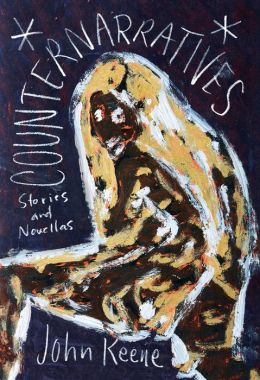
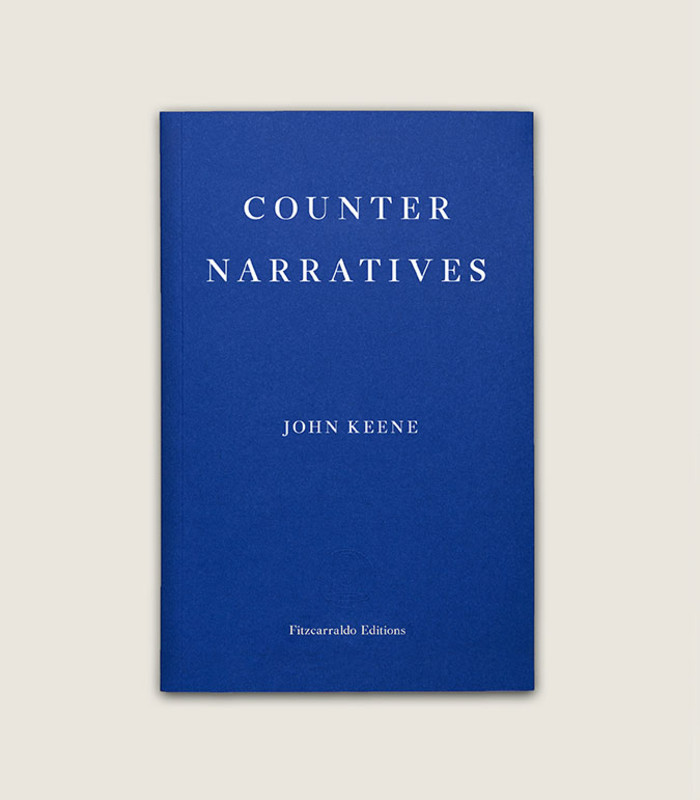
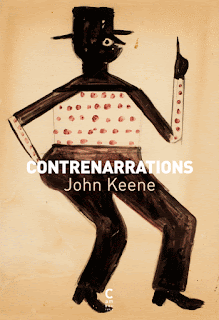
On August 24, the French edition of Counternarratives, published by Éditions Cambourakis, retitled Contrenarrations and superbly translated by Bernard Hoepffner, hit bookstores. (As I may have written before, Hoepffner was one of the most perspicuous editors I have ever worked with, and perfectly complemented my excellent New Directions editor Barbara Epler.) Cambourakis chose a painting by the great Bill Traylor to grace the cover, maintaining the theme and style of the New Directions cover, but endowing it with its own distinctive look:


There have been several short prose reviews so far; the first, by Emmanuel Requette, on the website of Librairie Ptyx, was one that the translator, Hoepffner, forwarded directly to me. It's very good. A brief quote:

Ce n’est pas Le Noir, La Négritude, L’opprimé qui est le cœur de Contrenarrations, mais sa parole. Brimée, bridée, brisée, mais jamais éteinte, conservant dans la possibilité de son advenue toute sa force. Mieux encore, enfouies sous des couches de silence forcé, semblent y avoir mûri des manières plus subtiles et fécondes de rendre compte. Jamais inutilement post-moderne, ni victimaire, ni doloriste, Contrenarrations consacre génialement le rôle impertinent et salvateur de la forme.
[Rough translation: It isn't the Black Person [or Blackness], Blackness, the Oppressed that is the heart of Counternarratives, but their speech. Bullied, constrained, broken, but never extinguished, keeping all its force in the possibility of its occurrence. Better still, buried under layers of enforced silence, seeming to have ripened in more subtle and fruitful ways of taking account of things . Never uselessly postmodern, nor playing the victim, nor lugubrious, Counternarratives brilliantly consecrates the impertinent and saving role of form.]
On their Facebook page, Éditions Cambourakis also features this review by Damien Aubel from the French monthly magazine Transfuge's coverage of the August rentrée littéraire:


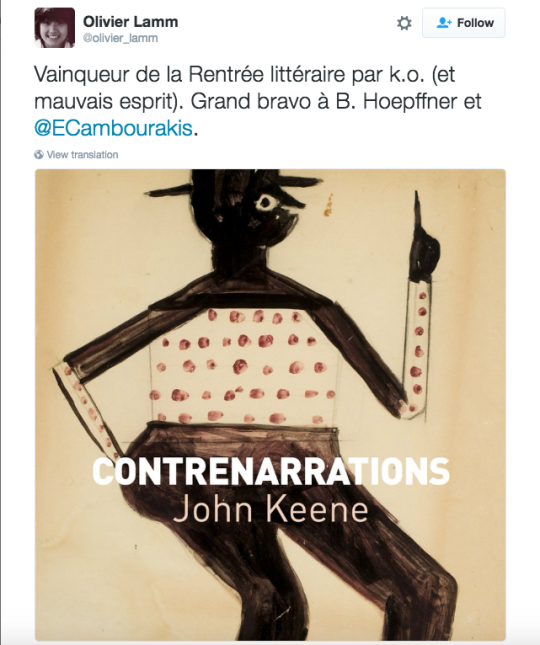
I also came across the following tweet, by Olivier Lamm, about Contrenarrations' appearance at a recent Rentrée littéraire in Paris (I think): he says that the book was winner by knockout (and evil spirits--referencing several characters in the collection)! It's nice praise and I'll take it!

Tuesday, September 13, 2016

Classes Have Begun + The LIU Brooklyn Lockout (UPDATED)

Rutgers-Newark
Labor Day has come and gone, and in its wake the school year is off and racing. In addition to chairing African American and African Studies again this year, I have a graduate English seminar on my slate. Last Thursday I taught my first class meeting for this course, which runs under the rubric "Topics in Literature," with the subtitle "Postmodern: Beauty, Ideology, Power." What I'd envisioned was a course exploring key aesthetic concepts, both old and new, as means of apply critical pressure to a wide array of late 20th and 21st century works, in the genres of poetry, fiction and drama, that fall broadly underneath the category of post-modern.

Some of these will be by writers visiting Rutgers-Newark's Writers at Newark reading series this fall: Rickey Laurentis, Robin Coste Lewis, Eileen Myles, Chinelo Okparanta, Kristin Váldez Quade, and Ocean Vuong. Other works include texts that I have taught before, like Adrienne Kennedy's Alexander Play The Ohio State Murders (I love this work!) and poetry by Kenneth Koch, Mei-Mei Berssenbrugge, as well as books I have never taught before but long wanted to, including Peter Weiss's (in)famous play Marat/Sade, Cormac McCarthy's award-winning and popular dystopia The Road, Bret Easton Ellis's masterpiece of visionary satire, American Psycho, and Nnedi Okorafor's stunning novella Binti.

Of course for every text I chose there were many handfuls I had to forgo, but I am teaching an undergraduate African Diasporic fiction class this upcoming spring, so I am going to be aim to include some of the works I could not use this fall in that class--while also being mindful not to overload those students. I hope to post a bit more about the in-class discussions as the semester progresses.

***

UPDATE:
As the New York Times reports, LIU Brooklyn's faculty lockout has finally ended, after 12 days, on September 14. The university's administration and its faculty union agreed to extend the existing contract, which had expired on August 31, to May 31, 2017, or the end of the current academic year. During this period administrators and union officials will negotiate a new contract and the faculty union will not authorize a strike. The end of the lockout averts what was quickly becoming a fiasco for LIU Brooklyn's hardline president and the university, as students staged walkouts and public demonstrations against the policy. Chalk up one loss, however temporary, for the ongoing neoliberal corporatization of American colleges and universities.

While Rutgers-Newark faculty and most of our colleagues are back in classrooms or will shortly be, unionized faculty at Long Island University-Brooklyn find themselves locked out by their current administration. Since their contract expired on August 31, LIU president Kimberly Cline has kept all 400 members of the faculty union off campus. In addition to cutting their pay, Cline and the university have also cut blocked their campus email accounts, dropped their health insurance, and replaced them with temporary scab teachers. Although Cline pledged to students that the lockout would not cause disruptions, it has allegedly transformed LIU-Brooklyn into a site of chaos, with some classes being led by faculty members lacking expertise in their assigned subjects and other classes barely being taught, if at all. In one particularly egregious case, Democracy Now reported, LIU's Chief Operating Officer, Gale Haynes, a political scientist, was slated to teach a yoga class; the university has since called this an "error."

The chief point of contention centers on LIU's new proposed contract for its Brooklyn unionized faculty, which would not only lower their pay and benefits relative to their colleagues at LIU's C. W. Post satellite campus on Long Island, but also gut pay for adjuncts. Once their contract expired, LIU-Brooklyn's unionized faculty barely had time to read and vote on the contract, and probably would have struck for better terms, as they had in the past, but Cline preemptively locked them out when the contract expired. When they voted roughly a week later to reject the contract, Cline did not reopen dialogue, and has given no signal that she or the administration plan to back down, leaving LIU-Brooklyn students, who pay anywhere from $30,000 to $50,000 per year confused and enraged. COO Haynes claims that the university is negotiating in good faith, though neither she nor anyone else in the administration has yet officially proposed more equitable terms. The Long Island University Faculty Federation has filed a complaint over unfair labor practices with the National Labor Relations Board, and, according to a report in Common Dreams, the LIU Faculty Senate has issued a no-confidence vote for Cline.

Were the faculty to accept the current contract, they would be ratifying a two-tier system not just for themselves in relation to their colleagues at C. W. Post, but especially for new Brooklyn faculty members, and in particular, adjuncts. Cline, however, has yet to sign a labor contract with any of the unions at LIU, and rejected outright the possibility of extending the previous contract for five weeks while the university and union negotiated the new one. Instead, as publications such as Common Dreams, The Nation and The Atlantic have pointed out, Cline's goal since becoming president appears  slashing costs at any cost, and cementing neoliberal, anti-labor policies to improve the school's financial picture and credit rating in the short term. The danger for the institution is manifold: its reputation is taking a serious hit; it will be hard, even at a time of academic job scarcity and precarity, to field quality faculty in the future; and it may be driving away current and future students, and alienating alumni. Two hundred LIU students protested yesterday, and there have been rolling protests since the lockout began. Perhaps Cline's goal is to shut the campus down for good in favor of the wealthier Long Island branch, which would be loss for Brooklyn and New York's academic ecology. Right now, though, that doesn't seem such a far-fetched idea.


Democracy Now: "Everything Was Immediately Cut at LIU"

Monday, September 12, 2016

Worker Writers School Fall Open House on Governor's Island

The packed house at Worker Writers School
This past Saturday, at the invitation of the brilliant poet, professor and activist Mark Nowak, I had the pleasure of attending and participating in this year's "Fall Open House," a series of mini-workshops, conversations, and readings, which the Worker Writers School organized in collaboration with PEN America. The half-day event took place at Nolan Park House #11 on Governors Island (which I'd never before visited), and brought together participants from a range of labor unions and social action organizations, ranging from the Domestic Workers United, the Taxi Workers Alliance, and the Street Vendor Project to Picture the Homeless and the Retail Action Project. Though a swelter descended in the early morning, transforming the Nolan Park house into a kiln, participants (including one of our new Rutgers-Newark MFA students) kept dropping in, and though I had to head back before the final session, Mark noted that many participants stayed even into the early evening.

The sessions included Bhaskar Sunkara, editor of Jacobin, speaking about socialism and organizing; a panel on Vocabularies of Resistance, featuring scholar, author, activist and Williams College professor Joy James, political scientist and founding member of Lower East Side Community Labor Organization Immanuel Ness, and investigative reporter and author Anjali Kamat; a writing session led by the stellar poet and professor Patricia Smith, entitled "Giving the Stories Room"; Pulitzer Prize-winner Dale Maharidge speaking on "Someplace Like America"; and a concluding reading by the Worker Writers’ School participants. I followed Bhaskar and talked not only about my own Counternarratives, but about the necessity of counternarratives and stories of resistance more broadly in transforming the guiding narratives in this and other societies.

In addition to the speaking and writing sessions, the Fall Open House also included the U.S. film premiere of Vienna-based artist and filmmaker Oliver Ressler's Emergency Turned Upside Down, which ran several times during the day, and, in the darkroom at the rear of the building, photographer Daniel Johnson created a Proletarian Nights Photo Booth, inspired by philosopher and critic Jacques Rancière, with both digital and Polaroid photos free of charge. Many thanks to Mark again, and to all the presenters and participants for an enlightening, invigorating day--and perfect reason finally to venture over to Governor's Island.

Some photos:

The bookselling table
Mark (at left) and some of
the participants
The Proletarian Nights Photo
Booth, pre-set up
Bhaskar Sunkara, at center, before
his presentation
During the first session
Marian, Joy James, and Immanuel Ness 
Immanuel Ness, about to speak 
Immanuel Ness, Anjali Kamat
and Patricia Smith
Patricia Smith fanning herself
(it was hot!) as she got everyone
thinking, dreaming and writing


Sunday, September 11, 2016

Random Photos

It has been a while since I've posted any. Here are some (fairly to very) recent ones, including a series from Governors Island, which I visited yesterday.

Our increasingly luxury tower-
filled, hypergentrifying
downtown Jersey City skyline
A longtime business in downtown JC,
being forced out, now features
a retail space sign in its window
Strange juxtapositions: a rainy sunny day
in Jersey City
Late summer catness (cuteness)
At the Jersey City Pride
Festival 
Newark Avenue, the main Pride
thoroughfare this year 
People having lunch on the Upper East Side, Manhattan
High end tchotckes Expensive art
at an Upper East Side gallery

My ever-rising office bookstacks 
A badger, in South Kearney (NJ) 
On the Governor's Island ferry 
Leaving the South Ferry docks 
The Staten Island ferry, with Jersey City in the
background and Manhattan at right

Governors Island 
Disembarking 
One of the historic buildings on what
once was a strategic military base
One of the organizations based on Governors Island
One of the Nolan Park houses,
with a fascinating sculpture out front 
Another one of the organizations based on GI 
An outdoor exercise class in Nolan Park
One of the Nolan Park paths
DJs about to set up for an afternoon set 
Relaxing in the extreme heat 
Pershing Hall (I think), Governors Island 
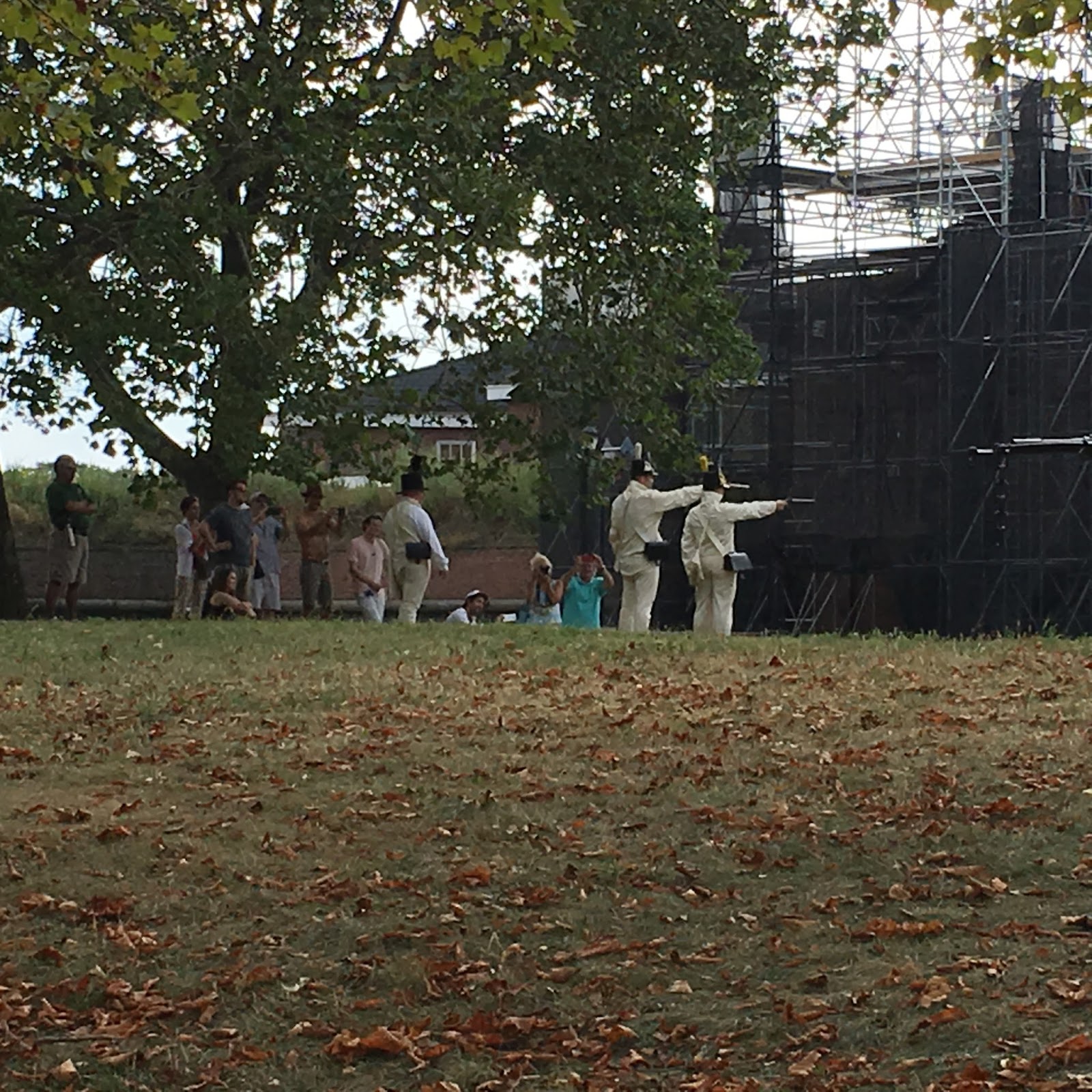
Some sort of shooting event
(a reenactment?)
Looking toward Brooklyn
Pulling away as another ferry arrives
Brooklyn, from the ferry
Courtland Street, with the Calatrava PATH
hub looming like a giant rib at left
Santiago Calatrava's PATH station, with
One World Trade Center at rear
Inside the futurist PATH station--
with the Oculus visible at top--
now fully occupied and bustling 
One of the second floor commercial
arcades, World Trade Center
The stairs to the Oculus and main floor 
A couple photographing each other, World Trade Center
A restaurant demolition in Newark