One of the things I've begun to do since becoming a vegetarian that I used not to is more cooking integrating multiple vegetables at once, creating dishes that taste delicious and last for several days, rather than my old approach, which I grew up with, which entails cooking several different things separately and then putting them on the plate. The old pattern entailed cooking a piece of meat (say a lamb chop), a vegetable (say, spinach), and a starch (say brown rice). This is how my mother cooked and still does; my late maternal grandparents, both of them very good cooks, would make more integrated dishes, perhaps based on their experiences growing up in the South before and during the Great Depression and its aftermath, when putting whatever you had into a pot was the preferable way to go.
C and I, or alone, would then have these meat+starch+vegetable with bread (homemade over the last few years). Pasta dishes were an obvious exception; in those I sometimes combined multiple vegetables (onions, mushrooms; vegetarian lasagna involved spinach, zucchini, yellow squash, etc.), or vegetables and meat. Occasionally I would cook stews or soups--which are extremely easy, and my friend Phoebe M. used to recommend them many years ago, but the idea of making a soup, for whatever reason, left me cold--or other dishes entailing combinations, but these were comparative rare. I'd go to the store and plan things around the meat I was buying. What would go with these chicken legs? What would go with these pork chops? And so on.
When I first shifted to vegetarianism, I would do something similar, cooking 2-3 vegetables (beets, broccoli, etc.) separately, adding the brown rice or couscous, and then have a slice of bread with it. But learning to combine several different vegetables in dishes has been a boon. It saves lots of money; the dishes last for days, whether I'm eating them by myself or with C; and when they work, they are delicious. Another thing I've learned to do is improvise: if I have certain spices in the kitchen, I can now figure out different kinds of curries, for example, and create something that has a different flavor depending upon the vegetable at hand. Also, having certain types of beans, lentils, and varieties of rice makes variations on certain dishes possible.
Here is a winter dish that I created--of course others have created something very similar and you can find recipes online--the other day that is perfect for winter meals. It incorporates acorn squash, which I almost always used to roast or cook in a pan of water, but which here becomes the basis for a filling and incredibly tasty meal. Its natural sweetness, amplified by the carrots, and hardiness is such that I didn't even need to add chutney, and the potato adds a contrasting flavor but similar texture. The curry I use below is improvised; you can change some of the ingredients, thus varying its flavor, but the basic cumin + coriander + turmeric + ginger + cinnamon + cayenne + clove combo seems to produce a delicious flavor, and obviates the need to buy pre-made curry powders, which you still may want to have for other dishes where a particular (red Madras, say, or milder curry) is what you're seeking. Making this sort of curry means a fragrant kitchen, and less need to try to figure out how to incorporate vital herbs and spices into your diet.
ACORN SQUASH CURRY
2 TB olive oil
1 medium-sized or large acorn squash, cut into 1 inch chunks
1/2 large or 1 small brown potato, chunked
1-2 carrots diced
1/2 large yellow onion, diced
3 cloves garlic diced (or equivalent)
2 TB fresh ground ginger
1 tsp ground cumin
1 tsp ground coriander
1 tsp ground cardamom (optional)
1 tsp ground cayenne pepper (optional)
1 tsp turmeric
2 cloves
1 cinnamon stick (or ground equivalent)
1/2 can of unsalted tomato paste
1 cup of water or vegetable stock* + extra water while cooking
salt & black pepper to taste
Start by adding chunking and dicing all your vegetables. Wash the skin of your acorn squash before you chunk it. Using a sharp knife and being very careful, pierce the skin of the squash and cut it in half. Then, after removing the very tough ends and the seeds, slowly cut it into small chunks. Go slowly, because acorn squash skins can be tough, and you don't want to...well, you want to keep all your fingers! (Let me add that I like the texture of the softened acorn skin, but if you want it softer, you might microwave the diced chunks for 2 minutes to soften them up.)
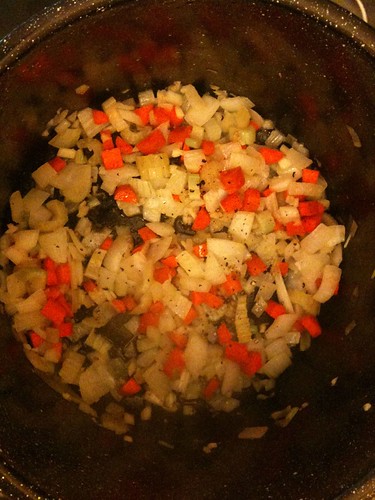
Next add the olive to in a cooking pot. Let it heat on low, and add diced onion and garlic. (I highly recommend using real onions and not onion powder, both for flavor and texture.) When the onions have begun to break down, add the acorn squash and the carrots, to let them soften. Turn the heat to medium. Add salt and pepper. Stir frequently. Once the squash has begun to soften, add the potato chunks, the spices (including the ginger), the tomato paste, and the cup of stock or water. Let it boil for a bit, then simmer for 30 minutes, stirring and adding a little water periodically to ensure that the potatoes don't burn.
(If you want some protein, about 20 minutes before you're done you can add 1/2 cup of red lentils + 1/2 cup of more water to cover them or cook up some curried lentils (1/2 cup lentils + 1 cup of water + salt, pepper, curry powder, cooked till lentils are soft) to go with this dish and brown rice.)
The squash and squash skin should be soft before you serve. Also, remove the cloves & cinnamon stick if you are serving to guests, who may not be so found of these hard bursts of flavor.
Serve over brown rice (2 1/2 cups of vegetable stock or water + 1 cup of brown rice + tsp of olive oil), with fresh homebread bread, and there you go!
*I learned how to make vegetable stock from watching and (probably misremembering!) Chef Jacques Pepin's show on how to make really scrumptious, practical dishes, but here goes, and you can freeze it so it's always available: 2 cups of water + 1/2 onion + 1 stalk of celery diced + 1-2 carrots diced + pinch of salt and pepper --> boil for 20 minutes et voilà, you have basic vegetable stock!
C and I, or alone, would then have these meat+starch+vegetable with bread (homemade over the last few years). Pasta dishes were an obvious exception; in those I sometimes combined multiple vegetables (onions, mushrooms; vegetarian lasagna involved spinach, zucchini, yellow squash, etc.), or vegetables and meat. Occasionally I would cook stews or soups--which are extremely easy, and my friend Phoebe M. used to recommend them many years ago, but the idea of making a soup, for whatever reason, left me cold--or other dishes entailing combinations, but these were comparative rare. I'd go to the store and plan things around the meat I was buying. What would go with these chicken legs? What would go with these pork chops? And so on.
When I first shifted to vegetarianism, I would do something similar, cooking 2-3 vegetables (beets, broccoli, etc.) separately, adding the brown rice or couscous, and then have a slice of bread with it. But learning to combine several different vegetables in dishes has been a boon. It saves lots of money; the dishes last for days, whether I'm eating them by myself or with C; and when they work, they are delicious. Another thing I've learned to do is improvise: if I have certain spices in the kitchen, I can now figure out different kinds of curries, for example, and create something that has a different flavor depending upon the vegetable at hand. Also, having certain types of beans, lentils, and varieties of rice makes variations on certain dishes possible.
Here is a winter dish that I created--of course others have created something very similar and you can find recipes online--the other day that is perfect for winter meals. It incorporates acorn squash, which I almost always used to roast or cook in a pan of water, but which here becomes the basis for a filling and incredibly tasty meal. Its natural sweetness, amplified by the carrots, and hardiness is such that I didn't even need to add chutney, and the potato adds a contrasting flavor but similar texture. The curry I use below is improvised; you can change some of the ingredients, thus varying its flavor, but the basic cumin + coriander + turmeric + ginger + cinnamon + cayenne + clove combo seems to produce a delicious flavor, and obviates the need to buy pre-made curry powders, which you still may want to have for other dishes where a particular (red Madras, say, or milder curry) is what you're seeking. Making this sort of curry means a fragrant kitchen, and less need to try to figure out how to incorporate vital herbs and spices into your diet.
ACORN SQUASH CURRY
2 TB olive oil
1 medium-sized or large acorn squash, cut into 1 inch chunks
1/2 large or 1 small brown potato, chunked
1-2 carrots diced
1/2 large yellow onion, diced
3 cloves garlic diced (or equivalent)
2 TB fresh ground ginger
1 tsp ground cumin
1 tsp ground coriander
1 tsp ground cardamom (optional)
1 tsp ground cayenne pepper (optional)
1 tsp turmeric
2 cloves
1 cinnamon stick (or ground equivalent)
1/2 can of unsalted tomato paste
1 cup of water or vegetable stock* + extra water while cooking
salt & black pepper to taste
Start by adding chunking and dicing all your vegetables. Wash the skin of your acorn squash before you chunk it. Using a sharp knife and being very careful, pierce the skin of the squash and cut it in half. Then, after removing the very tough ends and the seeds, slowly cut it into small chunks. Go slowly, because acorn squash skins can be tough, and you don't want to...well, you want to keep all your fingers! (Let me add that I like the texture of the softened acorn skin, but if you want it softer, you might microwave the diced chunks for 2 minutes to soften them up.)
Next add the olive to in a cooking pot. Let it heat on low, and add diced onion and garlic. (I highly recommend using real onions and not onion powder, both for flavor and texture.) When the onions have begun to break down, add the acorn squash and the carrots, to let them soften. Turn the heat to medium. Add salt and pepper. Stir frequently. Once the squash has begun to soften, add the potato chunks, the spices (including the ginger), the tomato paste, and the cup of stock or water. Let it boil for a bit, then simmer for 30 minutes, stirring and adding a little water periodically to ensure that the potatoes don't burn.
(If you want some protein, about 20 minutes before you're done you can add 1/2 cup of red lentils + 1/2 cup of more water to cover them or cook up some curried lentils (1/2 cup lentils + 1 cup of water + salt, pepper, curry powder, cooked till lentils are soft) to go with this dish and brown rice.)
The squash and squash skin should be soft before you serve. Also, remove the cloves & cinnamon stick if you are serving to guests, who may not be so found of these hard bursts of flavor.
Serve over brown rice (2 1/2 cups of vegetable stock or water + 1 cup of brown rice + tsp of olive oil), with fresh homebread bread, and there you go!
*I learned how to make vegetable stock from watching and (probably misremembering!) Chef Jacques Pepin's show on how to make really scrumptious, practical dishes, but here goes, and you can freeze it so it's always available: 2 cups of water + 1/2 onion + 1 stalk of celery diced + 1-2 carrots diced + pinch of salt and pepper --> boil for 20 minutes et voilà, you have basic vegetable stock!