Tuesday, July 16, 2013

Fiction As An Aid to Thinking, or: Jacobs on Ambiguity

It has been a while since I've posted on current cognitive and brain science research that underlines the importance and power of imaginative writing, particularly fictional narratives, but then I came across Tom Jacobs' article last month in Pacific Standard, "Want to Learn How to Think? Read More," and realized I ought to write a little here about the work Jacobs discusses, and some of its implications. I should start by pointing that Jacobs' title misleads; he is writing not so much about learning how to think as about the distinctive ways researchers have found that reading certain kinds of texts, particularly fictional ones, shape and affect our thinking.

In his Pacific Standard article he focuses on recent findings by three psychologists at the University of Toronto, led by Maja Djikic, Senior Research Scholar and Director of the Self-Development Laboratory at Toronto's Rotman School of Management, who, in a paper they co-published earlier this year in The Creativity Research Journal, "Opening the Closed Mind: The Effect of Exposure to Literature on the Need for Closure," discovered that people reading works of fiction, as opposed to works of nonfiction, tended when tested afterward to show more capacity for ambiguity as opposed to a need for order and cognitive closure.

In the experiment, Djikic and colleagues had 100 Toronto undergraduates read one of either 8 short stories, by major fiction writers including Wallace Stegner and Jean Stafford, or one of 8 short nonfiction pieces by major nonfiction writers such as George Bernard Shaw and Stephen Jay Gould.  Afterwards the study participants completed a survey measuring their "need for certainty and stability," based on questions such as "I don't like situations that are uncertain," and what Djikic and her co-researchers found was that the students reading the works of fiction scored "significantly" lower than those reading the nonfiction.

What the researchers also registered was that among self-described frequent readers of fiction or nonfiction, the effect was "particularly pronounced." They posited that this might be an effect of fiction's not requiring a reader to come to a definite conclusion (though we often do, or wrestle with one), and a result of the imaginative simulation of thinking styles--and I would add, behavior, spatial experiences, perceptions, etc.--of characters of all kinds. Jacobs quotes the paper, which says:

One can think along and even feel along with Humbert Humbert in Lolita, no matter how offensive one finds this character. This double release—of thinking through events without concerns for urgency and permanence, and thinking in ways that are different than one’s own—may produce effects of opening the mind.

I would add, as I have before in prior entries on this topic, that global and local effects of works of fiction work on our minds in various ways. Not only in terms of simulative thinking, but also in the ways that characterization, voice and plot, to pick three key elements, generate cognitive embodiment and mirroring effects. I would also point out that drilling down to the granular level, language itself is crucial here. Specific words and their effects, perceived through the ascending matrices of phonemic arrangement up through syntactic effects to the level of paragraphs, on up to the movement of the narrative itself, work, often unconsciously, in and on our minds.

Jacobs ends by gesturing, as so many articles of this type do, by putting the empirical in service of the instrumental, particularly government and corporate educational policy. He cites Djikic and her colleagues appeal, in their paper, for a rethinking of the current approach of diminished funding for and support of the arts and humanities, which is occurring at every educational level across the US. Additionally, at a moment when there are discussions about the "crisis" in the humanities (which is to say, discussions about alleged shrinking enrollments and majors, as well as decreased funding), and at a moment where science, technology, engineering and mathematics (STEM) study, in the service of the domestic and global careers and economies, dominate, the findings of Djikic and her colleagues, offer an important counterpoint.

Moreover, like similar studies I have posted about before, these findings should remind us that literature, especially imaginative writing and especially fiction, poetry and drama, are anything but frivolous and unworthy of our attention, that we still do not fully understand how they work, even after centuries of exploring them, and that counter to what someone like Lee Siegel says, they are very much worth not just enjoying as entertainment, but examining in a variety of ways within academe. They are among the oldest and demonstrably powerful creative technologies that human beings have created, and we should not forget this.

Sunday, July 14, 2013

"My Soul Is Weary With Sorrow"

Trayvon Martin, 1995-2012

"My soul is weary with sorrow; strengthen me according to your word." Psalm 119:28

Shortly before we learned last night of the verdict in the George Zimmerman trial, C said to me, he's going to be convicted, and I said he would be found not guilty of the February 26, 2012 killing 17-year-old Trayvon Martin.

Any number of clues during the trial's run pointed in this direction, but I also thought at that moment of the innumerable times over the span of my life on this earth, of the innumerable times over the nearly 400 years of colonial and US history, during which black and brown people have been killed, with impunity, which is to say, with the support of the state and its various systems, including the law.

I thought about how the killing of black and brown people is a feature of the creation and history of this state, and many others, including our and their laws.
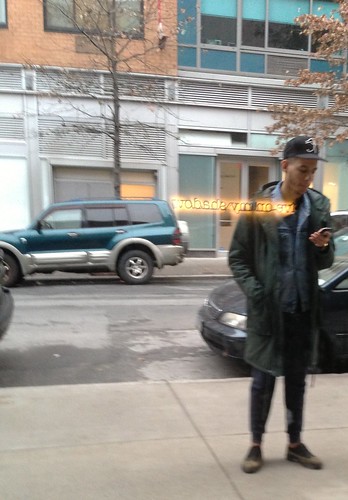
I thought about how we live in a society and in a system in which the concept of justice is often a phantasm, a mere word, often made to function as its inverse, especially when it comes to black and brown people.
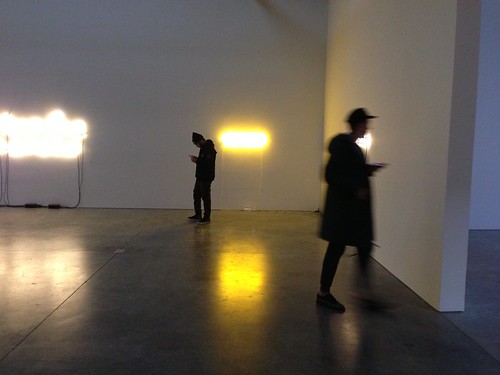
I thought about how for so many of us, Trayvon Martin was not and will not be just a name, not just an image, not just an analogy or a metonym, but a young person, a young black person, a young black murdered person whose name we add to a long list of names, too long, that we know we must not and cannot forget.

I thought about how many of us can say that we have been in Trayvon Martin's place and by the grace of God, of luck, of circumstance, we are still able to talk about God or gods, and grace, and circumstance, we are able to talk about the fact that we are still here, but very might not have been.

I thought about Trayvon Martin's parents' grief and sorrow, about how they will never get their son back, how they will never be able to live down the horror not only seeing his body after he was killed but now know that it has become an object of derision, of merriment, for people who had no concept of his humanity and perhaps never will.

I thought about how our friends did not have to testify in court and suffer the humiliation of becoming the subject, the target of attacks, a figure for caricature, a way for people not to deal with the terrific tragedy that unfolded that night in Florida.

I thought about how we have witnessed this story over and over again, about how angry and disappointed and enraged and disgusted and numbed I and others are by it, how it always gets transformed into another story, a story in which the deeper social, political and economic structures that make possible the killing of black children, brown children, black people, brown people, poor people, queer people, women, never get examined or discussed, and people move on to the next thing, and then it happens all over again.

I thought about how this entire fiasco will be turned into a money-making enterprise, how death, especially black and brown deaths, become a spectacle, to be exploited and disposed of when the next new thing comes along, and the fact of this child's death, the seriousness and sadness and solemnity that should attend it, are quickly disposed of.

I thought about how, once again, nothing will change unless we change that nothing into something, how we cannot depend upon "leaders" or laws to ensure the safety and sanctity of our laws, unless they are fully grasp how unsafe and little regarded, we are and are tired of being.

I thought about how low-grade mourning, and frustration, and rage, and indifference, become constants, and how so many of our lives entails not just recognition of but a continuous attempt to manage these feelings, to not be consumed by, destroyed by them.

We cannot be consumed and destroyed by these feelings. We should mourn Trayvon Martin's death, and change a legal system that allows his killer to walk free. But we also have to acknowledge that the society we live in needs to change, and not rest until that happens.

Monday, July 08, 2013

Quote: Enrique Vila-Matas

"39) 'Adieu' is a brief text by Rimbaud included in A Season in Hell, in which the poet does indeed appear to be saying farewell to literature: 'Autumn already! But why yearn for an eternal sun if we are committed to the discovery of divine light, far away from those who die at different seasons?'

"A mature Rimbaud - 'Autumn already!' - a mature Rimbaud at the age of nineteen bids farewell to what for him is the illusion of Christianity, to the various stages his poetry has been through, to his illuminist principles, in short to his huge ambition. And before him he glimpses a new path: 'I tried to invent new flowers, new stars, new flesh, new languages. I thought I had acquired supernatural powers. Now you see! I must bury my imagination and my memories! The beautiful glory of an artist and storyteller snatched away!'"

"He ends with a statement that has become famous, clearly a farewell of the first order: 'One must be absolutely modern. No songs; hold on to a step that has been taken.'"

"All the same, even though [André] Derain did not send it to me, I prefer a simpler farewell to literature, much more straightforward than Rimbaud's 'Adieu.' It is to be found in the draft of A Season in Hell and reads as follows: 'I can now say that art is an idiocy.'"

-- Copyright © from Bartleby & Co., Enrique Vila-Matas, translated by Jonathan Dunne, New York: New Directions Publishing Corporation, 2007. All rights reserved.

Saturday, July 06, 2013

Photos from This Winter & Spring II

Some photos from events I never got around to blogging. Enjoy!

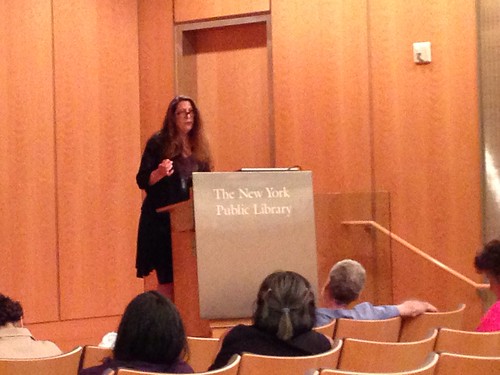
Phyllis Levin, talking about John Donne
Phillis Levin, at the "John Donne, Re-Done" reading
and discussion at the New York Public Library
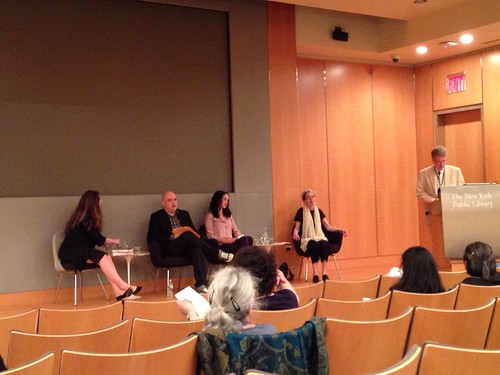
Levin, Donnelly, Cespedes, Dubrow and Jay Barksdale, at NYPL
Levin, Timothy Donnelly, Helen Cespedes,
Heather Dubrow, and Jay Barksdale, at "John
Donne, Redone" at NYPL
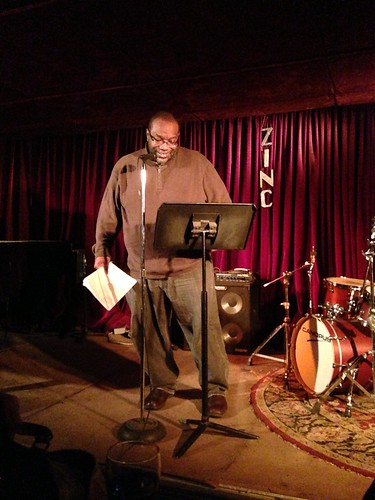
Fred Moten, Segue Series @ Zinc Bar
Poet, scholar and thinker extraordinaire
Fred Moten at the Segue Series, Zinc Bar
Tonya Foster, Segue Series @ Zinc Bar
The one and only Tonya Foster, reading
at the Segue Series, Zinc Bar
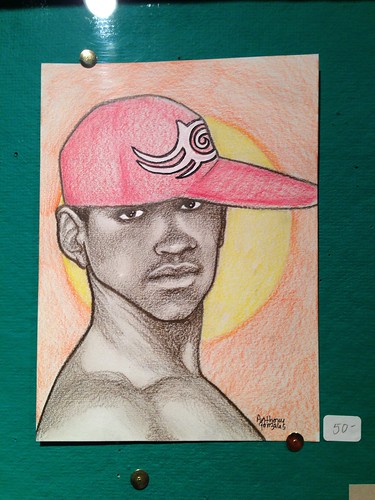
Anthony Gonzales drawing
Drawing by Anthony Gonzales,
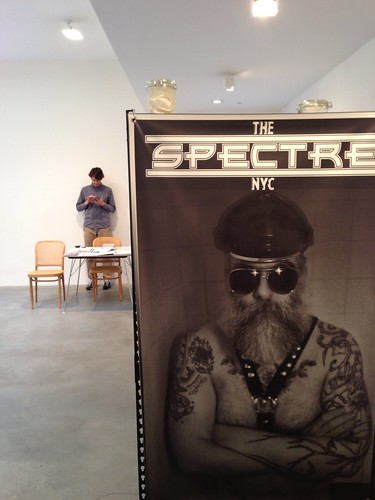
Leslie Lohman Museum of Gay and Lesbian Art
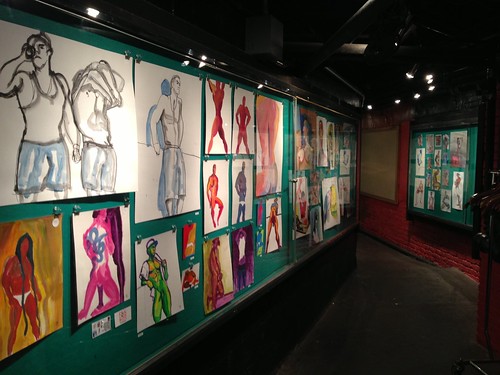
Basement Gallery, Erotic Art Fair
Two artists, Erotic Art Fair, Leslie Lohmann
Two artists, Erotic Art Fair
(Anthony Gonzales, at right)
Paintings and drawings
Hallway, Leslie Lohman Museum of Gay and Lesbian Art,
Basement Gallery, Erotic Art Fair
Paintings and drawings
Some of the art on display, Erotic
Art Fair, Leslie Lohman Museum
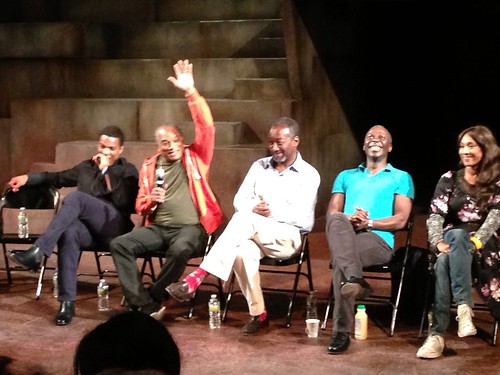
Royal Shakespeare Company after their performance of *Julius Caesar* at BAM
Some of the cast members, Royal Shakespeare Company's
performance of Julius Caesar at Brooklyn Academy of Music
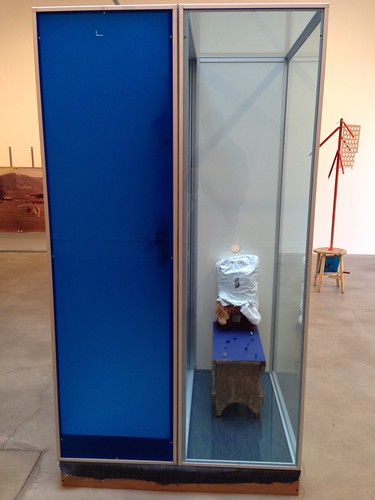
Nayland Blake two-way cabinet
Cabinet display, Nayland Blake, "What Wong Wreng,"
Matthew Marks Gallery
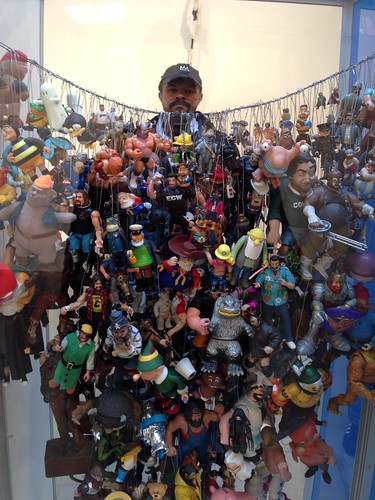
Nayland Blake sculpture
Standing behind one of Nayland
Blake's sculptures, Matthew Marks Gallery
Matthew Marks Gallery, photo of Nayland Blake installation
One of the displays, Nayland Blake's
"What Wont Wreng," Matthew Marks Gallery
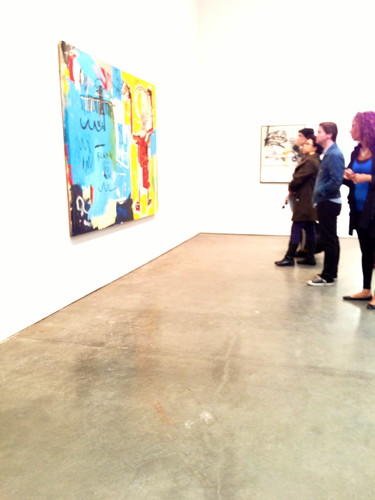
At the Jean-Michel Basquiat show, Gagosian Gallery
Jean-Michel Basquiat show,
Gagosian Gallery (h/t to Mr. Reggie H!)
(photos were prohibited, so....)
IMG_9At the Jean-Michel Basquiat show, Gagosian Gallery268
At the Basquiat show, Gagosian Gallery
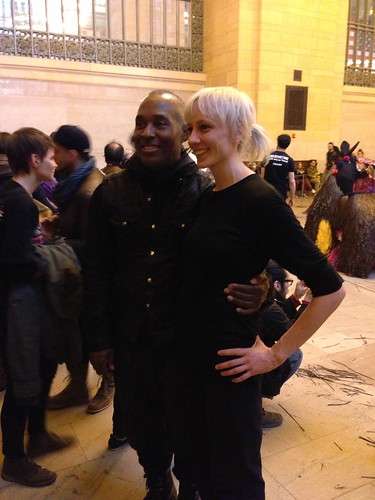
Nick Cave and dancer, HEARD NY
Artist and professor Nick Cave, with one of his
dancers, at his HEARD•NY performance,
Grand Central Terminal
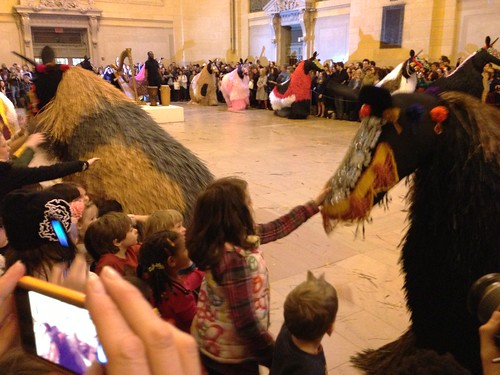
The dance, HEARD NY
HEARD•NY performance,
Grand Central Terminal
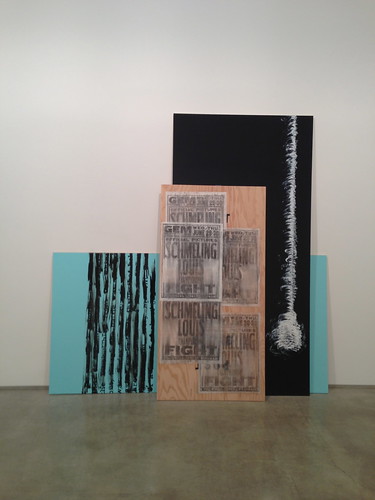
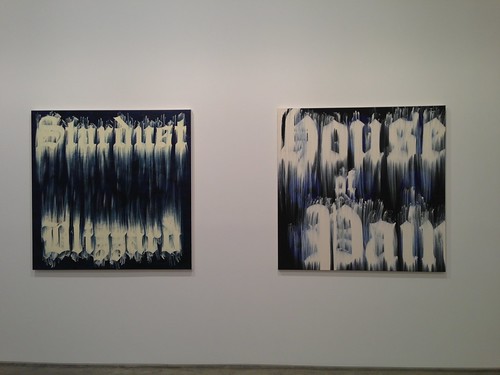
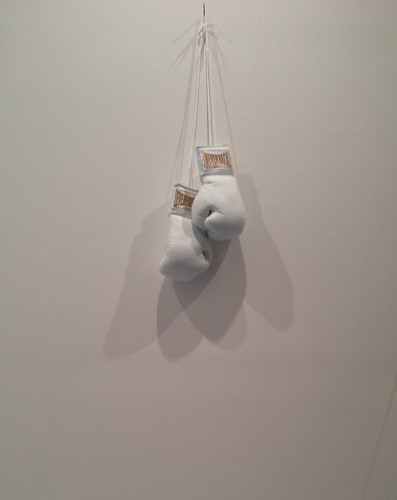
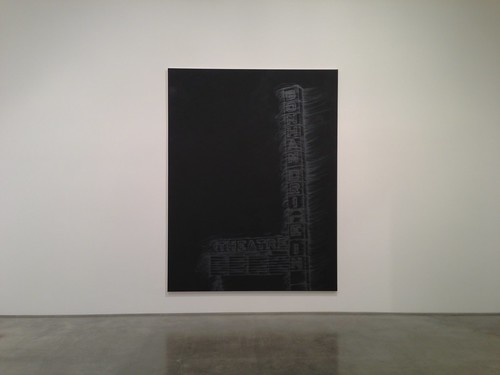
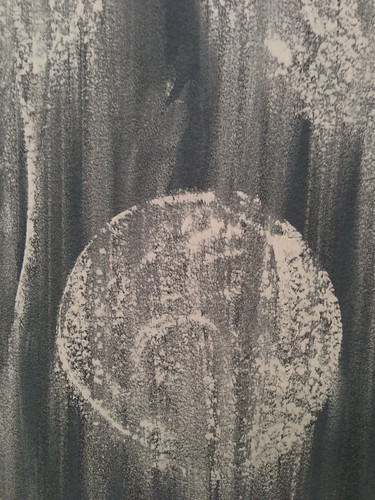
Gary Simmons mixed media works
Gary Simmons installation, Metro Pictures
Artwork, Gary Simmons show, Chelsea
Gary Simmons paintings and installation,
Metro Pictures
Artwork, Gary Simmons show, Chelsea
Gary Simmons installation, Metro Pictures
Artwork, Gary Simmons show, Chelsea
Gary Simmons installation, Metro Pictures
Artwork, Gary Simmons show, Chelsea
Gary Simmons installation, Metro Pictures
Artwork, Gary Simmons show, Chelsea
Detail, Gary Simmons installation,
Metro Pictures
Self-portrait in front Gary Simmons' artwork
Self-Portrait with Gary Simmons installation,
Metro Pictures

Photos from this Winter & Spring I

Some photos of events I never got around to blogging about. Enjoy!

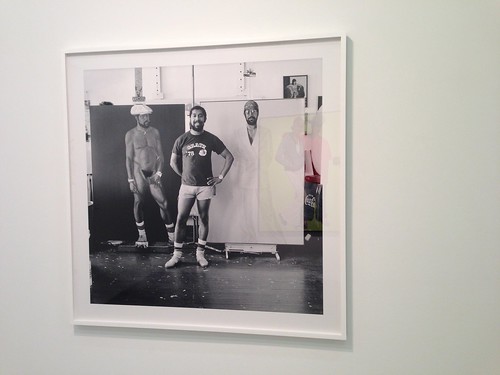
@ Barkley L. Hendricks show
Barkley L. Hendricks' "Hearts Hands Eyes Mind,"
at Jack Sheinman Gallery
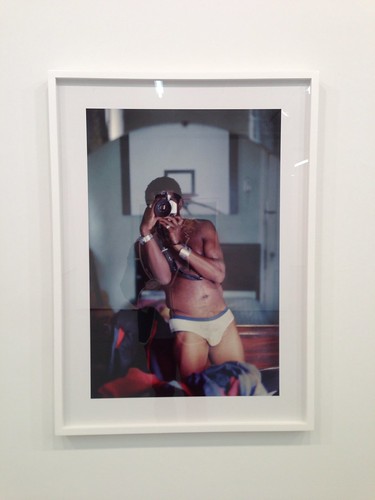
Hendricks self-portrait
Barkley L. Hendricks' portrait,
"Hearts Hands Eyes Mind,"
at Jack Sheinman Gallery
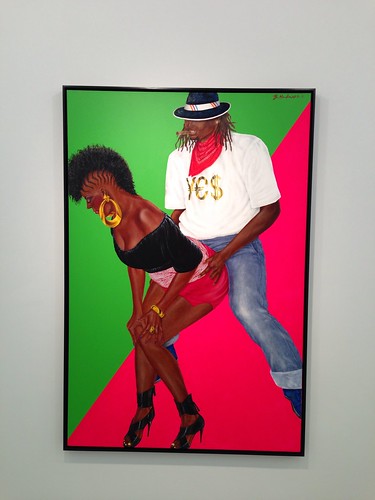
Recent Hendricks painting
Barkley L. Hendricks new painting
"Hearts Hands Eyes Mind,"
at Jack Sheinman Gallery
Hendricks' self-portrait with his paintings
Barkley L. Hendricks' portrait,
"Hearts Hands Eyes Mind,"
at Jack Sheinman Gallery
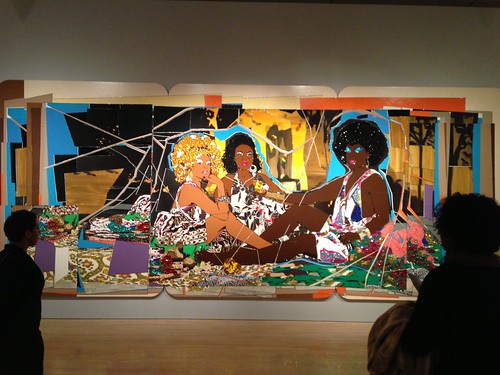
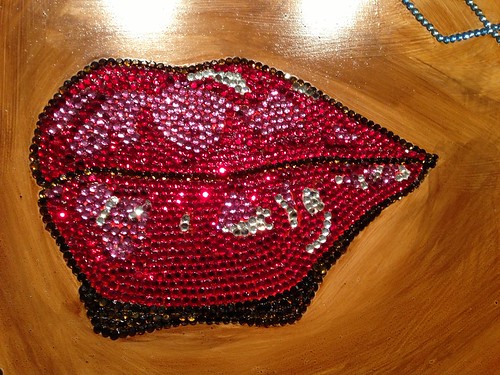
"Déjeuner sur l'herbe" @ Mickalene Thomas show, Brooklyn Museum
Mickalene Thomas's "Déjeuner sur l'herbe,"
from her "The Origin of the Universe" exhibit,
Brooklyn Museum of Art
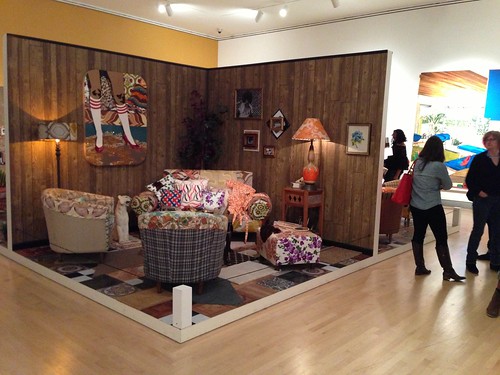
Room installation @ Mickalene Thomas show, Brooklyn Museum
Mickalene Thomas installation,
from her "The Origin of the Universe" exhibit,
Brooklyn Museum of Art
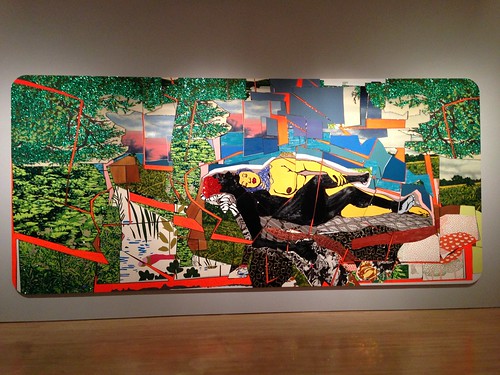
Painting @ Mickalene Thomas show, Brooklyn Museum
Mickalene Thomas painting,
from her "The Origin of the Universe" exhibit,
Brooklyn Museum of Art
Detail, from painting @ Mickalene Thomas show, Brooklyn Museum
Detail from a Mickalene Thomas painting,
from her "The Origin of the Universe" exhibit,
Brooklyn Museum of Art
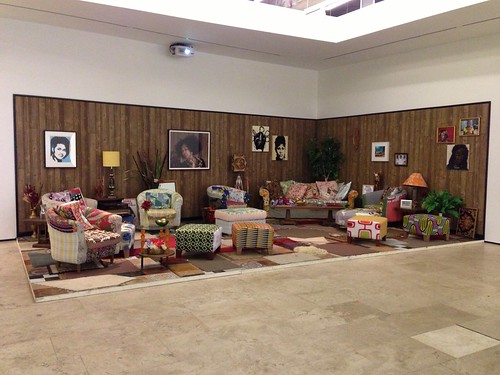
Installation, Mickalene Thomas show
Installation, Mickalene Thomas exhibit,
"How to Organize a Room Around a Striking Piece of Art",
Lehmann Maupin Gallery
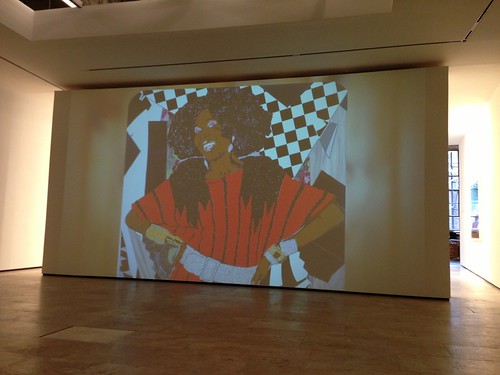
Film still, Mickalene Thomas show
Film still, Mickalene Thomas exhibit,
"How to Organize a Room Around a Striking Piece of Art",
Lehmann Maupin Gallery
Outside Glenn Ligon's show
Outside the "Glenn Ligon: Neon" show,
Luhring Augustine Gallery
Glenn Ligon neons
In the galleries, "Glenn Ligon: Neon" show,
Luhring Augustine Gallery
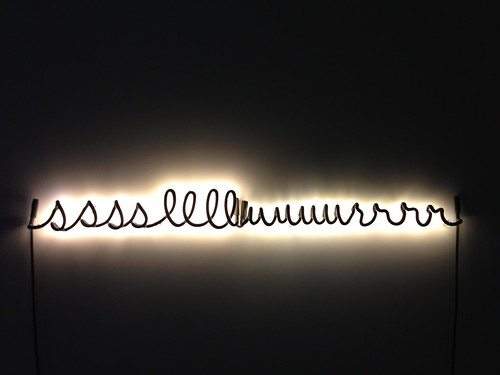
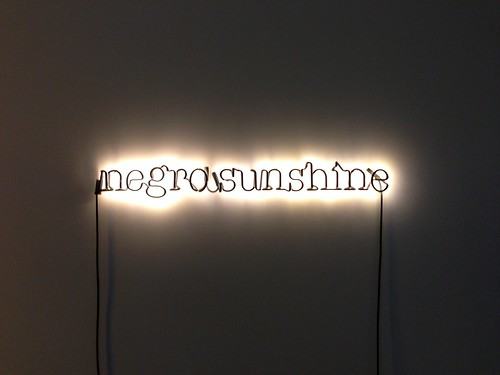
Glenn Ligon neon
Glenn Ligon's "Impediment" (2006),
Luhring Augustine Gallery
Glenn Ligon neon
Glenn Ligon's "Warm Broad Clow" (2005),
Luhring Augustine Gallery

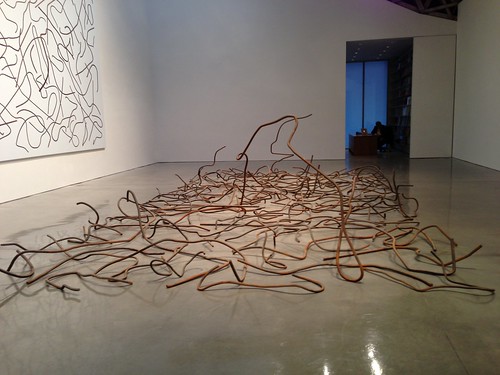
Ai Weiwei sculpture
Ai Weiwei's "Forge,"
Mary Boone Gallery
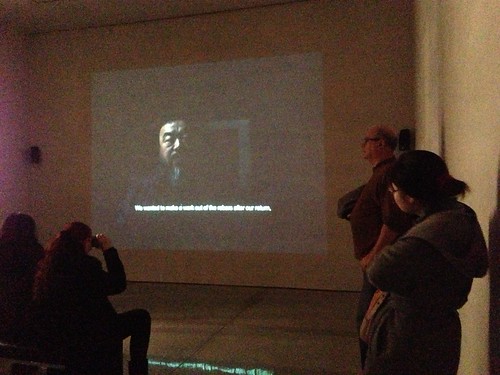
Ai Weiwei film
Video of Ai Weiwei, at "Forge"
exhibition, Mary Boone Gallery
William Villalongo mixed media work
William Villalongo painting,
"Sista Ancesta" show, Susan Inglett Gallery
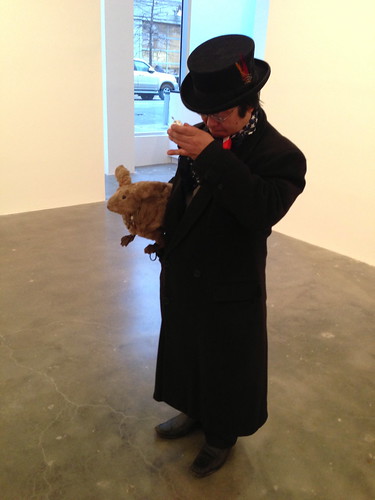
Dr. Takeshi Yamada, artist, at William Villalongo show
Artist Dr. Takeshi Yamada, impresario behind
the Museum of Wonders, with his bunny in tow,
at William Villalongo's "Sista Ancesta" show,
Susan Inglett Gallery
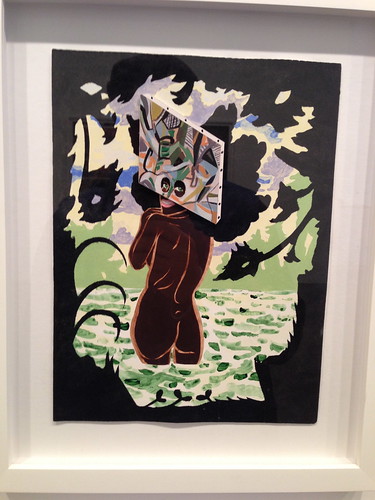
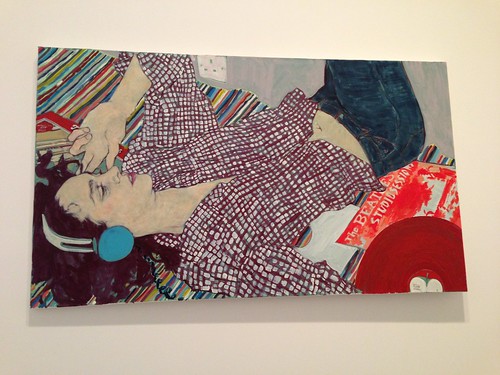
William Villalongo painting
William Villalongo painting,
"Sista Ancesta" show, Susan Inglett Gallery
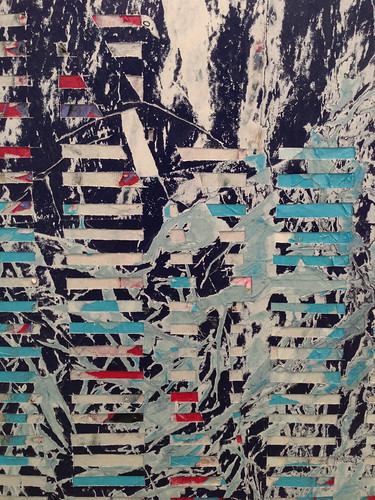
Detail, Mark Bradford painting
Detail, Mark Bradford painting,
Mark Bradford, Sikkema Jenkins & Co.
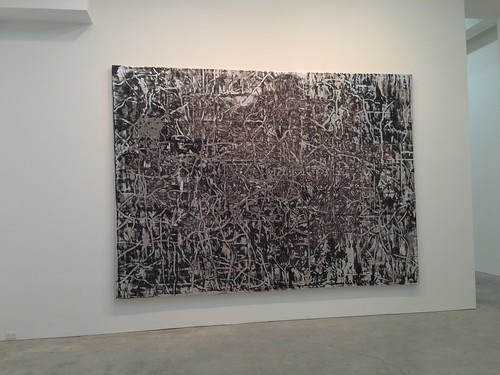
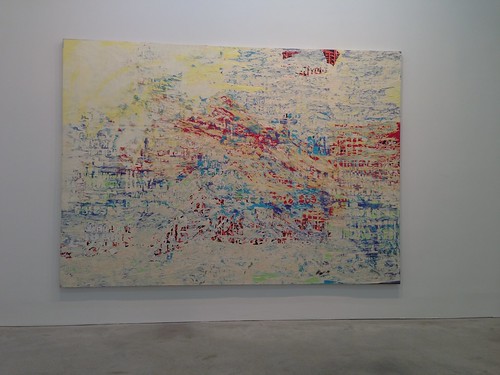
Mark Bradford painting
Mark Bradford painting,
Mark Bradford, Sikkema Jenkins & Co.
Mark Bradford painting
Mark Bradford's "Her Mouth Across the Table" (2012),
Mark Bradford, Sikkema Jenkins & Co.
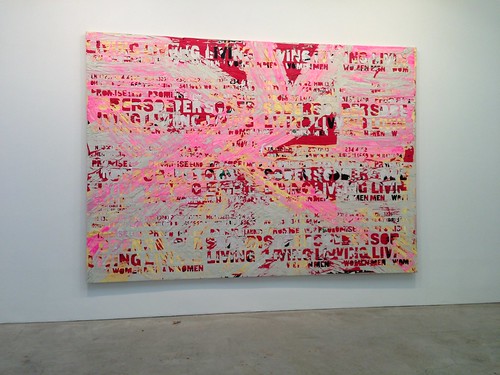
Mark Bradford painting
Mark Bradford's "Promise Land" (2012),
Mark Bradford, Sikkema Jenkins & Co.
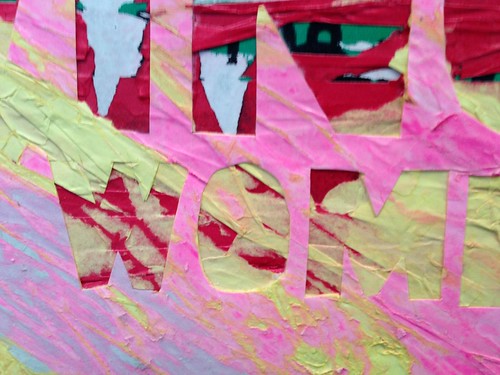
Detail of Mark Bradford painting
Detail, Mark Bradford's "Promise Land" (2012),
Mark Bradford, Sikkema Jenkins & Co.