Tyler Perry's House of Payne
I saw ads for this show on Monday, then this evening heard Wendy Williams on her WBLS show dismissing it and breaking on Tyler Perry (at right, courtesy EURWeb) when she responded to a caller's inquiry about the purported romance between Perry and Tyra Banks (Wendy implied that Perry's real interests lay in the person of the show's star, Allen Payne ("How you doin'?")). So I was curious to catch it, despite my longstanding feelings about the buffoonery Perry packages so adeptly and lucratively for public consumption. As I was chatting on the phone with my friend David this evening, C. pointed to the TV screen to say that the show was coming on, at 11 pm, on UPN after WWOR-TV's infamously over-the-top news program. Though I missed the first few minutes of the show, when I finally did begin watching it I realized that I was witnessing something so bad, so awful, that it actually merited the description "dreadful," as in, "filling one with dread at the possibility of seeing it again." Dreadful premise, dreadful production, dreadful performances. In fact, it's so dreadful I thought it might be an elaborate joke, until I realized that, no, it was for real. It makes both The Jeffersons and Good Times look not only like high art, but progressive. The premise involves Payne's character moving back home with his parents, his two children in tow, because his wife has become...a crack addict who burned the house down! (Maybe I misheard this bit, but then maybe I'm misremembering a similar scenario for Perry's character in Diary of a Mad Black Woman.) The actor playing Payne's father was in full minstrel mode, and would have made Amos or Andy jealous; the woman playing Payne's mother, when not missing her timing, actually had to turn sideways to exit the soundstage. Payne himself seems to be performing as if he'd never learned even the basics of acting, including convincing facial expressions and gestures and was in a drama. Tonight's episode involved the father/grandfather fearing that his grandson, who he caught with a very tiny tutu hanging (not draped, and he wasn't wearing it) around his neck, was a "tambourine player." Which is to say, gay. (Is "tambourine player" an alternate name for gay people somewhere on this planet? Is "Riverdance" a gay reference? Really?) So the show went through all the predictable, homophobic responses. It suggested that if a young boy didn't want to be a fireman or learn karate, he could still be beaten up to be "toughened up," which would, naturally, de-gay him. (I guess there wasn't time or narrative space to deploy the Bible's de-gaying powers in this episode.) Payne's character, the boy's father, showed no character by going along with this, and initially was unable to deal with the fact that his son was sitting alone in the kitchen drinking out of a carton of milk (in an African-American household?) with the tutu hanging from his neck. Wouldn't this provoke some basic questions even in the most inane sitcom world? The source of the family's gay panic, the clumsy tutu-as-symbol, ultimately turned out to be rather simple and utterly sentimental, however; the boy missed his (crackhead) mother, and was sporting the tutu, which would not have fit on a Barbie, let alone a human being, like a necklace (?) because he and she used to dance around while she wore it (how?) when times were good (naturally), and of course it still bore her scent. Yep. In Tyler Perry-land. I know Perry is a hot commodity right now, but someone with UPN must have a semblance of aesthetic and critical judgment left, right? According to EURWeb, 10 episodes of this syndicated dreck are set to air. UPN, please stop while you're ahead.
The PATH Train Disparity
This entry will really be of interest only to those of us who (have to) take the PATH trains between New York and New Jersey. Every day that I've been back in New Jersey and have ridden the PATH into and out of Manhattan, I've said to myself, you have to write something on the blog about how the Port Authority of New York and New Jersey continues to run more Hoboken-bound trains than Journal Square-bound (Jersey City) trains, even though Jersey City, the second-largest city in the state, is now almost as populous as Newark, the largest city, and the more-frequent Hoboken-bound trains are seldom full at any hour of the day or night (except when on a holiday schedule that combines their route with the Journal Square trains'), while the Journal Square trains are alwayspacked at morning and evening rush hours, and sometimes approaching full in the early afternoon and late evening. For years I dealt with this, inquired of and complained to conductors and thought, they are eventually going to figure out that this disparity is idiotic and will finally run more Journal Square trains. But it seems in over 10 years, they haven't gotten a clue. I've always heard the rationale that the Hoboken trains are more frequent because of the New Jersey transit rail lines that converge at the Hoboken station, but then where are all the train riders? Does the Secaucus exchange get most of them? Do they simply go straight into and out of New York's Penn Station and skip the PATH ride? There is the alternate explanation of racism; the fact is, the majority of people taking the Journal Square trains (like the Newark trains) are people of color, while the majority of Hoboken line commuters are white, but this seems too blatant and obvious. And with steroid-style development that's overtaken Jersey City, there's again a large and growing white population in Jersey City, though many of the new residents are much more affluent than their predecessors from 50 and 100 years ago. Will the train schedule disparities change once this new Jersey City population reaches critical mass, or will there still be more Hoboken trains?
 New Yorker's Rowing Experiment Capsizes
It was a fascinating idea, for undeniably great public and private causes. But unfortunately 41-year-old Victor Mooney wasn't able to get beyond the coast waters of Senegal in his attempt to row across the Atlantic Ocean to raise money for HIV/AIDS research and prevention. Fortunately for him the Senegalese Navy came to his rescue. If he does try this again, and I hope he does for the reasons he outlined, I pray that he'll find more seaworthy boat and some national, NGO or corporate sponsorship, and an official rescue agreement with several navies and coast guards. The Reuters article ended rather disturbingly with the following paragraph:
"I know the sea and how it gets. That man is going to have trouble in that boat -- he doesn't even seem to know how to row," said a local boatman who saw him take his first strokes.
Given what he was undertaking, I trust his rowing skills and prowess weren't really and won't in the future be an issue....
Brazil's Pirahã Tribe Upends Chomskyan Thesis
Or so says this article in Der Spiegel, which tells of a Brazilian tribe, the Pirahã, who, unlike every other group of speakers on earth, never use the very sort of compound sentence I'm unfurling here. This fact appears to contradict the recursion theory of human linguistic development, of which MIT linguist, philosopher and activist Noam Chomsky, one of my intellectual avatars, is an pioneer. But then the person who's made this claim is one of the few non-Pirahãs to understand and speak the language, so two Chomskyans are going to check things out very soon. They will get there, they will figure out what's really up.
Blog Round Up
Bernie has an excellent post on the appalling but not surprising Cocodorm story
Andrés beautifully memorializes HIV/AIDS activist Juan Mendez
Keguro posts on Googlebombing to aid the detained Egyptian blogger Alaa Abdel Fatah
Frank features fabulous photos for days on the Awards Ball 2006
Larry K. gives a thumb down to the Broadway version of The Color Purple
Nubian posts a video that speaks for itself
EJ has an Old School Wednesday lineup to carry you into the weekend
Random Photo

At the World Trade Center temporary PATH station, which from the day it opened has been a work of art
Farrago - I have always loved this word, though I'm using it here in its more positive connotations as a motley assembly, rather than a confused one.


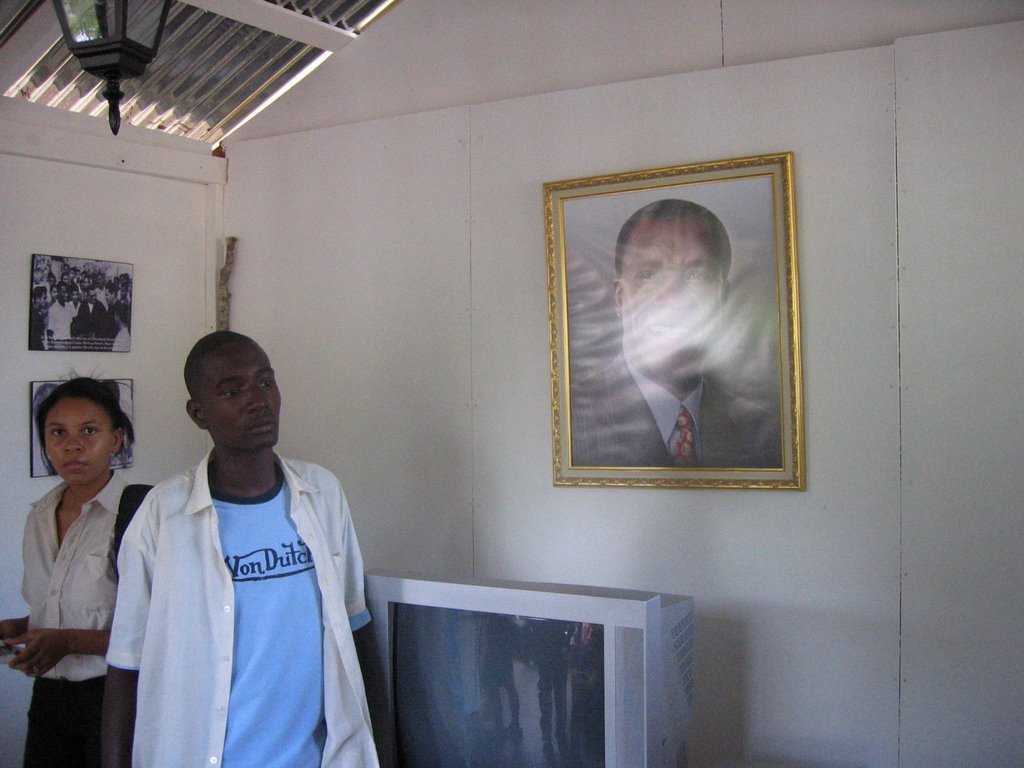

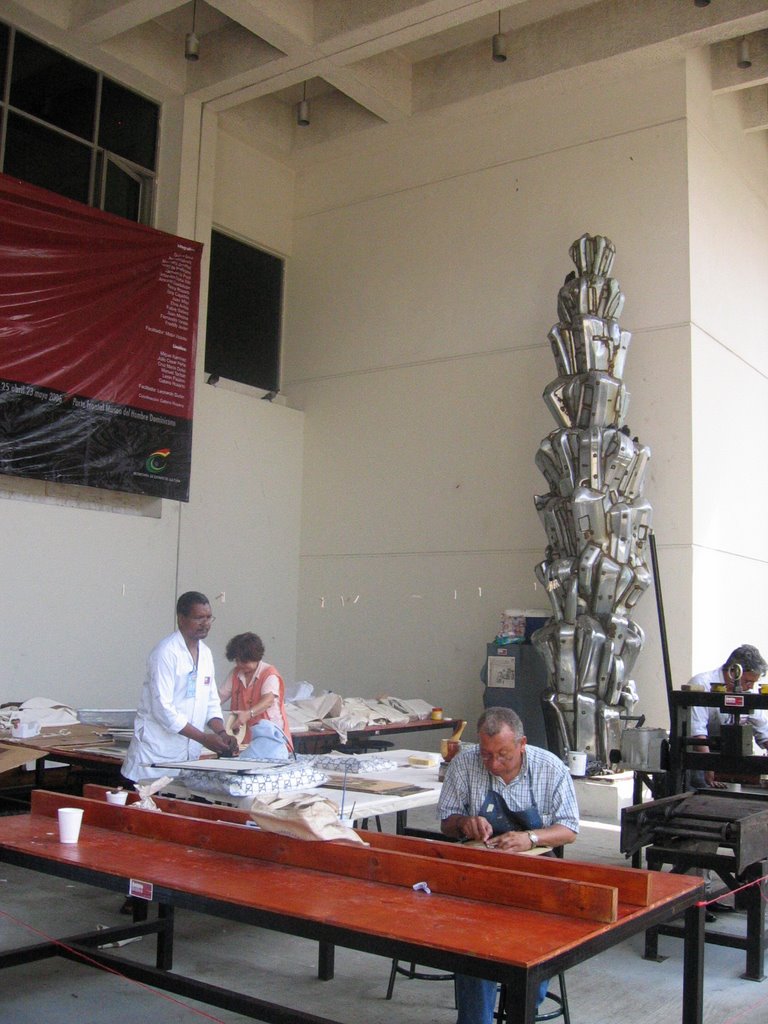
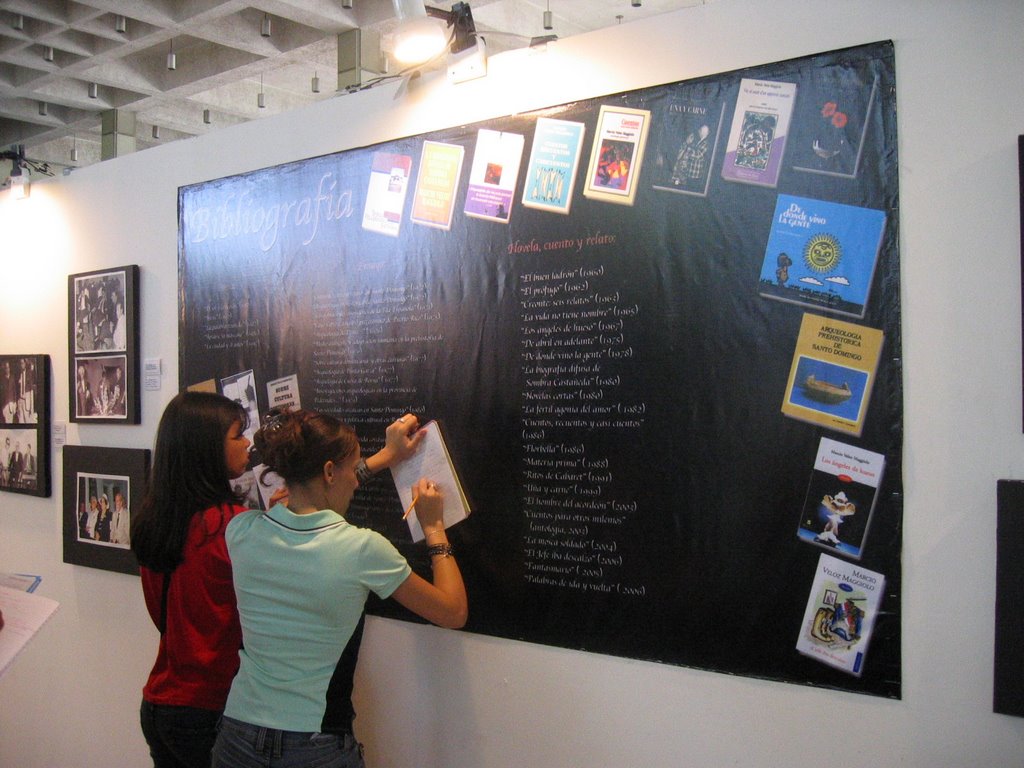


 Every year, the fair designates a
  Other authors whose books I picked up include








 "I hold the same relationship with literary property as I do with property in society: I am against it. I think there is a game with property in translation. That is, it puts into question something that common literary sense takes for granted, which is the fact that issues of property in literature are extremely complex, just as they are in society. Language is a common property; in language there is no such thing as private property. We writers try to place marks to see if we can detain its flow. There is no private property in language; language is a circulation with a common flow. Literature disrupts that flow, and perhaps that is what literature is."
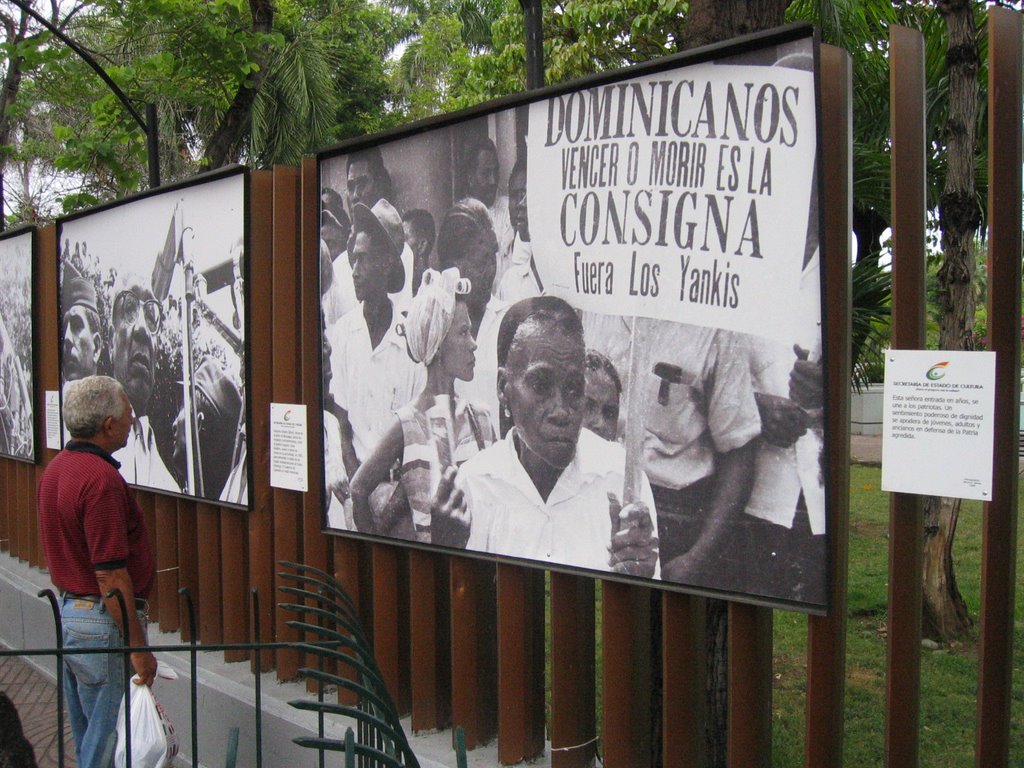
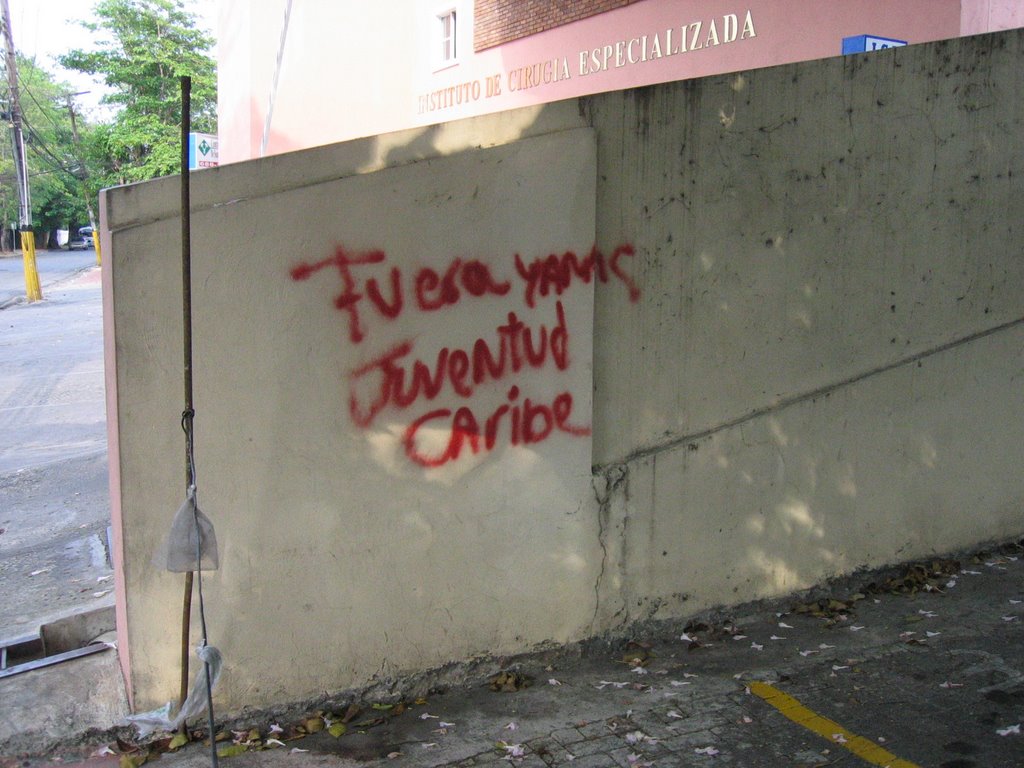

 It all sounded so...novelistic.
  "The extraordinary appearance of [Roberto] Clemente always helped him to reach those heroic dimensions. He was born as much for baseball as for photographs, busts and statues. That aspect was accentuated with an aristocratic gravity that convinced one as if it were another feature, more than his virile and Apollonian beauty. While the smile of Peruchín ([the Little Bull] Orlando Cepeda) always insinuated that easy-going confidence like my homeboy that went back to his origins in Santurce, back there in the space of the saoco* and Sunoco, Clemente even when he was smiling didn't lower his guard, in his persistence to prove himself, as a Black Puerto Rican baseball player, worthy of the greatest respect. In him there was something tense and fateful, as he hit those three thousand unstoppable balls; it was the Apollonian Kabbalah, the one of an ambition in which no excess fits, neither more nor les. He was a man touched by perfection. Peruchín, by comparison, is pure Dionysian exaltation."
 I saw yesterday that 85-year-old poet
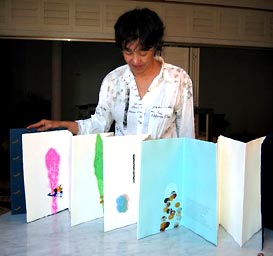 Here's a poem by a poet,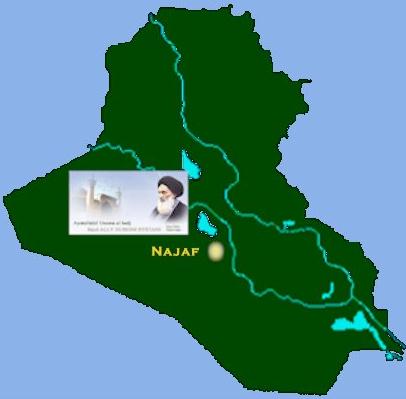


![[memoirs]](http://online.wsj.com/public/resources/images/MK-AG122A_MEMOI_20060413204938.jpg)